Wine has long held a cultural monopoly on aging—cellars filled with dusty bottles, sommeliers discussing tertiary aromas, and collectors tracking vintages like stock portfolios. Beer, by contrast, is often marketed as “fresh,” “crisp,” and “drink now.” Yet beneath that surface lies a rich, underappreciated truth: some beers don’t just survive time—they thrive in it. They develop layers of complexity no young bottle could offer: dried fig and black cherry from aged barleywine, leathery funk and barnyard earth from mature lambic, or silky umami depth from a decade-old imperial stout. Aging beer isn’t myth—it’s chemistry, microbiology, and patience in action. But unlike wine, it’s not universal. Only specific styles, brewed with intention and stored with precision, transform meaningfully over months or years. This article cuts through the noise to clarify when, how, and why beer ages—and when it absolutely shouldn’t.
Why Some Beers Age Well (and Most Don’t)
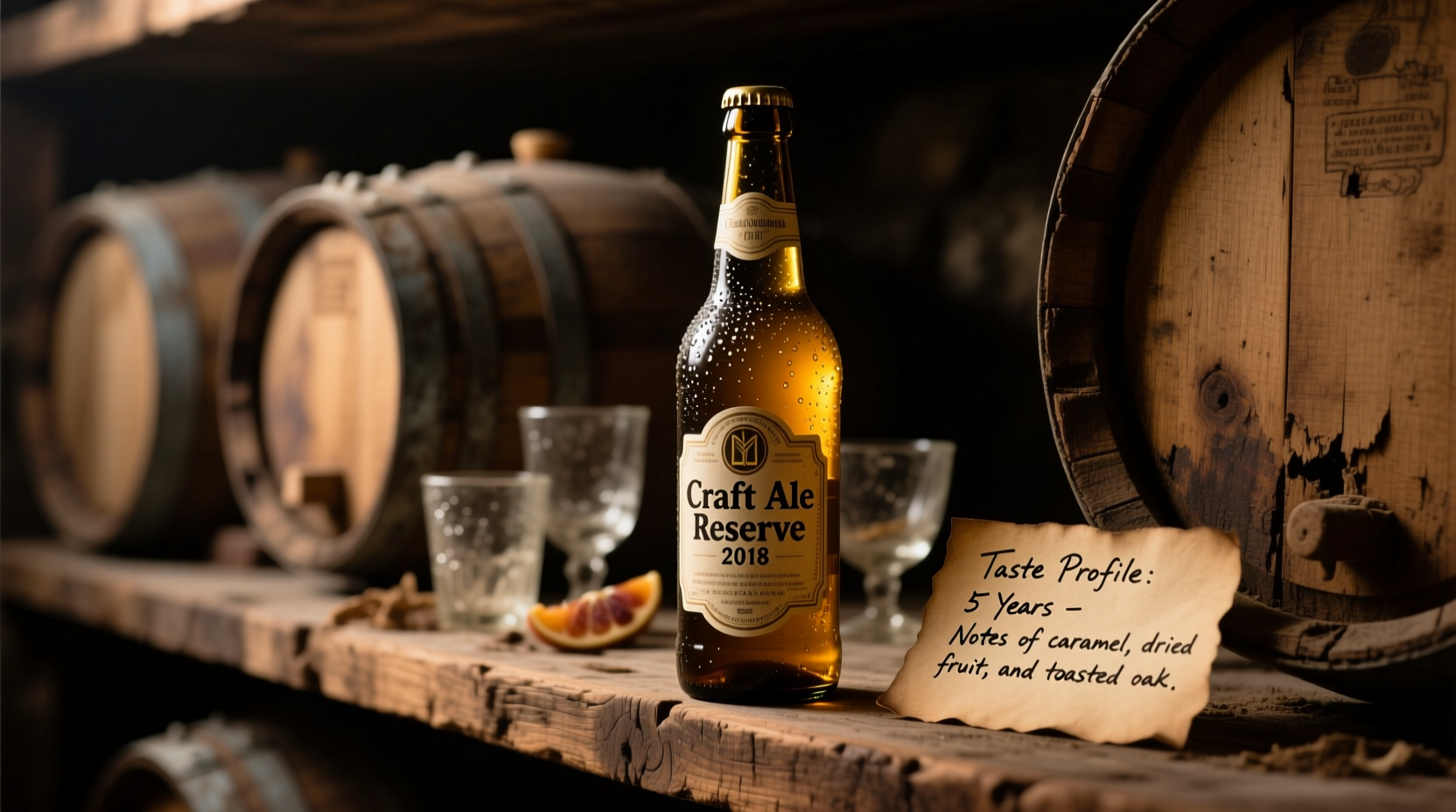
Beer aging hinges on three interlocking factors: alcohol content, microbial stability, and oxidative resilience. High-alcohol beers (typically above 8% ABV) resist spoilage because ethanol inhibits many spoilage organisms. Dark malts contribute melanoidins and polyphenols—natural antioxidants that slow staling reactions. And low-hop presence (especially in aged styles) matters: while fresh hop aromas fade quickly, aggressive dry-hopping introduces volatile compounds highly susceptible to oxidation—resulting in cardboard or sherry-like off-flavors rather than elegance.
Crucially, aging isn’t about “improving” all beer—it’s about enabling controlled chemical evolution. In wine, tannins polymerize and soften; in barleywine, Maillard-derived compounds hydrolyze into nutty, toffee-like notes. In sour lambics, Brettanomyces slowly metabolizes complex sugars and residual dextrins, producing earthy, spicy phenolics and subtle tropical esters. These transformations require time, but they also demand biological and chemical prerequisites most mainstream lagers, pilsners, and IPAs simply lack.
Tip: If a beer tastes aggressively hoppy, light-bodied, or crisp when fresh, it almost certainly won’t benefit from aging—and will likely stale faster than it matures.Styles That Gain Depth With Time (and Why)
Not all high-ABV or dark beers are age-worthy. True cellarability requires structural balance: enough alcohol for preservation, sufficient residual sugar or dextrins for microbes to work on, and robust malt character to anchor evolving flavors. Below is a comparison of proven aging candidates, their ideal windows, and signature transformations:
| Style | Optimal Aging Window | Key Flavor Evolution | Critical Storage Notes |
|---|---|---|---|
| Barleywine (English & American) | 2–8 years | Fruitcake → dried fig/prune → molasses & leather; hop bitterness softens, malt rounds out | Store upright to minimize cap contact; avoid light exposure at all costs |
| Imperial Stout | 1–5 years (up to 10 for barrel-aged) | Roasted coffee → licorice & dark chocolate → tobacco, oak tannin, and vinous acidity (if barrel-aged) | Keep at 50–55°F (10–13°C); fluctuations accelerate oxidation |
| Lambic & Gueuze (Traditional Belgian) | 3–15+ years | Sharp green apple → barnyard & wet hay → deep umami, saline minerality, and layered fruit complexity | Must be bottle-conditioned with native microbes; store horizontally like wine |
| Oud Bruin & Flanders Red | 2–10 years | Tart cherry → balsamic vinegar → leather, cedar, and dried currant | Acetic acid stabilizes over time; cooler temps preserve acidity balance |
| Strong Dark Ale (e.g., Quadrupel) | 3–7 years | Dark fruit & clove → raisin & port wine → fig paste & polished wood | Higher carbonation helps protect against oxidation; keep sealed tightly |
Note the absence of India Pale Ales, Pilsners, Hazy Juicy Ales, and most wheat beers. Their appeal rests on volatile hop oils, bright carbonation, and clean fermentation profiles—all of which degrade rapidly. As Dr. Chris White, founder of White Labs Brewing Yeast and author of Yeast: The Practical Guide to Beer Fermentation, explains:
“Beer aging is not passive storage—it’s active biochemistry. In a well-aged barleywine, you’re tasting enzymatic breakdown of complex carbohydrates, slow ester hydrolysis, and controlled oxidation of fatty acids. In an IPA left too long? You’re tasting aldehyde formation and hop oil degradation—neither of which are desirable.” — Dr. Chris White, Microbiologist & Brewing Scientist
The Science of Staling vs. Maturation
Two parallel chemical pathways define beer’s lifespan: staling and maturation. Both occur simultaneously—but one dominates depending on composition and conditions.
Staling is driven primarily by oxidation and light exposure. When oxygen dissolves in beer post-fermentation, it reacts with unsaturated fatty acids (like linoleic acid from malt), forming trans-2-nonenal—a compound responsible for papery, wet-cardboard aromas. Light (especially blue/UV wavelengths) catalyzes riboflavin-mediated reactions that produce skunky 3-methyl-2-butene-1-thiol (MBT). These reactions accelerate at warmer temperatures and in clear or green glass.
Maturation, by contrast, involves slower, more nuanced changes: the breakdown of diacetyl precursors (reducing buttery notes), polymerization of tannins and melanoidins (adding mouthfeel richness), and enzymatic or microbial activity (e.g., Brettanomyces converting residual dextrins into fruity esters). These processes require stability—not sterility—and unfold best between 45–55°F (7–13°C) with minimal temperature fluctuation.
The dividing line? Intention. A brewer who designs a barleywine with 12% ABV, 60 IBUs balanced by 40°L crystal malt, and careful oxygen exclusion during packaging creates a canvas for maturation. A pale lager bottled with 4.2% ABV and delicate noble hop aroma offers little buffer against staling—and no substrate for meaningful evolution.
A Step-by-Step Cellaring Protocol
Successful aging demands discipline—not just time. Follow this sequence precisely to maximize positive development and minimize risk:
- Select wisely: Choose only styles confirmed as age-worthy (see table above) and verify bottling date. Avoid cans unless explicitly designed for aging (most aren’t).
- Inspect packaging: Check for intact caps or corks, no leakage, and original brewery labeling. Avoid bottles with visible sediment unless expected (e.g., lambic).
- Control environment: Store at 45–55°F (7–13°C) in total darkness. Use a dedicated wine fridge or cool basement corner—not a kitchen cabinet or garage.
- Position correctly: Barleywines, stouts, and strong ales: store upright. Lambics, gueuzes, and corked bottles: store on their side to keep corks moist and sealed.
- Monitor progress: Taste a bottle every 6–12 months. Keep notes on aroma, mouthfeel, balance, and perceived age. Stop aging when complexity peaks—or when oxidation begins to dominate.
Mini Case Study: The 2012 Founders Kentucky Breakfast Stout (KBS)
In 2012, Founders Brewing Co. released its bourbon barrel-aged imperial stout, KBS, with an ABV of 12.9%. At release, it was intensely roasty, boozy, and rich—with bold notes of espresso, vanilla, and charred oak. A collector in Louisville purchased six bottles and stored them unopened in a climate-controlled wine fridge set to 52°F.
At year 3: The heat mellowed significantly. Roast notes softened into dark chocolate and molasses; bourbon character integrated, revealing toasted coconut and cinnamon.
At year 6: Acidity increased subtly—likely from slow acetic metabolism—adding brightness against the dense body. Flavors evolved toward fig jam, pipe tobacco, and aged balsamic.
At year 8: Oxidative notes emerged—dried apricot and sherry—but remained harmonious, not dominant. The beer tasted less “young stout” and more “liquid dessert wine.” By year 10, however, cardboard and wet paper became detectable in two bottles, signaling the end of its peak window.
This progression wasn’t guaranteed—it relied on consistent temperature, zero light exposure, and the beer’s inherent structure. Had those bottles sat in a garage through Midwest summers, they’d have oxidized within 18 months.
FAQ: Your Top Aging Questions Answered
Can I age any high-ABV beer I find?
No. Alcohol alone doesn’t guarantee age-worthiness. A 10% ABV hazy IPA lacks the malt backbone, low hop volatility, and microbial stability needed. Look for stylistic cues: dark color, restrained hop presence, prominent malt sweetness, and traditional aging lineage (e.g., English barleywines, Belgian quads, Flanders sours).
What’s the biggest mistake people make when aging beer?
Temperature fluctuation. Repeated warming and cooling cycles cause expansion and contraction inside the bottle, pulling oxygen past the seal and accelerating oxidation. Even 10°F swings daily can ruin a 5-year cellar project in under two years. Consistency trumps absolute coldness.
Do I need special equipment?
Not initially—but accuracy matters. A $30 wine fridge with digital temperature control and UV-blocking glass is vastly superior to a repurposed beverage cooler with poor insulation. Also invest in a simple notebook or spreadsheet to log purchase dates, storage conditions, and tasting notes. Without documentation, you’re aging blindly.
Conclusion: Embrace Time as an Ingredient
Aging beer isn’t nostalgia—it’s participation in a living process. It asks us to slow down, observe, and respect the invisible work of molecules and microbes. Unlike wine, which often ages in expectation of prestige or investment, beer aging remains deeply personal: a quiet ritual of opening a bottle you set aside years ago and discovering something both familiar and startlingly new. It teaches patience in an era of instant gratification—and rewards attention to detail with sensory revelations no fresh pour can replicate.
Start small. Buy two bottles of a reputable barleywine or Flanders red. Store one properly. Drink the other now. Compare them in six months. Take notes. Adjust. Repeat. You’ll learn more about flavor, chemistry, and your own palate in that single experiment than in dozens of tasting flights. Aging beer well isn’t reserved for connoisseurs or collectors—it’s available to anyone willing to treat time not as an enemy, but as a collaborator.
💬 Have you aged a beer that surprised you? Share your story—the style, timeline, storage method, and what you discovered. Your experience could help another enthusiast unlock their own cellar revelation.