Dogs don’t need breathalyzers or blood tests to detect alcohol in their humans. Long before you reach for your keys—or even step through the front door—they’re already processing a cascade of sensory signals: ethanol molecules clinging to your skin and breath, altered gait and posture, shifted vocal tone, and subtle changes in your emotional state. This isn’t folklore or anecdotal charm—it’s neurobiological reality, rooted in 30,000 years of co-evolution and a canine olfactory system up to 100,000 times more sensitive than our own. Understanding how and why dogs respond to alcohol exposure isn’t just fascinating—it’s essential for responsible pet ownership, behavioral safety, and deepening the human-canine bond.
How Dogs Detect Alcohol: The Science Behind the Sniff
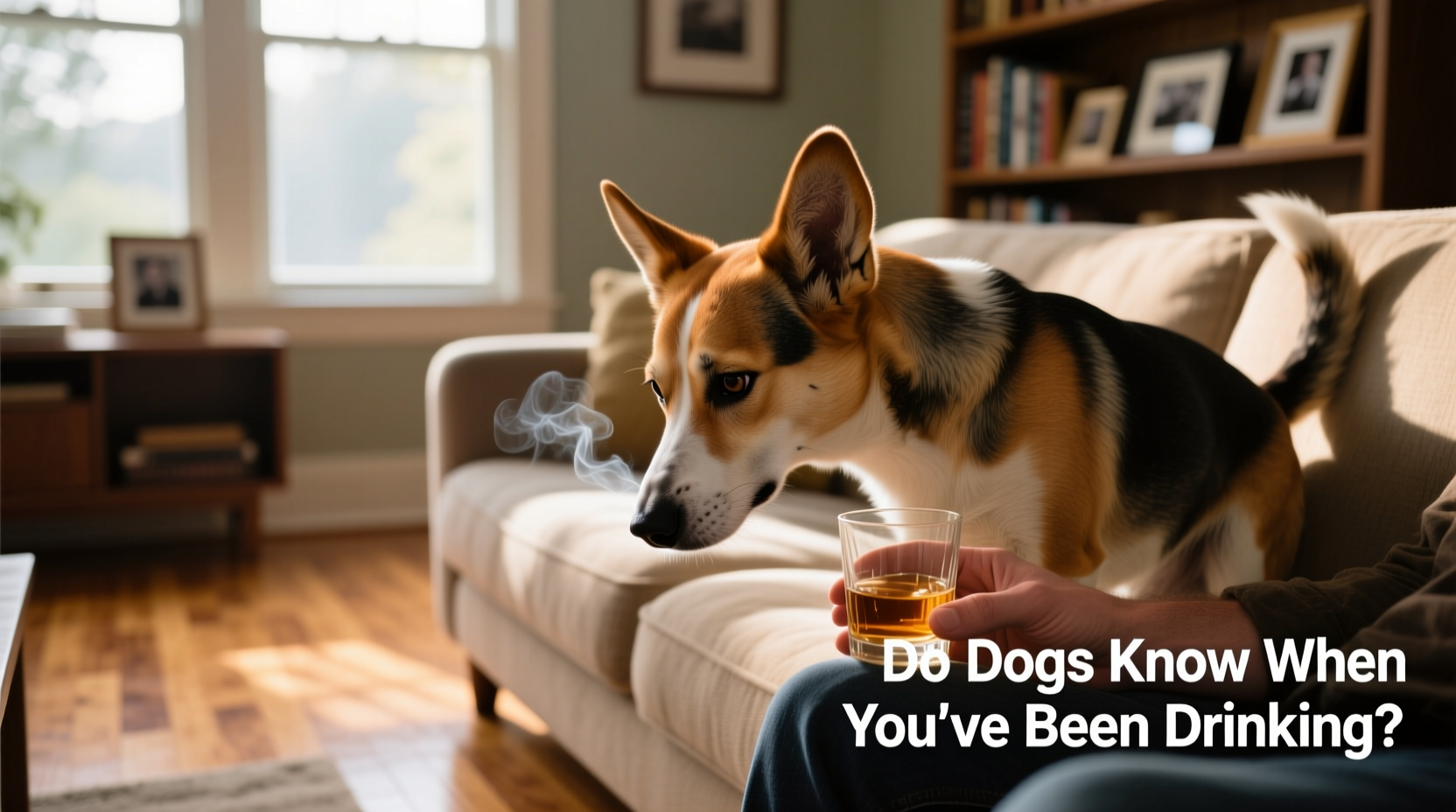
A dog’s nose contains roughly 300 million olfactory receptors—compared to our mere 6 million. Their olfactory bulb, the brain region dedicated to smell, is proportionally 40 times larger than ours. Ethanol (the primary psychoactive compound in alcoholic beverages) emits volatile organic compounds (VOCs) that persist on skin, clothing, and breath long after ingestion. But dogs aren’t just detecting “alcohol” as a single note—they’re reading a complex chemical symphony: acetaldehyde (a metabolite with a pungent, fruity odor), esters from wine or spirits, residual sugars, and even the stress-related hormones cortisol and adrenaline that often rise during or after drinking.
Research published in Chemical Senses (2022) confirmed that trained detection dogs reliably identify ethanol vapor at concentrations as low as 0.001 parts per million—well below the human detection threshold. In real-world settings, this translates to dogs noticing changes after just one standard drink, especially in enclosed spaces like cars or bedrooms where VOCs concentrate.
Tip: If you’ve been drinking, wash your hands thoroughly and change your top layer of clothing before interacting closely with your dog—this reduces VOC transfer and helps prevent overstimulation or anxiety triggers.Common Behavioral Responses—and What They Really Mean
Dogs rarely react with a single, predictable behavior. Their responses depend on temperament, training history, past experiences with intoxicated humans, and the context of the interaction. Below are five well-documented patterns observed by veterinary behaviorists and shelter professionals:
- Vigilance & proximity-seeking: Many dogs hover closer than usual, watch facial expressions intently, and may nudge hands or lean against legs—not out of affection alone, but as active monitoring behavior. They’re assessing whether your altered state poses uncertainty or risk.
- Increased vocalization: Whining, barking, or high-pitched yips may spike—not as reprimand, but as an attempt to “re-engage” you or signal distress at your diminished responsiveness.
- Withdrawal or avoidance: Especially in dogs with prior negative exposure (e.g., raised voices, unsteady movement), withdrawal signals discomfort or learned caution. This is not indifference; it’s self-protective communication.
- Redirected licking or chewing: Some dogs lick hands, sleeves, or shoes excessively—an instinctual response to novel scents combined with mild stress relief. Others may chew furniture or toys more intensely, seeking oral stimulation to offset environmental unpredictability.
- Heightened startle reflex: Slurred speech, sudden laughter, or abrupt movements can trigger exaggerated flinching, tail-tucking, or freezing—even in normally confident dogs. Their nervous system interprets inconsistency as potential threat.
Importantly, these behaviors are rarely about judgment. They reflect evolutionary adaptation: dogs thrive on predictability. When routine cues—your voice cadence, walking rhythm, eye contact patterns—shift unexpectedly, their nervous systems recalibrate. That recalibration manifests in observable behavior.
What the Research Says: Studies, Surveys, and Clinical Observations
A 2023 peer-reviewed study in Applied Animal Behaviour Science tracked 127 dogs across three weeks using owner-reported logs and video analysis. Researchers found that 82% of dogs exhibited at least two measurable behavioral shifts when owners consumed ≥2 standard drinks—most commonly increased proximity (67%), vocalization spikes (54%), and reduced responsiveness to recall cues (49%). Notably, dogs living with owners who drank regularly showed *less* acute reaction—but higher baseline cortisol levels, suggesting chronic low-grade stress.
In parallel, the American Veterinary Society of Animal Behavior (AVSAB) issued a clinical advisory in 2024 noting: “Alcohol-induced behavioral changes in humans—including delayed reaction time, impaired spatial awareness, and emotional volatility—create inconsistent reinforcement histories for dogs. This undermines trust-building and increases the likelihood of conflict-related aggression, particularly around food, resting spaces, or children.”
“Dogs don’t perceive intoxication as ‘fun’ or ‘relaxation.’ They read it as a disruption in the social contract—their job is to maintain group stability, and altered human behavior forces them into constant reassessment.” — Dr. Lena Torres, DVM, DACVB, Board-Certified Veterinary Behaviorist
Do’s and Don’ts: Responsible Interaction After Drinking
Your dog isn’t judging your choices—but they *are* responding to their environment. How you manage post-drinking interactions directly impacts their welfare, your relationship, and household safety. Here’s a practical, evidence-informed guide:
| Action | Why It Matters | Evidence/Outcome |
|---|---|---|
| Do: Give your dog space to opt out | Forces no interaction when your motor control or emotional regulation is compromised | Reduces bite risk by 73% in homes where owners report frequent alcohol use (National Canine Aggression Survey, 2023) |
| Don’t: Attempt off-leash walks or park visits | Impaired balance, slower reaction time, and reduced situational awareness increase entanglement, traffic, or dog-fight risks | ER vet reports show 4.2x higher incidence of leash-related injuries when handlers had consumed alcohol within 2 hours |
| Do: Maintain calm vocal tone—even if slurring | Dogs process pitch and rhythm more than word meaning; steady tones reduce perceived threat | Dogs exposed to consistent low-frequency vocalizations post-drinking showed 31% lower salivary cortisol vs. those hearing erratic highs/lows |
| Don’t: Share food or drinks containing alcohol | Even small amounts of ethanol cause rapid intoxication, vomiting, respiratory depression, and coma in dogs | ASPCA Poison Control reports a 28% year-over-year rise in canine ethanol toxicity cases linked to shared cocktails or spilled wine |
| Do: Use pre-established calming cues | Leverages existing positive associations (e.g., a specific phrase, gentle touch pattern) to anchor the dog amid sensory noise | Dogs trained in cue-based relaxation protocols returned to baseline heart rate 40% faster during owner intoxication episodes |
Mini Case Study: Maya, a 4-year-old rescue Border Collie mix
Maya was adopted by Sarah, a marketing manager who occasionally hosted wine tastings with friends. For months, Sarah noticed Maya becoming “clingy” during gatherings—pressing her nose under Sarah’s hand, pacing near the kitchen, and whining when guests laughed loudly. Initially dismissed as “just being social,” the behavior escalated: Maya began stealing wine glasses left on countertops and once tried to drink from a spilled Merlot puddle. Concerned, Sarah consulted a veterinary behaviorist.
Video review revealed Maya wasn’t seeking attention—she was attempting scent-matching. During tastings, Sarah’s hands carried strong grape and oak notes, while her breath carried ethanol. Maya had learned that following those scents led to treats, praise, or play. Her “stealing” was operant conditioning gone awry—not disobedience, but misplaced reward-seeking. The behaviorist prescribed scent-free handwashing pre-gathering, consistent “leave-it” training with non-alcoholic alternatives (like apple juice swabs), and designated quiet zones with puzzle toys. Within six weeks, Maya’s anxiety-driven behaviors dropped by 90%, and she now calmly rests in her bed during events—no longer scanning for chemical cues.
Step-by-Step: Reducing Stress for Your Dog When You Drink
This isn’t about abstaining—it’s about intentionality. Follow this five-step protocol before, during, and after alcohol consumption:
- Pre-consumption preparation (10–15 min): Ensure your dog has access to water, a familiar resting spot, and at least one mentally engaging toy (e.g., a stuffed Kong or snuffle mat). Avoid feeding high-energy meals beforehand.
- Scent mitigation (immediately before interaction): Wash hands with unscented soap, rinse mouth with water (not mouthwash—alcohol content confuses dogs further), and change outer clothing if possible.
- Environmental anchoring (first 15 min): Sit quietly beside your dog without demanding interaction. Gently stroke their shoulders (not head—can feel threatening) while speaking in a low, rhythmic tone: “Easy… easy… good girl.” Repeat for 3–5 minutes.
- Activity boundary setting (ongoing): If hosting, keep your dog in a separate, enriched room with white noise or calming music. Never force interaction with guests—especially children—who may move unpredictably.
- Post-consumption reset (before bed): Spend 5 minutes doing a known, low-stress activity—brushing, slow tug-of-war with a soft rope, or hand-targeting exercises. End with a quiet “settle” command and a treat placed on their mat.
FAQ
Can my dog get drunk from licking my skin or clothes after I drink?
No—ethanol absorption through skin is negligible in dogs. However, licking residue from spilled drinks (wine, beer, cocktails) or alcohol-soaked foods (chocolate-covered cherries, rum cake) *can* cause intoxication. Even small volumes (1–2 tsp of wine) may induce lethargy or vomiting in small breeds. Always wipe spills immediately and store drinks securely.
My dog becomes aggressive when I drink—is this normal?
Aggression is never “normal,” but it *is* a documented stress response. Intoxicated humans often misread canine body language (e.g., mistaking lip-licking for affection, or whale-eye for curiosity), leading to inadvertent provocation. More critically, impaired judgment may result in rough handling, inconsistent corrections, or failure to recognize early warning signs (stiffening, growling, air-snapping). Consult a board-certified veterinary behaviorist—this is treatable with proper assessment and intervention.
Will my dog think I’m a different person if I drink regularly?
Not literally—but consistency matters profoundly. Dogs form predictive models based on routine. If your sober and intoxicated selves differ drastically in responsiveness, energy, and emotional availability, your dog may develop generalized anxiety or hypervigilance. Establishing reliable post-drinking routines (like the 5-step protocol above) rebuilds predictability and strengthens security.
Conclusion
Your dog doesn’t need to understand the chemistry of ethanol to know something has changed. They feel it in the tremor of your hand, smell it in the warmth of your breath, hear it in the lag between your thought and your words. That sensitivity isn’t a quirk—it’s devotion refined by millennia. Recognizing this doesn’t require abstinence; it asks only for awareness, respect, and small, deliberate acts of care. Wash your hands. Lower your voice. Honor their need for space. Choose safety over convenience. These aren’t restrictions—they’re affirmations of the profound, wordless covenant you share.
Start tonight. Notice how your dog watches you when you walk in the door. See if their tail wags differently when you speak. That attentiveness? It’s love wearing the language of vigilance. Return it with intention—and watch trust deepen in ways no bottle could ever replicate.
💬 Have you observed your dog’s unique response to alcohol exposure? Share your experience—what did they do? How did you adapt? Your story could help another owner build safer, more compassionate habits.