Dr Pepper stands apart from most soft drinks—not just in flavor, but in its unique position within the caffeinated beverage landscape. For consumers tracking their daily caffeine consumption—whether for health, sleep quality, or sensitivity reasons—knowing precisely how much caffeine is in a can or bottle of Dr Pepper is essential. Unlike cola beverages, which often serve as benchmarks for caffeine content, Dr Pepper occupies a gray area: it’s not a cola, yet it delivers a noticeable stimulant kick. This article provides a definitive breakdown of the caffeine levels in Dr Pepper across all standard serving sizes, compares them with similar beverages, and offers practical guidance on integrating this information into dietary decisions.
Definition & Overview
Dr Pepper is a carbonated soft drink created in the late 19th century, reportedly first served in Waco, Texas, in 1885. It is marketed as having a \"unique blend of 23 flavors,\" though the exact composition remains a closely guarded trade secret. Commonly described as a mix of fruity, spicy, and caramel-like notes, Dr Pepper's taste profile distinguishes it from both colas and citrus sodas. While its flavor complexity sets it apart, its functional role in the beverage market aligns closely with other mainstream sodas: it is consumed for refreshment, thirst quenching, and mild stimulation due to caffeine content.
Unlike Coca-Cola or Pepsi, Dr Pepper does not fall under the technical category of \"cola\"—it contains no kola nut extract and lacks the dominant vanilla-caramel-and-phosphoric-acid backbone typical of that class. However, like many non-diet sodas, it includes caffeine as a key ingredient. The presence of caffeine enhances perceived alertness, contributes to the drink’s mouthfeel, and reinforces habitual consumption patterns. Understanding the quantity of caffeine in Dr Pepper is critical for individuals managing cardiovascular health, anxiety disorders, pregnancy-related dietary restrictions, or simply aiming to stay within recommended daily limits.
Key Characteristics of Caffeine in Dr Pepper
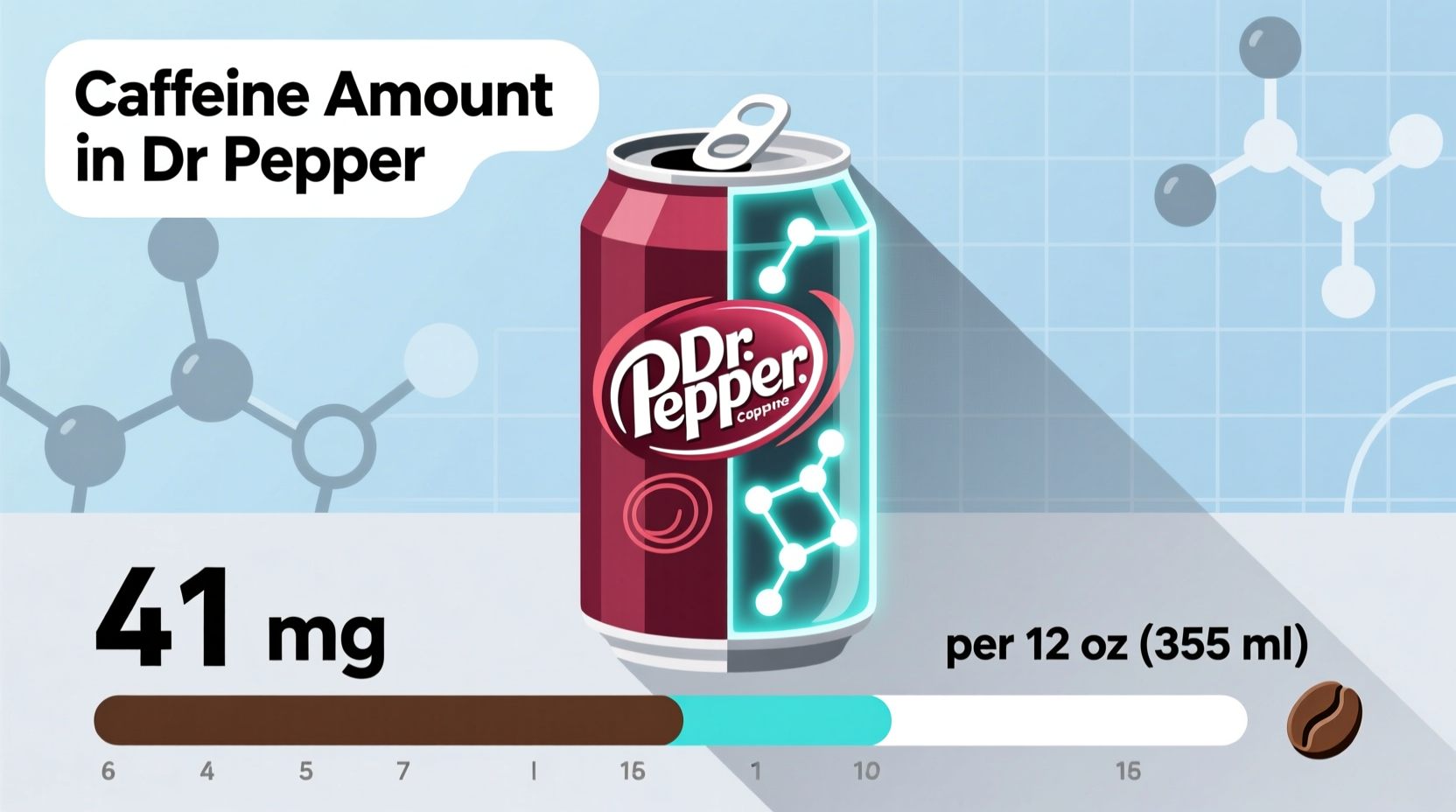
- Caffeine Content: 41 mg per 12 fl oz (355 mL) can
- Flavor Interaction: Caffeine subtly amplifies bitterness, balancing the syrupy sweetness of the 23-flavor blend
- Solubility: Fully dissolved in liquid form; no sediment or separation
- Onset Time: Effects typically felt within 10–45 minutes of consumption
- Half-Life: Approximately 3–5 hours in healthy adults (varies by metabolism)
- Culinary Function: Acts as a mild stimulant and flavor modulator rather than an ingredient used in cooking
- Shelf Life Impact: Caffeine content remains stable throughout the product’s shelf life when stored properly
Note: A standard 20 fl oz (591 mL) plastic bottle of Dr Pepper contains about 68 mg of caffeine—significantly more than the 12 oz can due to increased volume. Always check serving size when calculating intake.
Standard Caffeine Levels Across Dr Pepper Formats
The caffeine content in Dr Pepper varies directly with serving size. While the concentration (mg per ounce) remains consistent, total intake depends on container type. Below is a detailed table outlining common packaging formats and their respective caffeine loads:
| Container Type | Volume (fl oz) | Volume (mL) | Caffeine (mg) |
|---|---|---|---|
| Standard Can | 12 | 355 | 41 |
| Mini Can | 7.5 | 222 | 26 |
| Bottle (Small) | 16 | 473 | 55 |
| Bottle (Large) | 20 | 591 | 68 |
| Fountain Cup (Medium) | 16 | 473 | 55 |
| Draft / Keg (per 12 oz pour) | 12 | 355 | 41 |
This consistency across formats indicates that Dr Pepper maintains a uniform caffeine-to-volume ratio of approximately **3.4 mg per fluid ounce** (11.5 mg per 100 mL). This makes dosage predictable and allows users to calculate cumulative intake accurately when consuming multiple servings.
Practical Usage: Managing Caffeine Intake with Dr Pepper
In everyday contexts, Dr Pepper functions primarily as a standalone beverage. However, understanding how its caffeine content fits into broader dietary habits enables smarter consumption choices. The U.S. Food and Drug Administration (FDA) considers up to 400 mg of caffeine per day safe for most healthy adults. One 12 oz can of Dr Pepper accounts for just over 10% of that threshold. For perspective:
- A single espresso shot (~63 mg) contains slightly more caffeine than a 12 oz Dr Pepper
- A 16 oz brewed coffee (average 180 mg) delivers over four times the caffeine
- An energy drink like Red Bull (80 mg per 8.4 oz can) has nearly double the concentration
Consumers using Dr Pepper as part of a morning routine or afternoon pick-me-up should consider timing. Because caffeine peaks in the bloodstream within 30–60 minutes, drinking Dr Pepper too late in the day—especially after 3 PM—may interfere with sleep onset for sensitive individuals. Those combining Dr Pepper with other caffeinated beverages (e.g., coffee at breakfast, tea in the afternoon) must track totals carefully.
Actionable Tip: If you consume two 12 oz Dr Peppers daily (82 mg), you still have room for ~318 mg from other sources under the 400 mg guideline. But add a large coffee (250 mg) and you’re nearing the limit. Use a caffeine tracker app to log all sources.
In culinary applications, Dr Pepper is occasionally used as a braising liquid for meats—particularly in Southern U.S. barbecue traditions. When reduced, its sugars caramelize while volatile compounds (including some caffeine) evaporate. However, studies suggest only partial degradation of caffeine during simmering; roughly 80% may remain depending on cook time and volume reduction. Therefore, dishes made with Dr Pepper—such as pulled pork glazes or marinades—retain measurable caffeine unless decaffeinated versions are used.
Variants & Types: Caffeine Differences Across the Dr Pepper Line
The Dr Pepper brand offers several variations, each differing in caffeine content. Consumers seeking lower stimulation or complete avoidance have options, but must read labels carefully. Below is a comparison of major variants:
| Product Variant | Caffeine (mg per 12 oz) | Notes |
|---|---|---|
| Dr Pepper (Regular) | 41 | Original formula with full caffeine content |
| Dr Pepper Zero Sugar | 41 | Same caffeine level as regular; sweetened with aspartame and acesulfame potassium |
| Dr Pepper Cherry | 41 | No difference in caffeine despite added cherry flavoring |
| Dr Pepper Ten | 41 | Reduced-calorie version (10 calories); unchanged caffeine |
| Diet Dr Pepper | 41 | Historically labeled “Sugar-Free”; same caffeine as original |
| Decaf Dr Pepper | 0–2 | Technically not fully decaffeinated; trace amounts may remain |
Notably, **all regular and sugar-free versions except the decaf variant contain identical caffeine levels**. This contrasts with some brands that reduce caffeine in diet lines. The decision reflects consumer expectations: Diet Dr Pepper users often seek the same physiological effect as the original, particularly when substituting for coffee or energy drinks.
Comparison with Similar Beverages
To contextualize Dr Pepper’s caffeine level, it’s useful to compare it with other popular sodas and beverages. The following table highlights key comparisons:
| Beverage | Volume (fl oz) | Caffeine (mg) | Caffeine per Ounce |
|---|---|---|---|
| Dr Pepper | 12 | 41 | 3.4 mg/oz |
| Coca-Cola | 12 | 34 | 2.8 mg/oz |
| Pepsi | 12 | 38 | 3.2 mg/oz |
| Mountain Dew | 12 | 54 | 4.5 mg/oz |
| Barq’s Root Beer | 12 | 22 | 1.8 mg/oz |
| Sprite | 12 | 0 | 0 mg/oz |
| Red Bull (original) | 8.4 | 80 | 9.5 mg/oz |
From this data, Dr Pepper emerges as moderately caffeinated—higher than classic colas but significantly less potent than Mountain Dew or energy drinks. Its caffeine level is closer to Pepsi than to high-stimulant alternatives. Among dark sodas, only Jolt Cola (discontinued in most markets) exceeded Dr Pepper’s historical caffeine content.
“Many people assume all brown sodas are equally caffeinated. That’s a myth. Dr Pepper sits in the middle tier—more than Coke, less than Mountain Dew. It’s a good option if you want a noticeable lift without going overboard.” — Dr. Lena Torres, Registered Dietitian and Beverage Nutrition Analyst
Practical Tips & FAQs
Is Dr Pepper more caffeinated than Coke?
Yes. A 12 oz serving of Dr Pepper contains 41 mg of caffeine compared to 34 mg in Coca-Cola. The difference is modest but consistent across batches.
Can children safely drink Dr Pepper?
The American Academy of Pediatrics discourages caffeine consumption in children under 12. For teens (12–18), they recommend limiting intake to under 100 mg per day. One 12 oz Dr Pepper (41 mg) falls within this range but should be counted against other sources like chocolate, tea, or energy drinks.
Does Dr Pepper keep you awake?
For caffeine-sensitive individuals, yes. At 41 mg per can, it can delay sleep onset if consumed within six hours of bedtime. Tolerance varies widely; regular consumers may feel little effect.
Is there a completely caffeine-free Dr Pepper?
The closest option is Decaf Dr Pepper, which contains negligible caffeine (typically 0–2 mg per 12 oz). True zero-caffeine alternatives require switching to non-Dr Pepper brands like Sprite or caffeine-free ginger ale.
How does caffeine affect the taste of Dr Pepper?
Caffeine adds a slight bitter note that balances the high sugar content (39g per 12 oz). In blind tastings, decaffeinated versions are often perceived as sweeter or flatter in complexity.
What happens if I drink too much Dr Pepper?
Excessive consumption—especially multiple cans daily—can lead to side effects such as insomnia, jitteriness, increased heart rate, digestive discomfort, or dependency. High sugar content also poses risks for dental health and metabolic syndrome.
Can I use Dr Pepper in cooking without adding caffeine?
If caffeine is a concern, use Decaf Dr Pepper in recipes. Standard Dr Pepper retains most of its caffeine even after prolonged cooking, so substitution is necessary for low-caffeine diets.
Why doesn’t Dr Pepper list caffeine content on the label?
While some brands voluntarily disclose caffeine, U.S. regulations do not require it unless added beyond natural sources or in supplement form. However, Dr Pepper’s parent company (Keurig Dr Pepper) publishes nutritional data online and via customer service channels.
Storage Tip: Caffeine stability in Dr Pepper is excellent. Store unopened cans or bottles in a cool, dark place to preserve carbonation and flavor. Once opened, consume within 2–4 days to avoid flatness—even refrigeration won’t restore fizz.
Summary & Key Takeaways
Dr Pepper contains 41 mg of caffeine per 12 fluid ounce serving—a moderate amount compared to other soft drinks. This places it above Coca-Cola and Pepsi but well below Mountain Dew and energy drinks. All major variants—including Diet, Zero Sugar, and Cherry—maintain this same caffeine level, with the sole exception of Decaf Dr Pepper, which contains minimal residual caffeine.
Understanding this value allows consumers to make informed decisions about timing, quantity, and combination with other caffeinated products. Whether enjoyed as a midday refresher, a cocktail mixer, or a barbecue ingredient, awareness of caffeine content ensures alignment with personal health goals. For those sensitive to stimulants, pregnant, managing anxiety, or restricting intake for medical reasons, choosing the decaf version or limiting portion size is advisable.
Ultimately, Dr Pepper’s caffeine level reflects its dual identity: a flavorful soda with enough stimulation to satisfy cravings without crossing into high-alert territory. By integrating this knowledge into daily routines, drinkers can enjoy its distinctive taste responsibly and sustainably.
Final Recommendation: Track your total daily caffeine. If Dr Pepper is part of your rotation, log it alongside coffee, tea, medications, and supplements. Staying under 400 mg/day minimizes risk while allowing flexibility in beverage choice.