For coffee lovers seeking barista-level flavor at home, the choice between a budget espresso machine and a pod-based system is more than just about price. It’s about what kind of experience you want—craftsmanship or convenience, customization or consistency. While both promise café-quality results, only one truly delivers depth, control, and authenticity. Understanding the trade-offs helps you invest wisely in your daily ritual.
The Espresso Experience: What Defines Café Quality?
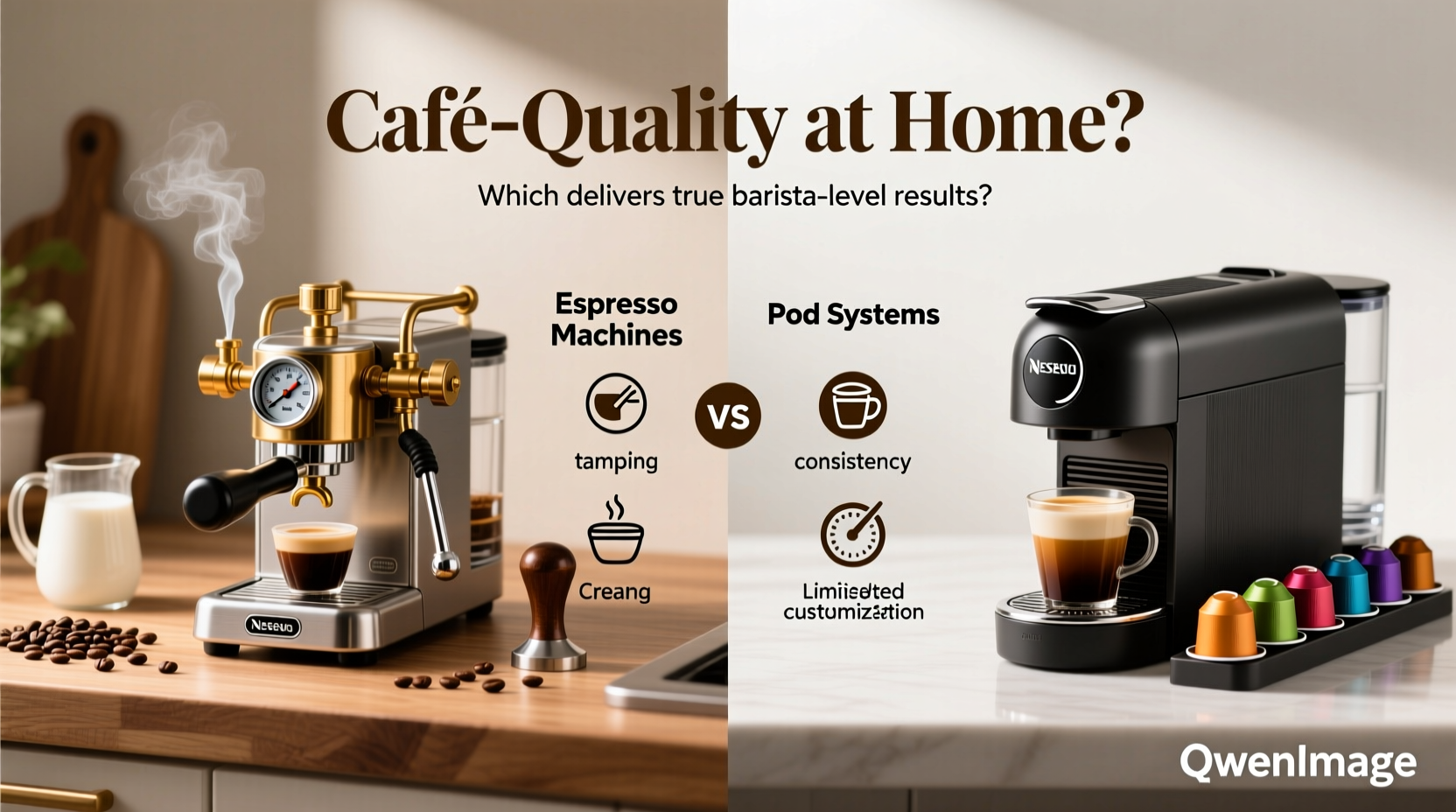
Café-quality coffee isn’t defined by branding or packaging—it's built on three pillars: extraction precision, bean freshness, and technique. True espresso requires water heated to 90–96°C (194–205°F), forced through finely ground coffee at 9 bars of pressure for 25–30 seconds. The result should be a rich, balanced shot with a golden crema on top—a sign of proper emulsification of oils.
Beyond technical specs, café quality also means adaptability. A skilled barista adjusts grind size, dose, and tamping pressure based on humidity, bean age, and roast profile. This level of nuance separates mechanical consistency from artistic mastery. Pod systems automate much of this process; budget espresso machines put it in your hands—with varying degrees of success.
“Espresso is as much science as it is art. The best machines don’t just brew—they respond.” — Luca Moretti, former World Barista Championship judge
Budget Espresso Machines: Craft Potential on a Tight Budget
Typically priced between $100 and $300, entry-level espresso machines like the Nespresso VertuoPlus, De’Longhi EC155, or Mr. Coffee Café Barista aim to bring semi-automatic brewing within reach. These models often include steam wands, portafilters, and manual controls that mimic professional gear.
Their appeal lies in control. You choose the beans, grind them yourself (or buy pre-ground), tamp by hand, and initiate the pull. This opens the door to experimentation: trying single-origin espressos, adjusting ratios for ristrettos or lungos, or steaming milk for microfoam lattes.
But limitations exist. Most budget machines struggle with temperature stability. They lack PID controllers and may fluctuate during extraction, leading to sour or bitter shots. Pump pressure can be inconsistent, especially if the unit hasn't fully preheated. And while they offer “9-bar pressure,” many fail to sustain it throughout the entire shot due to weak boilers or poor thermoblock design.
Tip: Preheat your portafilter and cup by running a blank shot before brewing. This stabilizes temperature and improves extraction.Where Budget Machines Shine—and Fall Short
The real strength of these machines isn’t peak performance but potential. With practice, users can achieve surprisingly good results. A well-dialed-in $150 machine using freshly roasted beans and a decent burr grinder can outperform a pod system in flavor complexity.
However, the learning curve is steep. Beginners often face channeling (uneven water flow), under-extraction, or scalded milk. Without a quality grinder—which can cost more than the machine itself—achieving consistent particle size is nearly impossible. Many end up using pre-ground coffee, which defeats the purpose of freshness-focused brewing.
Pod Systems: Convenience Engineered for Consistency
Pod systems like Nespresso OriginalLine, Keurig K-Café, or Lavazza Blue prioritize speed, simplicity, and repeatability. Each capsule contains precisely measured, pre-tamped, and nitrogen-sealed coffee. Insert the pod, press a button, and in under a minute, you get a drink calibrated to factory standards.
Manufacturers partner with roasters to optimize blends specifically for their machines. Capsules are engineered so water flows evenly through the grounds, minimizing human error. Temperature and pressure are tightly regulated by internal sensors, ensuring each shot tastes the same—today, tomorrow, and six months from now.
This reliability appeals to busy households, offices, and anyone who values predictability over personalization. No grinding, no cleaning grinds, no guesswork. Used pods eject cleanly, and most units auto-shut off after inactivity.
The Hidden Costs of Simplicity
While upfront costs are low—some starter kits go for under $100—the long-term expense adds up. A single Nespresso capsule costs around $0.70 to $1.00. Brewed twice daily, that’s over $500 per year. Compare that to $15 for a pound of specialty beans, which yields roughly 30 double shots—less than $0.50 per serving when ground at home.
There’s also environmental impact. Despite recycling programs, millions of aluminum and plastic pods end up in landfills annually. Some brands now offer compostable options, but availability varies, and industrial composting access is limited in many regions.
“The pod model works like fast food coffee: reliable, standardized, and designed for mass appeal—not nuance.” — Clara Nguyen, Sustainable Coffee Advocate
Direct Comparison: Performance, Taste, and Value
| Feature | Budget Espresso Machine | Pod System |
|---|---|---|
| Upfront Cost | $100–$300 | $80–$180 |
| Ongoing Cost Per Drink | $0.30–$0.80 (with whole beans) | $0.70–$1.20 (per capsule) |
| Taste Control & Customization | High – adjustable grind, dose, tamp | Low – fixed blend and brew profile |
| Learning Curve | Steep – requires technique | Nearly none – one-button operation |
| Temperature Stability | Variable – often inconsistent | Consistent – digitally controlled |
| Milk Frothing Capability | Most include steam wand | Limited – some have frothers |
| Environmental Impact | Low – reusable filters available | High – disposable pods |
| Café-Quality Potential | Moderate to High (with skill) | Moderate (consistent but generic) |
Real-World Example: Two Homes, Two Choices
In Portland, Oregon, Sarah Kim, a graphic designer and coffee enthusiast, bought a $180 De’Longhi pump machine and paired it with a $90 hand grinder. For weeks, her shots were sour and thin. She adjusted grind size, experimented with tamping pressure, watched tutorials, and eventually dialed in a Colombian bean that produced sweet, chocolatey espresso with hints of red berry. Her morning routine takes 12 minutes—but she calls it meditation.
Across the country in Atlanta, Mark Reynolds, a pediatrician with two young kids, chose a Nespresso Essenza Mini. His kitchen counter space is minimal, his time even scarcer. He uses Intenso capsules for a strong morning shot and runs hot water for an Americano. Cleanup takes seconds. He doesn’t care about origin notes or crema thickness—he wants something reliable that fits his pace.
Both get what they need. But only one experiences the full spectrum of espresso craft.
Step-by-Step Guide: Getting the Best Results from a Budget Machine
If you're committed to extracting café-quality drinks from an affordable setup, follow this sequence:
- Choose fresh, high-quality beans – Buy small batches from local roasters, ideally roasted within the past two weeks.
- Invest in a burr grinder – Blade grinders create uneven particles. Even an entry-level conical burr grinder ($60–$100) dramatically improves consistency.
- Dose correctly – Use 16–18 grams for a double shot. A digital scale ensures accuracy.
- Tamp evenly – Apply 30 pounds of pressure with a level, twisting motion to compact the puck uniformly.
- Preheat everything – Run water through the group head and portafilter. Warm your cup to avoid thermal shock.
- Pull the shot – Start the timer as soon as water hits the puck. Aim for 28–32 seconds to yield 30–40 grams of liquid.
- Evaluate and adjust – If it’s too sour, grind finer. If it’s bitter, go coarser. Small changes make big differences.
Checklist: Choosing the Right System for Your Lifestyle
- ☐ Do I have time to learn espresso technique?
- ☐ Am I willing to spend extra on a grinder and scale?
- ☐ Is counter space limited?
- ☐ Do I value flavor variety and freshness?
- ☐ How important is cleanup speed?
- ☐ Am I concerned about environmental waste?
- ☐ Do I enjoy milk-based drinks regularly?
Answer “yes” to the first four? A budget espresso machine could reward your effort. Prioritize the last three? A pod system might align better with your reality.
Frequently Asked Questions
Can a $150 espresso machine really make café-quality coffee?
Yes—but with conditions. It requires high-quality beans, a good grinder, and user skill. While it won’t match a $1,000+ machine in consistency, a well-operated budget unit can produce rich, aromatic espresso comparable to mid-tier cafés. Don’t expect competition-level precision, but do expect satisfying depth when dialed in properly.
Are reusable pods a good compromise?
They’re a step forward. Reusable stainless steel or silicone pods let you use your own coffee in a Nespresso or Keurig machine. However, they often suffer from poor sealing, leading to leaks or channeling. Extraction tends to be weaker and less even than with dedicated portafilters. Still, for those attached to pod convenience but wanting more flavor control, they offer a middle path.
Do pod systems work with non-dairy milks?
Yes, but caution is needed. Oat and soy milks burn easily in steam wands or frothers if overheated. Use lower temperatures and clean immediately after use to prevent clogging. Some newer pod machines come with pre-programmed plant-milk settings, improving texture and safety.
Final Verdict: Which Delivers True Café Quality?
If \"café quality\" means complex, vibrant flavors shaped by seasonality, roast style, and craftsmanship, then budget espresso machines win—provided you’re willing to engage with the process. They connect you to the coffee in a way automation cannot. Every variable becomes a tool for refinement.
If “café quality” means a reliably strong, hot, palatable drink with zero friction, then pod systems succeed on practicality. They deliver consistency without demand—ideal for workplaces, travel, or homes where coffee is fuel, not ritual.
The truth is, neither option perfectly replicates a specialty café. Baristas use $5,000 machines, train for months, and source directly from farms. But at home, the goal isn’t perfection—it’s satisfaction. Choose based on how you live, not how you wish you lived.
🚀 Ready to upgrade your coffee game? Try a week with whole beans and a budget machine—or commit to a month of pod-free brewing. Track the difference in taste, cost, and joy. Share your journey online and inspire others to rethink convenience.