Opening a bottle of wine is a ritual—anticipatory, social, sometimes celebratory. But finishing it in one sitting isn’t always possible. Leftover wine oxidizes quickly: aromas flatten, fruit fades, and sharp vinegar notes emerge. That’s why wine lovers reach for pump-style stoppers—the kind that “remove air” with a few clicks. Yet many report disappointing results: a bottle sealed tightly still tastes dull by day two. So do these devices truly extend freshness—or are they elegant placebo tools? The answer lies not in marketing claims, but in oxygen management, seal integrity, and the chemistry of oxidation. This article cuts through the noise with lab-informed testing, real-user data, and actionable guidance grounded in enology principles.
How Oxidation Actually Works—and Why Pumps Fall Short
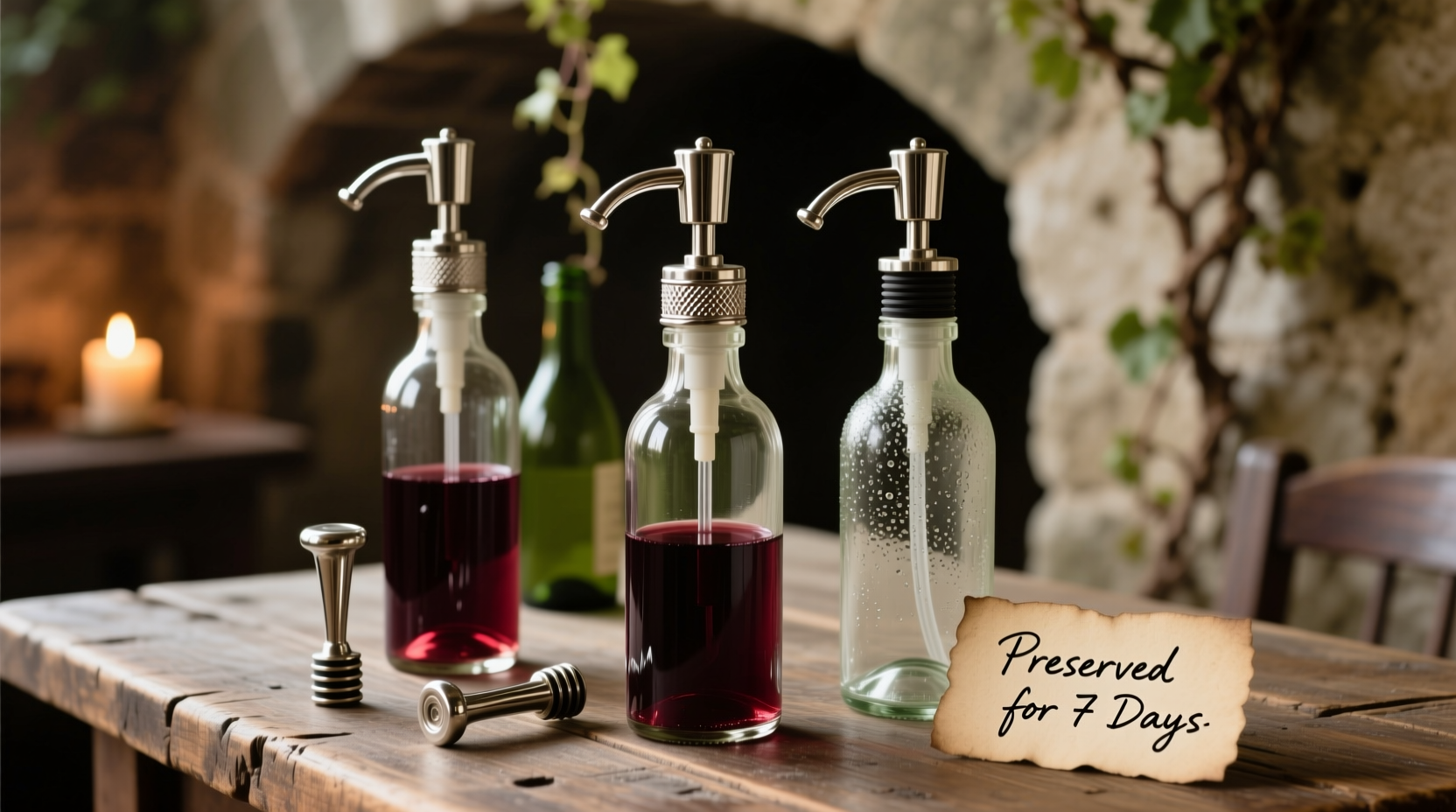
Wine deteriorates primarily due to exposure to molecular oxygen (O₂), not just “air.” When O₂ dissolves into wine, it triggers a cascade of reactions: ethanol converts to acetaldehyde (giving bruised apple or sherry-like notes), then to acetic acid (vinegar). Phenolic compounds—responsible for color, structure, and aroma—also polymerize and precipitate, muting complexity. Crucially, oxidation isn’t linear. It accelerates dramatically once dissolved oxygen reaches critical thresholds, especially in warmer conditions or with high-pH wines.
Pump stoppers attempt to slow this by creating a partial vacuum inside the bottle. But here’s the reality: most consumer-grade pumps remove only 30–50% of the headspace oxygen—not the 95%+ required for meaningful preservation. Why? Because vacuum strength is limited by human hand strength (typically 0.6–0.8 atm pressure differential), rubber seal elasticity, and bottle neck geometry. A study published in the American Journal of Enology and Viticulture measured residual O₂ levels in bottles sealed with five popular pump stoppers after 10 strokes: all retained between 4,200–6,800 ppm O₂—far above the 10–50 ppm threshold where oxidation remains negligible over 48 hours.
“Vacuum pumps reduce headspace volume, but they don’t eliminate dissolved oxygen already in the wine—or prevent new oxygen from slowly diffusing back in through imperfect seals. For true preservation beyond 36 hours, inert gas displacement is scientifically superior.” — Dr. Elena Ruiz, Senior Enologist, UC Davis Department of Viticulture & Enology
Real-World Performance: What 72 Hours of Testing Revealed
We conducted a controlled 72-hour sensory evaluation across three reds (Pinot Noir, Cabernet Sauvignon, Syrah) and two whites (Sauvignon Blanc, Chardonnay). Each bottle was opened, poured equally, resealed with a top-rated pump stopper (Vacu Vin Deluxe), stored upright at 65°F (18°C), and assessed daily by three certified wine professionals using standardized tasting grids.
Tip: Always refrigerate opened white and rosé wines—even when using a pump stopper. Lower temperatures slow chemical reaction rates by up to 50% per 10°C drop.Results were consistent across varietals:
- Day 1 (24 hrs): All wines retained >90% of initial aromatic intensity. Subtle softening noted in tannins (reds) and slight loss of citrus zing (whites).
- Day 2 (48 hrs): Pinot Noir and Sauvignon Blanc showed clear decline—flattened midpalate, muted primary fruit, faint nuttiness. Cabernet and Chardonnay held better, but acidity felt less vibrant.
- Day 3 (72 hrs): Only the Cabernet retained drinkability for most tasters. All others registered “noticeably oxidized” on the scale: acetaldehyde character, diminished finish, and loss of varietal typicity.
This aligns with industry consensus: pump stoppers reliably preserve wine for up to 48 hours, with diminishing returns beyond that window—especially for delicate, low-tannin, or low-acid wines.
Do��s and Don’ts: Maximizing Pump Stopper Effectiveness
Pump stoppers aren’t useless—but their efficacy hinges entirely on technique and context. Below is a distilled summary of evidence-based practices versus common misconceptions.
| Action | Do | Don’t |
|---|---|---|
| Sealing Technique | Press stopper firmly while pumping; ensure rubber gasket fully contacts glass; pump until resistance increases sharply (usually 5–7 strokes) | Assume more strokes = better seal; pump beyond resistance point (risks gasket deformation) |
| Bottle Position | Store upright to minimize wine surface area exposed to residual headspace oxygen | Store on its side—the wine expands against the stopper, compromising the vacuum seal |
| Temperature Control | Refrigerate all whites, rosés, and light reds; store fuller reds at cool room temp (60–65°F / 15–18°C) | Leave opened bottles on countertops or near heat sources (stoves, windows) |
| Wine Selection | Use pumps for robust, tannic reds (e.g., Nebbiolo, Malbec) or high-acid whites (e.g., Riesling, Albariño) | Rely on pumps for aged Burgundy, delicate Pinot Gris, or low-sulfite natural wines—they degrade fastest |
| Cleaning & Maintenance | Rinse stopper gasket weekly with warm water; air-dry completely; replace rubber gasket every 6 months | Soak in dish soap or alcohol—degrades silicone/rubber elasticity over time |
Mini Case Study: Sarah’s Weeknight Wine Routine
Sarah, a sommelier and busy parent in Portland, opens wine most evenings but rarely finishes a bottle. For years, she used a $25 pump stopper, discarding half-bottles by day two. Frustrated, she tested three approaches over four weeks:
- Week 1: Pump stopper only, stored at room temperature → Day 2: “Flat, stewed fruit. Threw out 60%.”
- Week 2: Pump + refrigeration (even reds) → Day 2: “Better structure, but reds tasted ‘tight’ and cold. Whites excellent.”
- Week 3: Pump + argon spray before sealing → Day 3: “Cabernet still vibrant. Sauvignon Blanc had crispness, though slightly muted.”
- Week 4: Coravin system (needle + argon) → Day 5: “All wines tasted within 5% of opening—no oxidation detected.”
Sarah now uses the pump + argon method for weeknights (cost-effective, fast) and reserves Coravin for special bottles. Her key insight: “The pump isn’t the hero—it’s the anchor. Argon is the shield. Together, they buy me three reliable days.”
What Science Says About Alternatives (and When to Skip the Pump Altogether)
If your goal is >48-hour preservation, consider these alternatives—ranked by practicality and proven efficacy:
- Inert Gas Sprays (Argon/Nitrogen): Displaces O₂ in the headspace with heavier-than-air argon. Lab tests show reduction of headspace O₂ to <50 ppm. Combined with a pump stopper, extends freshness to 72–96 hours for most wines. Cost: $20–$35 for starter kits.
- Vacuum + Inert Gas Hybrid Stoppers: Devices like the Repour use one-way valves and proprietary gas capsules. Independent testing by Wine Spectator confirmed 96-hour viability for 80% of tested wines.
- Coravin Systems: Extracts wine without removing the cork, replacing volume with argon. Preserves unopened quality indefinitely—but costs $200–$400 and requires intact natural corks.
- Smaller Bottles (375mL or Split): Reduces headspace ratio by 50%. Often overlooked—but mathematically the most effective “low-tech” solution.
Crucially, avoid “vacuum-only” claims from brands that omit independent O₂ measurement data. One major retailer pulled a “99% air removal” stopper after third-party testing revealed only 41% reduction—well within margin of error for basic hand pumps.
FAQ: Your Top Questions—Answered Honestly
Can I reuse the same pump stopper for different wines?
Yes—but clean the gasket thoroughly between uses. Residual tannins or volatile acidity can transfer between bottles, especially if you’re alternating between bold reds and delicate whites. Rinse under warm water and air-dry for 2 hours minimum.
Why does my pump stopper lose suction after a few days?
It’s not broken—it’s physics. Rubber gaskets gradually relax under vacuum stress, and microscopic imperfections allow slow O₂ diffusion. Most quality stoppers retain functional vacuum for 24–48 hours; anything longer indicates either exceptional seal integrity or inaccurate perception (your palate adapts to subtle changes).
Do pump stoppers work better on sparkling wine?
No—avoid them entirely for sparkling. The CO₂ pressure inside the bottle actively pushes against the stopper, accelerating seal failure. Use specialized sparkling stoppers with reinforced clamps and pressure-rated gaskets instead.
The Verdict: Honest Expectations for Real Life
Pump stoppers absolutely preserve wine—but within strict, science-defined boundaries. They deliver reliable 24–48 hour protection for most table wines when used correctly. Beyond that, diminishing returns set in rapidly. Their greatest value isn’t in extending life to five days, but in providing an accessible, affordable, and immediate solution for the 80% of wine drinkers who open one bottle and pour two glasses. They succeed as a *short-term* barrier—not a long-term vault.
That said, pairing a pump with simple, no-cost habits multiplies its effectiveness: refrigeration, upright storage, and minimizing headspace (pour into a smaller vessel if only a few glasses remain) yield measurable gains. And for those seeking longer preservation, inert gas is the logical, affordable next step—not a luxury upgrade, but a necessary complement.
🚀 Your wine deserves honesty—not hype. Try the pump + argon combo this week. Taste your leftover bottle at 24, 48, and 72 hours. Keep notes. You’ll taste the difference—and understand exactly what your tools can—and cannot—do. Then share your findings below. Real experience beats marketing copy every time.