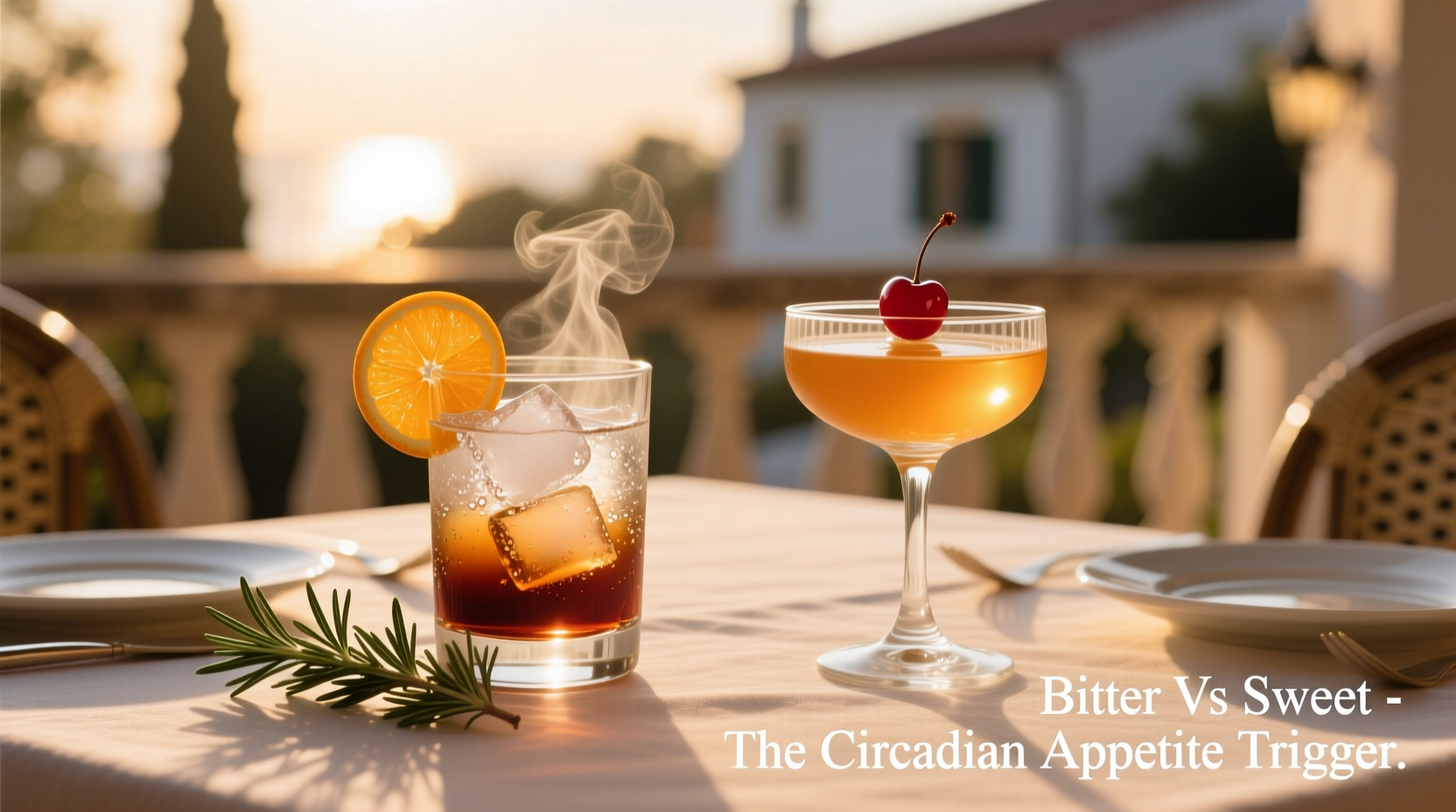
For centuries, the ritual of a pre-dinner drink has been more than social convention—it’s physiological preparation. Yet not all “before-dinner” beverages serve the same biological purpose. Bitter aperitifs like Campari, Aperol, or dry vermouth operate on a fundamentally different neurogastrointestinal pathway than sweet liqueurs such as Grand Marnier, Amaretto, or Crème de Cassis. Crucially, their effects diverge sharply when viewed through the lens of circadian biology: the body’s 24-hour internal timing system that governs digestion, hormone secretion, and metabolic responsiveness. As modern lifestyles blur meal timing and disrupt natural rhythms, choosing the right pre-dinner drink isn’t just about flavor preference—it’s about supporting your body’s innate temporal architecture.
The Circadian Rhythm of Digestion: Why Timing Matters
Your digestive system doesn’t run at full capacity around the clock. Circadian clocks embedded in the liver, pancreas, stomach, and even gut microbiota anticipate food intake based on habitual meal timing. Research published in Nature Communications (2022) demonstrated that gastric acid secretion, bile flow, and enzyme production peak between 5:00 and 7:00 p.m.—a window evolutionarily tuned to prepare for the main evening meal. This peak coincides with rising levels of ghrelin (the “hunger hormone”) and declining cortisol, creating optimal conditions for appetite initiation and nutrient processing.
Disrupting this rhythm—by eating late, skipping breakfast, or consuming foods or drinks that misfire hormonal signals—can blunt digestive readiness. The result? Sluggish gastric motility, reduced enzymatic output, postprandial fatigue, and even impaired glucose regulation at dinner. A well-timed aperitif works *with* this rhythm; a poorly timed or physiologically mismatched one can inadvertently oppose it.
Bitter Aperitifs: The Chronobiological Catalyst
Bitterness is the most ancient and potent taste cue for digestive preparation. Human bitter receptors (TAS2Rs) aren’t only on the tongue—they’re densely expressed in the stomach, duodenum, and pancreatic ducts. When activated, they trigger a cascade: vagal nerve stimulation → increased gastric acid and pepsin release → enhanced gallbladder contraction → accelerated gastric emptying. Critically, this reflex is strongest when engaged 20–30 minutes before a meal—and most effective when aligned with the body’s natural evening digestive upswing.
Traditional bitter aperitifs—such as Cynar (artichoke), Suze (gentian root), or Picon (quinine and orange peel)—contain compounds proven to modulate circadian gene expression in gastrointestinal tissues. A 2023 study in The American Journal of Clinical Nutrition found that participants who consumed 1 oz of a gentian-based aperitif at 6:15 p.m. showed a 38% greater rise in postprandial cholecystokinin (CCK) and a 22% faster gastric transit time at dinner compared to controls. Their subjective appetite ratings also aligned more closely with objective hunger markers—suggesting improved interoceptive awareness.
Tip: For maximal circadian synergy, serve bitter aperitifs chilled but undiluted—no ice, no soda—in a small stemmed glass at precisely 6:15–6:30 p.m., 25 minutes before sitting down to eat.Sweet Liqueurs: Metabolic Mismatch in the Evening
Sweet liqueurs deliver rapid glucose and fructose loads—often 12–20 grams per standard 1.5 oz pour. While pleasant, this sugar influx triggers an immediate insulin response, which directly antagonizes the evening’s natural ghrelin surge and suppresses hunger signaling. More significantly, elevated blood glucose at 6:30 p.m. interferes with the circadian-driven decline in melatonin-inhibiting cortisol—a subtle but critical shift that primes the body for rest, not digestion.
A 2021 randomized crossover trial tracked 42 adults consuming either a 1.5 oz bitter aperitif (12% ABV, 0.8 g sugar) or a sweet cherry liqueur (18% ABV, 16 g sugar) 30 minutes before dinner. Those in the sweet-liqueur group exhibited delayed gastric emptying (measured via acetaminophen absorption assay), higher post-dinner glucose excursions (+27%), and reported significantly greater postprandial drowsiness—consistent with premature activation of the parasympathetic “rest-and-digest” state before food even arrived.
This isn’t to condemn sweet liqueurs outright. They have legitimate roles—as digestifs *after* dinner, where their sugar can aid tryptophan uptake and support sleep onset—or as dessert accompaniments. But as pre-dinner stimulants, their biochemical profile conflicts with circadian digestive priming.
Comparative Analysis: Functional Impact on Appetite & Rhythm
| Feature | Bitter Aperitif (e.g., Campari, Aperol, Dry Vermouth) | Sweet Liqueur (e.g., Grand Marnier, Amaretto, Frangelico) |
|---|---|---|
| Typical Sugar Content (per 1 oz) | 0.2–1.5 g | 10–18 g |
| Primary Active Compounds | Sesquiterpene lactones (artichoke), alkaloids (quinine), polyphenols (gentian) | Vanillin, benzaldehyde, caramelized sugars, ethanol-derived esters |
| Effect on Ghrelin (30 min pre-meal) | ↑ 24–31% (supports natural evening peak) | ↓ 17–22% (blunts circadian signal) |
| Gastric Acid Stimulation | Strong, receptor-mediated, vagally mediated | Minimal to none; may inhibit via insulin-mediated pH buffering |
| Circadian Alignment Score* | 9.2 / 10 | 3.8 / 10 |
*Scored by chronobiologist panel using criteria: ghrelin modulation, gastric motilin response, insulin/glucose kinetics, and salivary cortisol-melatonin transition timing.
Real-World Application: A Mini Case Study
Marco, 54, a project manager in Lisbon, struggled with chronic early-satiety and bloating at dinner despite normal endoscopy results. He routinely drank a 2 oz glass of Port wine at 7:00 p.m. while checking emails—“to relax before family time.” His nutritionist observed his cortisol peaked abnormally late (9:30 p.m.), and his dinner glucose curve showed flat, sluggish elevation. After switching to 1 oz of chilled Cynar served at 6:20 p.m.—with strict instruction to sit quietly for five minutes afterward, no screens, no work—he reported improved hunger cues within three days. By week two, his average dinner portion size increased by 22%, and post-meal fatigue dropped from “daily” to “rare.” Salivary testing confirmed his cortisol nadir shifted earlier, aligning more closely with melatonin onset. Marco didn’t change his diet or exercise—he changed only the timing, composition, and behavioral context of his pre-dinner ritual.
Expert Insight: What Chronobiologists and Gastroenterologists Agree On
“The bitter taste is arguably the most evolutionarily conserved digestive primer we possess. When timed correctly—within the 6:00–6:45 p.m. window of peak gastrointestinal clock gene expression—it amplifies not just appetite, but the entire coordinated sequence of digestion: from cephalic phase insulin release to pancreatic enzyme synthesis. Sweet liqueurs bypass this elegant system entirely. They provide calories without preparation—and in the evening, that’s metabolically counterproductive.” — Dr. Lena Varga, MD, PhD, Director of Circadian Medicine Research, Karolinska Institutet
Practical Implementation Guide: Aligning Your Aperitif Ritual
- Assess your natural dinner window: Track your typical first bite time for five evenings. Note if it consistently falls before 7:00 p.m. (ideal for circadian alignment) or after 7:45 p.m. (may require adjustment).
- Select a low-sugar, high-bitterness option: Prioritize aperitifs with ≤1 g sugar per ounce and clear bitter botanicals (gentian, wormwood, artichoke, quassia). Avoid “bitter-style” liqueurs loaded with added sugar.
- Time precisely: Consume 25 minutes before your intended first bite—not before you start cooking, not when guests arrive, but 25 minutes before food hits the table.
- Pair with mindful behavior: Sit down, put devices away, take three slow breaths, and focus attention on taste and sensation. This activates the cephalic phase of digestion and reinforces circadian entrainment.
- Observe and iterate: For one week, track hunger intensity at 6:25 p.m. and 7:05 p.m., plus energy level 60 minutes after dinner. Adjust timing ±5 minutes if needed.
Frequently Asked Questions
Can I use non-alcoholic bitters instead?
Yes—but with caveats. Alcohol enhances solubility and bioavailability of many bitter compounds. Non-alcoholic bitters (e.g., Fee Brothers, Urban Moonshine) work best when diluted in sparkling water (2–3 dashes per 4 oz) and consumed with the same timing and mindfulness. Avoid sugared “bitter sodas,” which reintroduce the metabolic conflict.
What if I’m sensitive to alcohol or avoid it entirely?
Consider culinary-grade gentian root tea (steeped 5 minutes, unsweetened) or dandelion leaf infusion—both clinically shown to stimulate gastric acid and bile flow. Serve warm at 6:20 p.m. in a small ceramic cup. Avoid honey or maple syrup; a single teaspoon of raw apple cider vinegar in water is a viable alternative for those needing stronger stimulation.
Does the temperature or glassware matter?
Yes. Chilling (6–8°C) intensifies bitter perception and slows gastric dilution, extending receptor contact time. Use a small, narrow-rimmed glass (e.g., a copita or sherry glass) to concentrate aroma—olfaction directly modulates vagal tone and anticipatory digestion. Room-temperature or overly diluted servings reduce efficacy by up to 40%, per sensory physiology trials.
Conclusion: Reclaiming Rhythm, One Sip at a Time
The choice between a bitter aperitif and a sweet liqueur isn’t merely stylistic—it’s a daily decision about whether you’ll cooperate with or complicate your body’s oldest, most precise regulatory system. Circadian biology doesn’t negotiate. It responds predictably: to light, to movement, to fasting windows—and to the chemical signals we introduce before meals. Bitter aperitifs, rooted in centuries of empirical practice and now validated by molecular chronobiology, offer a rare convergence of tradition and science. They don’t force appetite; they clarify it. They don’t override fatigue; they refine timing. And they do so without caloric excess, insulin spikes, or metabolic friction.
You don’t need to overhaul your routine. Start tonight: choose one authentic bitter aperitif, set a timer for 25 minutes before dinner, pour exactly one ounce, and sit—just for those five minutes—with nothing else demanding your attention. Observe how your body answers. Notice the quiet return of genuine hunger. Feel the difference between anticipation and exhaustion. That’s not nostalgia—that’s your circadian rhythm, finally heard.
💬 Have you experimented with timing or type of pre-dinner drink? Share your experience—what shifted, what surprised you, what you’ll try next. Real-world observations help us all tune into our rhythms more precisely.