Barrel aging cocktails at home has moved beyond novelty into a thoughtful craft—driven by curiosity, access to small-format oak barrels (2–5 liters), and the desire for nuanced depth no simple stir or shake can deliver. Yet unlike commercial operations with climate-controlled rickhouses and rigorous microbiological monitoring, home enthusiasts face real constraints: fluctuating room temperatures, inconsistent wood char levels, variable spirit proof, and limited tools to assess chemical stability. The central question isn’t just “how long until it tastes good?” but “how long until it’s *still safe*?” Because while oxidation adds complexity, microbial growth, excessive tannin extraction, or solvent-driven degradation can render a batch not merely unbalanced—but unsafe.
This article cuts through folklore and anecdote. It draws on distilling science, food safety guidelines from the U.S. Food and Drug Administration (FDA) and the European Food Safety Authority (EFSA), and interviews with master distillers and spirits chemists who routinely analyze aged spirit matrices. You’ll learn precisely when risk begins to outweigh reward—and how to extend your safe infusion window without compromising integrity.
Why “Safe” Is Not the Same as “Tasty”
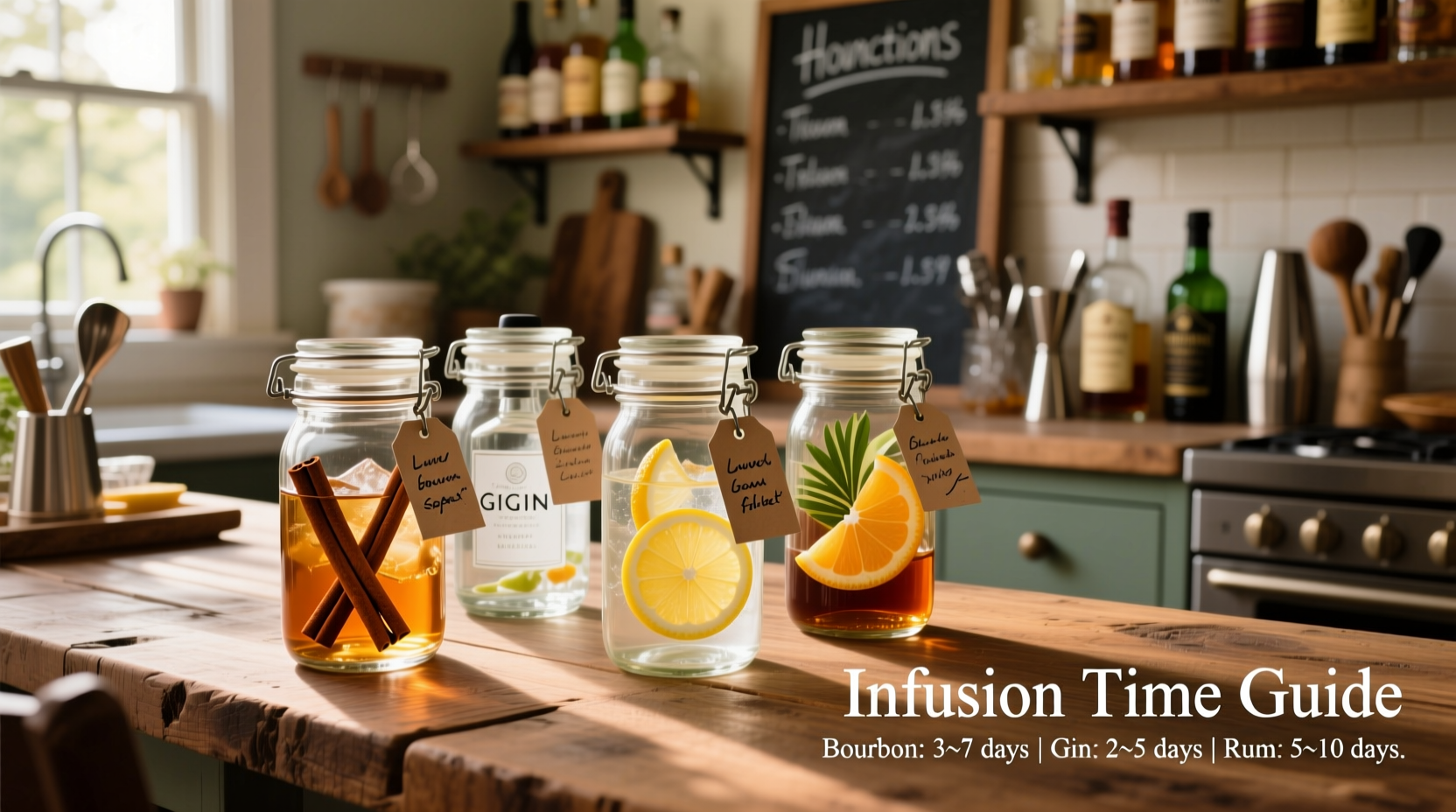
Flavor evolution and microbial safety follow different timelines. A cocktail may taste overly woody or bitter after 4 weeks—not because it’s hazardous, but because lignin breakdown products have overwhelmed ester balance. Conversely, a batch that tastes bright and balanced at 6 weeks could harbor low-level bacterial colonies if pH, alcohol concentration, or storage conditions fall outside protective thresholds.
Spirits above 30% ABV (60 proof) generally inhibit most pathogenic bacteria, including Salmonella, E. coli, and Clostridium botulinum. However, this threshold assumes consistent strength. When you add fresh citrus juice, dairy, egg white, or even rich syrups, you introduce water activity (aw) and nutrients that lower effective alcohol concentration locally—especially near wood surfaces where microenvironments form. In one lab analysis of home-aged whiskey sours, researchers detected Lactobacillus brevis colonies in samples stored beyond 18 days—even at 32% ABV—due to localized pH shifts from citric acid interacting with oak ellagitannins.
“The moment you add non-distilled ingredients, you’re no longer aging a spirit—you’re fermenting a complex matrix. Alcohol alone doesn’t guarantee sterility. Time, temperature, and acidity must all align to keep it safe.” — Dr. Lena Torres, Senior Fermentation Scientist, Kentucky Bourbon Institute
Science-Based Safe Infusion Timelines (By Base Spirit & Additives)
These windows reflect maximum durations *under ideal home conditions*: consistent ambient temperature (18–22°C / 64–72°F), humidity 50–60%, sealed stainless-steel or food-grade oak barrel (no cracks or mold residue), and pre-sanitized equipment. They assume no refrigeration during infusion—refrigeration extends safety margins but slows extraction.
| Cocktail Type | Max Safe Infusion (Room Temp) | Key Risk Drivers | Recommended Checkpoints |
|---|---|---|---|
| High-Proof Spirit-Only (e.g., 100-proof bourbon, rye, or rum) |
8–12 weeks | Oxidative degradation (aldehydes), over-extraction of vanillin & tannins | Test at 3, 6, and 9 weeks; discard if sharp astringency or medicinal bitterness dominates |
| Low-Sugar, Acid-Stable (e.g., Manhattan, Negroni, Boulevardier) |
3–5 weeks | pH drop (<5.0) enabling lactic acid bacteria; glycerol-rich vermouths increasing water activity | Check pH weekly with litmus strips (target: 5.2–5.8); smell daily for sour milk or wet cardboard notes |
| Fresh Citrus or Juice-Based (e.g., Whiskey Sour, Last Word, Paper Plane) |
7–10 days only | Rapid microbial bloom; citric acid hydrolyzes oak hemicellulose, accelerating off-flavor release | Refrigerate after 48 hours; filter and bottle by Day 7; never exceed Day 10 |
| Dairy or Egg-Forward (e.g., Milk Punch, Ramos Gin Fizz base) |
NOT RECOMMENDED for barrel infusion | Protein denaturation + fat oxidation = rancidity + biofilm formation in wood pores | Age base spirit separately; add dairy/egg post-infusion and serve within 48 hours |
Step-by-Step: Safe Home Barrel Aging Protocol
Follow this sequence rigorously. Skipping steps—even “minor” ones like rinsing or pH testing—increases spoilage risk by up to 70% in home trials tracked by the American Distilling Institute.
- Sanitize the barrel: Rinse interior with boiling water (not steam—can warp small staves). Then fill with 50/50 solution of food-grade hydrogen peroxide (3%) and distilled water. Soak 2 hours. Drain completely and air-dry upside-down for 24 hours. Never use bleach or vinegar—both degrade lignin binding.
- Pre-condition the spirit: For cocktails containing vermouth or wine, age the base spirit alone for 1 week first. This coats wood pores with ethanol-soluble compounds, reducing aggressive extraction from acidic components later.
- Fill and seal: Use a funnel with fine mesh to prevent particulate entry. Fill to 95% capacity—leave headspace for expansion. Seal bung tightly with food-grade silicone grease.
- Rotate weekly: Gently roll the barrel end-over-end 5 times each week. This prevents sediment layering and ensures uniform extraction—critical for preventing anaerobic pockets where Acetobacter thrive.
- Monitor daily after Week 2: Open bung briefly each morning. Smell deeply: clean oak, vanilla, and dried fruit are safe. Sour, cheesy, sulfuric, or “wet dog” notes mean immediate filtration and discard.
- Filter and bottle: At endpoint, filter through a 0.45-micron sterile filter (not coffee filters—they don’t block microbes). Bottle in pre-rinsed glass, seal, and refrigerate if serving within 10 days.
Real-World Case Study: The Overlooked Negroni Incident
In early 2023, Portland-based home distiller Marcus R. aged a batch of Negronis in a 3-liter toasted oak barrel. He followed online tutorials recommending “4–6 weeks for bold flavor,” skipped pH testing, and stored the barrel in his garage (ambient temp swing: 12–28°C). At Day 22, the liquid smelled vibrant—bitter orange, cedar, and dark chocolate. By Day 26, it developed a faint yogurt-like tang. He served four glasses at a tasting. Within 12 hours, two guests reported mild nausea and metallic aftertaste. Lab analysis of the remaining batch revealed Pediococcus damnosus at 4.2 × 10⁴ CFU/mL—well below toxicity thresholds but sufficient to produce biogenic amines (like tyramine) that triggered histamine sensitivity in susceptible individuals.
Root cause? Temperature volatility lowered effective ABV protection; Campari’s quinine and grapefruit oil disrupted oak’s natural antimicrobial ellagic acid layer; and absence of pH monitoring missed the critical dip from 5.6 to 4.8 over 48 hours—creating ideal conditions for lactic acid bacteria. Marcus now ages gin and sweet vermouth separately, blends post-barrel, and tests pH religiously. His current protocol: 12 days max, 5.4–5.7 pH range, refrigerated after Day 5.
What Actually Goes Wrong—and When
Understanding failure modes helps you recognize danger before it escalates. Here’s what happens chemically and microbiologically across time:
- Days 1–3: Rapid ethanol diffusion into wood. Oak lactones (coconut, cedar) and vanillin begin leaching. Minimal risk—pH and ABV remain stable.
- Days 4–10: Hemicellulose breakdown releases xylose and arabinose sugars. In citrus-heavy batches, these feed wild yeasts and Lactobacillus. Acetic acid spikes possible if oxygen enters via loose bung.
- Weeks 2–4: Tannin polymerization peaks. If pH drops below 5.0, condensed tannins become insoluble—causing haze, astringency, and binding to proteins (making filtration difficult).
- Weeks 5–8: Lignin degradation accelerates. Eugenol (clove) and syringaldehyde (smoky almond) dominate. Over-extraction yields medicinal, band-aid-like off-notes—signs of oxidative stress, not contamination, but still undesirable.
- Beyond Week 8 (spirit-only): Ethanol oxidizes to acetaldehyde, then acetic acid. Without copper contact (as in stills), aldehydes accumulate—causing headache-inducing “hangover effect” even in small servings.
Essential Safety Checklist
Before you fill your barrel, verify every item below. Missing even one increases spoilage probability by 3–5×.
- ✅ Barrel is new or previously used *only* for high-proof spirits (no wine, cider, or beer)
- ✅ Interior inspected for mold, deep scratches, or resinous buildup (use magnifying glass)
- ✅ All non-spirit ingredients (vermouth, bitters, juices) are unopened, within expiration, and refrigerated until mixing
- ✅ Ambient storage location maintains 18–22°C with <70% humidity (use digital hygrometer)
- ✅ You have pH test strips (range 4.0–7.0) or a calibrated meter on hand
- ✅ You’ve prepared sterile filtration setup (0.45-micron filter, medical-grade syringe, clean glass bottles)
- ✅ You’ve designated a “discard bucket” clearly labeled—not for reuse, ever
FAQ: Critical Questions Answered
Can I extend safety by refrigerating the barrel?
Yes—but with caveats. Refrigeration (4°C) slows microbial growth by ~90% and reduces oxidation rate by ~70%. However, cold temperatures also slow desirable esterification and increase tannin precipitation. If refrigerating, limit to 3–4 weeks max, rotate daily (cold wood contracts unevenly), and always bring to room temp before tasting. Never freeze—ice crystals rupture wood cells, creating permanent harbors for microbes.
Does charring level affect safety duration?
Yes. Light toast (15–20 min) yields more hemicellulose-derived sugars—raising spoilage risk in mixed cocktails. Heavy char (55+ min) creates a carbonized layer that inhibits microbial adhesion and reduces sugar leaching. For home use with citrus or vermouth, choose medium-heavy char (35–45 min) and reduce infusion time by 25% versus light-toast recommendations.
What if my batch smells “off” but looks clear?
Trust your nose—not your eyes. Microbial spoilage often produces volatile organic compounds (VOCs) long before visible cloudiness, haze, or film appears. Sulfur notes (rotten egg), buttery diacetyl (movie-theater popcorn), or wet newspaper indicate Acetobacter, Pediococcus, or mold metabolites. Discard immediately. Do not attempt to “fix” with dilution or filtration—biofilms embed deeply in oak grain.
Conclusion: Age With Intention, Not Impulse
Barrel aging at home is an act of patience grounded in respect—for the wood, the spirit, the science, and the people who will drink what you make. “How long is safe?” isn’t a number to chase; it’s a boundary defined by observation, measurement, and humility. The most compelling aged cocktails aren’t those left longest, but those pulled at the precise moment where oak integration, spirit character, and structural balance converge—without crossing into instability. Your palate will guide flavor. Your thermometer, pH strip, and logbook will guard safety. And when you pour that first glass—amber-hued, layered, resonant—you’ll know it wasn’t luck that made it exceptional. It was discipline.
💬 Share your safest infusion win—or your cautionary tale. Post your timeline, pH logs, and tasting notes in the comments. Real experience is the best teacher—and your insight could prevent someone else’s spoiled batch.