
A baked potato topped with savory ground beef is more than just a meal—it’s a culinary embrace of comfort, texture, and balanced flavor. This dish transforms two humble ingredients—potatoes and ground beef—into a satisfying entrée that feels both nourishing and indulgent. Whether served on a weeknight table or as a centerpiece at a casual dinner, the combination delivers crisp edges, fluffy interiors, and deeply seasoned meat that satisfies cravings without requiring advanced technique. It appeals equally to home cooks seeking simplicity and those who appreciate layered flavors built from quality ingredients and proper execution.
The baked potato, a staple in American and European kitchens for over a century, serves as an ideal edible vessel. Its neutral starch base absorbs fats, salts, and spices while maintaining structural integrity under heavy toppings. When paired with well-browned, properly seasoned ground beef, it becomes a complete protein-and-carbohydrate package that requires minimal additional components to feel substantial. Yet, its versatility allows for endless customization through garnishes, sauces, and side pairings. Understanding how to execute each component—selecting the right potato, baking it effectively, seasoning the beef with depth, and assembling with balance—is key to elevating this seemingly simple dish into something memorable.
Definition & Overview
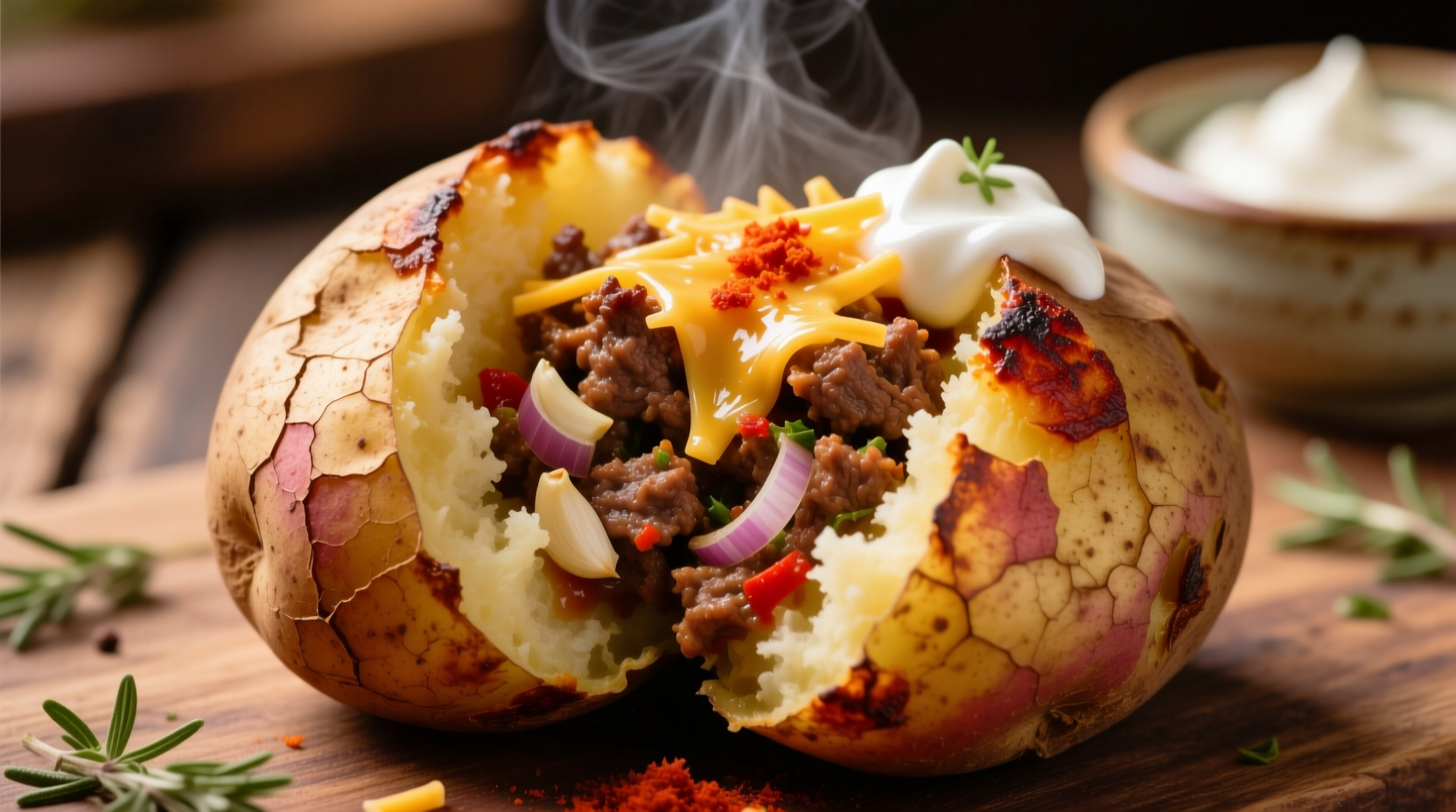
A baked potato topped with savory ground beef is a composed dish consisting of a fully cooked russet or Idaho potato split open and generously filled with seasoned, pan-cooked ground beef. The potato is typically baked until tender inside with a slightly crisp skin, then fluffed and lightly dressed before being crowned with warm beef. Additional toppings such as cheese, sour cream, chives, or sautéed vegetables are common but not required. The dish belongs to the broader category of “loaded potatoes” or “gourmet baked potatoes,” which gained popularity in mid-20th-century American diners and steakhouse menus.
The foundation lies in contrast: the dry, fluffy flesh of the baked potato contrasts with the moist, umami-rich ground beef. While often considered comfort food, the dish can be nutritionally balanced by using lean beef, minimizing added fats, and incorporating fresh vegetables into the topping mixture. Culinary traditions vary regionally—some versions include tomato-based sauces, others use smoked paprika or Worcestershire for complexity—but all share a commitment to hearty satisfaction.
Key Characteristics
| Characteristic | Description |
|---|---|
| Flavor Profile | Earthy (potato), savory/umami (beef), with optional notes of garlic, onion, herbs, or spice depending on seasoning. |
| Aroma | Toasted starch from baked skin; rich, meaty scent from seared beef and aromatic vegetables. |
| Texture | Fluffy and dry interior potato; tender, crumbly, slightly chewy beef filling. |
| Color | Tan-to-golden brown potato skin; deep brown beef with flecks of green (if garnished). |
| Culinary Function | Main course entrée; vehicle for protein and fiber; base for customizable toppings. |
| Shelf Life | Assembled dish best served immediately. Components can be stored separately: cooked beef up to 4 days refrigerated; baked potato up to 2 days. |
Practical Usage
The success of a baked potato with ground beef hinges on mastering two separate processes—baking the potato correctly and preparing the beef with intention. Each step contributes uniquely to the final experience.
Baking the Potato: Technique Matters
Russet potatoes are preferred due to their high starch content and thick skins, which crisp beautifully during baking. Select uniform-sized potatoes (about 8–10 oz each) to ensure even cooking. Wash thoroughly, pierce several times with a fork to allow steam release, and optionally rub with olive oil and coarse salt for enhanced crust formation.
For optimal results, bake at 400°F (205°C) directly on the oven rack with a sheet tray below to catch drips. Baking time ranges from 55 to 75 minutes, depending on size. The potato is done when a skewer inserts easily into the center and internal temperature reaches 205–210°F (96–99°C). Let rest 5–10 minutes before opening to preserve steam and fluffiness.
Once split, gently fluff the interior with a fork. For richer flavor, stir in a small amount of butter, warmed milk, or sour cream. Season lightly with salt and pepper. Avoid over-mixing, which can lead to gumminess.
Preparing the Savory Ground Beef
Use 80/20 ground beef (80% lean, 20% fat) for optimal moisture and browning. Leaner blends may result in dryness; fattier ones require draining after cooking. Heat a heavy skillet over medium-high heat. Add a teaspoon of neutral oil if needed, then add chopped onions and minced garlic, sautéing until translucent (about 3–4 minutes).
Add the ground beef, breaking it apart with a wooden spoon. Cook undisturbed for 1–2 minutes to encourage fond development—the browned bits that carry intense flavor. Continue stirring and breaking down clumps until fully browned (7–9 minutes total). Drain excess fat only if necessary.
Season thoughtfully: a standard blend includes 1 tsp smoked paprika, ½ tsp garlic powder, ½ tsp onion powder, ¼ tsp black pepper, and ¾ tsp kosher salt. For depth, add 1 tbsp Worcestershire sauce, 1 tsp Dijon mustard, or 2 tbsp tomato paste cooked for 30 seconds before adding beef. A splash of low-sodium beef broth (¼ cup) deglazes the pan and integrates flavors.
Simmer for 3–5 minutes to meld seasonings. Taste and adjust. Keep warm until serving.
Pro Tip: For restaurant-style texture, avoid overcrowding the pan. Cook in batches if preparing large quantities. Crowding lowers the pan temperature, causing the beef to steam rather than sear, resulting in gray, mushy meat instead of richly browned crumbles.
Assembly & Presentation
Place the opened baked potato on a plate with skin sides down to stabilize. Spoon the warm ground beef evenly over the center, allowing some to spill onto the plate. At this stage, layer additional toppings strategically:
- Cheese: Sharp cheddar, Monterey Jack, or pepper jack melts beautifully over hot beef. Use freshly grated for better meltability.
- Sour Cream: Adds tang and cools spicy elements. Swirl on top or serve on the side.
- Chives or Green Onions: Provide freshness and color contrast.
- Optional Additions: Sautéed mushrooms, roasted corn, black beans, jalapeños, or avocado slices increase complexity.
Balance is critical—too many toppings overwhelm the core flavors. Serve immediately while both components are warm.
Variants & Types
This dish adapts readily to dietary needs, cultural influences, and ingredient availability. Recognizing these variations helps tailor the meal to specific preferences.
By Protein Type
- Ground Turkey or Chicken: Leaner alternative; benefits from added moisture (e.g., extra sauce or oil) and bold seasoning to compensate for milder flavor.
- Plant-Based Crumbles: Made from soy, pea protein, or mushrooms. Choose brands with umami enhancers like yeast extract or mushroom powder. Sauté with same aromatics and seasonings as beef.
- Ground Lamb: Offers gamier, richer profile. Pairs well with cumin, coriander, and mint. Common in Middle Eastern-inspired versions.
By Regional Influence
- American Diner Style: Classic preparation with cheddar, sour cream, bacon bits, and chives.
- Mexican-Inspired: Beef seasoned with cumin, chili powder, oregano; topped with pico de gallo, guacamole, and cotija cheese.
- Mediterranean Version: Substitute beef with spiced lamb or lentils; top with tzatziki, olives, and feta.
- Tex-Mex Skillet Style: Incorporate diced tomatoes with green chilies, black beans, and corn into the beef mixture before topping.
By Dietary Adaptation
- Low-Carb/Keto: Retain full-fat toppings (butter, cheese, sour cream); omit starchy additions like corn or beans.
- Gluten-Free: Naturally compliant if using gluten-free Worcestershire or tamari instead of soy sauce derivatives.
- Meal Prep Friendly: Bake potatoes and cook beef in advance. Reheat separately to maintain texture—microwave potato briefly, reheat beef in skillet.
| Variation | Best For | Key Adjustments |
|---|---|---|
| Classic Beef & Cheddar | Family dinners, beginners | Standard seasoning, basic toppings |
| Southwest Style | Casual entertaining, spice lovers | Add cumin, chili, beans, avocado |
| Vegan Lentil-Topped | Plant-based diets | Replace beef with cooked lentils + soy sauce for umami |
| Gourmet Herb-Infused | Dinner parties, refined palates | Use shallots, thyme, rosemary; finish with truffle oil |
Comparison with Similar Ingredients
Several dishes resemble the baked potato with ground beef but differ significantly in structure, intent, or composition.
| Dish | Similarities | Differences |
|---|---|---|
| Shepherd’s Pie | Uses ground meat and potatoes | Potatoes are mashed and baked as a top layer; dish is assembled in a casserole and oven-finished. |
| Loaded Fries | Features beef, cheese, sour cream | Base is fried potato strips; higher fat, less structural integrity. |
| Stuffed Baked Potato | Nearly identical concept | Term often implies more elaborate fillings; sometimes pre-mixed into the potato flesh. |
| Taco-Stuffed Potato | Same base, similar toppings | Follows taco flavor profile (lime, cilantro, taco seasoning); often includes lettuce and salsa. |
The distinction matters: while shepherd’s pie relies on slow oven fusion, the baked potato with ground beef emphasizes immediate textural contrast and modular assembly. Unlike fries, which degrade quickly under wet toppings, the whole baked potato maintains form, making it superior for sit-down meals.
Practical Tips & FAQs
How do I prevent a soggy baked potato?
Bake directly on the oven rack to allow air circulation. Do not wrap in foil unless finishing early and holding—foil traps steam and softens the skin. If using foil, remove during the last 10–15 minutes of baking to crisp the exterior.
Can I microwave the potato instead?
You can, but results differ. Microwaving cooks rapidly via moisture excitation, yielding a softer skin and sometimes gummy texture. For best results, microwave for 5–6 minutes first, then finish in a 400°F oven for 20 minutes to develop crust and dry out the interior slightly.
What cut of beef is used for ground beef in this dish?
Ground chuck is ideal—typically 80/20, sourced from the shoulder. It offers balanced marbling for flavor and juiciness. Ground round is leaner and drier; ground sirloin falls in between.
How can I make the beef more flavorful?
Beyond standard seasonings, consider these enhancements:
- Add a parmesan rind to the pan while simmering (remove before serving).
- Include a teaspoon of fish sauce for hidden umami depth.
- Use rendered bacon fat instead of oil to sauté aromatics.
- Finish with a squeeze of lemon juice to brighten richness.
Is this dish freezer-friendly?
The cooked ground beef freezes well for up to 3 months. Cool completely, store in airtight containers. Baked potatoes do not freeze well—cell structure breaks down, leading to watery texture upon thawing. Freeze uncooked potatoes only if blanched and processed, which defeats the purpose here.
Can I use sweet potatoes?
Absolutely. Sweet potatoes offer a naturally sweet, creamy base that pairs surprisingly well with savory beef. Their lower starch content means a denser, moister interior. Roast at the same temperature but reduce time slightly (45–60 minutes). Complement with smoked paprika, cayenne, or black beans for harmony.
\"The best baked potatoes aren’t just cooked—they’re respected. They need space, time, and attention to develop their full character. Treat them like a canvas, not a container.\" — Chef Elena Martinez, Modern Comfort Kitchen
Summary & Key Takeaways
A baked potato topped with savory ground beef exemplifies intelligent comfort cooking—simple ingredients, elevated through technique and thoughtful seasoning. The russet potato, when baked properly, delivers a light, airy interior and crisp skin, forming an ideal foundation. The ground beef should be browned, not boiled, with layers of flavor built from aromatics, spices, and umami boosters.
Key points to remember:
- Always bake potatoes uncovered for optimal texture.
- Use 80/20 ground chuck for best flavor and moisture balance.
- Build seasoning in stages—sauté aromatics, bloom spices, deglaze, finish with acid.
- Assemble just before serving to preserve contrast.
- Variations abound—from Tex-Mex to plant-based—but the core principle remains: balance starch, protein, fat, and freshness.
Challenge Yourself: Next time, try roasting the potato with a sprinkle of smoked sea salt and a drizzle of duck fat. Top with beef seasoned with harissa and finished with Greek yogurt and pickled red onions. You’ll discover how small changes transform familiarity into excitement.
This dish proves that excellence doesn’t require complexity. With attention to detail, even the most basic ingredients can deliver a meal that feels intentional, satisfying, and deeply personal. Whether feeding one or four, the baked potato with savory ground beef stands as a testament to the power of home cooking done right.