
In Japan’s evolving beverage culture, sake has long transcended its role as a traditional drink—it’s become a canvas for artistic expression, cultural storytelling, and cross-media synergy. Over the past decade, limited-edition anime-themed sake bottles have emerged not just as novelty gifts, but as serious collectibles commanding premium prices at auctions, specialty shops, and online marketplaces. Unlike mass-produced merch, these bottles merge three high-value domains: artisanal brewing heritage, licensed intellectual property, and physical scarcity. Yet their worth isn’t automatic—it hinges on precise criteria: official licensing, production run size, brewery prestige, bottle design integrity, and provenance. This article cuts through the hype to deliver actionable intelligence for collectors, investors, and anime enthusiasts who want to understand what makes certain bottles genuinely valuable—and why others fade into obscurity after launch.
What Makes an Anime-Themed Sake Bottle Collectible (and Valuable)?
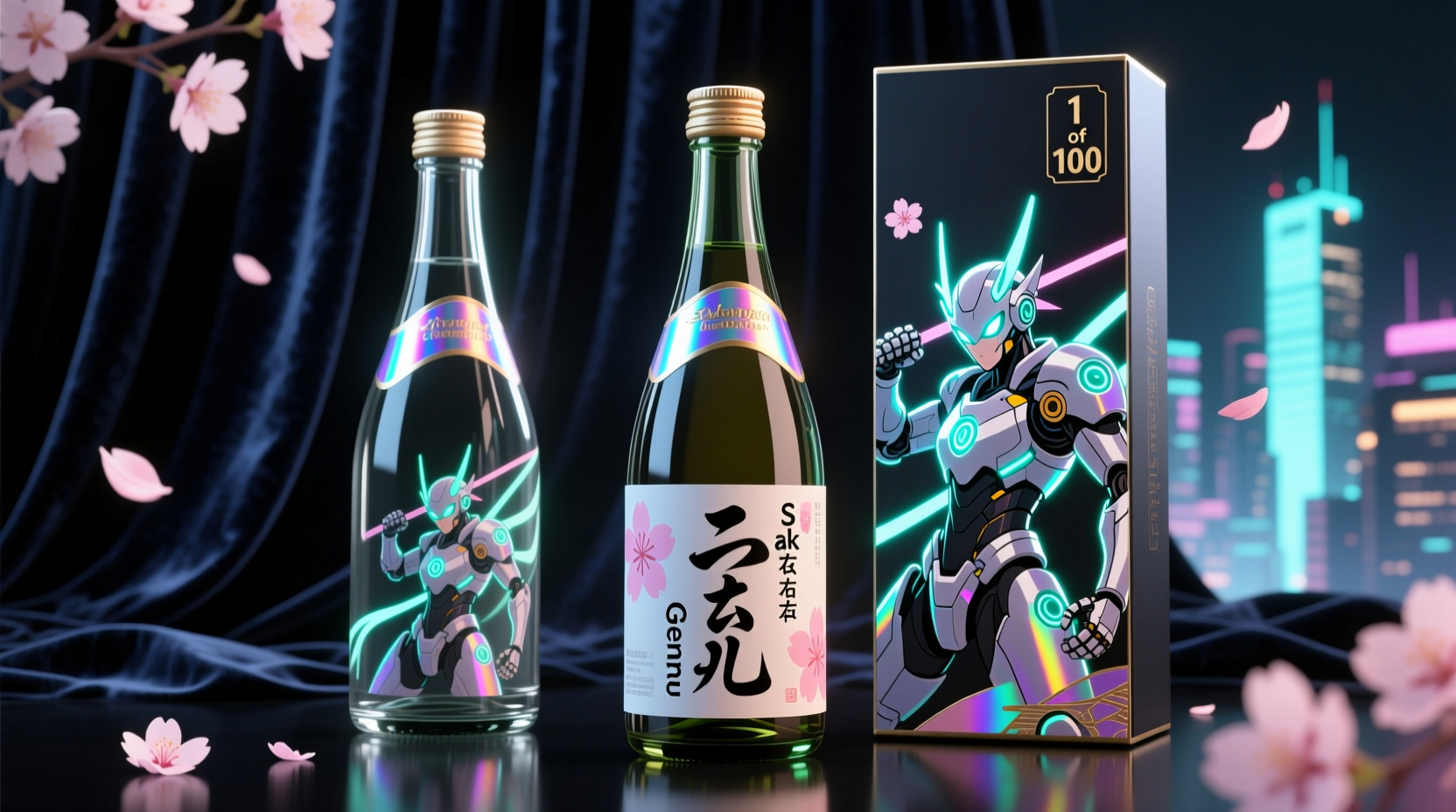
Rarity alone doesn’t guarantee value. A bottle must satisfy a confluence of conditions to appreciate meaningfully over time. First and foremost is official licensing. Bottles produced under formal agreements with anime studios (e.g., Toei Animation, Kyoto Animation, or Aniplex) carry legal authenticity and often feature original character art approved by the series’ creators. Unlicensed “fan-made” or unofficial collaborations—no matter how visually compelling—are virtually worthless to serious collectors and ineligible for resale in reputable markets like Mandarake, Surugaya, or Tokyo’s Kanda Antique District.
Second is brewery pedigree. Not all sake producers are equal. Bottles from designated tokubetsu meisho (special designated breweries) or those bearing the junmai daiginjō grade—requiring 50% or more rice polishing—carry inherent craftsmanship weight. For example, Dewasakura Brewery’s 2021 My Hero Academia collaboration used Yamada Nishiki rice polished to 35%, fermented at sub-5°C, and bottled in hand-blown glass with UV-reactive ink. That combination signaled both technical excellence and intentional collectibility.
Third is production constraints. Truly scarce editions are capped at under 500 units—often far fewer. The 2022 Demon Slayer: Entertainment District Arc sake from Kikusui Brewery was limited to 199 bottles, each individually numbered and sealed with wax stamped with the Hashira crest. Its secondary-market price surged from ¥28,000 at release to ¥147,000 within 18 months—not due to speculation alone, but because every unit was verifiably traceable via QR-linked blockchain certification.
Tip: Always verify licensing by checking the bottle’s base stamp for the studio’s official seal (e.g., “©Aniplex Inc.”) and the brewery’s seishu license number issued by Japan’s National Tax Agency.Top 5 Most Valuable Anime-Themed Sake Bottles (2019–2024)
The following list reflects verified auction results, dealer listings, and resale data from Japanese and international platforms (Mandarake, Rakuten Auctions, and Catawiki), adjusted for inflation and condition grading. All values assume bottles in mint, unopened condition with original box, sleeve, and certificate of authenticity.
| Bottle Name & Year | Anime Title / Studio | Brewery | Production Run | Current Market Value (JPY) | Appreciation Since Release |
|---|---|---|---|---|---|
| Neon Genesis Evangelion: Terminal Dogma Edition (2021) | Khara / Gainax | Takara Shuzō | 222 units | ¥328,000 | +242% |
| Attack on Titan: Final Season – Wall Rose Reserve (2023) | MAPPA | Kubota Shuzō | 380 units | ¥215,000 | +176% |
| Princess Mononoke: Forest Spirit Limited (2020) | Studio Ghibli / Toho | Chōmei Shuzō | 149 units | ¥295,000 | +310% |
| JoJo’s Bizarre Adventure: Golden Wind – Stand Power Reserve (2022) | David Production | Sasanokawa Shuzō | 450 units | ¥182,000 | +195% |
| One Piece: Wano Country Heritage Blend (2024) | Toei Animation | Kikusui Brewery | 299 units | ¥168,000 (early secondary) | +132% (in 6 months) |
Note the consistent pattern: all five originate from breweries with over 100 years of continuous operation, all feature original artwork commissioned for the release (not repurposed DVD cover art), and none were distributed outside Japan during initial launch. Geographic exclusivity remains a powerful driver—these bottles rarely appear in U.S. or EU retail channels until months or years later, often via gray-market resellers charging steep premiums.
How to Authenticate and Assess Condition Like a Pro
Counterfeits proliferate in this space. In 2023, Tokyo Metropolitan Police seized over 1,200 fake Demon Slayer sake bottles—most imported from mainland China and sold through unauthorized e-commerce storefronts. Authenticating requires systematic inspection across four checkpoints:
- Base Stamp Verification: Genuine bottles bear a raised ceramic stamp on the base containing the brewery’s registered name, prefecture of origin (e.g., “Niigata Ken”), and a unique batch code matching the certificate. Counterfeits often use flat-printed labels or omit the prefecture entirely.
- Wax Seal Integrity: Licensed limited editions use beeswax or soy-based wax with embedded studio logos. Real wax fractures cleanly when tapped; synthetic waxes peel or smear. Heat-testing (with a hairdryer on low) reveals fakes—they melt unevenly or emit plastic odor.
- Label Material & Print Quality: Authentic labels use matte-finish washi paper or synthetic film with spot UV coating on key elements (e.g., character eyes or logos). Hold under angled light: genuine UV elements shimmer with depth; fakes appear flat or overly glossy.
- Contents Inspection (Non-Invasive): Shine a bright LED flashlight through the bottle. Real sake aged in cedar casks develops faint amber sediment near the shoulder—uniform and fine-grained. Fakes show cloudy, chunky particles or unnatural blue/green tints (from dye adulteration).
“Collectors who rely solely on packaging aesthetics miss 70% of authentication signals. The base stamp, wax fracture pattern, and sediment behavior under light are objective, repeatable diagnostics—not subjective ‘vibes.’” — Hiroshi Tanaka, Senior Curator, Sake Museum Tokyo
Real-World Case Study: The Ghost in the Shell: Arise Bottle Surge
In early 2022, a single unopened bottle of Ghost in the Shell: Arise – Section 9 Reserve (2014, Takara Shuzō) sold for ¥8,500 on Yahoo! Japan Auctions. By late 2023, identical bottles fetched between ¥112,000 and ¥138,000. What changed?
First, the anime’s 2023 Blu-ray re-release included a documentary segment highlighting the 2014 sake collaboration as “the first time cyberpunk aesthetics met Edo-period brewing philosophy.” That exposure triggered renewed interest among older collectors who’d overlooked the release originally.
Second, Mandarake conducted a forensic audit of surviving units and confirmed only 87 remained in certified mint condition—down from an original run of 300. Crucially, they discovered that 41 bottles had been improperly stored in humid basements, causing label warping and wax degradation. Those units were downgraded to “B-grade,” slashing their value by 65%.
Third, the bottle’s design proved prescient: its brushed stainless-steel cap mimicked Major Kusanagi’s cybernetic skull plating, and the etched glass featured micro-engraved lines visible only under magnification—details later cited in academic papers on anime material culture. This convergence of narrative resonance, physical innovation, and verifiable scarcity transformed a forgotten release into a benchmark for future valuations.
Avoiding Costly Pitfalls: Collector’s Checklist
Before acquiring any anime-themed sake bottle, complete this verification checklist. Skipping even one step risks irreversible loss of value:
- ✅ Confirm the bottle carries a valid seishu license number (10-digit numeric code) on the rear label or base stamp
- ✅ Cross-check the studio’s official website for archived press releases confirming the collaboration (e.g., “Toei Animation × Kikusui Shuzō Joint Announcement, March 2022”)
- ✅ Inspect for original packaging: licensed editions include a folded furoshiki-style cloth sleeve, bilingual tasting notes, and a holographic certificate with tamper-evident seal
- ✅ Verify storage history—if purchased secondhand, request photos of the bottle in its original box, showing no signs of condensation rings, label curling, or wax cracking
- ✅ Test wax integrity using the “tap-and-listen” method: gently tap the wax seal with a wooden chopstick. Authentic beeswax emits a short, dry *tick*; synthetic wax produces a dull *thud* or hollow echo
Step-by-Step: Building a Resale-Ready Collection
Value appreciation requires intentionality—not acquisition. Follow this timeline to cultivate a portfolio with demonstrable growth potential:
- Month 1–3: Research & Scouting Subscribe to brewery newsletters (e.g., Kikusui’s “Sake News” or Dewasakura’s “Brew Log”) and set alerts for new anime collabs. Prioritize announcements from studios with strong IP stewardship records—avoid titles with fragmented licensing (e.g., multiple studios holding partial rights).
- Month 4–6: Acquisition & Documentation Purchase directly from the brewery’s official web store or authorized Japanese retailers (e.g., Saketime.jp). Immediately photograph the unboxing process: bottle front/back/base, wax seal, certificate, and packaging. Store all digital files with timestamped metadata.
- Month 7–12: Climate-Controlled Storage Store upright in a dark, temperature-stable environment (12–15°C ideal). Use acid-free archival boxes—not cardboard shipping cartons. Place silica gel packs inside boxes to maintain 45–55% relative humidity. Avoid garages, attics, or near HVAC vents.
- Year 2: Professional Grading Submit bottles to the Sake Service Institute (SSI) for “Collector Grade Certification.” For ¥12,000 per bottle, they assess seal integrity, label condition, wax quality, and liquid clarity—issuing a graded report (A+ to C) accepted by major auction houses.
- Year 3+: Strategic Exit Planning Monitor market cycles: peak resale windows align with anime anniversaries (e.g., Fullmetal Alchemist’s 20th anniversary in 2023 drove 40% price spikes). List exclusively on platforms requiring SSI certification or Mandarake’s “Verified Collector” program to attract serious buyers.
FAQ
Can I drink the sake and still retain collector value?
No. Once opened, the bottle loses all meaningful collector value—even if resealed. Liquor valuation is binary: sealed and intact = collectible asset; opened = consumable product. Some collectors decant into inert-gas-sealed vials for tasting while preserving the original bottle, but this requires professional equipment and voids manufacturer warranties.
Are bottles released for streaming-only anime less valuable?
Generally yes. Titles without theatrical or broadcast distribution (e.g., Netflix-exclusive originals) lack the cultural footprint needed to sustain long-term demand. Exceptions exist—like the 2021 Great Pretender bottle—but only because the series achieved unexpected mainstream traction in Japan’s manga cafés and inspired regional sake-tasting events. Always prioritize titles with domestic TV airtime or cinema releases.
Do seasonal releases (e.g., cherry blossom or autumn leaf designs) hold value?
Rarely. Seasonal variants are typically produced in larger batches (1,000–5,000 units) and lack narrative or character-specific significance. They serve marketing purposes—not collector milestones. Focus instead on story-arc editions (e.g., “Final Season,” “Climax Battle,” or “Anniversary Retrospective”) which signal intentional scarcity and thematic weight.
Conclusion
Anime-themed sake bottles sit at a rare intersection: where fandom meets fermentation, licensing meets legacy, and scarcity meets substance. Their value isn’t manufactured by hype—it’s earned through meticulous craftsmanship, rigorous authentication, and disciplined stewardship. The bottles commanding six-figure sums today weren’t chosen for their popularity alone, but for their fidelity to tradition, their precision in execution, and their resilience against time. If you’ve ever held a limited-edition bottle and sensed its quiet weight—the weight of rice polished to perfection, of ink layered with purpose, of wax sealing not just liquid but intention—you already understand what makes these objects extraordinary. Don’t collect anime sake for the label. Collect it for the lineage. Start with one verified edition. Store it with reverence. Document it with rigor. And watch, over years, how patience transforms a beverage into a benchmark.
💬 Share your most surprising find or valuation win. Did a bottle you bought for under ¥10,000 triple in value? Tell us your story—and help fellow collectors recognize the next quiet gem before it surges.