
Greek lemon chicken is more than a dish—it’s an experience. The bright tang of lemon, the warmth of oregano, the succulence of perfectly cooked poultry: this classic Mediterranean preparation delivers bold flavor with minimal fuss. Yet many home cooks struggle to achieve that authentic balance—chicken that's tender inside, golden outside, and infused with citrus without being sour or dry. The secret isn’t in complicated techniques but in thoughtful details. From marination timing to fire-kissed grilling, these seven practical, tested strategies elevate your Greek lemon chicken from good to unforgettable. Whether you're cooking for family dinner or hosting a summer grill night, mastering this staple opens the door to vibrant, health-forward cuisine rooted in tradition.
Definition & Overview
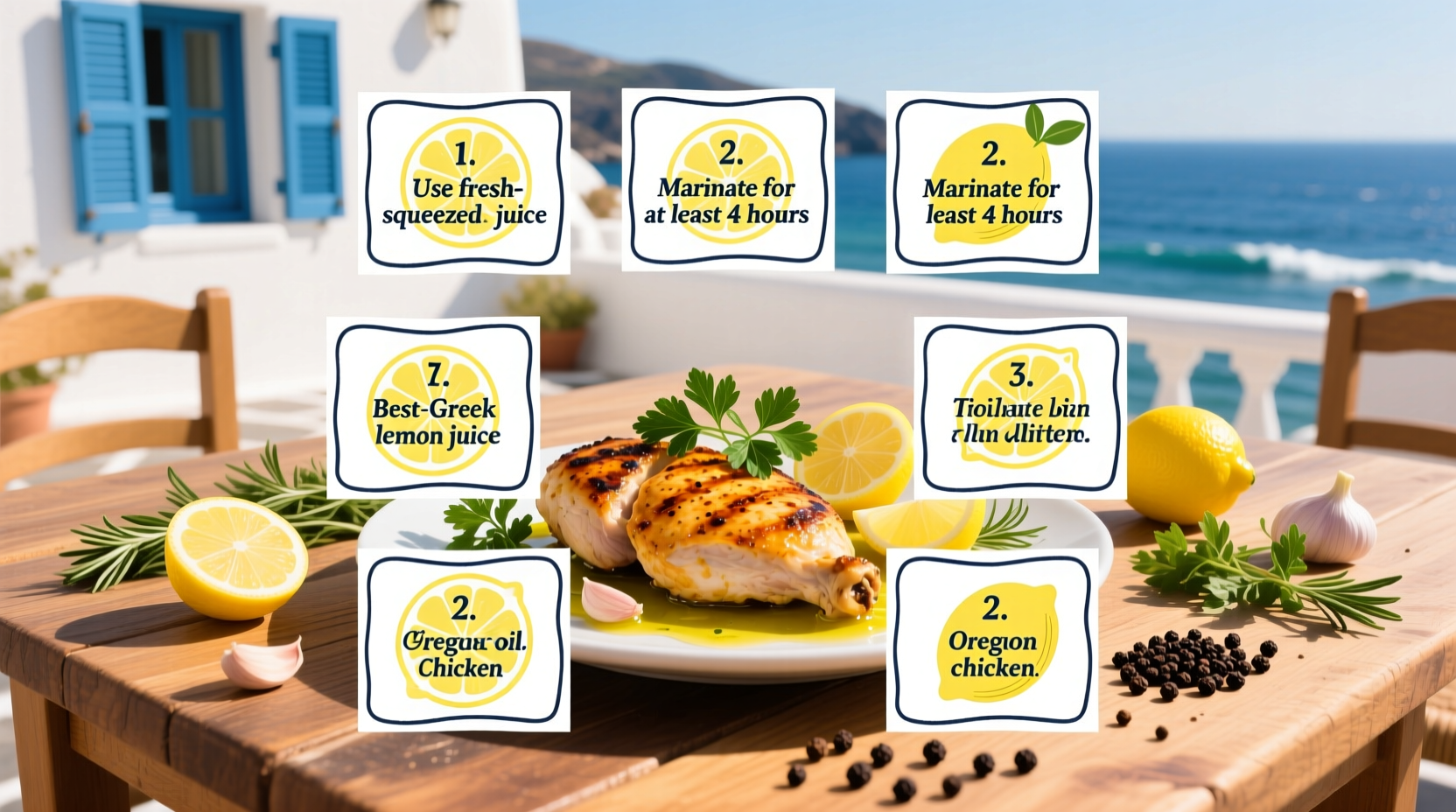
Greek lemon chicken (known locally as kotopoulo me lahanatha or simply part of *souvlaki* when skewered) is a cornerstone of Hellenic home and taverna cooking. At its core, it features chicken—typically bone-in thighs, drumsticks, or breast pieces—marinated in fresh lemon juice, extra virgin olive oil, garlic, dried oregano, salt, and pepper, then roasted, grilled, or baked until deeply flavored and moist. While variations exist across regions—from Crete to Thessaloniki—the essence remains consistent: acidity cuts richness, herbs add earthiness, and slow infusion ensures depth.
This dish reflects Greece’s culinary philosophy: simplicity powered by quality ingredients. Unlike heavily spiced global counterparts, Greek lemon chicken relies on freshness rather than heat. It’s often served alongside tzatziki, grilled vegetables, rice pilaf, or horiatiki salad, making it a balanced centerpiece for any meal. Its popularity has spread globally, especially through Greek-American diners and Mediterranean diet enthusiasts, though authenticity often gets diluted in translation. True excellence lies not just in following a recipe but understanding how each element contributes to texture, aroma, and taste.
Key Characteristics of Authentic Greek Lemon Chicken
| Characteristic | Description |
|---|---|
| Flavor Profile | Bright, citrus-forward with herbal notes (oregano), pungent garlic, and savory depth from olive oil and sea salt. Balanced—not overly sour. |
| Aroma | Fragrant with lemon zest, toasted garlic, and warm Mediterranean herbs. Intensifies during cooking. |
| Texture | Juicy, tender meat; skin crisped if roasted or grilled. No dryness when properly marinated and cooked. |
| Color | Golden-brown exterior, pale ivory interior. Marinating does not \"cook\" the meat like ceviche due to short exposure. |
| Heat Level | Mild. Not spicy. Heat comes only from black pepper, optionally red pepper flakes. |
| Culinary Function | Main protein course. Serves hot off the grill, oven, or rewarmed gently. Excellent cold in salads or wraps. |
| Shelf Life | Marinated raw chicken: up to 2 days refrigerated. Cooked chicken: 3–4 days refrigerated. |
Tip #1: Use Fresh Lemons, Not Bottled Juice — And Zest Matters
The single most impactful decision in preparing Greek lemon chicken is using freshly squeezed lemon juice. Bottled juice lacks vibrancy and carries preservatives that mute flavor and interfere with protein breakdown during marination. Fresh lemons offer natural acidity (citric acid), which helps tenderize the meat while enhancing seasoning penetration.
But go further: **use the zest**. Lemon zest contains essential oils rich in limonene, giving an aromatic lift that juice alone cannot provide. Grate the outer yellow layer of 1–2 lemons into the marinade before juicing them. Avoid the white pith—it’s bitter.
“Zest is where the soul of the lemon lives. In Greece, we never squeeze without zesting first.” — Chef Dimitra Kostas, Athens Culinary Institute
For every pound of chicken, use the juice of two medium lemons and the zest of one. This ratio balances brightness without overwhelming the palate.
Pro Tip: Roll lemons firmly on the counter before cutting—they’ll yield up to 30% more juice.
Tip #2: Marinate Overnight (But Not Too Long)
Acid-based marinades work differently than oil or dairy ones. While they enhance flavor and slightly denature surface proteins, over-marinating can make chicken mushy. For Greek lemon chicken, aim for **8 to 12 hours**, ideally overnight.
Why this window? Citric acid begins breaking down muscle fibers after about four hours. By eight, the chicken absorbs maximum flavor and gains tenderness. Beyond 24 hours, especially with breast meat, the texture risks becoming chalky or grainy. Bone-in, skin-on cuts tolerate longer marination better due to fat and connective tissue buffering.
Always marinate in a non-reactive container—glass, ceramic, or food-grade plastic. Metal reacts with acid, creating off-flavors. Seal tightly and refrigerate immediately.
Marination Timeline Guide
- Minimum effective time: 2 hours (for last-minute prep)
- Ideal window: 8–12 hours
- Maximum safe time: 24 hours (stick to dark meat beyond 12h)
- Never exceed: 48 hours (risk of texture degradation)
Tip #3: Balance Oil and Acid at a 3:1 Ratio
A common mistake is dousing chicken in pure lemon juice. Without sufficient fat, the result is sharp and drying. The solution? A precise oil-to-acid ratio.
Use **three parts extra virgin olive oil to one part lemon juice**. For example: ¾ cup olive oil + ¼ cup lemon juice per 2 lbs chicken. This emulsified base coats the meat evenly, carries flavors, protects against moisture loss, and promotes browning.
Choose a robust, peppery Greek EVOO like Koroneiki for authenticity. These oils have lower smoke points but unmatched flavor—perfect for roasting under 400°F or finishing after grilling.
Oil Options Compared
| Type | Best For | Limitations |
|---|---|---|
| Greek Extra Virgin Olive Oil | Authentic flavor, roasting, finishing | Low smoke point (~375°F); avoid high-heat searing |
| Avocado Oil (blend) | High-heat grilling (smoke point ~520°F) | Milder taste; dilutes Mediterranean character |
| Light Olive Oil | Extended cooking, air frying | Lacks polyphenols and aroma of EVOO |
Blend avocado oil with EVOO (e.g., 2:1) for high-heat applications where you still want flavor.
Tip #4: Double Down on Oregano—And Use the Right Kind
Oregano isn't optional—it's foundational. But not all oregano is equal. Mediterranean oregano (Origanum vulgare hirtum) grows wild in rocky Greek hillsides, producing small leaves packed with carvacrol, a compound responsible for its pungent, slightly minty bite.
Compare options:
- Greek/Mediterranean oregano: Earthy, floral, assertive. Use 1½ teaspoons dried per pound.
- Italian oregano: Milder, sweeter. Acceptable substitute but less authentic.
- Mexican oregano: Citrusy, stronger; botanically different (related to verbena). Not recommended.
Add half the oregano to the marinade, reserving the rest to sprinkle over the chicken before cooking. This layered approach creates both infused and top-note herb presence.
Storage Note: Store dried oregano in an airtight jar away from light. It loses potency after 6–12 months.
Tip #5: Grill Over Indirect Heat for Juicier Results
Grilling imparts smoky complexity that baking cannot match. However, direct flame leads to burnt exteriors and raw interiors. Instead, use **two-zone grilling**.
Set up your charcoal or gas grill with one side hot (direct heat), the other off or low (indirect). Start chicken pieces skin-side down over direct heat for 3–4 minutes to sear and mark. Then move to the indirect zone, cover the grill, and cook slowly at 350–375°F until internal temperature reaches 165°F (about 25–35 more minutes depending on cut).
This method mimics traditional Greek clay ovens (*fournos*) by combining char and convection-like circulation. Baste occasionally with reserved (not used) marinade during the first 10 minutes of indirect cooking.
Grill vs. Oven: Pros and Cons
| Method | Advantages | Drawbacks |
|---|---|---|
| Grill (Two-Zone) | Smoky flavor, crisp skin, restaurant-quality char | Weather-dependent, requires attention |
| Oven Roasting | Consistent results, hands-off, great for batches | No smoke flavor unless using liquid smoke |
| Air Fryer | Fast, ultra-crisp skin, energy-efficient | Limited capacity, uneven browning on large pieces |
Tip #6: Add a Spoonful of Honey for Depth and Caramelization
A little sweetness rounds out acidity and promotes caramelization. Stir **1 tablespoon of Greek thyme honey** into the marinade. This native honey—often labeled “polyfloral hill honey”—adds subtle floral notes and enhances Maillard browning on the surface.
Honey also stabilizes the marinade’s pH, preventing excessive protein tightening. It won’t make the dish sweet; instead, it deepens the umami backbone. If unavailable, use mild wildflower honey. Avoid processed clover honey or agave, which lack complexity.
Do not confuse this with glazing. The honey integrates into the marinade, not applied late-stage like a barbecue sauce. Adding sugar at the end risks burning due to lemon’s low pH.
Tip #7: Rest Before Slicing—and Save the Drippings
Removing chicken straight from heat leads to juice loss. Let it rest **10–15 minutes** tented loosely with foil. This allows muscle fibers to reabsorb fluids, resulting in moister bites.
Meanwhile, collect pan or grill drippings. Skim excess fat, then deglaze the roasting pan with a splash of water or white wine, scraping browned bits. Mix with a teaspoon of cornstarch slurry if desired, simmer 2 minutes, and drizzle over plated chicken. This simple jus elevates the dish from rustic to refined.
In Greece, this technique is called *tsatsisti*, referring to repurposed cooking liquids. Nothing is wasted.
Serving Suggestion: Arrange rested chicken over a bed of warm orzo tossed with chopped parsley, feta, and diced tomato. Spoon warm jus on top.
Variants & Regional Twists
While the classic version reigns supreme, regional interpretations add nuance:
- Island Style (Cyclades): Adds capers and green olives to the marinade for briny contrast.
- Thracian Influence: Incorporates paprika and bay leaf for deeper warmth.
- Athenian Street Food: Cubed breast meat skewered as souvlaki, served in pita with onion and tzatziki.
- Cretan Mountain Version: Uses rosemary instead of oregano, reflecting local flora.
These variations are not deviations but expressions of terroir—proof that even within Greece, there’s no single “correct” way.
Comparison with Similar Dishes
Greek lemon chicken is often confused with other citrus-marinated poultry dishes. Understanding distinctions prevents misapplication.
| Dish | Origin | Key Differences |
|---|---|---|
| Chicken Piccata | Italy | Breaded cutlets finished with lemon-butter sauce; uses capers and white wine; served immediately sauced. |
| Pollo al Limón (Latin America) | Mexico/Caribbean | Often includes orange juice, cumin, cilantro; may be spicy; sometimes uses beer or cola in marinade. |
| Tandoori Chicken | India | Yogurt-based marinade, turmeric, chili, garam masala; red color from annatto or dye; cooked in tandoor. |
| Greek Lemon Chicken | Greece | Simple: lemon, EVOO, garlic, oregano; no breadcrumbs, no yogurt, no chilies; emphasizes purity of flavor. |
Practical Tips & FAQs
Can I use chicken breast?
Yes, but take care. Breast meat dries out faster. Flatten to even thickness, limit marination to 8 hours, and cook to 160°F (carryover heat brings it to 165°F). Consider brining in saltwater (½ tbsp salt per cup water, 30 min) before marinating to boost moisture retention.
What if I don’t have fresh lemons?
Reconstituted frozen lemon juice is acceptable in a pinch, but never use concentrate with preservatives. As a last resort, substitute white wine vinegar (½) and lime juice (½), though flavor shifts noticeably.
Can I bake it instead of grill?
Absolutely. Preheat oven to 375°F. Place chicken in a roasting pan, skin-up. Roast 35–45 minutes (depending on size), basting once midway. Broil 2–3 minutes at the end for color.
How do I store leftovers?
Cool within two hours. Store in airtight container for up to 4 days. Reheat gently in oven at 300°F wrapped in foil to preserve moisture. Excellent cold in gyros or grain bowls.
Is this dish gluten-free?
Yes, provided no cross-contamination occurs. Traditional Greek lemon chicken contains no grains. Serve with gluten-free sides like roasted potatoes or quinoa.
Can I freeze marinated chicken?
Yes. Freeze raw marinated pieces in zip-top bags for up to 3 months. Thaw fully in refrigerator before cooking. Do not cook from frozen—uneven marination breakdown occurs.
Summary & Key Takeaways
Perfect Greek lemon chicken hinges on precision, not complexity. Follow these principles to consistently deliver restaurant-quality results at home:
- Fresh lemons are non-negotiable—include zest for maximum aroma.
- Marinate 8–12 hours, especially for breast meat; avoid exceeding 24 hours.
- Maintain a 3:1 oil-to-acid ratio to protect texture and carry flavor.
- Use authentic Greek oregano and layer it in marinade and finish.
- Grill with indirect heat or roast slowly to ensure even doneness and juicy results.
- Add honey for depth—it balances acidity and boosts browning.
- Rest and reuse drippings to maximize juiciness and create a quick pan sauce.
Master this dish, and you’ve unlocked a gateway to Mediterranean cooking: vibrant, nourishing, and deeply satisfying. Try pairing your next batch with a chilled Assyrtiko wine and a simple village salad—then savor the taste of Greece, one bite at a time.