When it comes to earrings, the choice between zircon ear clips and diamond stud earrings isn’t just about aesthetics—it’s a decision that involves budget, lifestyle, longevity, and personal values. Cubic zirconia has long been celebrated as an affordable alternative to natural diamonds, but how do they truly compare in terms of brilliance, durability, and emotional value? For many, the allure of real diamonds lies in their rarity and legacy, while others prioritize practicality and cost-efficiency. This article breaks down every factor that matters when deciding whether real diamonds are truly worth the investment.
Understanding the Basics: What Are Zircon Ear Clips?
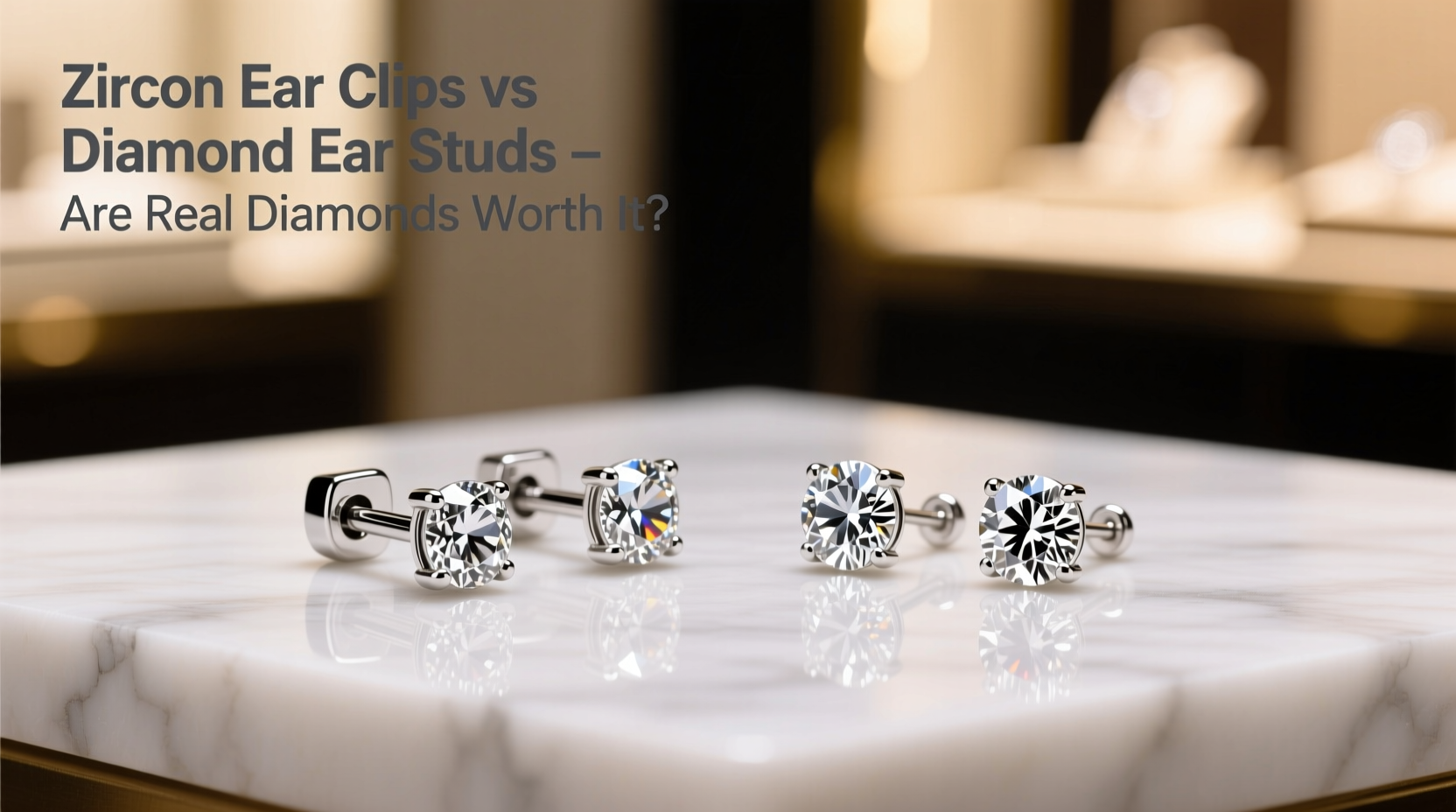
Zircon ear clips—more accurately referred to as cubic zirconia (CZ) ear clips—are non-pierced earrings designed for people who either can't or prefer not to wear traditional studs. They rely on pressure or clip mechanisms to stay in place and typically feature synthetic gemstones made from zirconium dioxide. These stones are lab-created to mimic the visual properties of diamonds, offering high clarity and sparkle at a fraction of the price.
Cubic zirconia is engineered to be flawless, often appearing brighter than natural diamonds under store lighting. However, this perfection is also a telltale sign for experts—real diamonds almost always have minor inclusions or color variations. CZ stones are mass-produced, making them accessible and widely used in fashion jewelry.
Tip: Clean zircon ear clips with mild soap and water weekly to maintain their shine; avoid harsh chemicals that can dull the surface over time.Diamond Stud Earrings: The Benchmark of Elegance
Diamond stud earrings consist of genuine diamonds set in precious metal posts, usually secured with butterfly backs. Their value is determined by the classic \"Four Cs\": carat weight, cut, color, and clarity. Even small diamond studs (e.g., 0.25 carats total weight) can range from $300 to several thousand dollars depending on quality.
Unlike synthetic stones, natural diamonds form deep within the Earth over billions of years. This geological rarity contributes to their enduring appeal. High-quality cuts maximize light reflection, giving diamonds their signature fire and scintillation. When properly cared for, diamond studs can last generations—making them heirloom pieces passed down through families.
“Diamonds aren’t just about sparkle—they represent permanence. A well-cut diamond retains its beauty and value over decades.” — James Reed, GIA-Certified Gemologist
Head-to-Head Comparison: Zircon vs Diamond
| Feature | Cubic Zirconia Ear Clips | Diamond Stud Earrings |
|---|---|---|
| Cost | $10 – $100 | $300 – $10,000+ |
| Hardness (Mohs Scale) | 8–8.5 | 10 (hardest known mineral) |
| Brilliance | High initial sparkle, tends to cloud over time | Consistent fire and brilliance with proper care |
| Durability | Scratches easily; prone to chipping | Extremely durable; resistant to scratches and wear |
| Lifetime | 1–3 years with regular use | Lifetime, potentially generations |
| Hypoallergenic Options | Limited; often uses base metals | Common in platinum, gold, or hypoallergenic alloys |
| Eco & Ethical Impact | Low environmental cost; no mining | Varies—conflict-free options available; some environmental concerns |
When Zircon Makes Sense: Practical Use Cases
There are clear scenarios where zircon ear clips outperform diamond studs in terms of practicality. Consider Sarah, a nurse working 12-hour shifts in a hospital. She loves wearing elegant earrings but can’t risk losing expensive jewelry during fast-paced rounds. Her solution? A pair of rhodium-plated zircon ear clips costing $35. They look polished, require minimal maintenance, and don’t cause anxiety if misplaced.
This example highlights a broader truth: for everyday wear, travel, or active lifestyles, zircon offers peace of mind. It’s also ideal for experimenting with bold styles without financial commitment. Fashion-forward individuals often rotate multiple pairs of zircon clips to match outfits, something few would do with high-value diamond studs.
The Long-Term Value of Real Diamonds
While zircon wins on upfront affordability, diamonds excel in long-term value retention. A study by the Gemological Institute of America (GIA) found that well-cut, certified diamonds between 0.30 and 1.00 carats retain 60–80% of their value over ten years, especially when accompanied by documentation like GIA or AGS reports.
Moreover, real diamonds carry emotional significance. Engagement rings, anniversary gifts, and milestone celebrations often center around diamonds—not because they’re flashy, but because they symbolize endurance. As one client told a Beverly Hills jeweler: “I didn’t buy these studs for myself. I bought them so my daughter could wear them on her wedding day.”
Tip: Always request a certification report when purchasing diamond studs. It verifies authenticity and protects your investment.Step-by-Step: How to Decide What’s Right for You
- Assess your lifestyle. Do you work in a high-movement environment? Travel frequently? If yes, low-cost zircon clips may be more practical.
- Determine your budget. Set a realistic spending limit. Remember, even modest diamond studs require thoughtful investment.
- Consider usage frequency. Will you wear them daily or only for special events? Occasional wear justifies higher cost.
- Evaluate skin sensitivity. Check metal types. Nickel-free gold or platinum settings reduce allergy risks—common in quality diamond studs.
- Think long-term. Are you building a jewelry collection? Planning to pass items down? Diamonds align better with legacy goals.
Frequently Asked Questions
Can you tell the difference between zircon and diamond?
To the untrained eye, high-quality cubic zirconia looks nearly identical to a diamond in daylight. However, under magnification, diamonds show natural inclusions, while CZ stones appear too perfect. Also, diamonds exhibit sharper light dispersion and resist fogging longer when breathed on.
Do zircon ear clips tarnish?
Yes, especially if the base metal is brass or alloy. Rhodium plating helps delay tarnishing, but it wears off after months of use. Regular cleaning and storage in anti-tarnish pouches can extend their life.
Are lab-grown diamonds a better alternative?
Lab-grown diamonds are chemically identical to mined diamonds but cost 30–50% less. They offer the durability and brilliance of natural diamonds without ethical or environmental concerns. For those wanting real diamond qualities at lower prices, they’re an excellent middle ground.
Final Verdict: Are Real Diamonds Worth It?
The answer depends on what you value most. If you're looking for temporary elegance, variety, or budget-friendly accessories, zircon ear clips are a smart, stylish choice. They serve a functional role in modern wardrobes and allow self-expression without financial strain.
But if you seek lasting quality, emotional resonance, and a piece that can endure decades of wear, real diamond studs justify their cost. They resist scratches, maintain brilliance, and hold symbolic meaning that synthetic stones cannot replicate. Over time, the per-wear cost of a diamond pair drops significantly—especially when worn regularly or preserved as heirlooms.
In essence, zircon is a tactical choice; diamonds are a strategic investment.
💬 What kind of earrings do you reach for most often? Share your thoughts on zircon vs. diamond in the comments—your experience could help someone make their next jewelry decision with confidence.