In recent years, fashion has seen a wave of nostalgia sweep through social media and retail spaces alike. From low-rise jeans and butterfly clips to bedazzled accessories and velour tracksuits, the early 2000s aesthetic—commonly known as Y2K fashion—has resurfaced with viral momentum. Platforms like TikTok and Instagram have amplified this revival, making it seem as though every young person is dressing like they stepped out of a Britney Spears music video. But beneath the curated feeds and trending hashtags lies a more complex reality: Is Y2K fashion truly back in full force, or is it an overhyped trend that only captures a sliver of Gen Z’s diverse style?
Gen Z, born between the mid-1990s and early 2010s, grew up immersed in digital culture. Their fashion choices are shaped not by nostalgia for their own childhood, but by access to decades of global style via algorithms, resale markets, and fast-fashion reinterpretations. While some embrace the glitter and irony of Y2K aesthetics, many others are moving toward minimalist, sustainable, and gender-fluid alternatives. Understanding what Gen Z actually wears today requires looking beyond the noise of viral trends.
The Rise—and Limits—of the Y2K Revival
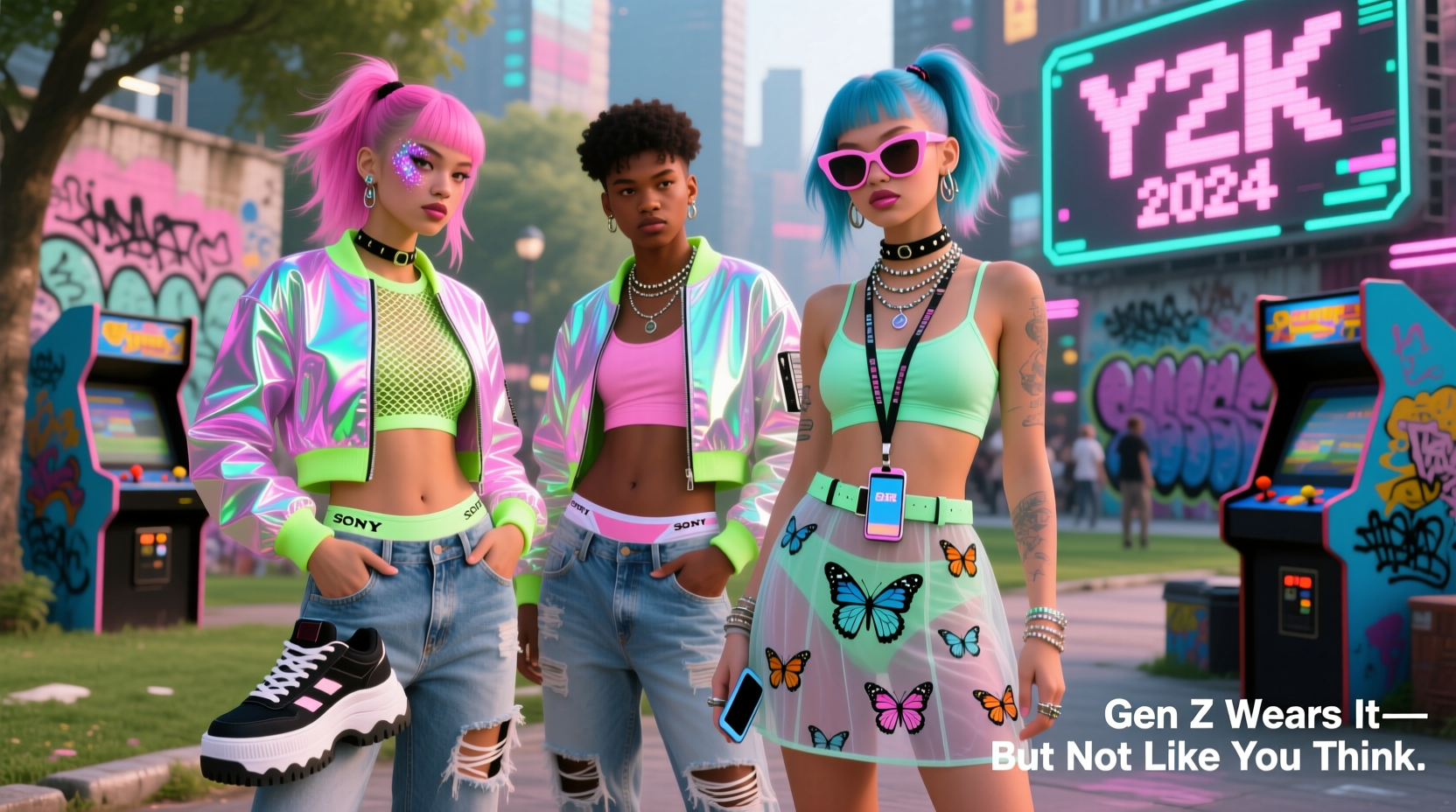
The return of Y2K fashion began around 2020, fueled by pandemic-era nostalgia and a cultural craving for playful self-expression after months of isolation. Designers and retailers responded quickly: Miu Miu reintroduced micro-miniskirts; Juicy Couture relaunched its iconic velour sets; and brands like Diesel and Blumarine embraced low-rise silhouettes and rhinestones. On TikTok, hashtags such as #Y2KFashion and #CoreAesthetic amassed billions of views, with users styling cargo pants, trucker hats, and logo-heavy tops in coordinated “fits” reminiscent of early MTV.
Yet, despite its visibility online, the Y2K trend is far from universal among Gen Z. A closer look reveals that much of the content promoting these styles comes from influencers and niche communities rather than everyday wearers. For many young people, wearing head-to-toe Juicy tracksuits or frosted lip gloss isn’t practical—or even desirable. The exaggerated elements of Y2K fashion—ultra-low waists, excessive branding, synthetic fabrics—are often seen as relics of a less inclusive, less environmentally conscious era.
“Nostalgia sells, but it doesn’t always translate to daily life. Gen Z engages with Y2K fashion ironically, selectively, or as costume—not as a default wardrobe.” — Dr. Lila Chen, Cultural Anthropologist & Fashion Studies Scholar
Instead, Gen Z tends to adopt *elements* of Y2K style—like butterfly motifs, translucent bags, or platform sandals—while blending them with contemporary sensibilities. This remixing reflects a broader shift toward personalization and anti-trend sentiment, where authenticity matters more than adherence to a single aesthetic.
What Gen Z Actually Wears: Beyond the Hype
To understand real-world Gen Z fashion, one must examine how young people dress outside curated photo shoots and influencer campaigns. Ethnographic studies and retail data suggest that comfort, versatility, and sustainability are central to their choices. Oversized hoodies, wide-leg trousers, neutral tones, and secondhand finds dominate wardrobes more than bedazzled crop tops or denim-on-denim ensembles.
A 2023 survey by McKinsey & Company found that 67% of Gen Z consumers prioritize sustainability when shopping, with 54% actively buying from resale platforms like Depop, Poshmark, or Vinted. These platforms allow them to experiment with vintage styles—including Y2K pieces—without committing to mass-produced replicas. They might pair a thrifted Ed Hardy tee with tailored cargo pants and chunky sneakers, creating a hybrid look that honors the past without being bound by it.
Tip: If you're inspired by Y2K fashion, try incorporating one nostalgic piece per outfit—like a rhinestone hair clip or metallic mini bag—to avoid overwhelming your look.The Dominant Aesthetics Among Gen Z
While Y2K remains visible, several other styles have gained deeper traction among Gen Z due to their alignment with values like individuality, functionality, and environmental responsibility:
- Quiet Luxury: Characterized by understated elegance, neutral palettes, and high-quality materials. Think cashmere knits, clean tailoring, and minimalist footwear. Popularized by shows like Succession, this aesthetic appeals to those rejecting flashy logos and disposable fashion.
- Cottagecore: Romantic, nature-inspired clothing featuring floral prints, puff sleeves, and linen fabrics. Though peaking during lockdowns, its influence persists in relaxed silhouettes and earth-toned wardrobes.
- Streetwear Redux: An evolution of 2010s streetwear, now focused on gender-neutral fits, limited drops, and artist collaborations. Brands like Brain Dead, A-Cold-Wall*, and Noah resonate more than throwback labels.
- Dopamine Dressing: Bright colors, bold patterns, and expressive layering used to boost mood. Unlike Y2K's uniform kitsch, this trend emphasizes emotional resonance over period accuracy.
Do’s and Don’ts: Navigating Y2K-Inspired Style Today
| Do | Don’t |
|---|---|
| Pair a vintage halter top with high-waisted jeans to update the silhouette | Wear ultra-low-rise pants if they don’t fit your body or lifestyle |
| Use Y2K accessories (e.g., charm bracelets, colored sunglasses) to add flair | Buy new fast-fashion versions of outdated trends |
| Experiment with metallic fabrics in small doses | Assume all Gen Z loves or identifies with Y2K looks |
| Shop secondhand for authentic early-2000s pieces | Ignore comfort and wear impractical items daily |
| Mix eras—combine a 2000s band tee with modern utility wear | Treat fashion as a rigid timeline rather than a creative palette |
Case Study: Maya’s Wardrobe Evolution
Maya, a 21-year-old university student in Portland, Oregon, started experimenting with fashion during lockdown by watching retro runway compilations. She was drawn to the boldness of Y2K looks—especially Paris Hilton’s pink-centric ensembles—and tried recreating them using clothes from her mom’s closet. At first, she wore low-rise jeans and cropped jackets to campus, but quickly realized they weren’t functional for long lectures or bike commutes.
She shifted toward a more adaptable approach: keeping the fun spirit of Y2K but adapting it to her needs. Now, she owns a vintage Juicy Couture hoodie she wears over bike shorts and combat boots, accessorizes with butterfly clips during themed events, and saves rhinestone minidresses for parties. Her everyday style leans into oversized denim jackets, neutral tees, and thrifted blazers—clothes that reflect both her personality and practical demands.
“I love the energy of Y2K,” Maya says, “but I don’t want to feel like I’m in costume. I pick what feels joyful, not what feels expected.”
Why the Perception Doesn’t Match Reality
The illusion that Y2K fashion dominates Gen Z wardrobes stems largely from algorithmic bias. Social media rewards novelty and visual impact, making extreme or stylized outfits more likely to go viral. A single TikTok of someone twirling in a bedazzled tube top can reach millions, while thousands of teens wearing simple jeans and hoodies go unnoticed.
Additionally, fashion marketing capitalizes on cyclical revivals because they’re easy to package and sell. Retailers launch “Y2K collections” knowing they’ll attract attention—even if sales remain niche. According to NPD Group data, only 18% of Gen Z purchases in 2023 were categorized as “nostalgic fashion,” compared to 43% classified as “basics” or “timeless essentials.”
This gap between perception and practice highlights a key truth: Gen Z doesn’t follow trends blindly. They curate, critique, and customize. For them, fashion is less about belonging to a movement and more about expressing layered identities across contexts—school, work, social media, activism.
Step-by-Step Guide: Building a Balanced, Trend-Smart Wardrobe
If you’re intrigued by Y2K fashion but unsure how to integrate it authentically, follow this five-step process:
- Assess Your Lifestyle Needs: Consider how much time you spend sitting, walking, or working. Choose silhouettes that support your routine—e.g., high-waisted pants instead of restrictive low-rise cuts.
- Select One Signature Element: Pick a single Y2K feature you genuinely enjoy—colorful jelly shoes, logo belts, or asymmetrical layers—and build around it.
- Source Thoughtfully: Prioritize secondhand, rental, or upcycled options. Sites like ThredUp and Vestiaire Collective offer authentic vintage pieces without contributing to overproduction.
- Blend Eras Intentionally: Combine nostalgic items with modern basics. Example: Wear a sheer mesh top over a plain tank with straight-leg jeans and minimalist sneakers.
- Evaluate Long-Term Wearability: Ask yourself: Will I still want to wear this in six months? Does it align with my values? If not, reconsider the purchase.
Frequently Asked Questions
Is Y2K fashion appropriate for professional settings?
Generally, no—most traditional workplaces favor conservative attire. However, creative industries may allow subtle nods to Y2K style, such as metallic accents or retro-inspired eyewear. When in doubt, opt for polished interpretations rather than literal recreations.
Are low-rise jeans really back?
They’ve returned in limited circles, particularly among fashion-forward urban youth and celebrities. But widespread adoption remains low. Most Gen Z wearers prefer mid- or high-rise cuts for comfort and inclusivity across body types.
How can I enjoy Y2K fashion without looking costumey?
Focus on balance. Pair one standout item (like a sparkly top) with neutral, modern basics. Avoid wearing multiple Y2K hallmarks at once—e.g., don’t combine trucker hats, cargo pants, frosted lipstick, and butterfly clips in a single look unless intentional.
Checklist: Evaluate Your Y2K Experiment
- ☑ I chose this piece because I like it—not because it’s trending
- ☑ It fits comfortably and suits my body type
- ☑ I can style it with at least two existing wardrobe items
- ☑ It was purchased secondhand, borrowed, or rented
- ☑ I feel confident and authentic wearing it
Conclusion: Style Beyond the Cycle
The so-called Y2K fashion comeback is less a full-scale revival and more a selective reimagining. While certain elements have found new life, they represent a fraction of what Gen Z actually wears. True style among younger generations is defined not by nostalgia, but by intentionality—choosing clothes that reflect identity, ethics, and lived experience.
Rather than chasing trends labeled as “back” or “dead,” Gen Z is rewriting the rules altogether. They borrow from the past, yes—but they do so critically, creatively, and with eyes fixed on the future. Whether it’s a butterfly clip tucked into braids or a perfectly worn-in thrifted jacket, their fashion speaks not of blind imitation, but of informed curation.
💬 What does your everyday style say about you? Share your thoughts below—how do you blend nostalgia with modern life? Let’s move beyond the hype and talk about real fashion.