
Steven Spielberg’s Schindler’s List (1993) is more than a cinematic achievement—it is an emotional reckoning. The film, based on the true story of Oskar Schindler, a German industrialist who saved over 1,100 Jews during the Holocaust, resonates with viewers not because it offers hope in isolation, but because that hope emerges from an ocean of despair. Its sadness is not manufactured for dramatic effect; it is rooted in historical reality, moral complexity, and the unbearable weight of human cruelty. To understand why the film feels so profoundly sorrowful is to confront the very nature of tragedy, memory, and responsibility.
The Weight of Historical Truth
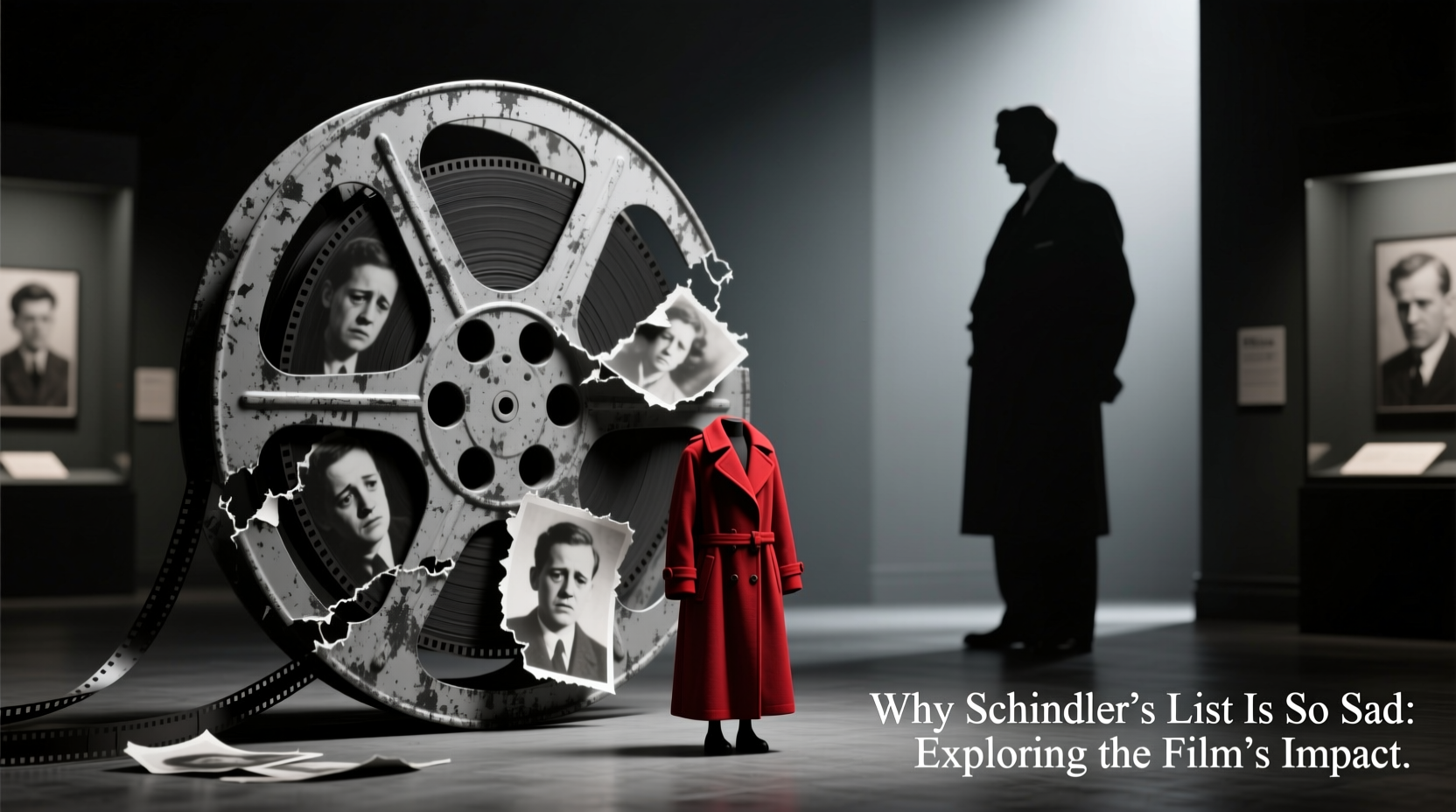
Schindler’s List derives its emotional power from its fidelity to real events. Unlike many war films that dramatize or fictionalize conflict, this movie is anchored in documented history. The screenplay, adapted from Thomas Keneally’s novel Schindler’s Ark, draws directly from survivor testimonies, archival records, and interviews. Every atrocity depicted—mass shootings, forced labor, children separated from parents—is grounded in what actually occurred.
The film opens with a family lighting Shabbat candles, a moment of peace abruptly shattered by the encroaching Nazi regime. This transition from normalcy to horror mirrors the experience of millions. As the narrative unfolds, viewers witness the systematic dehumanization of Jewish people: identity cards stamped with “Juden,” ghettos sealed off, families torn apart. The cumulative effect is not just sadness, but a deep sense of dread—a knowledge that worse is yet to come.
“We all know the statistics. Six million Jews perished. But it’s harder to grasp what that means until you see one person, then another, then another, taken away.” — Elie Wiesel, Holocaust survivor and Nobel Laureate
The Power of Minimalism and Monochrome
Spielberg made the bold decision to shoot Schindler’s List almost entirely in black and white—a choice that strips the world of color literally and symbolically. Without visual warmth, the audience is left with stark contrasts, shadows, and an unrelenting grayscale that mirrors the moral ambiguity of the era. The absence of color focuses attention on faces, gestures, and small details: a child’s red coat in a sea of gray, a pair of glasses left behind, hands clutching at windows during deportation.
This minimalism amplifies the emotional toll. When color does appear—briefly, like the girl in the red coat—it becomes haunting. Her presence is a silent indictment: she is visible, memorable, and ultimately lost. The return to monochrome after her reappearance as a corpse in a wheelbarrow is devastating. It signals not just her death, but the erasure of individuality in genocide.
Tip: When watching Schindler’s List, pay close attention to small visual details—they often carry the greatest emotional weight.Moral Complexity and the Figure of Oskar Schindler
Oskar Schindler begins as anything but a hero. A member of the Nazi Party, a womanizer, and a profiteer, he initially sees the war as an opportunity. He hires Jewish workers not out of compassion, but because they are cheaper. Yet over time, something shifts. He witnesses the liquidation of the Kraków Ghetto. He sees a young girl hiding under a bed. He watches as SS officer Amon Göth casually shoots prisoners from his balcony.
Liam Neeson’s portrayal captures this transformation with subtlety. Schindler doesn’t become a saint overnight. His redemption is gradual, painful, and incomplete. In the final scene, standing over the graves of those he couldn’t save, he breaks down, lamenting that he could have done more. “I could have got more out,” he says. “If I’d just… this car… why did I keep the car?”
This moment is among the most heartbreaking in cinema. It underscores a central theme: even the best actions in the face of evil feel insufficient. Schindler saved over a thousand lives, yet he grieves those he failed. That tension—between extraordinary courage and overwhelming loss—is what makes the film so emotionally complex.
A Timeline of Tragedy: Key Moments That Define the Film’s Sorrow
The film’s structure follows a slow descent into horror, punctuated by fleeting moments of humanity. Here is a brief timeline of pivotal scenes that contribute to its emotional impact:
- The Kraków Ghetto Liquidation (1943): Soldiers drag families from homes, shoot the elderly and infirm in the streets, and round up survivors. The chaos and brutality are overwhelming.
- Itzhak Stern’s Role: As Schindler’s accountant, Stern quietly compiles the list of workers to be saved. His calm demeanor masks deep trauma and constant fear.
- Helen Hirsch’s Abuse: The Jewish maid subjected to psychological torment by Amon Göth illustrates the intimate, daily horrors of subjugation.
- The Plaszów Camp Scenes: Göth’s arbitrary executions and obsession with control reveal the banality of evil.
- The Women Sent to Auschwitz by Mistake: A moment of panic as Schindler negotiates their return, highlighting how fragile survival truly was.
- The Final List: Names being written, families clinging to hope—each entry represents a life hanging in the balance.
- The Epilogue at the Holocaust Memorial: Survivors place stones on Schindler’s grave, linking past and present in a ritual of remembrance.
Impact on Audiences and Cultural Memory
Schindler’s List changed how the Holocaust is represented in popular culture. Before its release, few mainstream American films had confronted the genocide with such unflinching honesty. Afterward, it became a benchmark for historical storytelling—proof that cinema could serve as both art and testimony.
Many viewers report being unable to speak after watching the film. Some avoid rewatching it altogether, not because it’s poorly made, but because it’s too effective. It forces introspection: What would I have done? Could I have resisted? Would I have noticed?
To aid understanding, here is a comparison of common viewer reactions before and after seeing the film:
| Aspect | Before Watching | After Watching |
|---|---|---|
| Understanding of the Holocaust | Abstract, distant | Personal, visceral |
| Perception of Heroes | Clear-cut, idealized | Flawed, complex |
| Emotional Response | Intellectual interest | Grief, guilt, reflection |
| View of Human Nature | Generally optimistic | Mixed—capable of great evil and rare goodness |
Frequently Asked Questions
Is Schindler’s List based on a true story?
Yes. Oskar Schindler was a real person who saved approximately 1,200 Jews by employing them in his factories. The film closely follows historical accounts, including survivor interviews conducted by the Shoah Foundation.
Why didn’t Schindler save more people?
He did save over a thousand—more than any other individual during the Holocaust. But resources, timing, and Nazi oversight limited his ability to expand the list. His own regret in the final scene reflects the tragic scale of what was lost.
Is the girl in the red coat a real person?
No, she is a symbolic character created for the film. However, she was inspired by Romana Ligocka, a real survivor who wore a red coat as a child in the Kraków Ghetto. Her story adds emotional authenticity to the imagery.
How to Process the Film’s Emotional Impact: A Checklist
Watching Schindler’s List can be overwhelming. Use this checklist to help process the experience in a meaningful way:
- Allow yourself to feel grief—don’t suppress it.
- Research the real stories behind the characters.
- Visit a Holocaust museum or memorial if possible.
- Discuss the film with others to share perspectives.
- Write down your thoughts or reflections in a journal.
- Learn about other rescuers and resistance figures from the era.
- Support organizations dedicated to combating antisemitism and hate.
Conclusion: Why Sadness Matters
The sadness of Schindler’s List is not a flaw—it is its purpose. By confronting us with suffering, the film demands empathy, memory, and action. It reminds us that indifference enables atrocity, and that courage often arrives too late to undo the damage. Yet within its sorrow lies a quiet imperative: to remember, to teach, and to ensure that such darkness never prevails again.
💬 Have you seen Schindler’s List? How did it affect you? Share your thoughts, reflections, or questions in the discussion—keeping the conversation alive honors the memories it preserves.