
Gold has captivated civilizations for thousands of years. From ancient Egyptian pharaohs to modern central banks, gold has maintained a unique status as a symbol of wealth, power, and stability. Unlike other metals or commodities, gold doesn’t rust, tarnish, or corrode. It’s rare but not too rare, malleable yet durable. These intrinsic qualities, combined with deep-rooted human psychology and economic function, explain why gold remains valuable across time and cultures.
The allure of gold transcends aesthetics. While its lustrous shine makes it ideal for jewelry, its true value lies in its role as a store of wealth, a hedge against inflation, and a trusted asset during times of uncertainty. To understand why gold continues to hold such significance, we must examine its physical properties, historical context, monetary role, and psychological impact on human behavior.
Physical and Chemical Properties That Define Gold’s Value
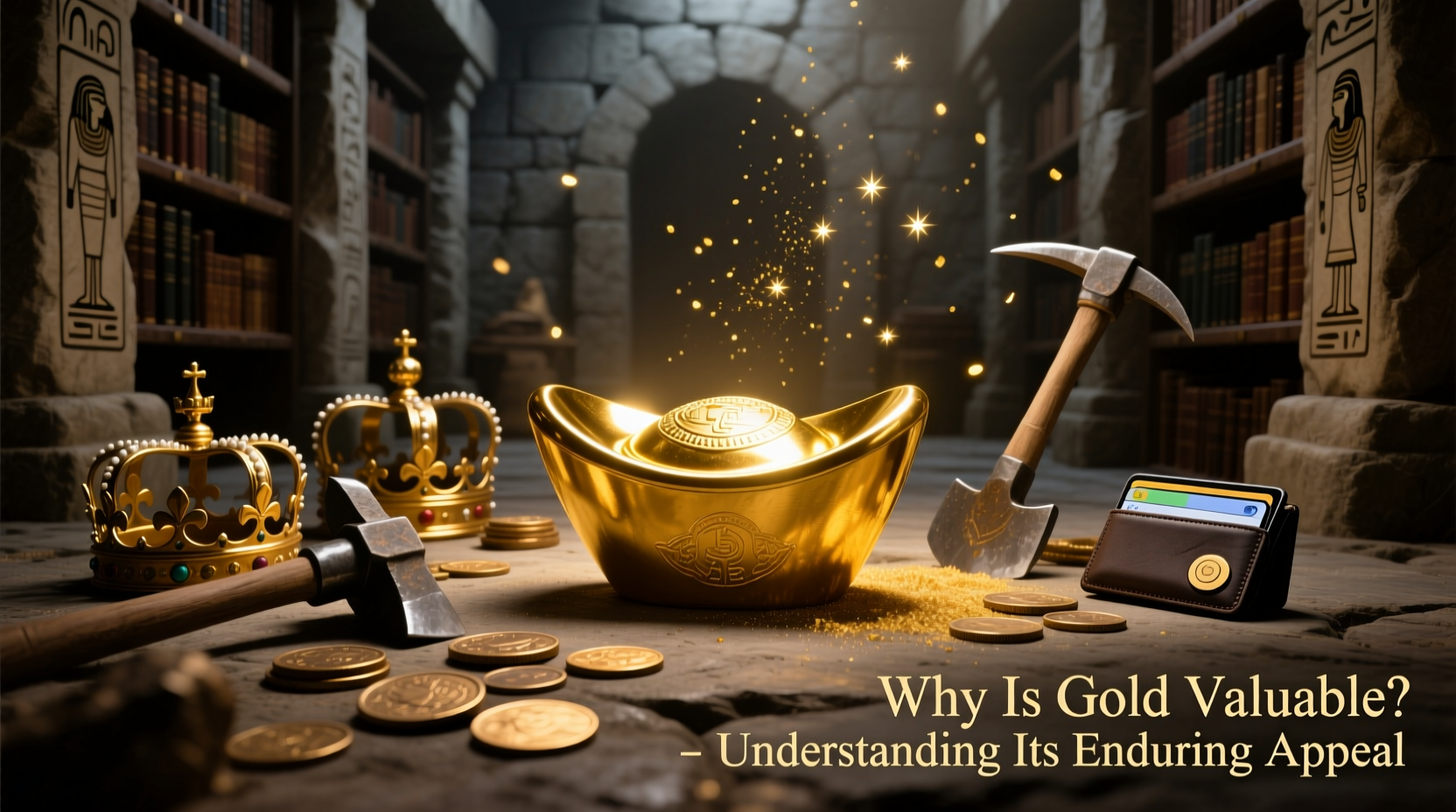
At the core of gold’s desirability are its unique physical and chemical characteristics. Unlike iron, which oxidizes, or silver, which tarnishes, gold remains virtually unchanged over millennia. This resistance to corrosion means that every ounce of gold ever mined still exists in some form today—either in vaults, jewelry, or electronic devices.
- Durability: Gold does not degrade when exposed to air, water, or most acids.
- Malleability: One ounce of gold can be stretched into a wire 50 miles long or hammered into a sheet covering 100 square feet.
- Rarity: Gold is scarce enough to maintain value but abundant enough to be useful in trade and ornamentation.
- Distinctive appearance: Its bright yellow color stands out among other metals, making it instantly recognizable and culturally symbolic.
A Historical Perspective: Gold Across Civilizations
Gold’s value predates written history. The earliest known gold artifacts date back to the Varna Necropolis in Bulgaria, around 4500 BCE. Ancient Egyptians associated gold with the gods, calling it “the skin of the sun.” Pharaohs were buried with vast quantities, believing it would ensure divine favor in the afterlife.
In classical antiquity, gold became the foundation of early monetary systems. Around 550 BCE, King Croesus of Lydia (modern-day Turkey) minted the first standardized gold coins, revolutionizing trade by providing a reliable medium of exchange. This innovation spread to Greece, Persia, and eventually Rome, where gold aureus coins funded an empire.
Throughout the Middle Ages and Renaissance, European monarchs hoarded gold to finance wars and assert dominance. The Spanish conquest of the Americas was largely driven by the pursuit of Incan and Aztec gold, flooding Europe with new supplies and triggering inflation—but also cementing gold’s role in global economics.
“Gold is money. Everything else is credit.” — J.P. Morgan, financier and founder of J.P. Morgan & Co.
The Role of Gold in Modern Economies
Even in today’s digital financial landscape, gold retains critical importance. Central banks around the world hold over 35,000 metric tons of gold reserves, including major economies like the United States, Germany, and China. These holdings serve as a buffer against currency devaluation and geopolitical instability.
The gold standard, though officially abandoned by most nations by the 1970s, shaped global finance for over a century. Under this system, currencies were directly linked to a fixed amount of gold, ensuring price stability and limiting reckless monetary expansion. While fiat currencies now dominate, many investors view gold as a natural counterbalance to government-issued money, especially during periods of high inflation or low interest rates.
During financial crises—from the 2008 recession to the market volatility of 2020—gold prices typically rise. This inverse relationship with riskier assets underscores its role as a “safe-haven” investment. When stock markets fall or currencies fluctuate wildly, gold often gains value simply because people seek stability.
Key Reasons Investors Turn to Gold
- Hedge against inflation and currency depreciation
- Portfolio diversification to reduce overall risk
- Protection during geopolitical conflicts or economic downturns
- Liquidity—gold can be easily bought, sold, or exchanged worldwide
- Long-term preservation of purchasing power
Cultural and Psychological Dimensions of Gold’s Appeal
Beyond economics and science, gold holds a powerful place in the human psyche. Psychologically, humans are drawn to scarcity, beauty, and permanence—all traits embodied by gold. Societies have consistently used gold to mark status, achievement, and celebration. Weddings, religious ceremonies, and national treasures frequently feature gold elements, reinforcing its symbolic weight.
In India, one of the world’s largest consumers of gold, the metal is deeply tied to cultural identity. Families pass down gold jewelry through generations, not just as heirlooms but as financial security. During festivals like Diwali, buying gold is considered auspicious and a sign of prosperity.
Similarly, in Western cultures, gold medals represent the pinnacle of athletic achievement, while golden anniversaries celebrate enduring relationships. These associations reinforce gold’s image as something timeless and aspirational.
Tip: Understanding the emotional resonance of gold can help investors recognize its sustained demand beyond pure market mechanics.Comparative Analysis: Gold vs. Other Store-of-Value Assets
| Asset | Scarcity | Portability | Durability | Global Acceptance |
|---|---|---|---|---|
| Gold | High (limited annual mining output) | High (easy to transport in bullion or coin form) | Exceptional (does not degrade) | Universal (recognized value across borders) |
| Silver | Moderate (more abundant than gold) | High | Good (but tarnishes over time) | Widespread, but less prestigious |
| Diamonds | Controlled by supply chains (not naturally scarce) | Moderate (small but require certification) | High (hardness), but resale value varies | Limited (value depends on grading and market) |
| Cryptocurrencies | Artificially capped (e.g., Bitcoin’s 21 million limit) | Excellent (digital transfer) | Dependent on technology and networks | Growing, but not universally accepted |
Mini Case Study: Venezuela’s Economic Collapse and the Return to Gold
When hyperinflation ravaged Venezuela’s economy in the 2010s, the national currency—the bolívar—lost almost all value. Prices doubled daily, savings evaporated, and basic goods became unaffordable. In response, citizens turned to alternative stores of value. Among them, gold emerged as a lifeline.
Despite strict capital controls, informal gold mining surged in remote regions. Locally mined gold was traded directly for food, medicine, and fuel. In border towns, merchants began pricing goods in grams of gold rather than bolívares. Meanwhile, the Venezuelan government attempted to launch its own cryptocurrency backed by oil and gold reserves—a move widely seen as an effort to regain trust through tangible asset linkage.
This real-world example illustrates how, in moments of systemic failure, societies revert to historically proven forms of value. Gold, despite being “old-fashioned,” provided reliability when modern financial instruments failed completely.
Frequently Asked Questions
Why isn’t gold used as everyday currency anymore?
While gold once backed national currencies, modern economies require flexible monetary policy to manage growth and recessions. A strict gold standard limits a government’s ability to adjust money supply. Today, gold serves more as a reserve asset than a transactional currency, though it remains a benchmark for financial stability.
Can gold lose its value?
Gold’s purchasing power can fluctuate based on interest rates, inflation, and investor sentiment. However, unlike fiat currencies, it cannot be printed at will, which protects it from total devaluation. Over long periods—centuries—gold has preserved wealth far more effectively than paper money.
Is gold a good investment today?
Gold performs best as part of a diversified portfolio. It may not generate income like stocks or bonds, but it reduces overall risk. Financial advisors often recommend allocating 5%–10% of a portfolio to precious metals, especially during uncertain economic times.
Conclusion: Embracing Gold’s Timeless Role
Gold’s value is not arbitrary—it is rooted in science, history, economics, and human nature. Its resistance to decay, universal recognition, and emotional significance make it unlike any other asset. Whether worn as a wedding band, stored in a national vault, or passed down as a family heirloom, gold continues to represent security and permanence in an ever-changing world.
As digital currencies evolve and financial systems face new challenges, gold remains a constant. Not because it’s trendy or speculative, but because it has proven, over millennia, to endure.
🚀 Ready to explore how gold fits into your financial strategy? Research reputable dealers, consider small allocations, and understand its role beyond price swings. Share this article with someone who values lasting worth over fleeting trends.