
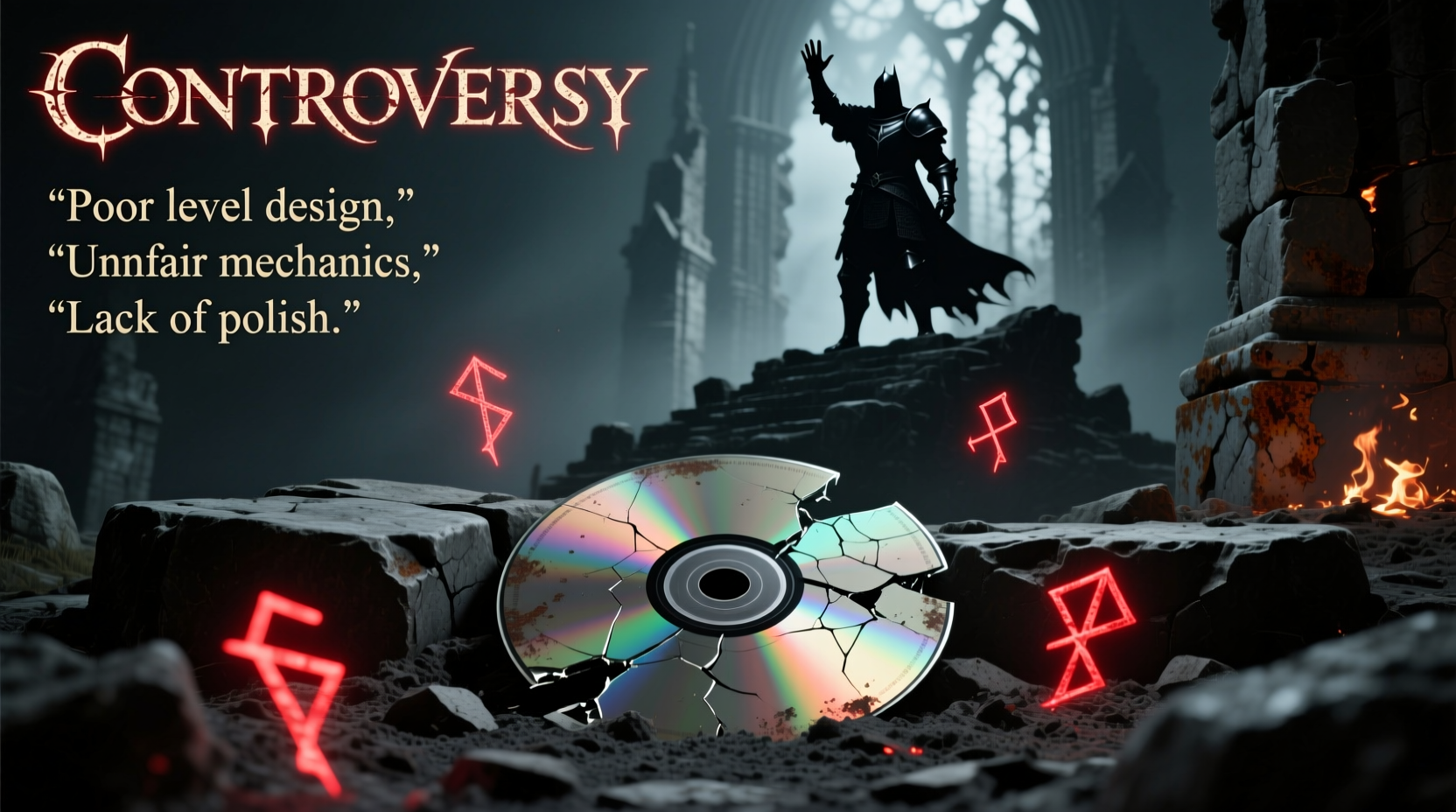
When FromSoftware released Dark Souls II in 2014, it arrived with high expectations. The original Dark Souls had redefined action RPGs with its punishing difficulty, intricate world design, and cryptic storytelling. Yet, despite selling millions of copies and receiving generally positive reviews, Dark Souls II became one of the most debated entries in the series. Over the years, a persistent narrative has emerged: many fans consider it the weakest link. But why is Dark Souls 2 hated? The answer isn’t simple—it’s rooted in shifting development leadership, gameplay changes, community expectations, and evolving perceptions.
The Shadow of a Masterpiece
The original Dark Souls (2011) was a landmark title. Directed by Hidetaka Miyazaki, it refined the mechanics introduced in Demon’s Souls, creating a game that felt both brutally fair and deeply rewarding. Its interconnected world, environmental storytelling, and meticulous enemy placement set a new standard for immersive game design.
Dark Souls II, however, was developed without Miyazaki at the helm. He stepped back to work on Project Beast, which later became Bloodborne. Instead, the project was led by Yui Tanimura and Tomohiro Shibuya—talented developers, but not Miyazaki. This shift sparked immediate skepticism. Fans began questioning whether the soul of the series could survive without its visionary director.
“Miyazaki wasn’t just a director—he was the architect of the tone, the pacing, the very philosophy behind the Souls games.” — James Lee, Game Design Analyst, *Edge Magazine*
Design Changes That Divided the Community
While Dark Souls II retained core elements like bonfires (now called “Flame Keepers”), stamina-based combat, and permadeath mechanics, several key changes alienated long-time fans:
- Increased enemy density: Areas were packed with enemies, reducing exploration freedom and increasing frustration.
- Health scaling with level: Unlike previous entries where health growth slowed, DS2 gave players more HP per level, making higher-level runs feel less challenging.
- Less interconnected world design: Zones were more linear and segmented, lacking the seamless looping paths of Lordran.
- Artificial lighting and atmosphere: Many players criticized the overuse of fog and darkness not tied to narrative or environment, calling it “empty horror” rather than meaningful dread.
A Comparative Overview: Key Differences Between Dark Souls I and II
| Feature | Dark Souls (2011) | Dark Souls II (2014) |
|---|---|---|
| Director | Hidetaka Miyazaki | Yui Tanimura & Tomohiro Shibuya |
| World Design | Fully interconnected; vertical layering | More linear; zone-based progression |
| Health Scaling | Diminishing returns past mid-levels | Linear increase with Soul Level |
| Enemy Placement | Strategic, atmospheric | Denser, sometimes arbitrary |
| Atmosphere | Organic decay, melancholy | Heavy artificial fog, gothic horror |
| Storytelling | Environmental, subtle | Still subtle, but slightly more direct |
The Role of Expectations and Timing
Timing played a crucial role in the backlash. By 2014, the “Souls-like” genre was exploding. Games inspired by FromSoftware’s formula were everywhere, and fans expected innovation, not iteration. Instead, Dark Souls II felt, to some, like a step backward—a polished but soulless expansion of an established template.
Moreover, the marketing emphasized accessibility. Phrases like “more approachable difficulty” and “refined camera system” signaled a softening of the franchise’s identity. For a community built on overcoming insurmountable odds, this felt like betrayal.
Yet, not all changes were regressive. The addition of weapon durability, expanded NPC questlines, and dynamic weather systems added depth. The game also featured one of the most emotionally resonant endings in the series—the Pursuer’s arc, culminating in the DLC’s *Crown of the Ivory King*, is still praised for its tragedy and closure.
Rehabilitation Through Scholarship: How Perception Changed
In recent years, a critical reevaluation of Dark Souls II has taken place. Critics and longtime players have begun highlighting its strengths: the haunting beauty of Majula, the oppressive weight of Drangleic Castle, and the thematic coherence of a kingdom rotting from within due to its king’s fear of death.
The three DLC episodes—*Crown of the Sunken King*, *Crown of the Old Iron King*, and *Crown of the Ivory King*—are now widely regarded as some of the best content in the entire series. They restored interconnectivity, deepened lore, and delivered emotional payoffs absent in the base game.
“I went from hating Dark Souls II to considering it the most tragic entry. It’s not about triumph—it’s about decay, denial, and the cost of clinging to life.” — Lila Tran, Souls Lore YouTuber
Real Example: A Player’s Journey from Disappointment to Appreciation
Consider Mark, a dedicated Souls fan who played through the series chronologically. After finishing the original Dark Souls, he approached the sequel with excitement. Within hours, he was frustrated. Enemies respawned too frequently. Bonfire locations felt sparse. The world lacked the awe of Lordran.
He shelved the game for five years. When he returned for a second playthrough—this time on NG+ and with the Scholar of the First Sin edition—his experience transformed. The upgraded visuals clarified level layouts. The tighter enemy balance made combat more deliberate. And after completing all three DLCs, he saw the full narrative arc: a kingdom cursed not by fire or gods, but by human weakness.
“I realized I hadn’t given it a fair chance,” Mark said in a forum post. “It’s not trying to be the first game. It’s asking different questions.”
Actionable Checklist: Reassessing Dark Souls II Fairly
To judge Dark Souls II on its own merits, follow this checklist:
- Play the Scholar of the First Sin edition for improved lighting and balance.
- Complete all three DLC episodes—they’re essential to the full experience.
- Avoid comparing level design directly to Dark Souls I; appreciate Drangleic’s fragmented decay.
- Focus on the story of King Vendrick and the pursuit of immortality.
- Try a low-level melee build to counteract inflated health scaling.
- Engage with the community for deeper lore insights (e.g., Scholar of the First Sin’s implications).
Frequently Asked Questions
Is Dark Souls II canon?
Yes. Despite directorial changes, FromSoftware confirms Dark Souls II is part of the official timeline. It takes place between the events of the first game and *Dark Souls III*, during the early stages of the Second Flame.
Why does the main game feel so different from the DLC?
The base game was developed under tighter deadlines and creative constraints. The DLC, designed later with more freedom, reflects a return to classic Souls design principles—interconnected zones, layered secrets, and stronger environmental storytelling.
Should I skip Dark Souls II?
No. While flawed, it offers unique themes, powerful boss fights (like the Smelter Demon), and one of the most moving endings in the series. Approach it as a companion piece—not a replacement—for the original.
Conclusion: Beyond the Hype and Hate
The hatred toward Dark Souls II says as much about fandom culture as it does about the game itself. It was judged against an impossible standard—perfection defined by its predecessor. But when examined without bias, Dark Souls II emerges as a flawed yet ambitious entry that explores isolation, decay, and the futility of escaping mortality.
Its legacy isn’t clean, but it’s significant. It pushed the series forward technically, experimented with narrative delivery, and laid groundwork for future titles. More importantly, it reminds us that art—even interactive art—can evolve beyond its origins.
🚀 Ready to revisit Drangleic with fresh eyes? Boot up Scholar of the First Sin, dive into the DLC, and discover the sorrow beneath the stone. Share your thoughts—has your opinion of Dark Souls II changed over time?








