If you’ve ever checked yourself in a mirror midday only to find your foundation clinging to dry patches, settling into fine lines, or looking heavy and unnatural, you’re not alone. The dreaded “cakey” finish is one of the most common makeup frustrations—especially when you started the day with a flawless base. While foundation formula and skin prep play major roles, many overlook the transformative power of setting spray. Used correctly, it can be the difference between touch-up desperation and lasting radiance.
Cakey makeup isn’t just about product choice—it’s often a symptom of mismatched techniques, environmental factors, and incorrect use of finishing tools like setting sprays. This guide breaks down the science behind the cakiness, identifies root causes, and delivers practical, pro-tested solutions using setting spray as your secret weapon.
What Makes Foundation Look Cakey?
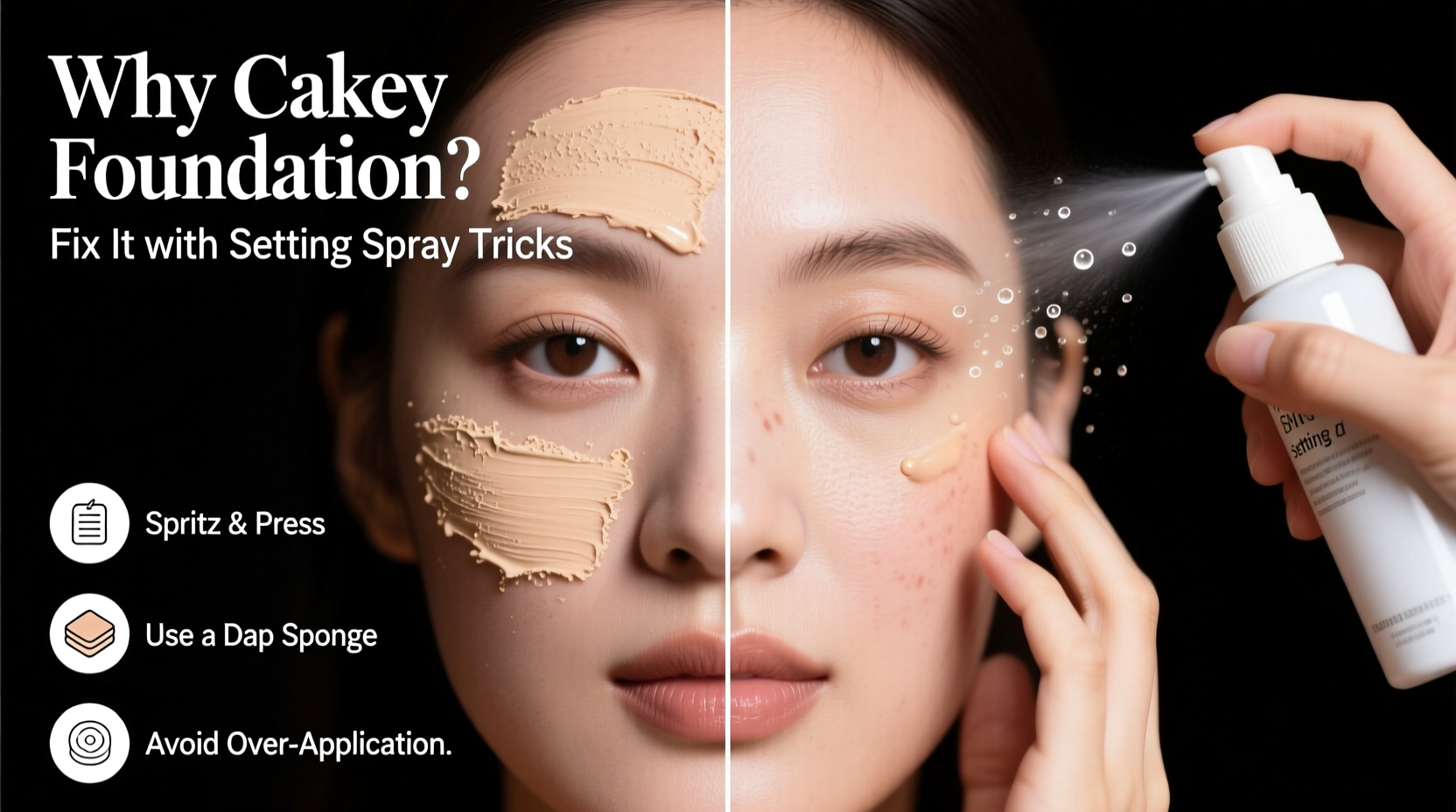
“Cakey” refers to makeup that appears thick, cracked, or powdery on the skin. It often accumulates in texture irregularities—around the nose, under the eyes, or across forehead lines—and loses its seamless blend over time. Several interrelated factors contribute:
- Over-application: Layering too much foundation or concealer creates excess product that dries down unevenly.
- Poor skin prep: Dehydrated or flaky skin doesn’t provide a smooth canvas, causing foundation to cling and crack.
- Incompatible formulas: Combining drying foundations with mattifying powders can strip moisture and amplify texture.
- Environmental exposure: Heat, humidity, and indoor air conditioning accelerate oil production and moisture loss.
- Incorrect setting methods: Using powder alone without proper sealing can lead to buildup and oxidation.
While these issues develop throughout the day, they’re rarely irreversible. The key lies in understanding how setting spray interacts with your routine to lock in hydration, meld layers, and preserve finish.
Tip: Always apply foundation on slightly damp skin to prevent patchiness and improve blendability.The Role of Setting Spray in Preventing Cakeyness
Setting spray is more than a final flourish—it’s a functional step that stabilizes makeup while enhancing wear. Unlike loose or pressed powder, which absorbs oil but can add texture, setting spray uses a fine mist of polymers, humectants, and film-formers to create an invisible shield over makeup.
There are three primary types of setting sprays, each affecting cakeyness differently:
| Type | Best For | Impact on Cakeyness |
|---|---|---|
| Hydrating/Misting Sprays | Dry, mature, or textured skin | Reduces flaking; softens appearance of layers |
| Matte/Long-Wear Sprays | Oily or combination skin | Controls shine but may accentuate dryness if overused |
| Dual-Phase (Hybrid) Sprays | All skin types seeking balance | Offers hold + hydration; ideal for preventing midday breakdown |
When applied correctly, setting spray fuses foundation, concealer, and powder into a cohesive layer. This process—called “melting” the makeup—eliminates separation and reduces the visibility of buildup. It also replenishes surface moisture, counteracting the drying effects of pigments and powders.
“Setting spray isn’t optional—it’s the glue that holds your makeup together. Without it, even the best foundation can oxidize, separate, and look artificial within hours.” — Lena Park, Celebrity Makeup Artist & Educator
Step-by-Step Guide: How to Use Setting Spray to Prevent Cakeyness
Using setting spray effectively requires timing, technique, and the right sequence. Follow this professional routine to extend wear and maintain a natural finish:
- Start with hydrated skin: Apply a lightweight moisturizer or hydrating serum. Wait 5 minutes before applying foundation to allow absorption.
- Use minimal foundation: Apply thin layers with a damp sponge or brush. Build coverage only where needed—avoid heavy application on smooth areas like cheeks.
- Set strategically: Use a translucent powder only on areas prone to shine (T-zone, under eyes). Avoid over-powdering.
- First mist – pre-set hydration: Hold the setting spray 8–10 inches from your face and apply 2–3 spritzes *before* powder. This primes the makeup to adhere smoothly.
- Second mist – seal the layers: After powdering, apply another 3–4 spritzes in an “X” and “T” motion. This melts the layers together and prevents powder from sitting on top.
- Let it dry naturally: Do not blot or fan your face. Allow the mist to evaporate completely (about 30 seconds).
- Midday refresh: Carry your setting spray. If makeup starts to fade or feel tight, mist lightly and press gently with clean hands to reactivate the finish.
Pro Tricks to Maximize Setting Spray Effectiveness
Going beyond basic application, these advanced techniques are used by professionals to combat cakeyness in high-humidity environments and long-wear conditions:
- Layer with a hydrating mist first: Before any makeup, spritz a facial mist like rosewater or thermal spring water. Let it dry, then proceed. This adds a moisture buffer beneath foundation.
- Customize your spray: Mix a drop of facial oil into your setting spray (shake well before each use). Ideal for dry skin types needing extra luminosity.
- Freeze your setting spray: Keep it in the fridge for a cooling effect that helps constrict pores and reduce midday oiliness—especially effective in summer.
- Double-spray method: Spray once before makeup, once after. The initial layer bonds to skin; the final layer seals the entire look.
- Use it with cream products: Spritz after blush and bronzer to soften edges and integrate them seamlessly into the skin.
One often-overlooked trick? Re-mist and press—not rub—your face halfway through the day. This reactivates the polymers in the spray, essentially “resetting” your makeup without adding new product.
Real Example: From Cakey to Cohesive in One Workday
Sophia, a marketing executive in Miami, struggled daily with her full-coverage foundation cracking by 1 PM despite meticulous application. Her office environment alternated between AC blasts and outdoor commutes, creating extreme shifts in humidity and temperature.
She followed a standard routine: moisturizer, foundation, powder, go. But by noon, her under-eye area looked dry and her forehead had visible lines of separation.
After consulting a makeup artist, she adjusted her method:
- Switched to a hydrating primer with hyaluronic acid
- Applied foundation in thin layers with a damp sponge
- Used powder only on her T-zone
- Applied a dual-phase setting spray twice—after foundation and again after powder
- Carried the spray for a midday refresh before client meetings
Result: Her makeup stayed intact and looked fresh until 6 PM. No more powderiness, no touch-ups with sponges in the restroom. The simple addition of strategic setting spray transformed her experience.
Do’s and Don’ts When Using Setting Spray
Avoid common mistakes that undermine your efforts. Refer to this checklist to stay on track:
| Do’s | Don’ts |
|---|---|
| Apply in a crisscross “X” pattern for even coverage | Don’t spray too close—this causes pooling and dripping |
| Allow the spray to dry naturally | Don’t fan or blot immediately after spraying |
| Reapply midday for a refreshed look | Don’t skip the second mist after powder |
| Choose a formula suited to your skin type | Don’t use matte sprays on dry skin without added hydration |
| Shake dual-phase sprays vigorously before use | Don’t assume all sprays are created equal—read ingredients |
Frequently Asked Questions
Can I use setting spray instead of powder?
You can, but with caveats. Setting spray alone won’t control oil on oily skin types. However, if you have dry or normal skin, a hydrating setting spray used after liquid foundation can eliminate the need for powder, reducing the risk of cakeyness. For oily zones, use a light dusting of powder followed by spray to lock it in without heaviness.
Why does my face still look cakey even with setting spray?
This usually points to over-application earlier in the routine. Setting spray enhances what’s already on your face—it can’t erase excess product. Try reducing foundation amount and focusing on targeted coverage. Also, ensure your spray is fresh; expired formulas lose their binding agents and become ineffective.
How many times should I reapply setting spray during the day?
Once, ideally around midday. Over-misting can break down makeup, especially if the formula contains alcohol. A single 3–4 spritz refresh is enough to revive the finish. Press fingers gently over the skin afterward to reactivate the product.
Checklist: Prevent Cakey Foundation in 7 Steps
Follow this concise action plan every time you do your makeup:
- Exfoliate gently 2–3 times per week to remove dead skin cells
- Moisturize and wait 5 minutes before makeup
- Use a damp beauty sponge for sheer, buildable foundation application
- Set only oily areas with translucent powder
- Apply setting spray in an “X” and “T” motion after foundation
- Seal with a second round of spray after powder
- Carry your spray for a midday refresh—press, don’t rub, after misting
Final Thoughts: Make Setting Spray Your Secret Weapon
Cakey foundation isn’t inevitable—it’s a signal that your routine needs refinement. More often than not, the solution isn’t switching products, but optimizing how you use them. Setting spray, when integrated intentionally, acts as both protector and perfector. It preserves the integrity of your makeup while maintaining a skin-like finish.
Don’t reserve it for special occasions. Make it a non-negotiable step in your daily ritual. Experiment with timing, formulas, and layering techniques until you find what works for your skin and lifestyle. Once you master the art of the mist, you’ll wonder how you ever went without it.
💬 Ready to ditch the cakey look for good? Start tonight: clean your sprayer nozzle, shake your bottle, and try the double-mist method tomorrow. Share your results or favorite tips in the comments below!








