The human eye is more than a window to the world—it’s also a canvas of color shaped by biology, genetics, and physics. From deep brown to icy blue, eye color is one of the most visually striking traits we inherit. Yet, despite its familiarity, few understand what truly determines why eyes have color. It's not just about pigment; it's a complex interplay of genes, cellular structure, and even the way light behaves within the iris.
Eye color has fascinated scientists and artists alike for centuries. While once thought to follow simple Mendelian inheritance, modern research reveals a far more intricate story involving multiple genes, regulatory mechanisms, and environmental influences during early development. Understanding this process not only satisfies curiosity but also sheds light on broader genetic principles and even certain health conditions linked to pigmentation.
The Role of Melanin in Eye Color
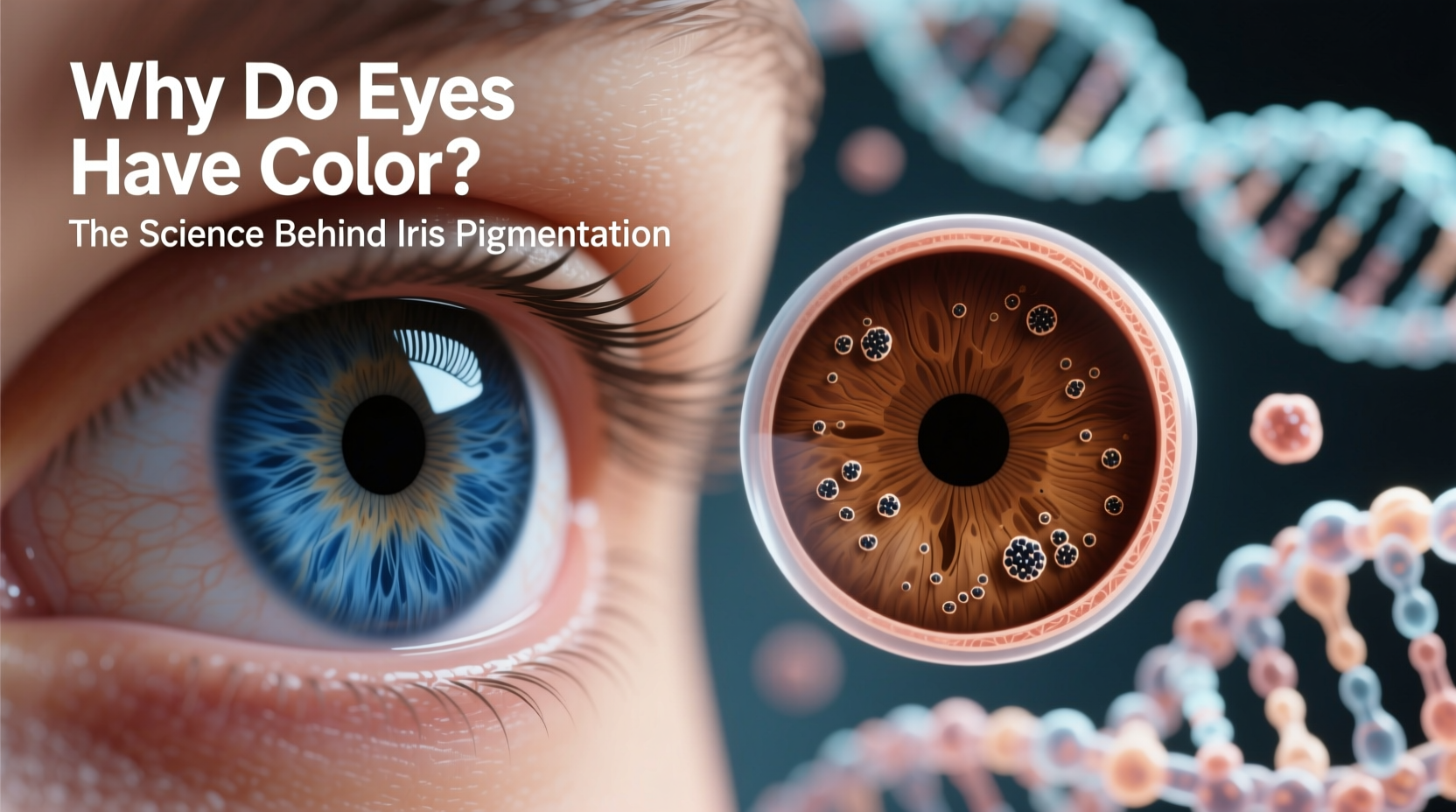
The primary determinant of eye color is melanin, a pigment also responsible for skin and hair tone. Melanin is produced by specialized cells called melanocytes located in the iris—the colored ring surrounding the pupil. The amount and distribution of melanin in the anterior layers of the iris dictate whether eyes appear brown, green, hazel, or blue.
Brown eyes contain high concentrations of melanin in both the front (anterior) layer and deeper stroma of the iris. This dense pigmentation absorbs most incoming light, minimizing reflection and resulting in a dark appearance. In contrast, blue eyes have very little melanin in the front layer. When light enters the iris, it scatters due to a phenomenon known as Rayleigh scattering—the same effect that makes the sky appear blue. This scattered light reflects back predominantly in shorter (blue) wavelengths, giving the eye its characteristic hue.
Green and hazel eyes fall between these extremes. Green eyes typically have moderate melanin levels combined with a yellowish structural pigment called lipochrome. Hazel eyes often display a mix of colors due to variable melanin distribution and can shift in appearance under different lighting conditions.
Tip: Eye color may appear to change slightly depending on clothing, lighting, or emotional state—not because the pigment changes, but due to how light interacts with the iris.Genetics Behind Eye Color Variation
For decades, eye color was taught as a classic example of single-gene inheritance, with brown dominant over blue. However, advances in genomics have dismantled this oversimplification. Today, researchers recognize that at least 16 genes contribute to eye color, with two playing particularly prominent roles: HERC2 and OCA2.
The OCA2 gene, located on chromosome 15, regulates the production of melanin within melanosomes—tiny organelles inside melanocytes. A variation near this gene, controlled by the neighboring HERC2 gene, acts like a switch that can turn down melanin production in the iris. Individuals with specific variants in this region tend to have blue eyes, while those without them produce more melanin and usually have brown eyes.
Other genes such as TYR, TYRP1, and SILV also influence pigmentation pathways. These interact in complex ways, leading to the wide spectrum of intermediate shades seen across populations. For instance, someone might inherit genes promoting low melanin from one parent and moderate lipochrome expression from the other, resulting in green or hazel eyes.
“Eye color is a polygenic trait influenced by subtle variations across multiple genes—not a simple dominant-recessive switch.” — Dr. Linda Liu, Geneticist at the National Eye Institute
How Newborns Develop Eye Color
Babies are often born with blue or gray eyes regardless of their eventual adult color. This occurs because melanocytes in the iris are not fully active at birth. Over time—typically within the first six to twelve months—these cells begin producing melanin based on genetic instructions.
The timeline varies significantly among individuals. Some infants show definitive eye color by three months, while others take up to three years for full pigmentation to stabilize. During this period, parents may observe gradual shifts from blue to green, hazel, or brown as melanin accumulates.
This developmental phase explains why predicting a baby’s final eye color early in life remains challenging. Even genetic testing cannot always provide certainty, since gene-environment interactions and epigenetic factors may modulate melanin expression during infancy.
Timeline of Infant Eye Color Development
- Birth – 3 months: Eyes often appear blue or gray due to minimal melanin.
- 3 – 6 months: Initial signs of melanin production may darken the iris.
- 6 – 12 months: Most babies show stable trends toward final color.
- 1 – 3 years: Final pigmentation typically sets; minor shifts still possible.
Rarity and Distribution of Eye Colors Worldwide
While all humans share the same basic ocular anatomy, eye color distribution varies dramatically across regions due to ancestral migration and evolutionary pressures. Brown eyes dominate globally, present in over 79% of the population. They are especially prevalent in Africa, Asia, and Latin America, where higher melanin offers protection against intense UV radiation.
Blue eyes, though iconic in parts of Europe, occur in only about 8–10% of people worldwide. Northern European countries like Estonia and Finland report the highest prevalence—up to 89% in some areas. Green eyes are rarer still, estimated in just 2% of the global population, with clusters in Ireland, Scotland, and Iceland.
| Eye Color | Global Prevalence | Most Common In |
|---|---|---|
| Brown | ~79% | Africa, Asia, Middle East, Americas |
| Blue | ~8–10% | Northern & Eastern Europe |
| Hazel | ~5% | North America, Middle East |
| Green | ~2% | Ireland, Scotland, Iceland |
| Gray | <1% | Baltic States, Russia |
Unusual Eye Colors and Medical Insights
Some rare eye colors arise from medical or genetic anomalies. For example, individuals with albinism lack sufficient melanin throughout the body, including the iris. Their eyes may appear pale blue, pinkish, or red due to light reflecting off blood vessels in the retina—a condition known as transillumination.
Another rare phenomenon is central heterochromia, where the inner ring of the iris differs in color from the outer portion—such as a golden center surrounded by green. Sectoral heterochromia involves patches of different color within one iris. While often harmless and congenital, sudden changes in eye color in adulthood should prompt medical evaluation, as they can signal inflammation, glaucoma, or tumors like melanoma.
Interestingly, certain medications can alter eye color. Prostaglandin analogs used to treat glaucoma—like latanoprost—have been known to increase melanin production in the iris, leading to gradual darkening over months of use. This side effect, while usually permanent, underscores the dynamic nature of ocular pigmentation even beyond childhood.
Mini Case Study: Emma’s Changing Eyes
Emma, a 28-year-old teacher from Minnesota, noticed her eyes seemed lighter in photos taken during winter compared to summer. After consulting an optometrist, she learned that seasonal lighting differences and her choice of wardrobe (darker clothes in winter, bright tones in summer) were influencing perceived eye color. Her hazel irises contained radial streaks of gold and brown, which became more pronounced under warm indoor lighting. No medical concern was found—just a vivid demonstration of how environment shapes visual perception.
Frequently Asked Questions
Can two blue-eyed parents have a brown-eyed child?
Yes, though rare. Because eye color involves multiple genes, recessive mutations in one gene can be offset by dominant alleles in others. If both parents carry hidden variants associated with increased melanin (e.g., in OCA2 or HERC2), there’s a small chance their child inherits combinations that activate pigment production.
Do animals have the same range of eye colors as humans?
No. Most mammals have limited eye color variation, typically ranging from yellow to brown. Structural blues and greens seen in birds, reptiles, and some fish result from different optical mechanisms, such as collagen arrangement or crystalline structures in the tapetum lucidum—a reflective layer absent in humans.
Is eye color linked to vision quality?
Not directly. However, people with lighter eyes may experience greater light sensitivity due to less protective iris pigmentation. This can make them more prone to discomfort in bright environments but does not impair visual acuity or overall eye health.
Actionable Checklist: Understanding Your Own Eye Color
- Observe your eyes in natural daylight to see true base color.
- Note any patterns of heterochromia or multi-tonal zones.
- Consider family history—both parents’ and grandparents’ eye colors.
- Track changes over time, especially if you're using new medications.
- Discuss unusual shifts with an ophthalmologist to rule out underlying issues.
Conclusion
Eye color is far more than a cosmetic feature—it's a living testament to human genetics, evolution, and biophysics. From the microscopic dance of melanin granules to the macro-level spread of traits across continents, the story of eye color bridges science and identity. Whether your eyes are dark as midnight or clear as spring skies, each shade carries a unique biological narrative shaped by thousands of years of inheritance.
🚀 Curious about your genetic roots? Explore DNA testing services that analyze pigmentation markers—or simply appreciate the complexity behind your gaze. Share this article to spark conversations about the science in our sight.