
Yellowjackets are among the most feared stinging insects in North America, not because they’re the most venomous, but because of their sudden aggression and tendency to attack in groups. Unlike solitary wasps or even honeybees, yellowjackets don’t hesitate to defend their nests with coordinated force. This raises a critical question: why are yellowjackets so aggressive? The answer lies in their biology, social structure, seasonal behavior, and environmental triggers. Understanding what drives their defensive instincts can help people avoid dangerous encounters and coexist more safely with these misunderstood insects.
The Biology Behind Yellowjacket Aggression
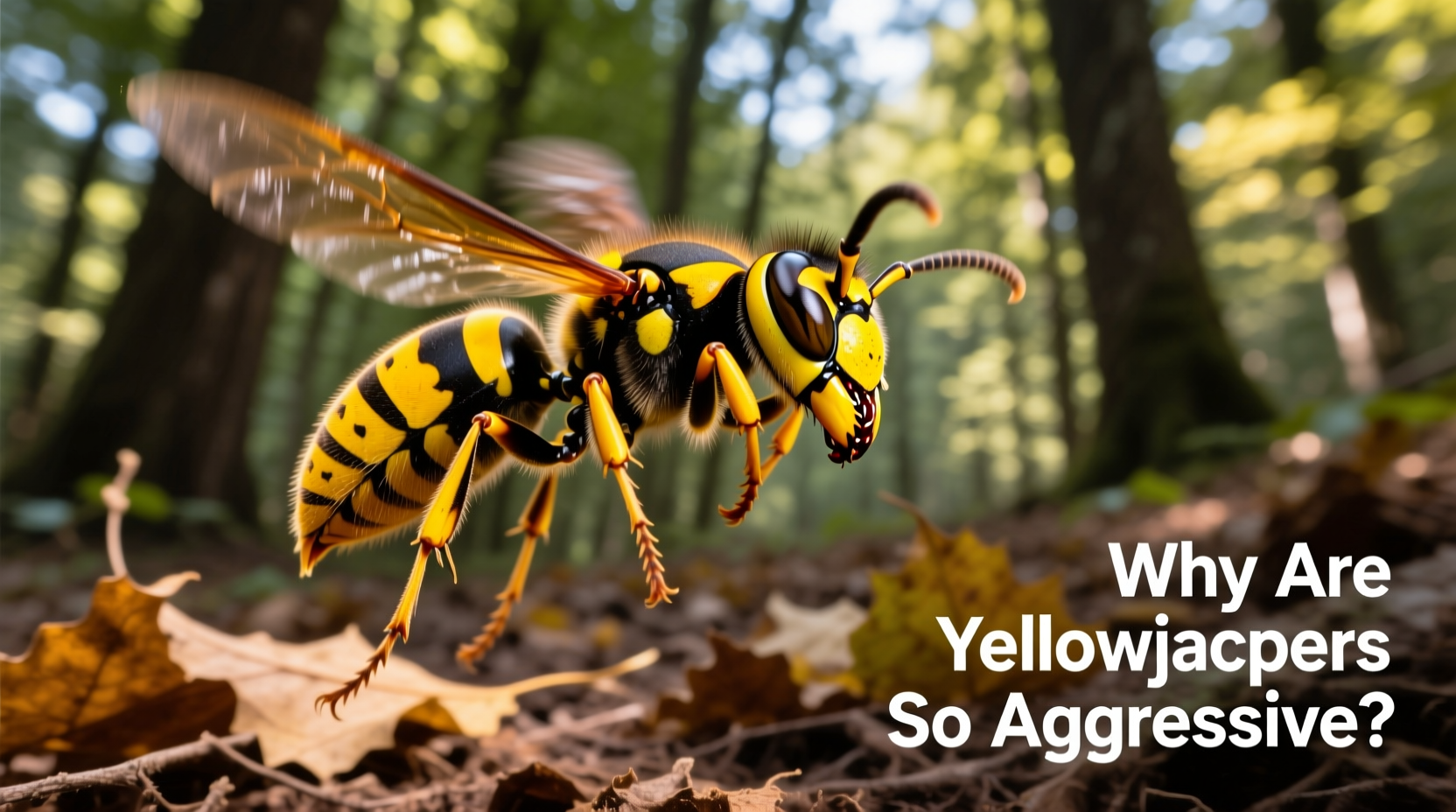
Yellowjackets (genus Vespula and Dolichovespula) are social wasps that live in complex colonies led by a queen. Each colony follows a strict annual cycle: founded in spring, growing through summer, and dying off in winter—except for new queens who hibernate. As the colony grows, so does its need for protection. Worker yellowjackets are sterile females whose primary duties include foraging, feeding larvae, and defending the nest.
Their aggression is not random—it’s a survival mechanism. A single sting delivers venom containing enzymes and peptides that cause pain and inflammation. But more importantly, when a yellowjacket stings, it releases alarm pheromones. These chemical signals alert nearby nestmates, triggering a rapid, collective defense. This means one perceived threat can quickly escalate into multiple stings as other workers join the attack.
Tip: If you're stung by a yellowjacket, move away quickly and calmly—running in a straight line reduces the chance of attracting more wasps.Seasonal Triggers of Increased Aggression
Yellowjacket behavior changes dramatically throughout the year. In early summer, they are primarily protein seekers, hunting insects and spiders to feed developing larvae. At this stage, they tend to be less confrontational toward humans unless provoked. However, by late summer and early fall, their behavior shifts due to key biological and dietary changes.
- Colony Decline: As temperatures drop, the queen stops laying eggs. With fewer larvae to feed, worker yellowjackets lose their primary purpose.
- Diet Shift: Without larvae needing protein, workers turn to sugary foods—soda, fruit, nectar, and even garbage. This brings them into direct conflict with humans at picnics, barbecues, and outdoor events.
- Increased Defensiveness: Late-season colonies are at peak population, often housing thousands of individuals. Larger nests mean more defenders, and any disturbance near the nest can provoke a massive response.
This seasonal shift explains why late-summer encounters with yellowjackets are far more dangerous than those in spring or midsummer. They are hungrier, more numerous, and more sensitive to disturbances.
Nesting Habits and Territorial Behavior
Where yellowjackets build their nests plays a crucial role in human-wasp conflicts. Most species construct underground nests in abandoned rodent burrows, but others build aerial nests in wall voids, attics, or dense shrubbery. These locations often overlap with human activity—lawns, patios, playgrounds—increasing the likelihood of accidental nest disturbance.
A yellowjacket colony considers a radius of 3–10 feet around the nest entrance as its core territory. Stepping on a hidden ground nest while mowing the lawn or brushing against an attic nest during storage cleanup can trigger instant retaliation. Their territorial instinct is so strong that even vibrations from power tools or loud noises may agitate them.
“Yellowjackets aren’t inherently malicious—they’re just extremely efficient at protecting their investment. A single disturbed nest can result in dozens of stings within seconds.” — Dr. Alan Thompson, Entomologist, University of Vermont
Do’s and Don’ts When Around Yellowjackets
| Action | Recommended? | Reason |
|---|---|---|
| Swatting at a wasp near food | No | Triggers alarm pheromones; attracts more wasps |
| Walking barefoot on grass | No | Risk stepping on hidden ground nests |
| Using unscented lotions | Yes | Fragrances mimic floral scents that attract foragers |
| Covering food outdoors | Yes | Prevents attracting scavenging workers |
| Wearing bright colors | No | Yellow and white resemble flowers; increases attention |
| Remaining calm and moving slowly | Yes | Reduces perception of threat |
Real-Life Scenario: A Backyard BBQ Gone Wrong
In August 2022, a family in central Oregon hosted a backyard cookout. While setting up near a flower bed, a child kicked a loose piece of turf, unknowingly disturbing a yellowjacket nest beneath. Within seconds, wasps erupted from the ground. Five people were stung multiple times before escaping indoors. One adult required emergency medical treatment due to an allergic reaction.
Investigation later revealed a mature underground nest housing over 3,000 workers. The incident wasn’t caused by provocation but by unintentional intrusion into a well-camouflaged nest zone. This case underscores how ordinary activities can become hazardous without awareness of yellowjacket nesting patterns.
How to Prevent Aggressive Encounters: A Step-by-Step Guide
Reducing the risk of yellowjacket stings involves proactive habits and environmental management. Follow this timeline-based approach to minimize threats:
- Spring (March–May): Inspect your property for signs of early nesting. Look for increased wasp traffic near holes in the ground or under eaves. Early detection allows for safer removal.
- Summer (June–July): Keep trash cans tightly sealed and rinse recyclables. Avoid leaving sugary drinks or meat scraps outdoors. Use covered containers for compost.
- Early Fall (August–September): Be extra cautious when mowing, gardening, or cleaning gutters. Wear closed-toe shoes and long pants in high-risk areas.
- Late Fall (October–November): Seal entry points in homes to prevent overwintering queens from establishing nests next season. Repair window screens and gaps in siding.
- Year-Round: Educate children and guests about not swatting at wasps and reporting nests immediately.
Frequently Asked Questions
Can yellowjackets sting more than once?
Yes, unlike honeybees, yellowjackets have smooth stingers and can sting repeatedly without dying. This makes them particularly dangerous during defensive attacks.
Are all yellowjackets aggressive?
No. Solitary foragers away from the nest are usually non-aggressive unless directly threatened. The majority of attacks occur within close proximity to the nest, where guard wasps are on high alert.
What should I do if I find a yellowjacket nest?
Do not attempt to remove it yourself. Contact a licensed pest control professional who can safely eliminate the nest using protective gear and appropriate treatments. DIY methods often lead to dangerous stinging incidents.
Conclusion: Respecting Nature While Staying Safe
Yellowjackets aren’t aggressive out of malice—they’re driven by evolutionary imperatives to protect their colony and ensure reproductive success. Their defensive behavior, while intimidating, serves a vital ecological role. They help control pest insect populations and contribute to nutrient cycling.
By understanding their life cycle, recognizing seasonal patterns, and respecting their space, people can significantly reduce the risk of conflict. Simple actions like covering food, wearing neutral clothing, and avoiding known nest sites go a long way. Awareness, not fear, is the best defense.
🚀 Stay informed, stay cautious, and share this knowledge with others. Knowing why yellowjackets act the way they do empowers you to enjoy the outdoors safely—even during peak wasp season.