Walking through a city at night, you might spot someone dressed in flowing black velvet, silver jewelry glinting under streetlights, their eyeliner sharp enough to cut through social norms. This is more than just fashion—it’s a statement. The goth subculture, rooted in music, literature, and visual identity, has endured for decades, drawing individuals from all walks of life. But what lies beneath the surface? Why are some people irresistibly drawn to goth fashion, and what does this attraction reveal about human psychology and the need for belonging?
The appeal of goth fashion isn’t merely aesthetic. It’s deeply psychological, tied to identity formation, emotional regulation, resistance to mainstream culture, and the search for community. Understanding this requires peeling back layers—not just of lace and leather—but of personal experience, societal pressures, and cognitive patterns that shape how we express ourselves.
The Allure of Aesthetic Identity
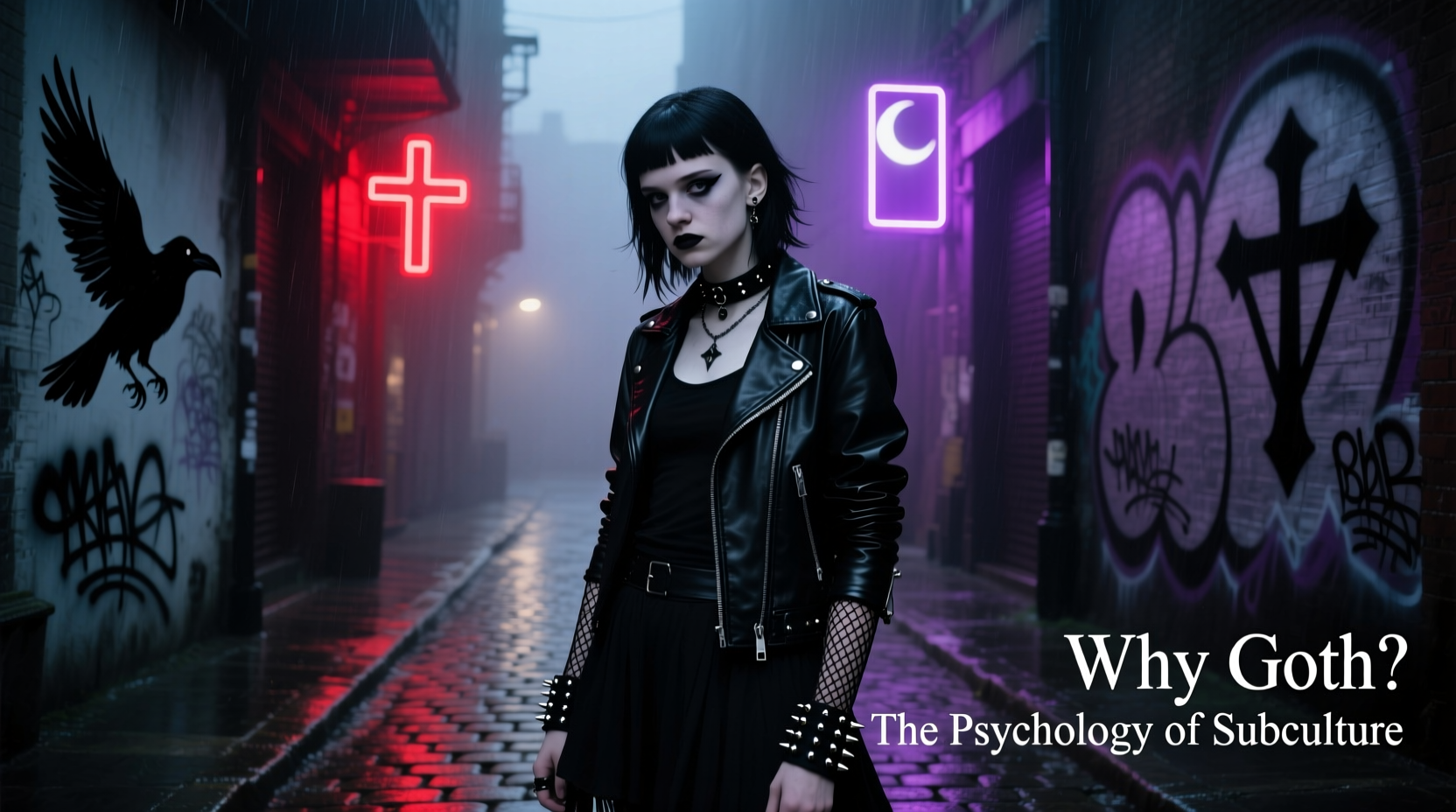
From Victorian mourning attire to punk rebellion, clothing has long served as a tool for self-definition. For many drawn to goth fashion, style becomes an extension of inner complexity. Black clothing, dramatic makeup, and ornate accessories aren't random choices—they're deliberate expressions of mood, philosophy, and individuality.
Goth aesthetics often draw from Romanticism, Gothic literature, and horror imagery. These influences celebrate melancholy, introspection, and beauty in darkness. Wearing such styles allows individuals to externalize internal states—particularly those that feel misunderstood or stigmatized in everyday society.
Tip: Clothing can be therapeutic. If certain styles make you feel seen or empowered, explore them without fear of judgment.Psychologically, this aligns with symbolic self-completion theory—the idea that people use symbols (like clothing) to express aspects of themselves they value but may not fully embody yet. A teenager feeling isolated might adopt goth fashion not just because it looks cool, but because it reflects their sense of depth, sensitivity, and nonconformity.
Subcultures as Sanctuaries
Human beings are inherently social creatures who seek connection. When mainstream culture fails to validate one’s emotions or worldview, subcultures offer refuge. The goth scene—through clubs, music festivals, online forums, and local meetups—provides a space where sadness isn’t dismissed, introspection is respected, and difference is celebrated.
This sense of belonging is powerful. Research in social psychology shows that group affiliation enhances self-esteem and reduces anxiety. For someone who feels alienated in school, work, or family settings, finding others who appreciate dark art, post-punk music, or philosophical pessimism can be transformative.
“Being part of the goth community saved me during a time when I felt invisible. Here, my sadness wasn’t something to fix—it was understood.” — Maya R., 27, graphic designer and lifelong goth
Subcultures also provide scripts for behavior and identity. In mainstream environments, there are unspoken rules about how to act, dress, and feel. Subcultures rewrite those rules. Within the goth world, wearing black every day isn’t strange—it’s expected. Expressing existential dread through poetry or music isn’t morbid—it’s authentic.
The Psychology of Rebellion and Autonomy
Adopting goth fashion is often interpreted as rebellion. While this label can be reductive, there’s truth in it. Choosing to stand out—especially by embracing symbols associated with death, decay, or taboo—is a quiet act of defiance against cultural expectations.
Developmental psychologists note that adolescence and early adulthood are critical periods for identity exploration. During these years, individuals test boundaries, question authority, and experiment with different personas. Goth fashion offers a structured form of rebellion—one that doesn’t necessarily involve risk-taking behaviors like substance use or delinquency, but still signals independence.
Moreover, rejecting normative beauty standards—such as tanned skin, bright colors, or minimal makeup—can be empowering. By flipping these norms on their head, goths reclaim agency over their appearance. This autonomy is psychologically protective; studies show that perceived control over one’s environment correlates with lower stress and higher resilience.
Do’s and Don’ts of Navigating Subcultural Identity
| Do | Don’t |
|---|---|
| Use fashion to explore your evolving identity | Treat subculture membership as a fixed label |
| Seek communities that affirm your values | Isolate yourself from diverse perspectives |
| Engage critically with subcultural norms | Conform blindly to avoid standing out within the group |
| Express emotions honestly through creative outlets | Assume emotional depth requires constant melancholy |
Emotional Expression and Mental Health
A common misconception is that goths are depressed—or even suicidal—simply because of their fashion choices. This stereotype is not only inaccurate but harmful. While some individuals in the subculture may struggle with mental health issues, so do people across all demographics and styles.
In reality, goth fashion often serves as a healthy outlet for emotional processing. Art therapy principles suggest that externalizing difficult emotions—through color, texture, or symbolism—can reduce internal tension. Black clothing, for example, might represent grief, but it can also signify strength, mystery, or protection.
A 2015 study published in *The Journal of Individual Differences* found that goths scored higher on empathy and openness to experience—two traits linked to creativity and emotional intelligence. Another longitudinal survey noted that adolescents involved in alternative subcultures reported greater self-awareness and authenticity, though they were more likely to face bullying.
It’s crucial to distinguish between using fashion as emotional armor versus masking unresolved trauma. Healthy engagement with subculture involves self-reflection, community support, and balance. When style becomes the only coping mechanism, professional help may be needed.
Mini Case Study: From Isolation to Empowerment
James, a 19-year-old college student, grew up in a small town where emotional expression was discouraged. He described himself as “too sensitive” and was frequently mocked for crying during movies or writing dark poetry. At 15, he discovered goth music—Bauhaus, Siouxsie and the Banshees, The Cure—and began experimenting with black clothing and eyeliner.
Initially, his parents worried he was “going through a phase” or hiding depression. But James noticed a shift: he felt more grounded, more visible. He joined an online goth forum, attended a local alternative night, and eventually started a campus club for dark culture enthusiasts.
“I didn’t become goth because I was sad,” James explained. “I became goth because it gave me a language for feelings I couldn’t name before. Now I’m majoring in psychology—I want to help others find their voice too.”
His story illustrates how subcultures can serve as bridges between isolation and integration—not by changing who someone is, but by validating their existence.
The Role of Media and Misrepresentation
Media portrayals of goths have historically been sensationalized. News reports linking goth fashion to violence or suicide clusters—despite lack of evidence—have contributed to stigma. Films and TV shows often depict goths as brooding loners or villains, reinforcing negative stereotypes.
This misrepresentation has real consequences. Teachers may misinterpret a student’s black clothing as a cry for help. Employers might unconsciously bias against alternative appearances. Even well-meaning friends and family may express concern not based on behavior, but on aesthetics.
However, increased visibility—through influencers, musicians, and inclusive fashion brands—has begun to shift perceptions. Designers like Rick Owens, Alexander McQueen, and Yohji Yamamoto have brought goth-inspired aesthetics into high fashion, legitimizing its artistic value.
As society becomes more aware of neurodiversity, mental health, and identity fluidity, the line between “alternative” and “mainstream” continues to blur. What was once marginalized is now recognized as a legitimate mode of self-expression.
Checklist: Building a Healthy Relationship with Subcultural Identity
- Reflect on why certain styles resonate with you—do they reflect your mood, values, or aspirations?
- Seek out inclusive communities, both online and offline, that encourage respectful dialogue.
- Maintain connections outside your subculture to foster diverse perspectives.
- Be mindful of how your appearance affects your opportunities—adapt when necessary without self-betrayal.
- Separate aesthetic preference from emotional dependency—ensure you have multiple outlets for well-being.
- Educate others gently when stereotypes arise, especially in professional or academic settings.
Frequently Asked Questions
Does liking goth fashion mean someone is depressed?
No. While some individuals who identify with goth culture may experience depression, fashion preference alone is not an indicator of mental illness. Many goths are emotionally intelligent, creative, and mentally healthy. Assuming otherwise perpetuates harmful stereotypes.
Can someone be part of multiple subcultures at once?
Absolutely. Identity is rarely monolithic. Someone might enjoy goth fashion while also participating in anime fandom, environmental activism, or fitness communities. Modern identity is fluid, and overlapping affiliations are common and natural.
Is goth fashion still relevant today?
Yes. While the peak media attention of the 1980s and 1990s has passed, goth culture remains vibrant. Annual events like Whitby Gothic Weekend attract thousands worldwide. Moreover, elements of goth aesthetics continue to influence fashion, music, and digital art—proof of its enduring resonance.
Understanding the Deeper Pull
The draw toward goth fashion ultimately stems from a fundamental human need: to be seen. In a world that often rewards conformity, superficial positivity, and emotional suppression, choosing to wear black lace, recite Edgar Allan Poe, or dance to Joy Division is an act of courage.
It says: *I exist. I feel deeply. I don’t need to smile to be valid.*
Subcultures like goth thrive because they offer more than clothes or music—they offer meaning. They allow individuals to craft narratives around their pain, curiosity, and uniqueness. And in doing so, they transform marginalization into mastery.
The psychology behind subcultural affiliation reveals a broader truth: diversity in expression enriches society. When we stop pathologizing difference and start appreciating it, we create space for everyone to belong—whether dressed in neon, denim, or midnight black.
💬 Have you ever felt drawn to a subculture? What did it give you? Share your story in the comments—your experience could help someone else feel less alone.