King Will rings have gained attention across online marketplaces for their remarkably low prices compared to traditional jewelry brands. At first glance, a $20 ring that looks like platinum or gold seems too good to be true. Yet, thousands of customers purchase them daily. The real question isn’t whether they’re affordable—it’s *why* they’re so cheap. The answer lies in a combination of material selection, mass production techniques, supply chain efficiency, and strategic market positioning. This article breaks down the cost structure behind King Will rings, analyzing the materials used, manufacturing processes, and economic factors that allow such aggressive pricing without collapsing quality entirely.
Material Composition: What Are King Will Rings Actually Made Of?
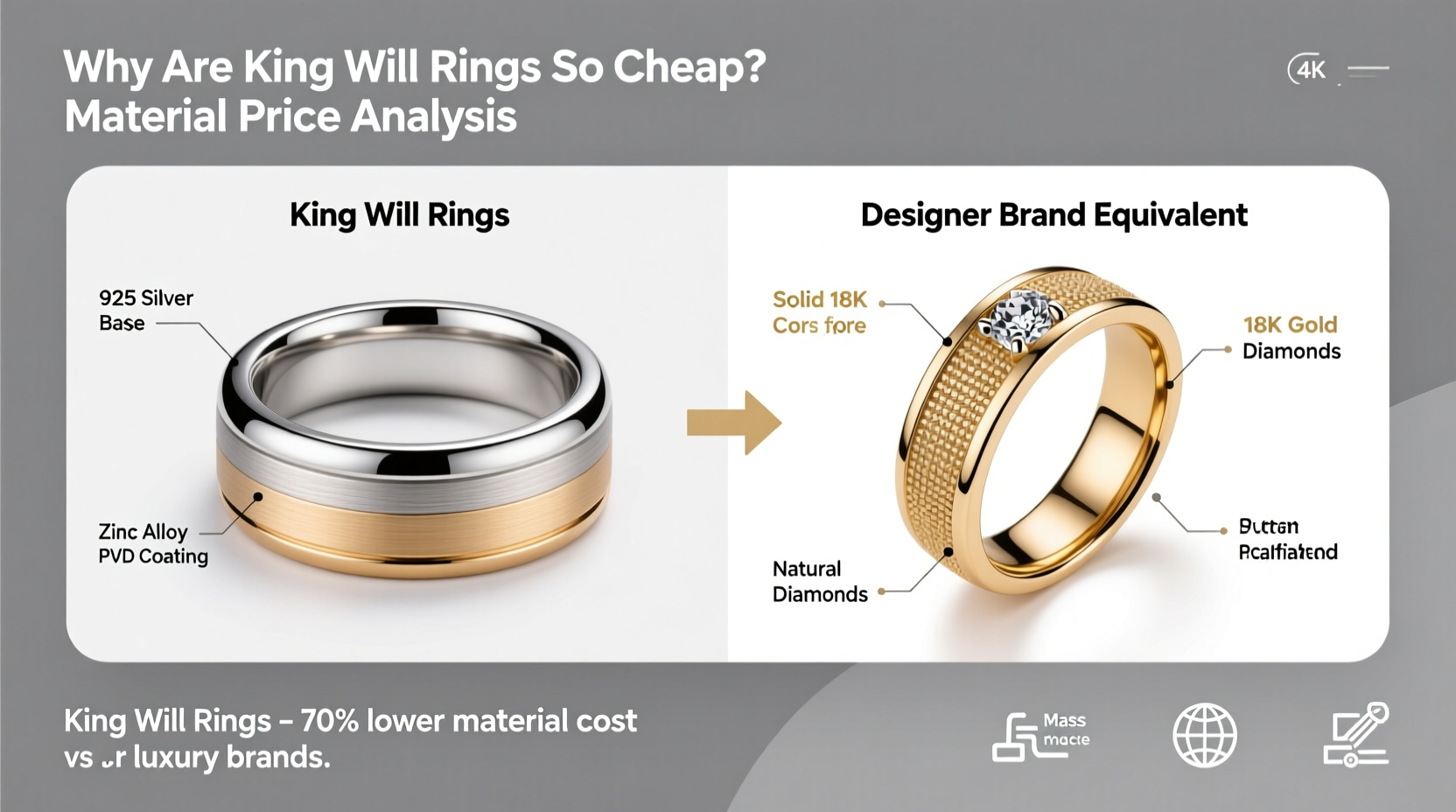
The most direct factor influencing price is the choice of base materials. Unlike fine jewelry that uses solid gold, platinum, or high-karat alloys, King Will rings primarily use inexpensive base metals. The most common materials include:
- Zinc alloy (Zamak): A blend of zinc, aluminum, magnesium, and copper. It's lightweight, easily molded, and costs less than $2 per kilogram in bulk.
- Stainless steel: Often used for wedding bands in this range. Resistant to tarnish and durable, but still far cheaper than precious metals.
- Copper or brass cores with plating: Many rings feature a thin layer of gold, silver, or rhodium over a copper base. This gives the appearance of luxury at a fraction of the cost.
The plating thickness is typically between 0.1 and 0.5 microns—much thinner than the 2–3 microns found in higher-end fashion jewelry. While it provides initial shine, it wears off faster with regular use, especially on rings, which are subject to constant friction.
Tip: Avoid wearing plated King Will rings in water or during physical activity to extend the life of the finish.Manufacturing Scale and Labor Efficiency
One of the biggest cost advantages King Will enjoys is economies of scale. These rings are produced in massive quantities in factories based in China and Southeast Asia, where labor and operational costs are significantly lower than in Western countries.
A typical factory producing King Will-style jewelry can manufacture over 50,000 units per month. With automated casting, polishing, and plating lines, the per-unit labor cost drops to under $0.15. Compare that to a small artisan jeweler in the U.S., where handcrafting a single band might take 30 minutes and incur $20+ in labor alone.
Mass production also reduces tooling and setup costs. Once molds are created, each additional unit adds minimal expense. This scalability allows King Will to maintain profit margins even at ultra-low retail prices.
“High-volume production turns marginal-cost savings into massive overall gains. That’s how you sell a ring for $19.99 and still make money.” — Daniel Lin, Supply Chain Analyst, Jewelry Industry Insights
Supply Chain and Distribution Model
King Will bypasses traditional retail markups by selling directly through e-commerce platforms like Amazon, AliExpress, and Shopify stores. This eliminates the need for brick-and-mortar overhead, sales staff, and middlemen distributors.
In a conventional jewelry store, a ring might pass through five hands before reaching the customer: manufacturer → wholesaler → distributor → retailer → consumer. Each step adds a markup of 30% to 100%. In contrast, King Will’s model cuts straight from factory to consumer.
Shipping is another cost saver. Orders are fulfilled from regional warehouses or shipped directly from China using low-cost logistics partners like Cainiao or YunExpress. While delivery may take 7–14 days, the savings are passed on to the buyer.
Distribution Cost Comparison
| Cost Factor | Traditional Jewelry Store | King Will (Direct-to-Consumer) |
|---|---|---|
| Base Material | $5–$10 | $0.80–$2.00 |
| Manufacturing Labor | $15–$30 | $0.10–$0.50 |
| Markup (Wholesale/Retail) | 200–400% | 50–100% |
| Final Retail Price | $80–$200 | $15–$30 |
Design Strategy and Market Positioning
King Will doesn’t compete on longevity or heirloom value. Instead, it targets consumers looking for trendy, short-term accessories. Their catalog emphasizes variety—skull rings, signet styles, gemstone bands, minimalist bands—allowing customers to rotate pieces frequently without financial guilt.
This “fast fashion” approach mirrors trends seen in clothing brands like Shein or H&M. Jewelry becomes disposable, worn for weeks or months rather than years. By accepting limited durability, King Will keeps design simple, materials cheap, and inventory flowing.
Additionally, product listings often use terms like “titanium look” or “gold tone” instead of claiming authenticity. This careful wording avoids legal issues while still appealing to buyers seeking aesthetic value.
Tip: Check product titles and descriptions carefully. Words like \"plated,\" \"alloy,\" or \"tone\" indicate non-precious materials.Real-World Example: A Customer’s Experience
Sarah, a college student from Austin, bought a King Will rose gold-plated tungsten ring for $18.99 during a graduation gift spree. She wore it daily for six weeks. By week eight, the plating began flaking near the band’s inner edge due to contact with lotion and sink water. Still, she considered it a worthwhile purchase: “I loved how it looked with my spring outfits. For less than the price of a meal, I got two months of wear. I’ll just buy another when this one fades.”
Sarah’s experience reflects the target audience: budget-conscious shoppers who prioritize style over permanence. King Will delivers exactly what it promises—a temporary accessory at a minimal cost.
How to Maximize Value When Buying King Will Rings
If you're considering a King Will ring, you can extend its lifespan and get better value with smart usage. Follow this checklist to make the most of your purchase:
- Remove during handwashing or showering – Water and soap accelerate plating erosion.
- Avoid contact with chemicals – Perfume, lotion, and cleaning agents degrade finishes.
- Store separately – Keep it in a soft pouch to prevent scratches from harder jewelry.
- Polish gently – Use a microfiber cloth; never use abrasive cleaners.
- Rotate usage – Alternate with other rings to reduce wear on any single piece.
Frequently Asked Questions
Are King Will rings made of real gold or silver?
No. King Will rings are not made of solid gold or silver. Some models feature a thin plating of gold or silver over a base metal like zinc alloy or stainless steel. Always check the product description for terms like “gold-plated” or “silver-tone” to confirm.
Do King Will rings cause skin discoloration?
Some users report green or black marks on their fingers, especially with copper-based alloys. This reaction is caused by oxidation when sweat interacts with the metal. It’s harmless but can be minimized by keeping the ring dry and removing it at night.
Can King Will rings be resized or repaired?
Generally, no. Due to their construction and low-cost materials, resizing is not feasible. If the plating wears off or the ring breaks, replacement is usually more practical than repair.
Conclusion: Understanding Value vs. Price
King Will rings are cheap because they’re designed to be. From low-cost alloys and automated factories to direct online sales and fast-fashion branding, every element of their business model prioritizes affordability over permanence. They aren’t meant to replace engagement rings or family heirlooms—but they succeed brilliantly as stylish, accessible accessories.
Understanding the material price analysis behind these rings empowers you to make informed choices. If you want lasting value, invest in solid gold or platinum. But if you want variety, trend-driven designs, and minimal financial risk, King Will offers a compelling option.
🚀 Ready to shop smarter? Share this breakdown with someone who’s ever wondered, “Why is this ring so cheap?”—and help them see the real cost behind the price tag.