
Chimpanzees, our closest living relatives sharing over 98% of our DNA, are often celebrated for their intelligence, empathy, and complex social bonds. Yet, they are also capable of shocking acts of violence—lethal attacks, infanticide, and brutal dominance struggles. This duality raises a pressing question: Why are chimpanzees so violent? The answer lies not in simple instinct but in a web of evolutionary pressures, social structures, ecological competition, and psychological complexity that mirrors some of humanity’s darkest impulses.
Understanding chimp aggression isn’t just about animal behavior—it offers insight into the roots of human conflict, cooperation, and morality. Decades of field research, particularly from primatologists like Jane Goodall and Richard Wrangham, have revealed that chimpanzee violence is not random but strategic, often serving reproductive, territorial, or hierarchical purposes.
The Social Hierarchy and Power Struggles
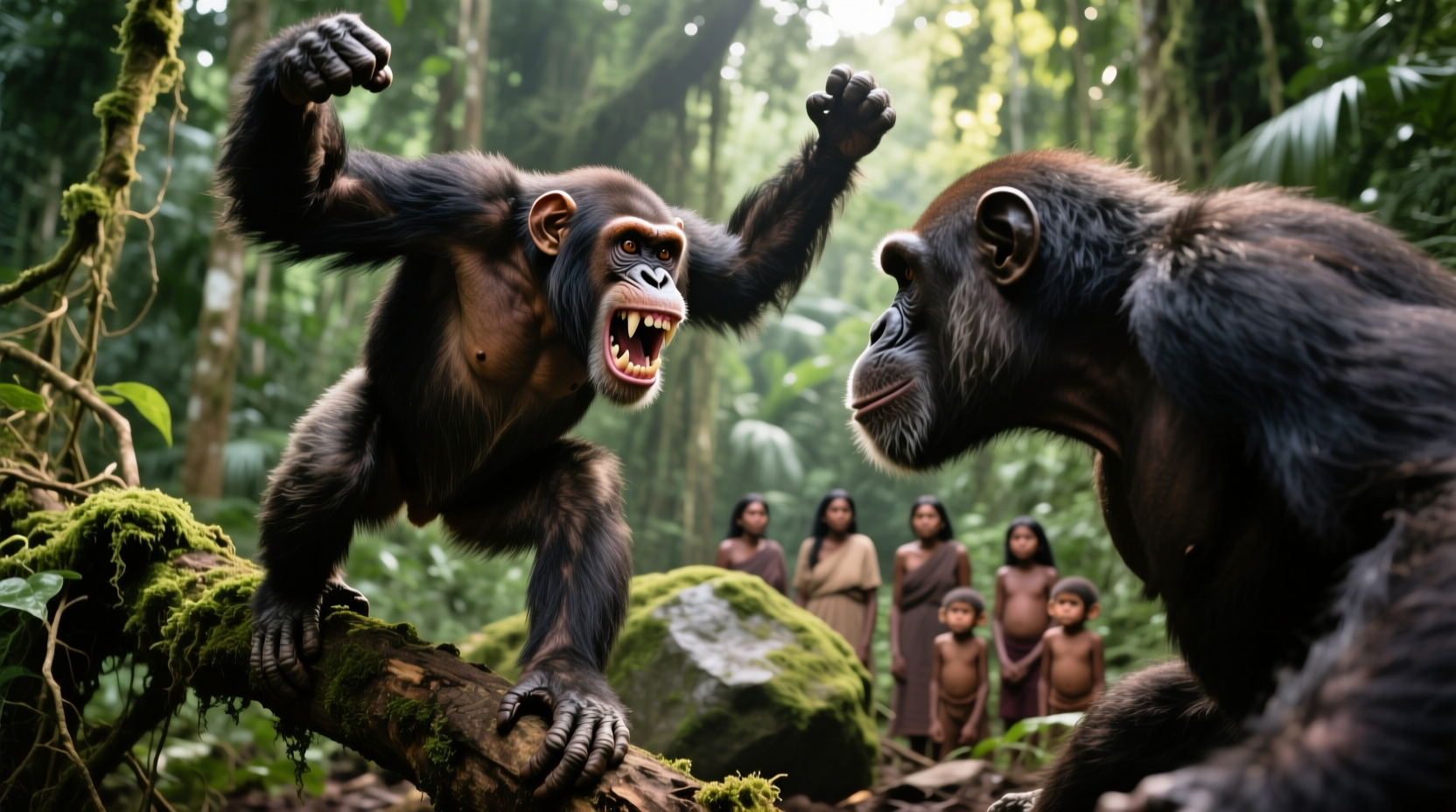
Chimpanzee societies are male-dominated, hierarchical, and intensely political. Males compete fiercely for status, as high-ranking individuals gain greater access to food, mating opportunities, and social influence. Aggression is a primary tool in this competition. Dominant males frequently assert control through displays of strength, intimidation, and physical confrontations.
In many chimp communities, coalitions form between males to overthrow existing alpha leaders. These alliances can be stable for years, but when power shifts occur, violence often follows. Subordinate males may be targeted, beaten, or even killed to eliminate threats. Infanticide has also been observed, typically carried out by new dominant males who kill infants sired by rivals—thereby accelerating the return of females to fertility and increasing their own chances of reproduction.
Tip: Aggression in chimps is often calculated, not impulsive—used as a strategic tool to gain or maintain social power.Lethal Intergroup Conflict: The Dark Side of Territoriality
One of the most disturbing aspects of chimpanzee behavior is intergroup violence. Unlike bonobos, who resolve tensions through sex and cooperation, chimpanzee communities engage in coordinated, sometimes lethal raids on neighboring groups. Males patrol the borders of their territory, and if they encounter a lone individual from a rival group—especially a male—they may attack with overwhelming force.
This behavior was first documented at Gombe Stream National Park in Tanzania, where Jane Goodall observed one community systematically eliminating members of a splinter group over several years—a phenomenon later termed “lethal raiding.” Similar patterns have since been recorded in Uganda’s Kibale Forest and other long-term study sites.
These attacks are not defensive skirmishes but proactive, organized assaults. Researchers believe this reflects an evolutionary strategy: reducing competition for resources such as fruit trees and water sources while expanding territorial control. In environments where food is patchy and valuable, eliminating rivals can significantly boost a group’s survival odds.
“We used to think war was a uniquely human trait. Then we watched chimps wage it with chilling efficiency.” — Dr. Richard Wrangham, Primatologist and author of *Demonic Males*
Biological and Evolutionary Roots of Aggression
Chimpanzee violence cannot be fully understood without considering biology. Testosterone levels in male chimps correlate strongly with dominance and aggression. High-ranking males exhibit elevated testosterone, which reinforces competitive behaviors. However, hormones alone don’t explain everything—social context modulates biological drives.
From an evolutionary standpoint, aggressive behavior persists because it enhances reproductive success. A male who eliminates rivals or rises to dominance is more likely to sire offspring. Even subordinate males benefit indirectly by aligning with powerful allies, gaining protection and occasional mating access.
Moreover, chimpanzees display what scientists call “coalitionary killing”—a rare trait shared only with humans among mammals. This suggests that lethal aggression in both species may stem from a common ancestor who lived 6–7 million years ago. The implication is profound: the capacity for organized violence may be deeply embedded in our lineage.
Environmental Stressors and Human Impact
While aggression is part of natural chimp behavior, human activity has intensified it in some populations. Deforestation, habitat fragmentation, and food scarcity caused by climate change or poaching disrupt social stability. When resources become scarce, competition escalates, leading to increased tension within and between groups.
In sanctuaries and research sites where food is artificially concentrated (e.g., feeding stations), aggression spikes during feeding times. Though such practices were once common in early studies, modern protocols avoid them to prevent distorting natural behavior.
A mini case study from the Budongo Forest in Uganda illustrates this: after logging operations reduced canopy cover and fruit availability, researchers noted a rise in male-male conflicts and infant mortality. The stress of diminished resources appeared to erode normal social buffers, making aggression more frequent and severe.
Mini Case Study: The Gombe War
In the late 1970s, Jane Goodall documented a four-year conflict between two splinter groups of chimpanzees in Gombe. What began as subtle boundary violations escalated into systematic killings. Males from the larger Kasakela community hunted down and murdered six individuals from the smaller Kahama group, including adult males and at least one female.
No clear trigger explained the split—likely due to internal power struggles—but the aftermath revealed how deeply ingrained lethal aggression could be. The Kasakela males didn’t just defend territory; they pursued enemies with apparent intent to exterminate. This event shattered the notion of chimpanzees as purely peaceful primates and forced scientists to reconsider the origins of warfare.
Comparative Behavior: Chimps vs. Bonobos
To understand why chimpanzees are violent, it helps to contrast them with their close relative, the bonobo. Both species share a common ancestor with humans, yet bonobos are remarkably peaceful, using sexual behavior and social bonding to diffuse tension.
Why the difference? One theory centers on ecology. Bonobos live south of the Congo River, where food is more abundant and evenly distributed. With less competition, there’s less need for aggression. Chimpanzees, occupying more variable and competitive environments, evolved under stronger selective pressure for dominance and territorial defense.
This comparison shows that violence in chimps isn’t inevitable—it’s shaped by environmental and social conditions. It also highlights that multiple evolutionary paths exist, even among closely related species.
| Feature | Chimpanzees | Bonobos |
|---|---|---|
| Sexual Dimorphism | High (males much larger) | Moderate |
| Social Structure | Male-dominated hierarchy | Female-bonded, egalitarian |
| Conflict Resolution | Aggression, dominance | Sex, grooming, play |
| Intergroup Violence | Frequent, often lethal | Rare, non-lethal |
| Infanticide | Observed | Not observed |
Tips for Understanding Primate Aggression
Tip: Avoid anthropomorphizing chimp behavior—while parallels to humans exist, their actions are driven by survival, not malice.- Observe aggression in context: Is it about rank, territory, or resource access?
- Recognize that not all chimps are equally aggressive—personality varies widely.
- Consider environmental factors: Habitat loss increases stress and competition.
- Study long-term data—short observations can misrepresent typical behavior.
- Compare across populations—some chimp groups show lower violence rates than others.
FAQ
Do chimpanzees kill for pleasure?
No evidence suggests chimps kill for enjoyment. Lethal aggression is typically goal-oriented—aimed at eliminating rivals, securing resources, or enhancing social status. While the behavior appears brutal, it serves adaptive functions in their environment.
Can chimpanzee violence be prevented in captivity?
In zoos and sanctuaries, careful group management reduces violence. Experts avoid housing unrelated males together, provide ample space and enrichment, and monitor social dynamics closely. Even so, aggression can erupt, especially during dominance challenges or breeding seasons.
Are humans naturally violent like chimpanzees?
Humans share traits with both chimps and bonobos. We are capable of extreme violence and remarkable cooperation. Our behavior depends on culture, environment, and social structure. Studying chimps doesn’t excuse human violence—it helps us understand its deep roots and how to mitigate them.
Conclusion: Confronting the Mirror of Nature
Chimpanzee violence unsettles us because it reflects parts of ourselves we’d rather ignore. Their aggression is not a flaw but a product of evolution—shaped by competition, survival needs, and social complexity. By studying it honestly, we gain not just knowledge of another species, but self-awareness.
The lesson isn’t that violence is inevitable, but that peace requires effort. Just as bonobos evolved alternative strategies, so too have human societies built systems of law, empathy, and reconciliation. Recognizing the roots of aggression empowers us to transcend them.
🚀 Want to deepen your understanding of primate behavior? Explore field research documentaries, support ethical wildlife conservation, or contribute to citizen science projects tracking animal social dynamics. Knowledge begins with curiosity—keep asking hard questions.