Choosing a necklace is more than just selecting a style—it’s about understanding the materials that define its brilliance, longevity, and meaning. When comparing white sapphire and clear crystal necklaces, many assume they look nearly identical. In reality, subtle yet significant differences exist in their optical properties, durability, cost, and how others perceive them. While casual observers may not immediately distinguish between the two, closer inspection and context reveal important contrasts. This guide explores what sets these gemstones apart and whether the average person will actually notice the difference.
Understanding the Materials: What Are White Sapphire and Clear Crystal?
Before assessing visibility of differences, it's essential to understand what each material is made of and where it comes from.
White sapphire is a naturally occurring gemstone, part of the corundum family—same as ruby. It forms deep within the Earth under intense heat and pressure. Known for its hardness (9 on the Mohs scale), white sapphire is prized for its clarity, brilliance, and resistance to scratching. Though colorless, it often has a slightly icy or cool-toned sparkle due to its high refractive index.
Clear crystal, commonly referring to lead crystal or high-quality glass, is man-made. Brands like Swarovski have perfected synthetic crystal with precise cutting and metallic additives to enhance sparkle. Crystal can mimic the fire and luster of diamonds or gemstones at a fraction of the cost. However, it ranks lower on the hardness scale (around 6–7), making it more prone to scratches over time.
“Sapphires carry geological history; crystals reflect engineering precision. One grows in nature, the other in labs—but both aim to dazzle.” — Dr. Lena Patel, Gemologist & Materials Scientist
Visual Differences: Can You Tell Them Apart?
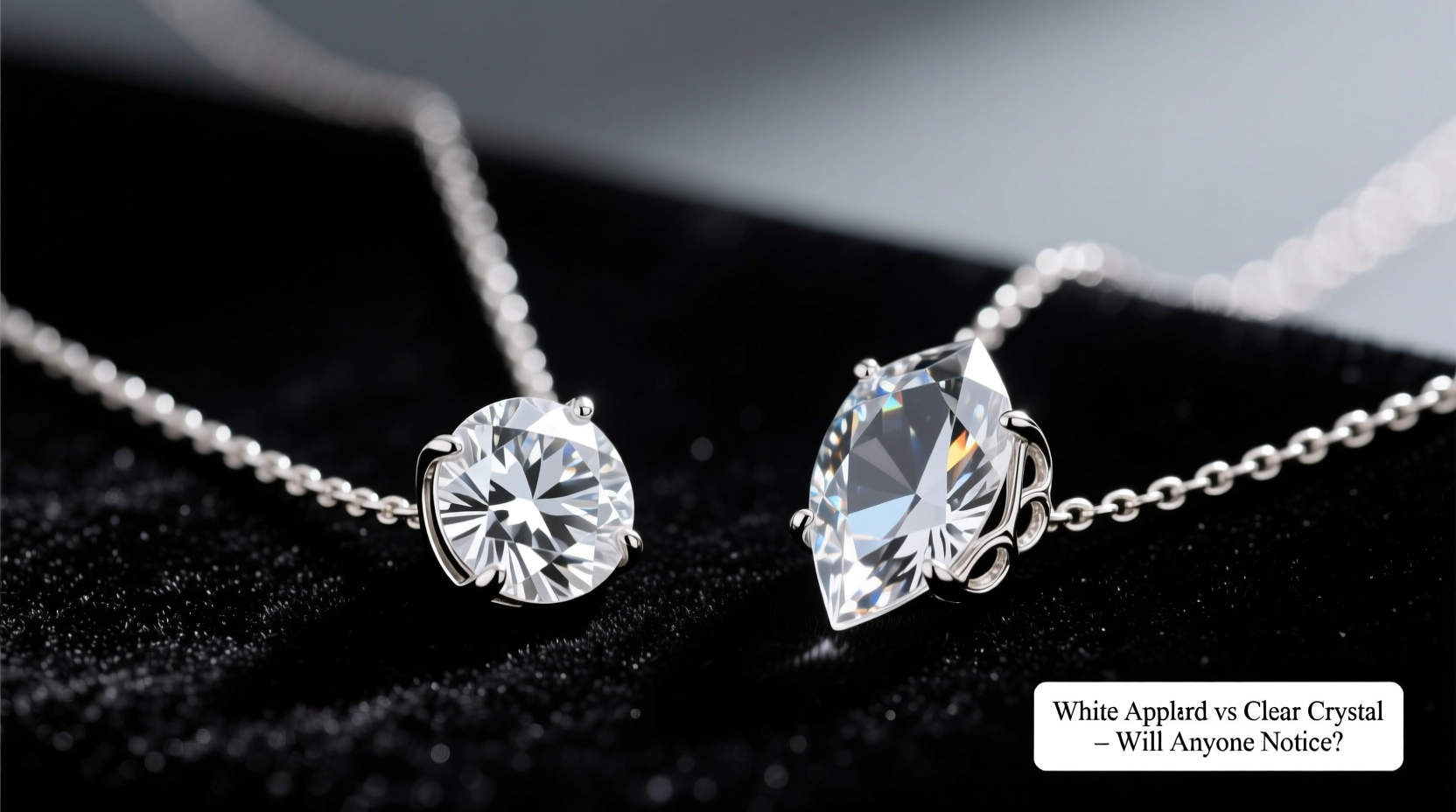
To the untrained eye, a well-cut white sapphire and a premium clear crystal necklace may appear nearly indistinguishable under ambient lighting. However, several visual cues can help differentiate them:
- Brilliance and Fire: Crystal often exhibits more \"fire\"—the rainbow-colored flashes—due to higher dispersion engineered into its structure. White sapphire tends to have a more subdued, silvery-white sparkle.
- Weight: Sapphires are denser. A sapphire pendant will feel noticeably heavier than a crystal one of the same size.
- Clarity Under Magnification: Natural sapphires may contain tiny inclusions visible under magnification, while crystal is typically flawless but may show mold lines or internal bubbles.
- Surface Wear: Over time, crystal develops fine scratches more easily, dulling its shine. Sapphire maintains its polish longer.
Comparison Table: Key Attributes at a Glance
| Feature | White Sapphire | Clear Crystal |
|---|---|---|
| Origin | Natural gemstone | Synthetic/manufactured |
| Hardness (Mohs) | 9 | 6–7 |
| Brilliance | Subtle, silvery-white | Bright, colorful fire |
| Durability | Excellent (resists scratches) | Fair (scratches over time) |
| Price (per carat) | $300–$1,000+ | $5–$50 |
| Lifetime Shine | Long-lasting | Diminishes with wear |
| Best For | Daily wear, heirlooms | Fashion pieces, events |
Real-World Perception: Will Anyone Actually Notice?
The answer depends heavily on context, setting, and the observer.
In everyday situations—wearing a necklace to work, dinner, or casual outings—most people won’t scrutinize your jewelry closely enough to detect whether it’s sapphire or crystal. The cut, setting, and overall design play a larger role in perceived elegance than the stone itself. A beautifully crafted crystal pendant in a sterling silver setting can easily pass as high-end.
However, in certain environments, distinctions become more apparent:
- Jewelry-savvy individuals—such as collectors or industry professionals—may recognize the weight, sparkle pattern, or lack of inclusions as indicators of crystal.
- Under bright lighting, such as at weddings or galas, crystal’s exaggerated fire might stand out as “too perfect” compared to the more natural shimmer of sapphire.
- Long-term wear reveals differences: after months of use, crystal shows micro-scratches; sapphire remains pristine.
A Mini Case Study: Two Necklaces, One Evening
Consider Sarah, who owns two similar-looking pendants: one with a 6mm white sapphire in platinum, the other a Swarovski crystal in rhodium-plated silver. At a cocktail party, both were admired equally. Guests complimented the sparkle and elegance. No one questioned the material. But when Sarah later visited a jeweler for cleaning, the expert immediately identified the crystal by its lightweight feel and surface wear. “It’s beautiful,” he said, “but it won’t last like your sapphire.”
This illustrates a key point: public perception favors beauty and presentation. Expert eyes detect authenticity and durability.
Care and Maintenance: Longevity Matters
How you care for your necklace influences how long it looks impressive—and whether differences emerge over time.
White sapphire requires minimal maintenance. Clean it monthly with warm soapy water and a soft brush. Its hardness protects it from daily abrasion, making it ideal for constant wear.
Crystal needs more attention. Avoid contact with lotions, perfumes, and harsh surfaces. Store it separately to prevent scratches. Even gentle handling can’t fully prevent wear—micro-abrasions accumulate, especially on facets.
“After five years, a crystal piece may lose 30% of its original luster due to surface degradation. A sapphire? It could still look brand new.” — Mark Tran, Jewelry Conservator
Step-by-Step Guide: How to Preserve Your Necklace’s Appearance
- Remove during activities: Take off your necklace before swimming, exercising, or cleaning.
- Clean gently: Use mild dish soap, lukewarm water, and a soft toothbrush. Rinse thoroughly.
- Dry properly: Pat dry with a lint-free cloth—never air-dry, which can leave water spots.
- Store safely: Keep in a fabric-lined box, separate from other jewelry.
- Inspect regularly: Check prongs and settings every few months for looseness.
FAQ: Common Questions Answered
Can I wear a crystal necklace every day?
You can, but it’s not ideal. Daily exposure to friction, chemicals, and impacts will degrade its finish faster than sapphire. Reserve crystal for occasional wear to preserve its brilliance.
Is white sapphire a good alternative to diamond?
Yes. White sapphire offers excellent durability and a similar appearance to diamond, though with less fire. It’s a popular ethical and budget-friendly choice for engagement rings and fine jewelry.
Do celebrities wear crystal or real gemstones?
Both. On red carpets, many wear high-end crystal (like Swarovski) for dramatic effect. For personal, everyday pieces, especially engagement rings, they often choose genuine stones like sapphire or diamond.
Final Thoughts: Choosing Based on Purpose, Not Just Appearance
The question isn’t just whether someone will notice the difference between white sapphire and clear crystal—it’s whether you want a piece that lasts, holds value, and withstands time. If you're seeking an affordable, eye-catching accessory for special occasions, crystal delivers stunning results. But if you’re investing in a meaningful, enduring piece—something to wear daily or pass down—white sapphire is the superior choice.
Ultimately, most people won’t analyze your necklace under a loupe. They’ll respond to how it complements your style and confidence. Yet behind the sparkle lies a decision about quality, intention, and longevity. Knowing the difference empowers you to choose wisely—not just for today’s impression, but for years of quiet satisfaction.
💬 Have you ever been asked about your necklace’s stone? Share your experience or thoughts on sapphire vs. crystal in the comments—your insight could help others make informed choices.