
Traveling light has become a badge of honor for modern adventurers, and few accessories embody that ideal better than the crossbody bag. Compact, secure, and stylish, these bags promise convenience—but when rain starts pouring or you're rushing through an airport puddle, one question arises: can it actually handle the elements? The answer lies in understanding the difference between \"water resistant\" and \"waterproof,\" and how those labels apply to real-world travel scenarios.
Understanding Water Resistance vs. Waterproofing
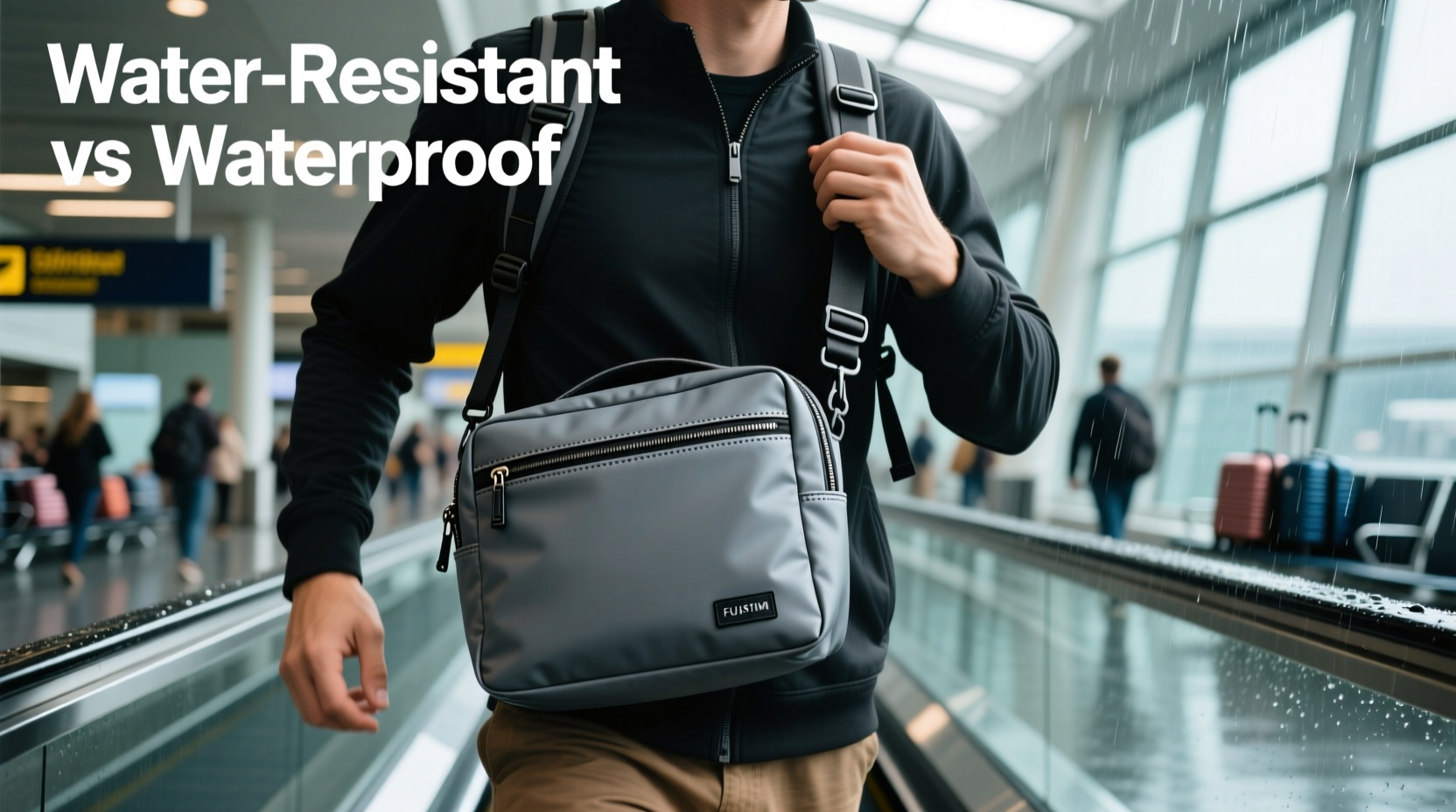
The terms \"water resistant\" and \"waterproof\" are often used interchangeably, but they describe very different levels of protection. Confusing them can lead to ruined electronics, damp clothes, or a lost passport.
Water resistant means the material or construction can withstand light moisture exposure—like a brief shower or accidental splash—for a limited time. Most crossbody bags fall into this category. They use tightly woven fabrics, waxed coatings, or synthetic materials like nylon or polyester with a DWR (durable water repellent) finish to shed water on the surface.
Waterproof, on the other hand, implies complete protection from water under defined conditions. Truly waterproof bags are typically made with sealed seams, rubberized linings, or roll-top closures designed to prevent any moisture ingress, even when submerged. These are common in outdoor gear but rare in fashion-oriented crossbodies.
Tip: If a bag claims to be “water resistant,” assume it’s not meant for heavy rain or submersion—treat it as a first line of defense, not a guarantee.Key Differences at a Glance
| Feature | Water Resistant | Waterproof |
|---|---|---|
| Material Type | Nylon, polyester, waxed canvas | PVC, TPU, rubber-coated fabrics |
| Seams | Sewn (may allow seepage) | Taped or welded (sealed) |
| Performance in Rain | Good for light showers | Effective in downpours |
| Likely Bag Styles | Fashion crossbodies, sling bags | Dry bags, outdoor utility packs |
| Breathability | Yes | No (can trap condensation) |
Can a Crossbody Bag Handle Real Travel?
The short answer: yes, but with caveats. A well-chosen crossbody can absolutely handle most travel situations—from city exploration to weekend getaways—as long as expectations align with its design.
Urban travelers benefit from the hands-free convenience and theft resistance of a crossbody. Many models now integrate RFID-blocking pockets, lockable zippers, and slash-proof straps. However, weather performance remains inconsistent. While a quick drizzle may bead off the surface, sustained rain can eventually penetrate seams or zippers, especially if the bag is overloaded or tilted.
Backpackers and outdoor travelers face tougher demands. Mud, river crossings, and sudden storms require more robust protection. In these cases, a dedicated waterproof dry sack inside a crossbody—or switching to a fully waterproof chest pack—may be necessary.
“Most crossbody bags marketed as ‘travel-friendly’ are water resistant, not waterproof. That’s fine for daily use, but don’t rely on them during monsoon season.” — Lena Torres, Outdoor Gear Reviewer, *WanderWell Journal*
A Real-World Scenario: Lisbon in the Spring
Consider Sarah, a digital nomad visiting Lisbon. She chooses a sleek black crossbody made from recycled water-resistant nylon, praised for its minimalist design and anti-theft features. Her first three days go smoothly—cafes, trams, cobblestone alleys. Then, a sudden Atlantic squall hits Baixa-Chiado.
She ducks under an awning, but her phone and notebook are near the top compartment, just beneath a standard zipper. After 15 minutes of heavy rain, she notices moisture creeping in along the seam. The exterior dries quickly, but her notebook has warped pages, and her phone case shows condensation.
The bag wasn’t defective—it performed as expected for its class. But Sarah assumed “water resistant” meant “safe in rain.” A simple addition—a ziplock bag for electronics—would have prevented the damage.
How to Maximize Protection on the Go
You don’t need to abandon your favorite crossbody for travel. Instead, adopt smart habits and small upgrades that dramatically improve reliability.
- Use internal dry bags: Place electronics, documents, and spare clothes in lightweight silicone or PVC pouches.
- Angle the bag strategically: During rain, position the bag so zippers face inward toward your body to reduce direct exposure.
- Carry a rain cover: Compact, foldable rain shields exist for smaller bags—some weigh less than 2 ounces.
- Apply DWR spray: Re-treat fabric annually with a water-repellent spray to restore beading performance.
- Avoid overstuffing: A bulging bag strains seams and prevents flaps from lying flat, creating entry points for water.
What to Look for When Buying a Travel-Ready Crossbody
- Tight weave or coated fabric: Look for terms like “ripstop nylon” or “waxed canvas.”
- Storm flaps: A fabric cover over the zipper adds extra protection.
- YKK AquaGuard zippers: These specialized zippers resist moisture penetration.
- Minimal external pockets: Each opening is a potential leak point.
- Roll-top or magnetic closure options: Some hybrid designs offer better sealing than standard zippers.
Checklist: Is Your Crossbody Ready for Travel?
- ✅ Fabric is labeled water resistant or treated for moisture
- ✅ Zippers are covered or use weather-resistant design
- ✅ You’ve packed critical items in sealed inner pouches
- ✅ Straps are adjustable and secure (preferably cut-resistant)
- ✅ You’re carrying a compact emergency rain cover
- ✅ Bag capacity matches your needs—no overstuffing required
Frequently Asked Questions
Does water-resistant mean I can wear it in the rain?
Yes, for light or short-term rain. But prolonged exposure—even moderate—can lead to seepage, especially around zippers and seams. Always take precautions with sensitive items.
Can I make my crossbody bag waterproof?
You can enhance water resistance with sprays or seam sealants, but true waterproofing requires sealed construction. For frequent wet conditions, consider using a waterproof liner bag instead.
Are leather crossbody bags water resistant?
Some full-grain leathers naturally repel light moisture, but most leather absorbs water over time and can stain, warp, or crack. Avoid wearing leather crossbodies in rainy climates unless specifically treated for outdoor use.
Final Thoughts: Smart Choices for Smarter Travel
The crossbody bag remains one of the most practical choices for urban travel, cultural tours, and short trips where mobility matters. But its ability to handle the elements depends not just on marketing labels, but on informed use. Understanding that “water resistant” is not a promise of invincibility allows you to prepare accordingly.
By combining thoughtful product selection with simple protective strategies, you can confidently carry your crossbody through airports, streets, and unexpected showers. It’s not about finding a bag that does everything—but choosing one that aligns with your environment and behavior.
💬 Have a crossbody that survived a downpour—or failed in light rain? Share your story in the comments. Your experience could help others pack smarter.