When choosing a handbag, one of the most overlooked yet critical factors is how well it maintains its shape over time. A bag that sags, creases permanently, or collapses under light use quickly loses both function and appeal. Today, with growing interest in ethical fashion, many consumers are weighing vegan leather against real leather—particularly when it comes to structural integrity. While aesthetics and ethics play a role, long-term performance matters just as much. This article dives deep into the structural behavior of both materials, examining which truly holds its shape longer and why.
The Role of Material Composition in Bag Structure
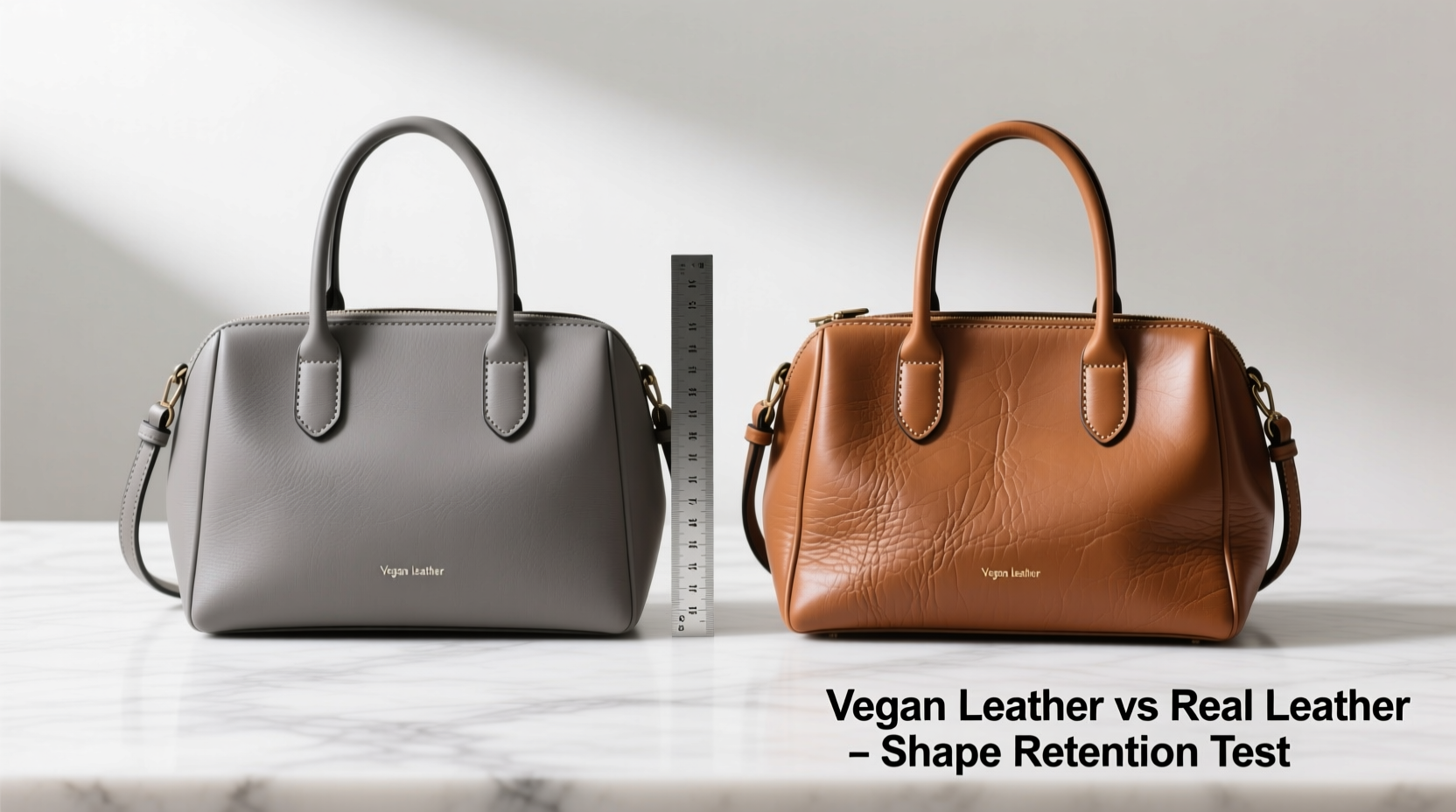
The foundation of any handbag’s ability to retain its form lies in the material used. Leather—whether animal-derived or plant-based—serves as the primary shell, supporting the internal framework and external design. However, not all leathers behave the same way under daily stress.
Real leather is a natural fiber matrix composed primarily of collagen. When tanned properly, it becomes flexible yet resilient, capable of rebounding from compression. Its fibrous structure allows it to drape elegantly while resisting permanent deformation if cared for correctly. Over time, high-quality full-grain or top-grain leather may develop character through patina but generally retains its dimensional stability.
Vegan leather, by contrast, refers to a broad category of synthetic or plant-based alternatives designed to mimic the look and feel of real leather. The most common types include polyurethane (PU) and polyvinyl chloride (PVC), though newer iterations use materials like cork, pineapple leaf fiber (Piñatex), apple waste, or mushroom mycelium. These materials vary significantly in density, tensile strength, and elasticity—all of which affect how well they support a bag’s silhouette.
Tip: Look beyond surface appearance—press on sample swatches to test stiffness and recovery. A good bag should resist denting without feeling rigid.Structural Longevity: Real Leather Advantages
High-quality real leather handbags consistently outperform their vegan counterparts in maintaining shape due to several inherent physical properties.
First, real leather has natural memory. Once formed into a specific structure during manufacturing, it tends to return to its original contours after temporary compression. This resilience stems from the cross-linked protein fibers that make up the hide. When supported internally with proper lining and frame structures (such as cardboard stiffeners or metal frames), real leather bags can last decades without slumping.
Second, real leather develops strength over time. Unlike synthetics that degrade with UV exposure and oxidation, well-maintained leather often becomes more supple and stable. It adapts to usage patterns while preserving overall geometry. For example, a structured tote made from Italian calfskin may soften slightly at stress points like handles, but the body remains upright and defined.
“Leather isn’t just durable—it’s dynamic. With age, it molds to your life but keeps its architectural integrity.” — Marcus Reed, Master Leather Craftsman, Florence Atelier
Additionally, luxury brands investing in real leather typically pair it with superior construction techniques: double-stitched seams, reinforced corners, and internal skeletons made from firm yet lightweight materials. These design choices amplify the leather’s natural advantages, resulting in bags that stand upright even when empty.
Vegan Leather: Innovation and Limitations in Shape Retention
Vegan leather has advanced dramatically in recent years, especially with bio-based innovations. However, most commercially available options still struggle with long-term shape retention compared to genuine leather.
PVC-based vegan leathers, once dominant, are particularly prone to sagging. They lack breathability and flexibility at a molecular level, leading to cracking after repeated folding. More importantly, they do not recover well from compression. Place a heavy book inside a PVC clutch for a week, and chances are it will retain an indented profile permanently.
PU leather performs better than PVC but still falls short. While softer and more pliable, PU lacks the fibrous depth of real leather. It stretches under load and often fails to rebound fully. In humid environments or under prolonged sun exposure, PU can delaminate from its fabric backing, causing warping and loss of rigidity.
Newer plant-based leathers show promise. Piñatex, derived from pineapple leaf fibers, offers moderate stiffness and improved sustainability. Mycelium leather (like Mylo™) mimics the porous structure of animal skin and is being adopted by major designers. Still, these materials are relatively untested over 5–10 year periods. Early adopters report mixed results: some bags hold form beautifully for years; others begin to droop within 18 months, especially when exposed to moisture or heat.
Case Study: Two Bags, Three Years Later
Sophie, a sustainable fashion blogger based in Portland, purchased two nearly identical shoulder bags in 2021—one made from full-grain cowhide, the other from certified apple-waste vegan leather. Both were used daily, carried laptops, and stored on shelves when not in use.
After three years, the differences were clear. The real leather bag had developed a warm honey-colored patina. Minor scuffs appeared near the base but faded with conditioning. Crucially, it still stood upright on her dresser, handles evenly balanced, corners crisp.
The vegan leather version, however, showed visible wear. The bottom panel sagged slightly forward, creating a “slumped” posture. Micro-tears formed along the seam where the strap attached, and the front flap no longer closed flush. Though Sophie loved the eco-credentials, she admitted the bag looked “tired” despite minimal staining.
This real-world example illustrates a broader trend: while vegan leather can look premium initially, structural fatigue sets in earlier—especially under consistent use.
Comparison Table: Shape Retention Factors
| Factor | Real Leather | Vegan Leather (Average) |
|---|---|---|
| Natural Elasticity | High – rebounds from pressure | Low to Moderate – prone to stretching |
| Density & Rigidity | Consistent across grain layers | Varies; often thinner substrate |
| Aging Behavior | Improves with care; gains character | Degrades: cracks, peels, sags |
| UV Resistance | Moderate to High (with conditioning) | Low – yellows and weakens |
| Long-Term Shape Hold (5+ yrs) | Excellent – maintains architecture | Fair to Poor – gradual collapse |
How Construction Influences Shape Beyond Material
Material alone doesn’t determine longevity. The craftsmanship behind the bag plays an equally vital role. A poorly made real leather bag with flimsy lining or inadequate internal support may sag faster than a well-constructed vegan alternative.
Key structural elements include:
- Lining quality: Heavy-duty canvas or polyester linings help maintain volume and reduce inward pull from contents.
- Internal stiffeners: Cardboard, plastic, or metal inserts in bases and sides prevent bottom-out and side bulging.
- Frame stitching: Double or triple stitching at stress points prevents seam failure and distortion.
- Handle attachment: Riveted or boxed connections distribute weight more evenly than glued loops.
Some vegan leather brands compensate for material weakness with robust engineering. For instance, Stella McCartney uses reinforced interlinings and precision-cut panels to preserve the silhouette of her vegan designs. Similarly, emerging brands like Angela Roi integrate flexible polymer cores beneath plant-based exteriors to enhance upright stability.
Still, even with advanced construction, the outer shell remains the weakest link. If the material itself cannot withstand micro-tearing or plasticization over time, no amount of internal framing will fully prevent eventual drooping.
Care Practices That Extend Shape Life
No matter the material, how you treat your handbag directly impacts its ability to hold shape. Here’s a step-by-step guide to maximizing structural lifespan:
- Rotate usage: Avoid using one bag daily. Give materials time to rest and recover between uses.
- Store properly: Always stuff bags with acid-free tissue or soft cloths to maintain form. Never hang leather bags long-term—the weight distorts straps and pulls shoulders down.
- Control environment: Keep bags away from direct sunlight, heaters, and damp basements. Ideal storage is cool, dry, and ventilated.
- Clean gently: Wipe spills immediately with a damp cloth. Use conditioners only as recommended—over-conditioning can soften leather excessively.
- Avoid overloading: Respect weight limits. Carrying heavy items like books or laptops daily accelerates wear, especially in thinner materials.
Checklist: Choosing a Bag That Holds Its Shape
- ✅ Prioritize full-grain or top-grain real leather for maximum durability
- ✅ Test bounce-back by pressing on the side—does it spring back?
- ✅ Check for internal stiffening in the base and sides
- ✅ Ensure lining is thick and securely attached
- ✅ Avoid overly thin vegan leathers unless reinforced structurally
- ✅ Choose reputable brands known for quality control
- ✅ Ask about warranty or repair services for long-term support
Frequently Asked Questions
Does real leather lose shape over time?
High-quality real leather resists permanent deformation. While it may soften slightly with use, it generally retains its overall structure for many years. Proper care—including stuffing during storage and avoiding excessive moisture—helps preserve its form.
Are there vegan leathers that hold shape well?
Yes, but they are limited. Advanced materials like Mylo™ mycelium leather and certain composite plant-based fabrics show improved structural performance. However, they remain niche and expensive. Most mass-market vegan leathers still lag behind real leather in long-term shape retention.
Can a sagging bag be restored?
In some cases, yes. For real leather, professional cleaning and reshaping services can revive collapsed areas. For vegan leather, restoration is less reliable—once the backing separates or the surface cracks, structural integrity is compromised beyond repair.
Conclusion: Making the Right Choice for Longevity
When it comes to holding shape longer, real leather handbags have a clear advantage over most vegan alternatives. Their natural fiber composition, combined with proven aging characteristics and industry-standard craftsmanship, makes them more likely to stand the test of time—both structurally and aesthetically.
That said, the gap is narrowing. Ethical innovation in bio-fabrication may soon deliver vegan materials that rival real leather in resilience. Until then, consumers seeking lasting form should prioritize material quality and construction over trend-driven labels.
If sustainability is a core value, consider investing in timeless real leather pieces sourced from tanneries with environmental certifications (e.g., Leather Working Group). Alternatively, opt for high-end vegan bags explicitly engineered for durability, and commit to meticulous care routines.
💬 Your turn: Have you owned a vegan leather bag that held its shape for years? Or a real leather favorite that still stands tall after a decade? Share your experience—we’d love to hear what’s worked in your wardrobe.