In recent years, ultra-thin watches for women have surged in popularity, celebrated for their elegance, subtlety, and modern refinement. Brands like Cartier, Jaeger LeCoultre, and even fashion-forward labels such as Daniel Wellington and Olivia Burton have embraced minimalist designs that prioritize slenderness over substance—literally. But while these featherweight timepieces dominate social media and influencer wardrobes, a growing number of watch enthusiasts are asking: Are ultra-thin watches truly worth the hype? Or do they sacrifice too much in terms of durability, functionality, and longevity?
This isn't just about aesthetics—it’s about understanding what you gain and lose when choosing a delicate profile over a more robust build. Whether you're building a capsule wardrobe or investing in your first luxury piece, knowing the trade-offs between ultra-thin and traditional women’s watches is essential.
The Allure of Ultra-Thin Watches
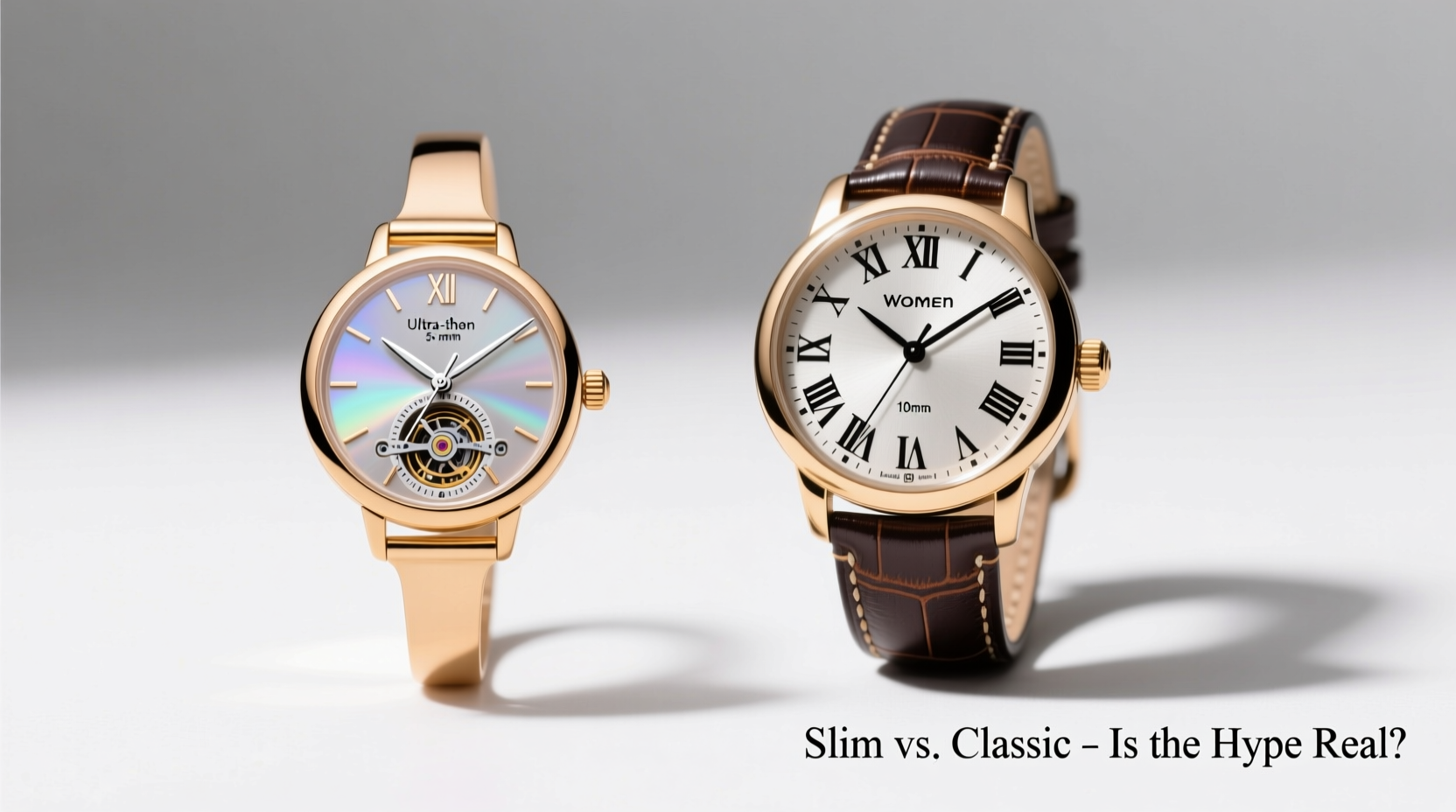
Ultra-thin watches typically measure under 7mm in thickness, sometimes dipping as low as 4mm. Their appeal lies in discretion and sophistication. These watches slip effortlessly under shirt cuffs, complement fine jewelry, and enhance formal wear without drawing attention away from an outfit. They’re designed to be felt rather than seen—a whisper on the wrist.
Designers often use sapphire crystal, slim movements (like quartz or hand-wound mechanical calibers), and lightweight materials such as titanium or polished stainless steel to achieve this sleek profile. The result is a timepiece that feels almost weightless and blends seamlessly into professional and evening settings.
Tip: If you frequently wear blazers or buttoned sleeves, an ultra-thin watch ensures a clean fit without fabric bunching.Traditional Watches: Substance Over Slimness
Traditional women’s watches range from 8mm to 12mm or more in thickness. While not bulky by men’s standards, they offer a more substantial presence on the wrist. Many feature automatic movements, water resistance up to 50–100 meters, and sturdier construction. These watches are built to last, often with replaceable batteries, serviceable movements, and better shock absorption.
Brands like Rolex, Omega, and Longines design many of their women’s models with both beauty and resilience in mind. A classic Lady-Datejust or Seamaster Aqua Terra may not disappear under a cuff, but it can survive accidental knocks, poolside splashes, and daily wear with minimal maintenance.
For active professionals, travelers, or those who value long-term investment, traditional watches often provide greater peace of mind.
Comparing Key Features: A Practical Breakdown
| Feature | Ultra-Thin Watches | Traditional Watches |
|---|---|---|
| Thickness | 4–7mm | 8–12mm+ |
| Movement Type | Quartz or manual-wind mechanical | Quartz, automatic, or chronograph |
| Water Resistance | Limited (often 30m or less) | Typically 50–100m |
| Durability | Fragile; prone to scratches and damage | More resilient; serviceable parts |
| Weight | Light (under 30g average) | Moderate (40–70g) |
| Lifestyle Fit | Office, formal events, minimalists | Active, travel, all-day wear |
Real-World Trade-Offs You Should Know
Consider Sarah, a corporate lawyer in her early 30s based in Chicago. She purchased a $2,200 ultra-thin dress watch from a Swiss brand for client meetings and networking dinners. It looked stunning with her tailored suits and silk blouses. However, within six months, she cracked the sapphire crystal after brushing against her desk during a video call. The repair cost $380, and the watch was out of commission for three weeks. When she asked the jeweler why it wasn’t more durable, he replied, “It wasn’t made to take hits. It was made to look perfect.”
Sarah later bought a slightly thicker automatic watch with 50m water resistance. Though it doesn’t slide under her cuffs as neatly, she wears it confidently every day—rain or shine, meeting or gym visit. Her takeaway? “I love how elegant the slim one looks, but I don’t trust it with my real life.”
“Ultra-thin watches are the ballerinas of horology—graceful, precise, and breathtaking—but they need protection. They aren’t meant for rugged use.” — Antoine Morel, Master Watchmaker at Geneva Time Institute
When an Ultra-Thin Watch Makes Sense
These watches shine in specific contexts:
- Formal occasions: Weddings, galas, black-tie events where subtlety is prized.
- Minimalist fashion: For those who favor clean lines and understated accessories.
- Cuff-friendly dressing: Ideal if you wear fitted shirts or jackets daily.
- Collectors and connoisseurs: Appreciate them as works of micro-engineering.
However, if your lifestyle includes frequent handwashing, fitness routines, outdoor activities, or travel, the limitations become apparent quickly. Water exposure—even hand sanitizer—can degrade seals over time. Dropping an ultra-thin watch on tile can warp the case or dislodge the movement.
Expert Care Tips for Ultra-Thin Owners
Tip: Never wear your ultra-thin watch in the shower, sauna, or while applying lotion—moisture and chemicals compromise delicate seals.- Rotate your timepieces: Use the ultra-thin model selectively, reserving it for low-risk environments.
- Avoid magnetic fields: Thin cases offer less shielding; keep away from phones, laptops, and speakers.
- Service every 4–5 years: Even quartz models benefit from gasket checks and cleaning.
- Store flat and protected: Use a soft pouch or watch box to prevent pressure on the crystal.
- Inspect regularly: Look for fogging inside the glass or loose crowns—early signs of seal failure.
Are They Worth the Hype? A Balanced Verdict
The hype around ultra-thin watches is understandable—they represent peak craftsmanship and aesthetic minimalism. But worth depends entirely on your needs. If your priority is elegance in controlled environments, yes, they are worth it. If you want a single watch that handles everything from morning coffee runs to evening cocktails, a traditional model will serve you better.
Moreover, resale value tells a story. While some high-end ultra-thin pieces retain value (especially limited editions), most fashion-oriented slim watches depreciate faster due to fragility and niche appeal. In contrast, well-maintained traditional watches from reputable brands often hold or increase in value over time.
FAQ
Can I wear an ultra-thin watch every day?
You can, but it’s not recommended unless your routine is low-impact. Daily risks like bumps, moisture, and dust shorten its lifespan significantly compared to a sturdier alternative.
Do ultra-thin watches use special batteries?
Yes. Due to space constraints, they often require smaller, less common battery sizes (like SR626SW). These may cost more and be harder to find than standard watch batteries.
Are automatic ultra-thin watches more reliable?
Some are, especially those from premium brands using proprietary slim movements (e.g., Piaget 900P). However, they’re also more expensive and still less shock-resistant than mid-sized automatics.
Final Thoughts: Choose Intentionality Over Trends
Watches should reflect both taste and truth—what you love, and how you live. The rise of ultra-thin designs speaks to a cultural shift toward minimalism and quiet luxury, but practicality still matters. Instead of chasing trends, ask yourself: What do I need this watch to do? Will it survive my Monday? Can I rely on it for years, not just seasons?
There’s no universal answer. But by weighing elegance against endurance, you’ll make a choice rooted in clarity, not hype.
🚀 Ready to build a smarter watch collection? Start by identifying your top three daily activities—then choose a timepiece that aligns with reality, not just Instagram aesthetics.








