Finding the ideal shirt dress online should be simple—but too often, it ends in disappointment. You place an order excitedly, only to receive a dress that’s too tight at the hips, too short in the torso, or gaping at the bust. The root cause? Guessing your size instead of measuring with precision. Unlike in-store shopping, online retail removes the ability to try before you buy, making accurate sizing knowledge essential. This guide equips you with a strategic, step-by-step approach to confidently select the right shirt dress size every time—no more returns, no more frustration.
Why Shirt Dresses Are Tricky to Size Online
Shirt dresses blend the structured silhouette of a button-down shirt with the length and flow of a dress. While versatile and stylish, their hybrid design introduces unique fitting challenges. Unlike bodycon or shift dresses, shirt dresses often feature tailored elements like darts, collars, cuffs, and waist definition, which vary significantly between brands. A size medium from one label might fit like a large on another due to differences in cut, fabric stretch, and intended silhouette.
Moreover, many shirt dresses are designed with intentional oversizing for a relaxed, fashion-forward look. Others are meant to be form-fitting. Without clear guidance, shoppers misinterpret the intended fit and end up ordering incorrectly. Fabric behavior also plays a role: cotton poplin holds its shape, while rayon blends drape more fluidly and may appear looser on the body than expected.
“Sizing inconsistency across brands is the number one reason customers return clothing online. Measurement accuracy beats guesswork every time.” — Lena Torres, E-commerce Fashion Consultant
The Step-by-Step Process to Determine Your Ideal Shirt Dress Size
Selecting the correct shirt dress size isn’t about memorizing brand charts—it’s about understanding your body measurements and how they align with garment dimensions. Follow this methodical process for reliable results.
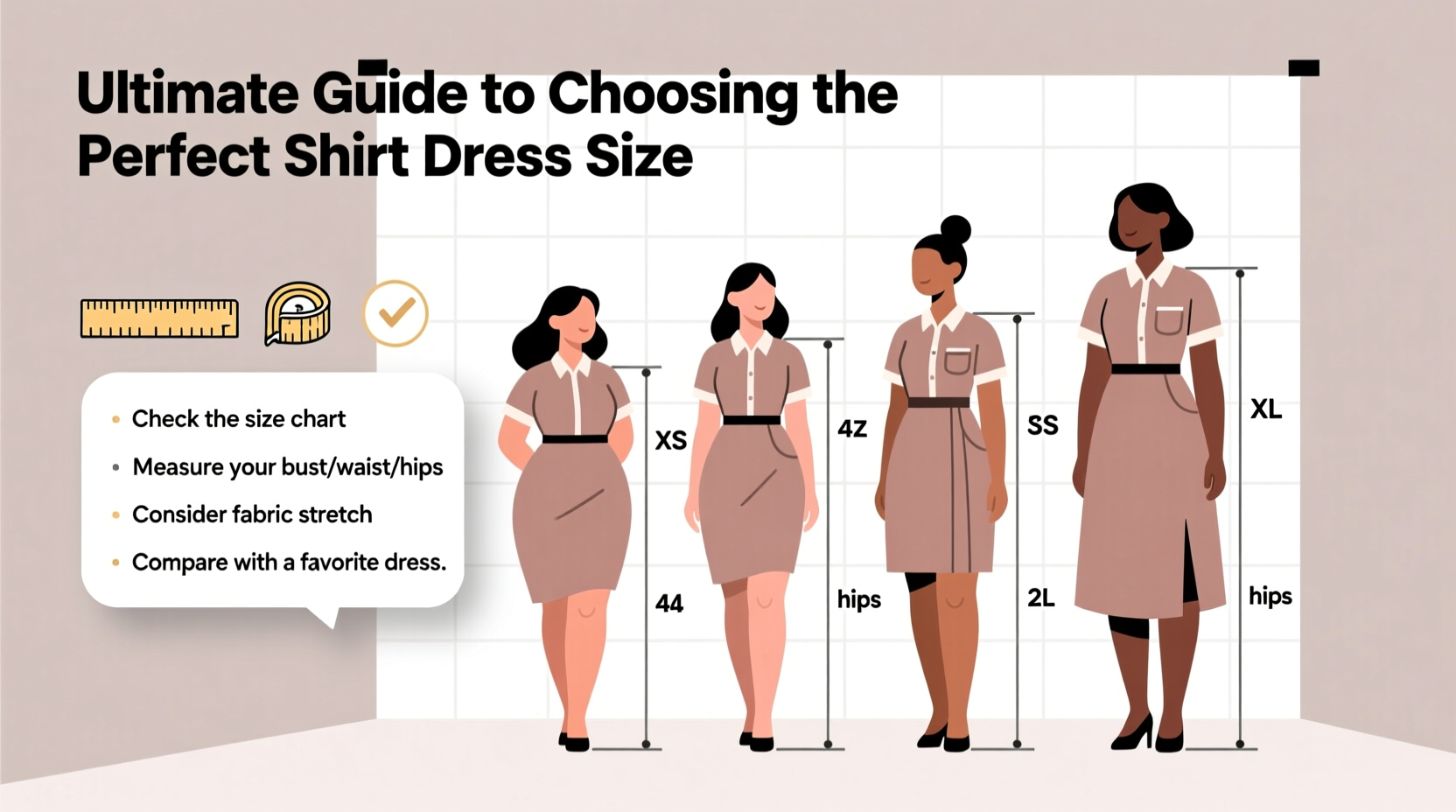
- Measure your body accurately. Use a soft tape measure and record your bust, waist, and hips. For shirt dresses, bust and hip measurements are most critical. Measure at the fullest part of each area, keeping the tape parallel to the floor and snug but not tight.
- Check the brand’s size chart. Never assume standardization. Locate the official size guide on the product page and note the garment’s actual measurements (not just S/M/L). Pay attention to chest, waist, and hip specs in inches or centimeters.
- Compare your body to the garment. Add 2–4 inches of ease to your bust and hip measurements for comfort, depending on the desired fit. If the dress has stretch, subtract 1 inch from the garment’s measurement to account for give.
- Analyze the cut and style. Is it meant to be oversized? Fitted? Belted? A belted shirt dress can accommodate a slightly larger size if cinched at the waist. An unfitted style requires closer alignment with your natural measurements.
- Read customer reviews. Look for comments like “runs small” or “true to size.” Real wearers provide invaluable insight into how the dress fits in practice, especially if multiple reviewers mention needing to size up.
Key Measurements and What They Mean for Fit
Understanding what each measurement impacts helps you prioritize accuracy. Here’s how specific dimensions affect the way a shirt dress drapes and feels.
- Bust/Chest: Critical for button closures. If the bust is too tight, buttons will strain or gap open. Measure around the fullest part of your chest.
- Natural Waist: Determines where the dress nips in, if belted. Even unstructured styles use waist width to calculate overall volume.
- Hips: Especially important for shirt dresses that flare below the waist. A tight hip measurement restricts movement and creates pulling lines.
- Length: Often overlooked. Check the center back length from shoulder to hem. Petite or tall individuals should verify this aligns with their height.
- Sleeve Length: Relevant for long-sleeve shirt dresses. Short sleeves that end above the elbow can feel awkward if too cropped.
| Body Area | How It Affects Fit | Action to Take |
|---|---|---|
| Bust | Determines button tension and front closure fit | Ensure 2–3 inches of ease; size up if near limit |
| Waist | Affects drape and whether belt sits correctly | Match to natural waist or plan for cinching |
| Hips | Impacts mobility and side seam tension | Add 3–4 inches ease for non-stretch fabrics |
| Length | Dictates hemline position (knee, midi, maxi) | Compare to your height; check model stats |
Real-World Example: Choosing Between Two Brands
Sophia, 5’6” with a 38” bust, 30” waist, and 40” hips, wanted a classic denim shirt dress. She found two options: Brand A and Brand B. Both listed a size medium as her usual go-to. But when she checked the size charts, differences emerged.
Brand A’s medium had a 40” bust and 42” hip—perfect on paper. However, customer reviews noted, “Runs very fitted; size up for comfort.” Brand B’s medium offered a 44” bust and 46” hip with slight stretch. Reviews said, “True to size, roomy but polished.”
Using the step-by-step method, Sophia measured the difference. For Brand A, she opted for a large to avoid tightness. For Brand B, she stuck with medium, trusting the relaxed cut. Both dresses arrived fitting perfectly—no returns, no hassle. Her success came from combining data with real-user feedback.
Essential Checklist Before You Click \"Add to Cart\"
Before finalizing any shirt dress purchase, run through this checklist to ensure confidence in your size choice.
- ✅ I have measured my bust, waist, and hips recently
- ✅ I’ve reviewed the brand’s size chart in inches/centimeters
- ✅ I’ve compared my measurements to the garment’s, including ease
- ✅ I’ve read at least three customer reviews mentioning fit
- ✅ I understand the intended silhouette (fitted, loose, belted)
- ✅ I’ve checked the fabric composition and stretch factor
- ✅ I’ve verified the length suits my height
Frequently Asked Questions
Should I size up if I’m between sizes?
It depends on the cut and fabric. For non-stretch materials or structured styles, size up. For stretchy or adjustable designs (like belted versions), you can often size down for a more tailored look. When in doubt, consult reviews.
How do I know if a shirt dress is meant to be oversized?
Check the product description for terms like “relaxed fit,” “slouchy silhouette,” or “intentional oversized.” Look at model photos—if the dress hangs loosely without contouring the body, it’s likely designed that way. Also, compare the garment measurements to your own; if they’re 6+ inches larger, it’s probably oversized.
Can I rely on international size conversions?
No. A US size 8 is not universally equivalent to a UK 10 or EU 36. Each region uses different grading systems. Always refer to the brand’s specific size chart using numeric measurements rather than letter or number sizes.
Final Thoughts: Shop Smarter, Not Harder
Choosing the perfect shirt dress size online doesn’t require luck—it requires preparation. By measuring yourself accurately, analyzing garment specs, and leveraging real shopper insights, you transform online shopping from a gamble into a precise science. The convenience of e-commerce should enhance your wardrobe, not complicate it. With these strategies, you’ll reduce returns, save money, and build confidence in every purchase.
🚀 Ready to shop with confidence? Grab your tape measure, bookmark this guide, and make your next shirt dress purchase the best-fitting one yet.