Selecting the perfect cross ring is more than choosing a meaningful design—it’s about ensuring it fits comfortably and securely on your finger. A ring that’s too tight can restrict circulation and cause discomfort; one that’s too loose risks slipping off during daily activities. Whether you’re buying for yourself or surprising someone with a symbolic gift, accurate sizing is essential. This comprehensive guide walks through reliable measurement techniques, environmental factors affecting fit, and practical steps to guarantee your cross ring sits just right.
Why Accurate Ring Sizing Matters for Cross Rings
Cross rings carry deep personal or spiritual significance, often worn daily as a reminder of faith, commitment, or remembrance. Because they’re typically worn long-term, comfort and fit are critical. Unlike fashion rings rotated frequently, cross rings tend to stay on one finger consistently, making improper sizing not just inconvenient but potentially harmful over time.
Fingers naturally fluctuate in size due to temperature, activity level, hydration, and even time of day. A ring measured during cold weather may feel snug when worn in summer heat. Additionally, cross rings often feature raised details or thicker bands compared to minimalist styles, which can influence how the ring feels—even if the diameter is correct.
“Even a half-size difference can impact both comfort and safety. Many people don’t realize their dominant hand tends to have slightly larger fingers from use.” — Daniel Reeves, Master Jeweler & GIA Graduate
Step-by-Step Guide to Measuring Your Ring Size at Home
You don’t need professional tools to get an accurate measurement. With careful attention and consistent methodology, you can determine your correct ring size using simple household items.
- Gather Supplies: You’ll need a flexible measuring tape (or a strip of paper/string), a ruler, a pen, and a calculator.
- Choose the Right Finger: Measure the finger where you plan to wear the cross ring. Most people choose the ring finger on their left hand, but traditions vary.
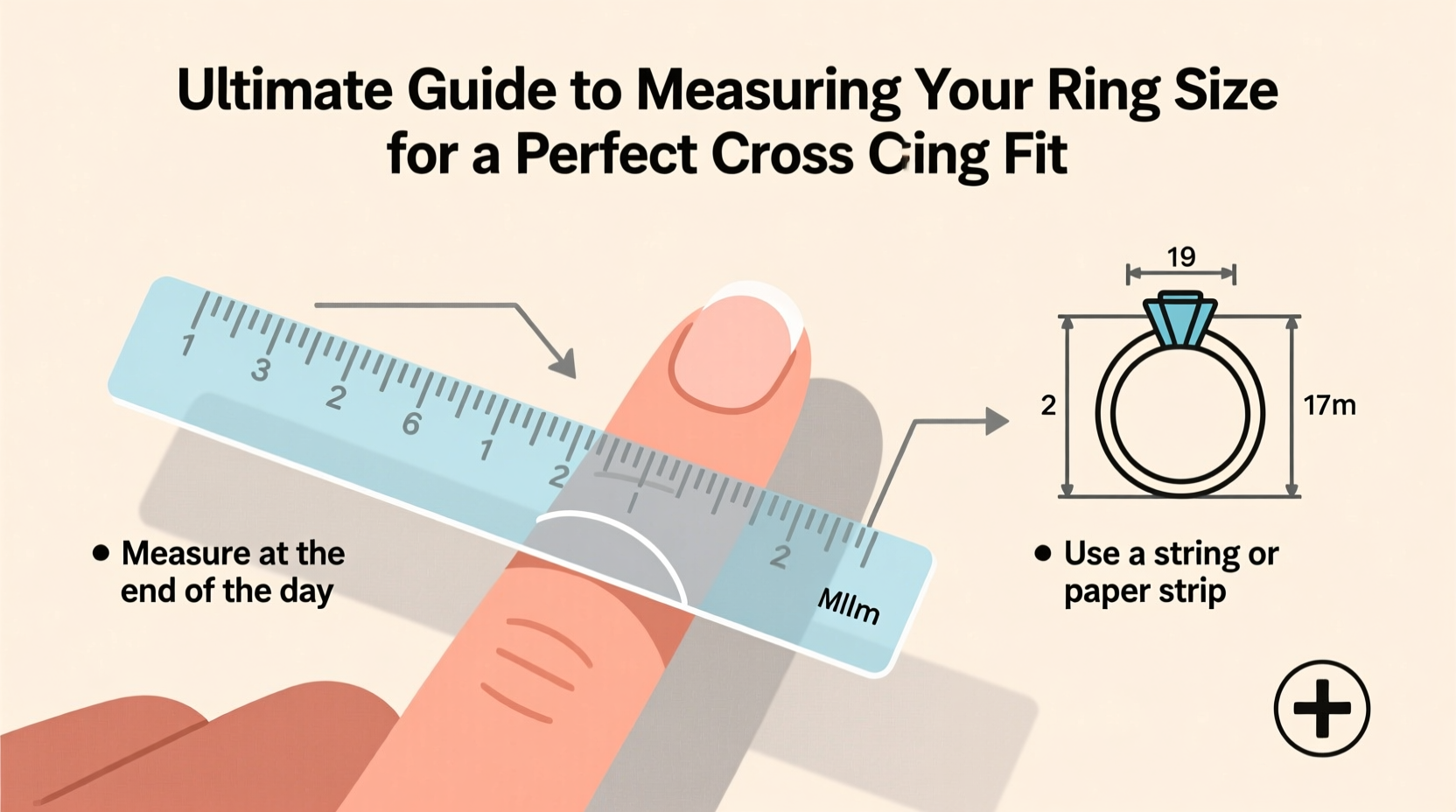
- Measure Circumference: Wrap the string or paper snugly around the base of your finger. Mark where the ends meet. Avoid wrapping too tightly—leave room for slight movement.
- Measure Length: Lay the marked strip flat against a ruler and record the length in millimeters.
- Convert to Ring Size: Use a standard conversion chart (see table below) to match the circumference to your ring size.
- Repeat for Accuracy: Take measurements at different times of day—morning, afternoon, and evening—to account for natural swelling.
- Average Results: If readings differ, calculate the average to find your most consistent size.
Comparison Table: Ring Size Conversion by Country
| US/Canada Size | UK/Australia Size | Internal Diameter (mm) | Circumference (mm) | France/Germany |
|---|---|---|---|---|
| 4 | F | 14.86 | 46.7 | 47 |
| 5 | H | 15.90 | 49.9 | 50 |
| 6 | J | 16.95 | 53.2 | 53 |
| 7 | L | 18.00 | 56.5 | 57 |
| 8 | N | 19.05 | 59.8 | 60 |
| 9 | P | 20.10 | 63.1 | 63 |
| 10 | R | 21.15 | 66.4 | 66 |
Common Mistakes to Avoid When Measuring Ring Size
- Measuring only once: Single measurements rarely reflect true size due to daily fluctuations.
- Using old rings without verification: An inherited or seldom-worn ring may no longer fit correctly.
- Ignoring band width: Wider bands (common in bold cross designs) require a slightly larger size for comfort.
- Guessing based on partner’s estimate: Even well-meaning guesses are often inaccurate by a full size.
- Not accounting for knuckle size: Some fingers have larger knuckles than the base, requiring a balance between slip-on ease and secure fit.
Real Example: Choosing the Right Fit for a Gift
Sarah wanted to surprise her brother with a silver cross ring for his birthday. She remembered him wearing a ring years ago and assumed size 8 would work. After ordering online, the ring arrived—and wouldn’t fit past his knuckle. Embarrassed, she contacted the jeweler, who advised her to use a ring sizer tool and measure during evening hours when fingers are fullest. She borrowed a similar-width ring from a friend with comparable hands, traced the inner circle, and matched it to a size 9. The second ring fit perfectly, and her brother wore it every day.
This experience taught Sarah that assumptions—even seemingly logical ones—can lead to errors. Taking the time to verify ensured both satisfaction and sentimental value.
Expert Methods: When Precision Is Non-Negotiable
For those seeking maximum accuracy, especially when purchasing higher-value pieces, professional tools offer superior reliability.
- Mandrel Gauge: A conical metal tool calibrated with ring sizes. Sliding a ring down until it stops reveals its exact size.
- Digital Calipers: Provide precise internal diameter readings down to 0.01 mm—ideal for verifying ordered rings.
- Plastic Sizing Kit: Affordable sets with multiple looped rings in incremental sizes allow trial fitting across several options.
Jewelers also assess fit dynamically—checking how easily the ring slides over the knuckle and whether it rotates freely without wobbling. These real-time evaluations capture nuances static measurements miss.
Checklist: How to Ensure Perfect Fit Before Purchase
- Measure your finger three times across two different days.
- Use the average result to determine your base size.
- Confirm whether the cross ring has a wide band (if so, consider going up ½ size).
- Check the retailer’s exchange policy in case resizing is needed.
- If gifting, discreetly borrow a ring from the recipient’s jewelry box.
- Consider climate: order a half-size smaller if buying for tropical regions, larger for colder areas.
- Ask the jeweler if they include a complimentary sizing kit with purchase.
Frequently Asked Questions
Can I resize a cross ring after purchase?
Many metal rings can be resized professionally, but intricate designs or stones near the band may limit adjustments. Titanium, tungsten, or ceramic crosses cannot be resized at all. Always confirm material type before assuming resizability.
Do cross rings fit differently than plain bands?
Yes. Due to symbolic detailing or asymmetrical profiles, cross rings may sit higher on the finger or distribute pressure unevenly. Try on similar styles in person if possible, or choose retailers offering home try-ons.
How do I know if my ring is too tight?
Signs include numbness, discoloration, indent marks on the skin, or difficulty removing the ring. A properly fitting ring should slide off over the knuckle with mild resistance but not cause pain or prolonged constriction.
Final Thoughts: Wear Your Faith Comfortably
A cross ring isn't just jewelry—it's a personal emblem meant to be worn with pride and peace of mind. Ensuring the perfect fit enhances both physical comfort and emotional resonance. By following precise measurement practices, avoiding common pitfalls, and understanding how design affects wearability, you protect your investment and honor the meaning behind the piece.
💬 Take action today: Re-measure your ring size using this guide, or help a loved one find theirs. Share your experience in the comments to support others seeking a meaningful, well-fitting cross ring.