When building a timeless, functional wardrobe, few pieces are as iconic as the tweed and corduroy jackets. Both have deep roots in British tailoring and American workwear, respectively, yet they’ve evolved into modern staples embraced by fashion-conscious individuals across climates and cultures. But when it comes to everyday wear—commuting, casual outings, weekend errands, or even smart-casual office environments—which fabric truly earns its place as the most versatile?
The answer isn’t straightforward. It depends on climate, personal style, maintenance habits, and lifestyle demands. One excels in structure and weather resistance; the other wins in comfort and seasonal adaptability. To help you decide, let’s break down the key differences, strengths, and real-world applications of both.
Understanding the Fabrics: Origins and Characteristics
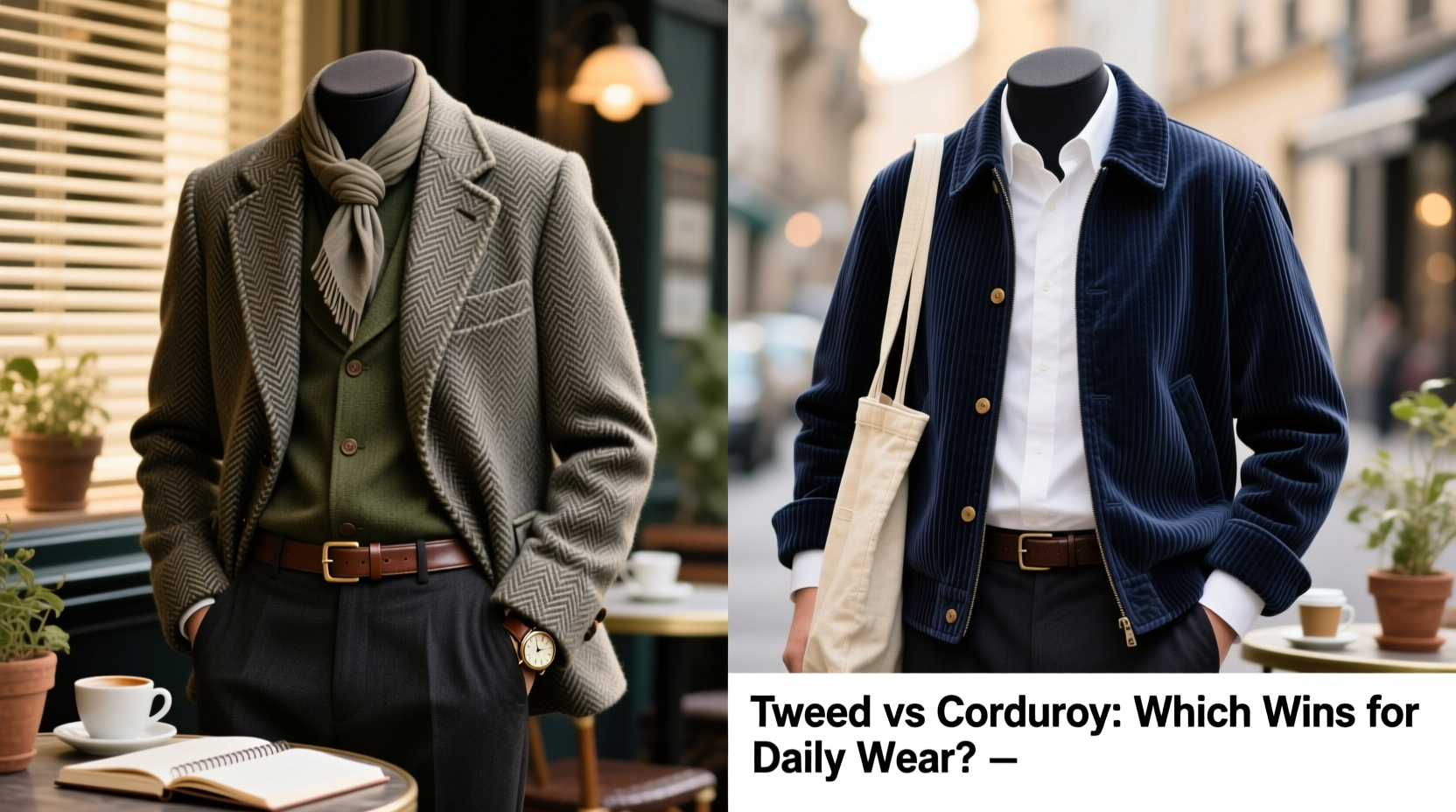
Tweed and corduroy originate from entirely different traditions but share one thing: they’re woven with purpose. Tweed began as rugged outerwear for Scottish and Irish country estates—designed to withstand wind, rain, and brambles. Traditionally made from coarse wool, it’s dense, textured, and often features herringbone, houndstooth, or check patterns. Its natural lanolin content provides water resistance, making it ideal for damp climates.
Corduroy, on the other hand, emerged from French velvet workshops before becoming a symbol of working-class durability in 19th-century England. It’s a cotton or cotton-blend pile fabric with raised “wales” (ridges) that give it a soft, tactile surface. While heavier versions exist, corduroy is generally lighter than tweed and offers superior breathability and comfort against the skin.
These foundational traits shape how each fabric performs in daily life—not just in appearance, but in function.
Comparing Versatility: A Side-by-Side Analysis
Versatility isn’t just about how many outfits a jacket can pair with—it’s about longevity across seasons, settings, and styling options. Let’s examine the two contenders across critical categories.
| Category | Tweed Jacket | Corduroy Jacket |
|---|---|---|
| Seasonal Range | Fall, winter, early spring (excellent insulation) | Spring, fall, mild winters (moderate warmth) |
| Climate Suitability | Better in cool, damp environments | Better in dry, temperate zones |
| Dress Level | Easily elevated to smart-casual or business attire | Inherently casual; harder to dress up formally |
| Maintenance | Resists wrinkles and stains; needs airing, not frequent cleaning | Prone to crushing and pilling; requires careful storage |
| Color & Pattern Options | Natural earth tones, checks, plaids—high visual interest | Solid colors dominate; limited pattern variety |
| Comfort | Stiff initially; may feel restrictive over time | Soft, flexible, and increasingly comfortable with wear |
Real-World Use Case: Two Weeks, Two Jackets
Consider James, a graphic designer living in Portland, Oregon. His workweek blends remote days with client meetings downtown. He tested both jackets over a 14-day period.
During a week of drizzly mornings and indoor-outdoor transitions, his olive green tweed blazer paired effortlessly with charcoal trousers, merino sweaters, and leather boots. It held up well in light rain, required no ironing, and looked appropriate at a coffee shop meeting. However, during a warm spell, he found himself overheating on walks between offices.
The following week, he wore a burgundy corduroy trucker jacket. It was comfortable over T-shirts and flannels, looked great with jeans, and didn’t trap heat. But after sitting in a café chair, visible creases formed down the back. When invited to a semi-formal dinner, he felt underdressed despite layering with a button-down.
Verdict? The tweed handled professional and variable conditions better. The corduroy shined in relaxed, dry settings but lacked polish when expectations rose.
“Tweed is inherently architectural—it holds its shape and signals intention. Corduroy is emotional, nostalgic, cozy. One is built for utility; the other, for comfort.” — Daniel Hart, Menswear Historian & Curator at the London Fashion Archive
How to Maximize Everyday Wearability: A Step-by-Step Guide
Regardless of your choice, proper integration into daily wear requires strategy. Follow this timeline to get the most out of your jacket:
- Week 1: Assess Your Environment
Track your daily routine—commute type, indoor/outdoor time, average temperature, and dress code. This determines whether insulation (tweed) or breathability (corduroy) matters more. - Week 2: Test Styling Combinations
Pair each jacket with three different bottoms (chinos, jeans, trousers) and two footwear styles (boots, sneakers, loafers). Note which looks feel cohesive and appropriate. - Week 3: Evaluate Real-World Performance
Wear each jacket for at least five full days. Pay attention to comfort, wrinkling, odor retention, and feedback from others. - Week 4: Decide Based on Lifestyle Fit
If you prioritize polish and all-weather resilience, choose tweed. If softness and seasonal flexibility matter more, go corduroy.
Expert Tips for Long-Term Wear and Care
- Air, don’t wash: Both fabrics degrade with frequent laundering. Hang them overnight after use to release odors and moisture.
- Use a wooden hanger: Maintains shoulder shape, especially important for structured tweed blazers.
- Brush tweed regularly: A clothes brush removes dust and restores the nap, preserving texture.
- Store corduroy folded or on padded hangers: Prevents wale crushing from prolonged hanging.
- Rotate your outerwear: Wearing the same jacket daily accelerates wear. Alternate with another piece every 2–3 days.
FAQ: Common Questions About Tweed and Corduroy Jackets
Can I wear a corduroy jacket to the office?
Yes, but with caveats. In creative or casual workplaces, a well-fitted corduroy jacket in navy, brown, or black can work with tailored trousers and polished shoes. Avoid wide-wale corduroy in bright colors for professional settings—it reads too informal.
Is tweed outdated or too formal for daily wear?
No. Modern tweed jackets come in unlined or half-lined versions, with softer shoulders and slimmer cuts, making them suitable for casual Fridays or weekend outings. Pair with dark denim and suede chukkas to tone down formality.
Which fabric lasts longer?
Tweed generally has a longer lifespan due to wool’s durability and resistance to abrasion. With proper care, a quality tweed jacket can last 10–15 years. Corduroy wears well but is prone to pile flattening and fraying at stress points like elbows and cuffs, especially in lower-pile varieties.
Final Verdict: Which Is More Versatile?
After evaluating performance, aesthetics, and adaptability, **the tweed jacket edges out corduroy as the more versatile option for everyday wear**. Its ability to transition from rural hikes to urban meetings, resist weather, maintain structure, and pair with both casual and refined clothing makes it a true wardrobe anchor.
That said, corduroy holds undeniable charm. For those prioritizing tactile comfort, vintage appeal, or living in milder climates, it remains a strong secondary choice—especially as a spring or autumn layer.
The ideal solution? Own both. Use tweed as your primary structured outer layer for cooler months and professional contexts. Keep corduroy for relaxed weekends, creative environments, or when you want a softer silhouette.
💬 What’s your go-to jacket for everyday wear? Share your experience with tweed or corduroy in the comments—your insights could help others build a smarter, more functional wardrobe.