When it comes to polished professional dressing, few choices spark as much debate as the tweed vest set versus the classic skirt suit. Both are wardrobe staples in high-end fashion circles, but they communicate different messages about status, sophistication, and sartorial intent. While neither is inherently superior, the perception of expense—how \"rich\" an outfit appears—is shaped by cut, fabric quality, styling, and context. Understanding these nuances can help you make smarter wardrobe investments that project confidence and refinement.
The Visual Language of Luxury
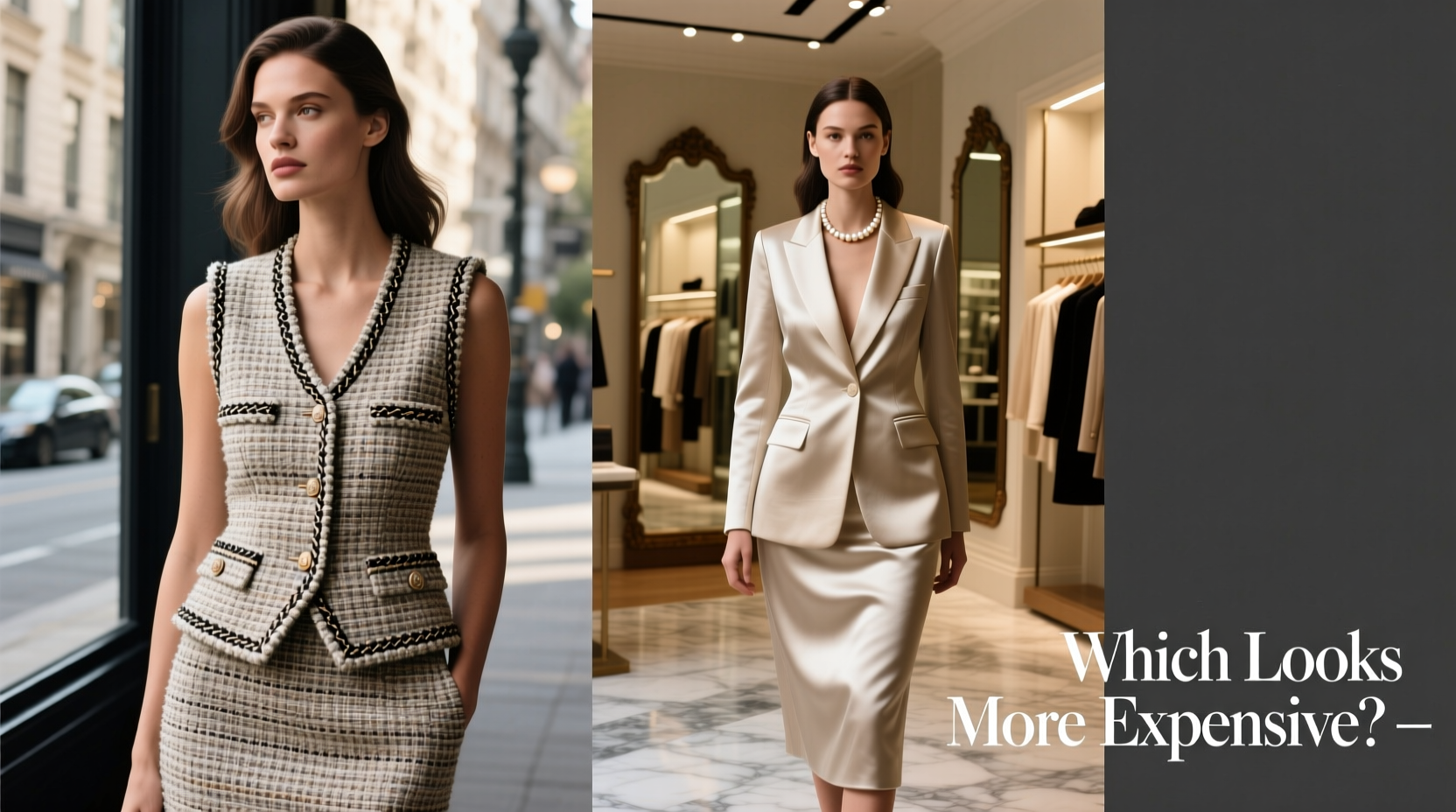
Luxury isn't just about price tags—it's about perception. An outfit that looks expensive typically features clean lines, balanced proportions, rich textures, and subtle details that suggest craftsmanship. The human eye instinctively recognizes quality through consistency: even stitching, fine wool, precise tailoring, and thoughtful accessories all contribute to a high-value impression.
Tweed and tailored suiting fabrics occupy adjacent but distinct spaces in this hierarchy. Tweed, traditionally associated with British country estates and heritage fashion houses like Chanel, carries a legacy of exclusivity. Skirt suits, particularly in solid wool or cashmere blends, are linked to boardrooms and executive presence. But when placed side by side, which ensemble reads as more luxurious?
Breaking Down the Tweed Vest Set
A tweed vest set typically includes a cropped jacket, matching vest (waistcoat), and coordinated skirt or trousers—all cut from the same textured wool blend. This coordinated approach creates visual unity, a hallmark of designer dressing. The intricate weave patterns, often featuring flecks of color and herringbone or houndstooth motifs, signal artisanal production.
Tip: To elevate a tweed set’s perceived value, pair it with silk blouses, pearl accessories, and pointed-toe heels—details that reinforce a couture aesthetic.The craftsmanship involved in weaving authentic tweed—especially Harris or Donegal tweed—is time-intensive and region-specific, contributing to its premium image. When well-tailored, the structured shoulders and nipped waist of a vest set create a sculpted silhouette that mimics high-fashion tailoring.
However, not all tweed is created equal. Cheap polyester blends with synthetic sheen or loose weaves can appear costume-like. Authenticity matters: real tweed has weight, texture, and slight irregularities that machine-made imitations lack.
Anatomy of the Classic Skirt Suit
A traditional skirt suit consists of a tailored jacket and matching pencil or A-line skirt, usually in solid navy, black, gray, or camel. Its strength lies in versatility and timelessness. Unlike trend-driven pieces, a well-cut skirt suit transcends seasons, making it a favorite among diplomats, lawyers, and executives.
The perceived expense of a skirt suit hinges on three factors: fabric, fit, and finish. A suit made from 100% virgin wool or wool-silk blend with a soft hand feel and matte finish will always look costlier than a stiff, poly-viscose alternative. Similarly, internal canvassing (as opposed to fused construction) adds structure and longevity, signaling investment-grade tailoring.
“Simplicity, when executed perfectly, reads as wealth. A flawless skirt suit in cashmere-blend wool says more than ten flashy pieces.” — Marcus Langford, Fashion Director at *Verve Edit*
In corporate environments, the minimalist elegance of a skirt suit often registers as more professionally upscale. It suggests discipline, authority, and attention to detail—qualities culturally tied to financial success.
Comparative Analysis: Key Differences
| Feature | Tweed Vest Set | Skirt Suit |
|---|---|---|
| Fabric Texture | Highly textured, patterned, artisanal | Smooth, solid, refined |
| Perceived Origin | Heritage, European luxury (e.g., Chanel) | Corporate, modern power dressing |
| Versatility | Moderate (best for fall/winter, formal events) | High (wearable year-round, across industries) |
| Craftsmanship Signal | Visible through weave complexity | Visible through drape and internal structure |
| Styling Flexibility | Lower (requires coordination) | Higher (jacket or skirt can be worn separately) |
The table reveals a key insight: while the tweed vest set wins in narrative richness and tactile luxury, the skirt suit often wins in functional elegance and broader acceptance as a symbol of affluence.
Real-World Example: The Boardroom Meeting
Consider two women attending a high-stakes client presentation in Manhattan. Clara wears a navy tweed vest set with gold-tone buttons and a silk camisole. Lena wears a charcoal skirt suit in lightweight wool crepe with a crisp white blouse and minimalist jewelry.
Both are impeccably dressed. Yet post-meeting feedback notes that Lena “looked like she belonged at the top table,” while Clara was described as “stylish but perhaps better suited for a fashion event.” The distinction isn’t about quality—it’s about context. In conservative industries like finance or law, the skirt suit aligns more closely with established norms of authority and discretion.
In contrast, Clara’s outfit might dominate at a creative agency or luxury retail launch, where individuality and brand storytelling matter more. There, her tweed set could be interpreted as a deliberate nod to timeless craftsmanship—therefore appearing more exclusive.
How to Make Either Look Expensive
The final verdict depends less on the garment type and more on execution. Here’s how to ensure either option radiates luxury:
- Invest in fabric integrity: Choose natural fibers. If it feels flimsy or static-prone, it won’t look costly.
- Prioritize fit over trend: Tailoring is the ultimate status signal. Even a $300 suit altered by a skilled tailor outshines an ill-fitting $2,000 designer piece.
- Limit visible branding: Logos cheapen perception. Quiet luxury favors subtlety—think tonal stitching, hidden linings, understated buttons.
- Pair with elevated basics: Silk, cashmere, and fine cotton underneath enhance any outer layer.
- Footwear matters: Clean, pointed-toe pumps or sleek loafers complete the illusion of wealth. Scuffed shoes undermine everything.
Checklist: Does Your Outfit Look Expensive?
- ✅ Fabric is heavyweight and natural (no plastic sheen)
- ✅ Jacket fits snugly across shoulders without pulling
- ✅ No loose threads, missing buttons, or pilling
- ✅ Colors are harmonized (no clashing accessories)
- ✅ Shoes and bag are in good condition and stylistically aligned
- ✅ Overall silhouette is clean and uncluttered
FAQ
Can a tweed vest set be worn in summer?
Traditional heavy tweed is best for cooler months. However, lighter-weight bouclé or linen-tweed blends are available for spring/summer wear. Opt for sleeveless vests and cropped jackets to maintain breathability.
Is a matching set inherently dressier than separates?
Yes—matching sets signal intentionality and are often reserved for formal or ceremonial occasions. Separates offer more adaptability but require greater skill to style cohesively.
Which has better resale value: tweed sets or skirt suits?
Vintage Chanel-style tweed sets hold exceptional resale value due to collectibility. Modern, well-branded skirt suits also retain worth, especially in classic cuts and rare fabrics like cashmere.
Final Verdict: Context Is King
So, which looks more expensive? The answer is situational. In fashion-forward or creative fields, the tweed vest set often appears more luxurious due to its association with haute couture and artisanal fabrication. Its intricate weave and coordinated design suggest a higher cost of production.
But in most professional, conservative, or international business settings, the skirt suit holds the edge. Its simplicity, wearability, and alignment with global power dressing codes make it the default symbol of quiet wealth.
Ultimately, the most expensive-looking outfit is the one worn with confidence, care, and coherence. Garments that are well-maintained, properly fitted, and styled with restraint will always outshine flashier alternatives.
💬 What’s your go-to power outfit? Share your thoughts on tweed versus tailoring and how you define “expensive” style in the comments below.