Formal fashion has long been dominated by silks, satins, and structured ball gowns—materials and cuts that signal elegance through opulence. But in recent years, a quieter contender has emerged from the background: the tweed A-line dress. Once reserved for country estates and autumn garden parties, tweed is now stepping into evening galas, cocktail events, and even black-tie affairs. The question arises: can a tweed A-line dress truly hold its own against a traditional formal gown?
The answer isn’t a simple yes or no. It depends on fabric quality, cut, occasion, and, most importantly, styling. Tweed, when thoughtfully chosen and elevated with refined details, can indeed be formal—just not in the same way as a sequined floor-length gown. Understanding this distinction is key to navigating modern dress codes with confidence and individuality.
The Evolution of Formal Wear
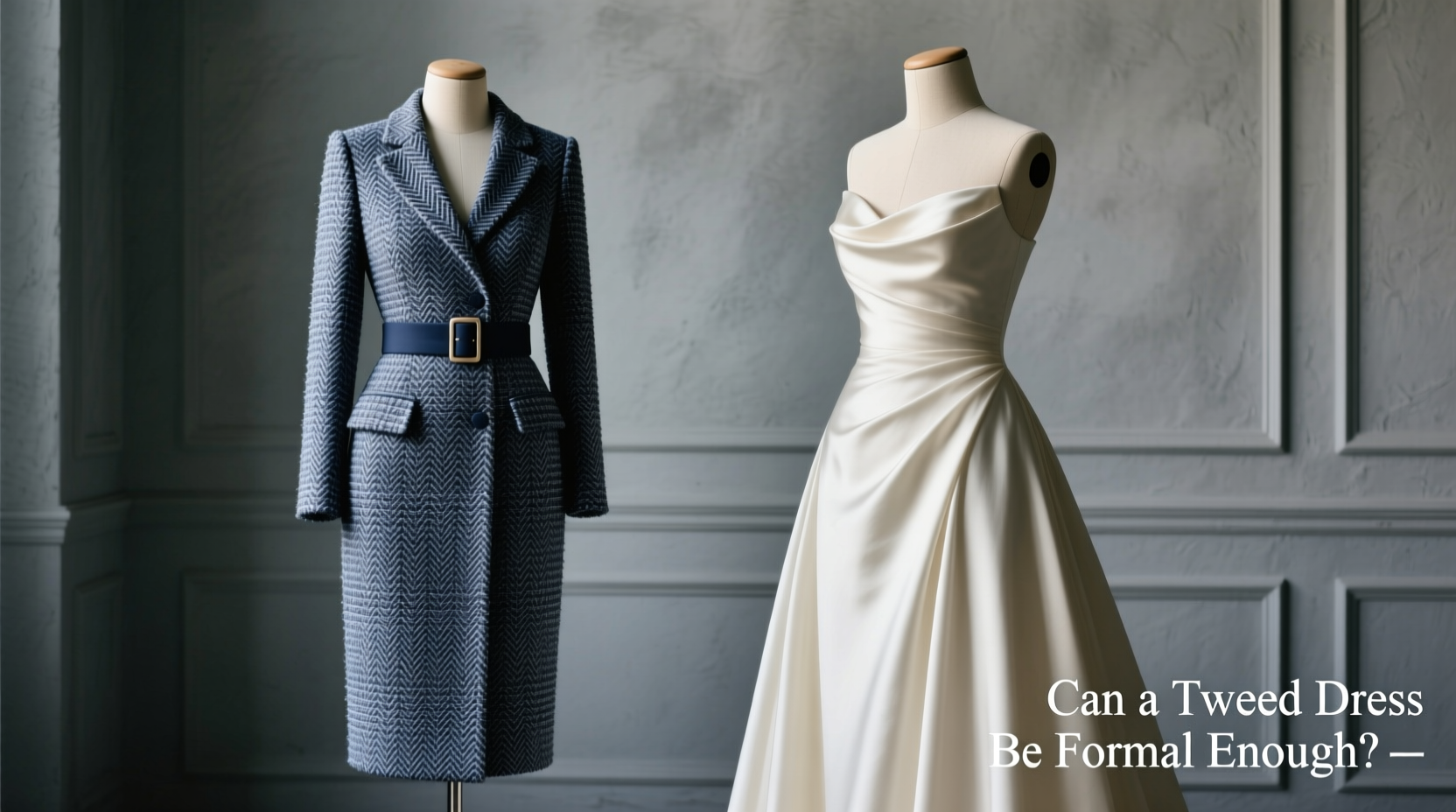
Historically, formal attire followed rigid rules. Men wore tuxedos; women donned long, flowing gowns in luxurious fabrics like silk, chiffon, or velvet. These materials shimmered, draped elegantly, and signaled wealth and occasion. Tweed, by contrast, was practical—woven for durability, warmth, and outdoor wear. Originating in rural Scotland and Ireland, it was designed for hunting, walking, and enduring harsh weather.
Yet fashion evolves. Coco Chanel famously reimagined tweed in the 1920s, transforming it from rustic outerwear into chic, tailored suits for women. Her designs celebrated structure, craftsmanship, and quiet sophistication over flashiness. This legacy lives on. Today’s designers—from Karl Lagerfeld at Chanel to Phoebe Philo at Céline—have continued to refine tweed, using fine wools, intricate weaves, and delicate embellishments to elevate its status.
As societal norms around formality loosen, so do definitions of “appropriate” attire. Black tie optional? Cocktail attire? Creative black tie? These ambiguous dress codes open space for interpretation—and for tweed to shine.
When Is a Tweed A-Line Dress Formal Enough?
A tweed A-line dress can be formal under specific conditions:
- Fabric quality: Opt for tightly woven, fine-gauge tweed—often labeled “dress tweed”—rather than coarse, bulky wool.
- Details matter: Look for silk linings, hand-finished hems, subtle metallic threads, or beading that elevate the texture.
- Silhouette: An A-line cut that skims the body without clinging offers timeless elegance and modesty, aligning well with conservative formal standards.
- Length: Knee-length or midi lengths are acceptable for cocktail events; longer hemlines (calf or ankle) increase formality.
- Occasion alignment: A winter wedding, charity gala, or holiday soirée may welcome tweed more readily than a summer beachfront reception.
Tweed vs. Gown: A Practical Comparison
| Feature | Tweed A-Line Dress | Traditional Formal Gown |
|---|---|---|
| Material | Wool blend, often with silk or metallic threads | Silk, satin, taffeta, lace, chiffon |
| Structure | Tailored, slightly structured, defined waist | May be corseted, voluminous, or fluid drape |
| Season Suitability | Fall, winter, early spring | All seasons (lighter fabrics for summer) |
| Versatility | Can transition from day to night with accessories | Largely event-specific; less wearable daily |
| Comfort & Mobility | Generally comfortable, allows movement | Can be restrictive, delicate, high-maintenance |
| Perceived Formality | Context-dependent; requires careful styling | Universally recognized as formal |
This comparison reveals that while gowns carry automatic formal weight, tweed dresses offer flexibility, seasonality, and understated refinement. They trade grandeur for longevity and wearability.
Styling a Tweed A-Line Dress for Formal Events
Success lies in balancing tweed’s inherent texture with elements that convey elegance. Consider this step-by-step approach:
- Choose the right base: Select a dress with clean lines, minimal patch pockets, and refined closures (hidden zippers, covered buttons).
- Elevate with accessories: Add a silk scarf, pearl earrings, or a vintage brooch. Avoid casual finishes like denim jackets or sneakers.
- Select formal footwear: Closed-toe pumps, pointed flats, or elegant ankle boots in patent leather or suede enhance sophistication.
- Layer strategically: A tailored cape, faux fur stole, or silk wrap adds drama and warmth without compromising formality.
- Carry a structured bag: A small box clutch or top-handle satchel in matching tones completes the look.
“Tweed isn’t inherently informal—it’s about context and curation. A beautifully crafted tweed dress styled with intention can be more powerful than a generic gown.” — Lydia Grant, Fashion Historian and Curator at the Museum of Style
Real Example: The Winter Wedding Guest
Sophia attended a December wedding held in a historic library. The invitation specified “festive formal attire.” She opted for a charcoal-gray tweed A-line dress with gold-thread flecks, knee-length hem, and a shawl collar. She paired it with sheer black stockings, burgundy suede pumps, and a vintage rhinestone brooch passed down from her grandmother. A short faux fur stole completed the ensemble.
No one questioned her choice. In fact, several guests complimented her on looking “polished yet personal.” The tweed was warm, appropriate for the indoor-outdoor venue, and aligned with the intellectual ambiance of the setting. Had she worn a satin gown, it might have felt out of place among the bookshelves and roaring fireplaces.
Checklist: Is Your Tweed Dress Formal-Ready?
- ✅ Fabric is fine-woven, not rough or overly textured
- ✅ Dress has a clean, tailored silhouette (no patch pockets or casual detailing)
- ✅ Hemline is knee-length or longer
- ✅ Lining is smooth (ideally silk or high-quality acetate)
- ✅ You’ve selected formal shoes and accessories
- ✅ Outfit matches the season and venue tone
- ✅ Outer layer (if needed) is elegant—not sporty or utilitarian
Common Misconceptions About Tweed
Many dismiss tweed as “too old-fashioned” or “only for daytime.” These assumptions overlook its adaptability. High-end fashion houses regularly feature tweed in their couture collections—not as novelty, but as statement pieces. The misconception stems from exposure to lower-quality versions: stiff, brightly colored, or poorly cut tweeds marketed as costume pieces.
True dress tweed is soft to the touch, subtly patterned (houndstooth, herringbone, windowpane), and expertly tailored. When worn with confidence, it communicates taste rather than trend-chasing.
FAQ
Can I wear a tweed dress to a black-tie event?
Typically, black-tie events expect floor-length gowns. However, if the dress code is “creative black tie” or the event is in a non-traditional setting (e.g., an art gallery opening), a sophisticated tweed dress—especially in deep navy, black, or jewel tones—can work. Pair it with dramatic jewelry and a sleek updo to reinforce formality.
Is tweed appropriate for summer formal events?
Not ideal. Tweed is a dense fabric designed for cooler climates. For summer events, lighter materials like linen blends, cotton voile, or silk are better suited. That said, some lightweight tropical wool tweeds exist—rare, but worth seeking if you’re committed to the aesthetic.
How do I care for a formal tweed dress?
Dry cleaning is recommended, especially for lined or embellished pieces. Store on padded hangers to maintain shape, and use breathable garment bags. Avoid folding for long periods, as creases can set into the weave.
Conclusion: Redefining Formal on Your Terms
The debate between tweed A-line dresses and formal gowns isn’t about superiority—it’s about relevance. While gowns remain the default symbol of formal elegance, tweed offers an alternative path: one rooted in craftsmanship, comfort, and quiet confidence. It challenges the notion that formality must dazzle to be valid.
In a world increasingly valuing individuality and sustainability, choosing a timeless tweed dress over a single-use gown isn’t just acceptable—it’s commendable. With thoughtful selection and intentional styling, a tweed A-line dress doesn’t just meet formal standards; it redefines them.
💬 Have you worn tweed to a formal event? Share your experience, styling tips, or photos in the comments—let’s expand what formal fashion can be.