When the weather turns unpredictable—cold winds howl and sudden downpours catch you off guard—the right outerwear makes all the difference. Two iconic coats dominate the conversation in classic men’s and women’s wardrobes: the trench coat and the pea coat. Both have military roots, timeless style, and widespread appeal. But when it comes to actual protection against wind and rain, one clearly outperforms the other under specific conditions.
Understanding the structural design, fabric composition, and functional details of each coat reveals not just their aesthetic differences, but their real-world utility in adverse weather. Whether you're commuting through city streets or braving coastal gusts, choosing between a trench and a pea coat shouldn’t be about fashion alone—it should be about performance.
The Origins and Evolution of Each Coat
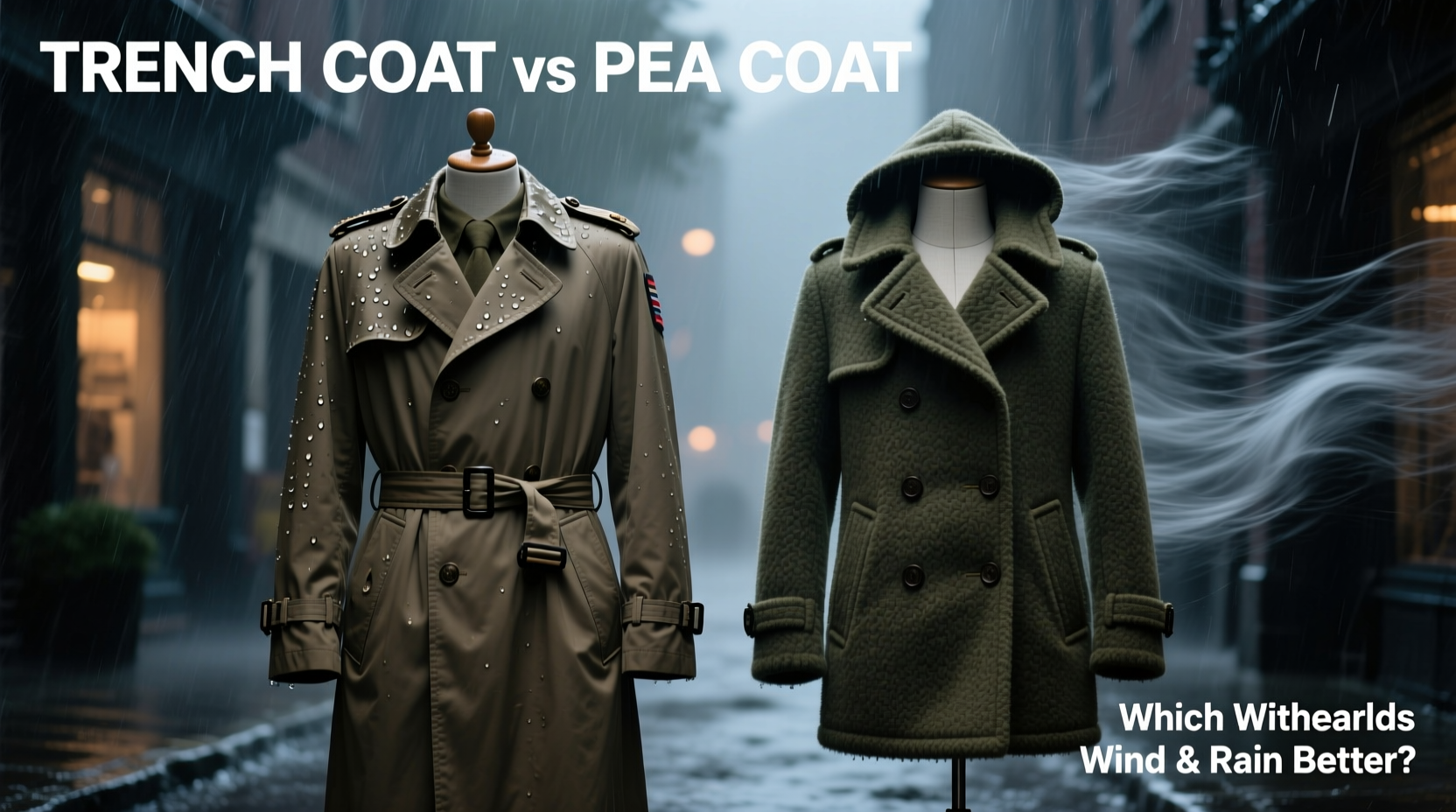
The trench coat traces its lineage to World War I, developed for British officers who needed a lightweight yet weather-resistant garment suitable for trench warfare. Originally made from tightly woven gabardine cotton—a fabric invented by Thomas Burberry—the trench was designed to shed water while allowing breathability. Key features like epaulets, storm flaps, and a deep rear vent were functional additions meant to carry gear and improve mobility in wet conditions.
In contrast, the pea coat originated with European naval forces as early as the 18th century. Known as “pijjekker” in Dutch (from “pij,” a coarse wool), it was adopted widely by American and British sailors due to its exceptional warmth and durability. Constructed from thick, heavy wool melton, the pea coat was built to endure freezing maritime climates where wind chill and dampness posed constant threats.
While both garments evolved into civilian staples, their core construction principles remained rooted in practicality. The trench prioritized water resistance and ventilation; the pea coat focused on insulation and wind deflection. These foundational goals continue to shape how each performs today.
Material Matters: Fabric Performance in Wet and Windy Conditions
The fabric is the first line of defense against the elements. How well a coat resists moisture absorption, blocks wind penetration, and retains heat depends largely on what it's made of—and how it's treated.
Trench Coats: Traditionally crafted from cotton gabardine, modern versions may use synthetic blends or treated cotton with durable water repellent (DWR) finishes. Gabardine’s diagonal weave creates a tight barrier that naturally resists light rain. However, prolonged exposure saturates untreated cotton, leading to waterlogging. While some trench coats feature waterproof membranes or rubberized linings (especially in premium models), most standard designs are only water-resistant—not fully waterproof.
Pea Coats: Made almost exclusively from wool melton, a densely felted fabric with minimal nap, pea coats excel at blocking wind. Wool fibers naturally absorb up to 30% of their weight in moisture without feeling wet, and they retain insulating properties even when damp. Melton’s compact structure prevents air permeability, making it highly effective at reducing wind chill. Unlike cotton, wool also wicks moisture away from the body, helping maintain comfort during active wear.
Tip: For maximum rain protection, choose a trench coat with a taped seam lining or Gore-Tex layer—standard cotton versions won’t hold up in heavy storms.Design Features That Impact Weather Resistance
Beyond fabric, the silhouette and functional details of each coat determine how effectively it shields the wearer from environmental stressors.
The trench coat typically includes several weather-specific design elements:
- Double-breasted front with storm flap: Adds an extra layer over the chest to prevent wind and rain infiltration.
- Adjustable buckled belt: Seals the waist to reduce drafts and channel water runoff.
- Epaulets and gun flaps: Originally for holding rank insignia and protecting ammunition, these now serve as decorative features but can slightly enhance water shedding.
- Vented back yoke: Improves airflow and allows water to escape, preventing pooling.
However, the trench’s longer length (usually mid-calf) exposes more surface area to wind-driven rain, and its looser fit can allow cold air to circulate underneath if not properly belted.
The pea coat, meanwhile, relies on simplicity and density:
- Short, boxy cut: Ends at the hip, minimizing exposed fabric and reducing flapping in high winds.
- Double-faced wool construction: Often lined with matching wool or a warm blend, eliminating gaps where wind could enter.
- Wide lapels and high collar: Can be turned up to shield the neck and lower face from biting gusts.
- Large wooden or metal buttons: Secure tightly across the chest, creating a snug seal.
Because the pea coat hugs the upper body closely and uses no external fastening belt, it eliminates potential entry points for wind once buttoned. Its compact design minimizes surface exposure, giving it an edge in blustery conditions.
Comparative Analysis: Trench vs Pea Coat in Real Weather Scenarios
“Wind resistance isn’t just about thickness—it’s about coverage, fit, and fiber integrity. A well-made wool coat will outperform most ‘water-resistant’ cotton shells in sustained storms.” — Daniel Reeves, Outerwear Designer & Textile Engineer
To evaluate real-world performance, consider three common weather challenges:
- Light Rain + Breeze: The trench coat shines here. Its DWR-treated surface beads water effectively, and the length protects trousers from splashes. With proper maintenance (reapplication of water repellency), it handles drizzle and gusts admirably.
- Heavy Rain + Strong Winds: Here, limitations emerge. Even treated cotton eventually absorbs moisture, becoming heavier and less breathable. Without a full waterproof membrane, the trench fails under prolonged downpours. The pea coat, though not marketed as rainwear, performs surprisingly well—its wool repels initial moisture, and the dense weave prevents wind from penetrating. However, extended soaking will compromise its effectiveness.
- Cold, Dry Wind (e.g., urban canyons or coastal areas): The pea coat dominates. Its short, insulated profile stops wind at the core, where heat loss is most critical. The absence of gaps around the torso and shoulders ensures consistent thermal regulation. In contrast, the trench’s open collar and belted waist can create convection currents that draw cold air inward.
| Feature | Trench Coat | Pea Coat |
|---|---|---|
| Fabric Type | Cotton gabardine (often treated) | Wool melton (double-faced) |
| Water Resistance | Moderate (water-resistant, not waterproof) | Low to moderate (absorbs moisture slowly) |
| Wind Blocking | Fair (depends on fit and belt) | Excellent (dense fabric, snug fit) |
| Warmth Level | Low to moderate (light insulation) | High (inherent wool insulation) |
| Best For | Spring/fall showers, light wind | Winter cold, strong winds |
| Lifespan (with care) | 5–10 years | 10–20+ years |
Case Study: Commuting Through a Coastal Storm
Sarah, a ferry commuter in Seattle, faces daily exposure to wind, mist, and sudden squalls. Last winter, she tested two coats during a week of relentless Pacific Northwest weather. On Monday and Tuesday, she wore her beige cotton trench. By midday, the shoulders darkened with absorbed moisture, and a persistent northerly wind slipped under the belt, chilling her torso. She arrived at work damp and shivering.
Switching to her navy double-breasted pea coat Wednesday through Friday, the experience changed dramatically. Despite similar rainfall, the wool maintained its shape and warmth. The high collar blocked wind from her neck, and the snug fit prevented air leakage. Though visibly wet after heavy bursts, the fabric dried quickly indoors and retained heat throughout the day.
Her takeaway: “The trench looks sharper, but the pea coat actually kept me dry and warm. For real weather protection, there’s no substitute for good wool.”
How to Maximize Protection From Either Coat
Neither coat is inherently flawless. With smart usage and maintenance, however, both can deliver improved performance.
Step-by-Step Guide to Enhancing Weather Resistance
- Apply a Water Repellent Treatment: Use a silicone-free DWR spray on trench coats every 3–6 months. Reapply after cleaning to restore beading action.
- Avoid Machine Washing Wool: Pea coats should be dry-cleaned or spot-cleaned only. Agitation damages the felted structure of melton wool.
- Layer Strategically: Underneath either coat, wear a moisture-wicking base layer and a mid-layer fleece or sweater. This compensates for thinner insulation in trenches and boosts warmth in pea coats.
- Seal Gaps: Add a scarf or turtleneck under the collar to block wind entry, especially in pea coats with open lapels.
- Store Properly: Hang both coats on wide, padded hangers to preserve shoulder shape. Keep them in a ventilated closet away from humidity to prevent mildew.
Frequently Asked Questions
Can a trench coat be worn in the rain?
Yes, but with caveats. A traditional cotton trench can handle light rain or brief exposure thanks to its tight weave and DWR treatment. However, in sustained or heavy rain, it will eventually soak through. For true rainy climates, opt for a trench with a waterproof membrane or consider a dedicated raincoat instead.
Are pea coats good in snow?
Pea coats perform well in dry snow and cold temperatures due to their excellent wind resistance and insulation. However, wet snow can saturate the wool over time. Pair with waterproof boots and gloves for full winter readiness, and avoid sitting on snowy surfaces to minimize moisture transfer.
Which coat lasts longer?
Generally, pea coats last longer. High-quality wool melton is incredibly durable and resistant to abrasion. With proper care, a pea coat can remain functional for decades. Trench coats, particularly those with cotton shells and complex linings, degrade faster when exposed to UV light, frequent rain, and improper storage.
Final Recommendations and Action Plan
If your priority is resisting wind and staying warm in cold, blustery conditions, the pea coat is the superior choice. Its dense wool construction, snug fit, and minimal wind penetration make it ideal for winter cities, coastal regions, and outdoor environments with persistent gusts.
If you face frequent light rain and milder temperatures—such as in spring or fall—the trench coat offers greater versatility and elegance. Just ensure it has modern enhancements like taped seams or breathable waterproof layers if you live in a rainy climate.
“Don’t choose based on trend cycles. Choose based on your environment. Your coat should protect you first, impress second.” — Lena Choi, Sustainable Fashion Consultant
Checklist: Choosing the Right Coat for Your Climate
- ☐ Assess your local weather patterns: frequent rain? strong winds? extreme cold?
- ☐ Prioritize fabric: wool for wind/cold, treated cotton or synthetics for rain.
- ☐ Try both on: check fit around shoulders, chest, and waist—gaps reduce protection.
- ☐ Look for functional details: sealed seams, storm flaps, high collars.
- ☐ Invest in quality: a well-made coat pays for itself in longevity and comfort.
Conclusion: Make the Smart Choice Based on Conditions, Not Clichés
The trench coat and pea coat are more than fashion statements—they’re engineered solutions to environmental challenges. Recognizing their strengths allows you to dress intelligently, not just stylishly. For wind resistance and consistent warmth in damp-chill conditions, the pea coat stands unchallenged. For light precipitation and transitional seasons, the trench remains unmatched in form and function.
Now that you understand the real differences, assess your needs honestly. Are you walking through windy harbors or rainy city blocks? Let your environment guide your decision. Upgrade your outerwear with purpose, and step outside with confidence—no matter what the sky throws your way.
💬 Have experience with trench or pea coats in extreme weather? Share your story in the comments and help others choose wisely!