
Every morning, professionals around the world face a quiet but impactful decision: what bag to carry to work. It’s not just about matching an outfit or fitting a laptop—it’s about balancing professionalism with physical well-being. The wrong choice can lead to slumped shoulders, chronic back pain, or even a wardrobe that feels out of sync with workplace expectations. Two of the most common contenders are tote bags and backpacks. One exudes classic sophistication; the other promises ergonomic relief. But which one truly serves both your image and your spine?
This guide breaks down the real-world trade-offs between tote bags and backpacks when used in professional settings. From posture and weight distribution to fabric choices and office culture cues, we’ll help you choose the right bag—not just for today, but for long-term comfort and credibility.
Ergonomics: How Your Bag Affects Your Body
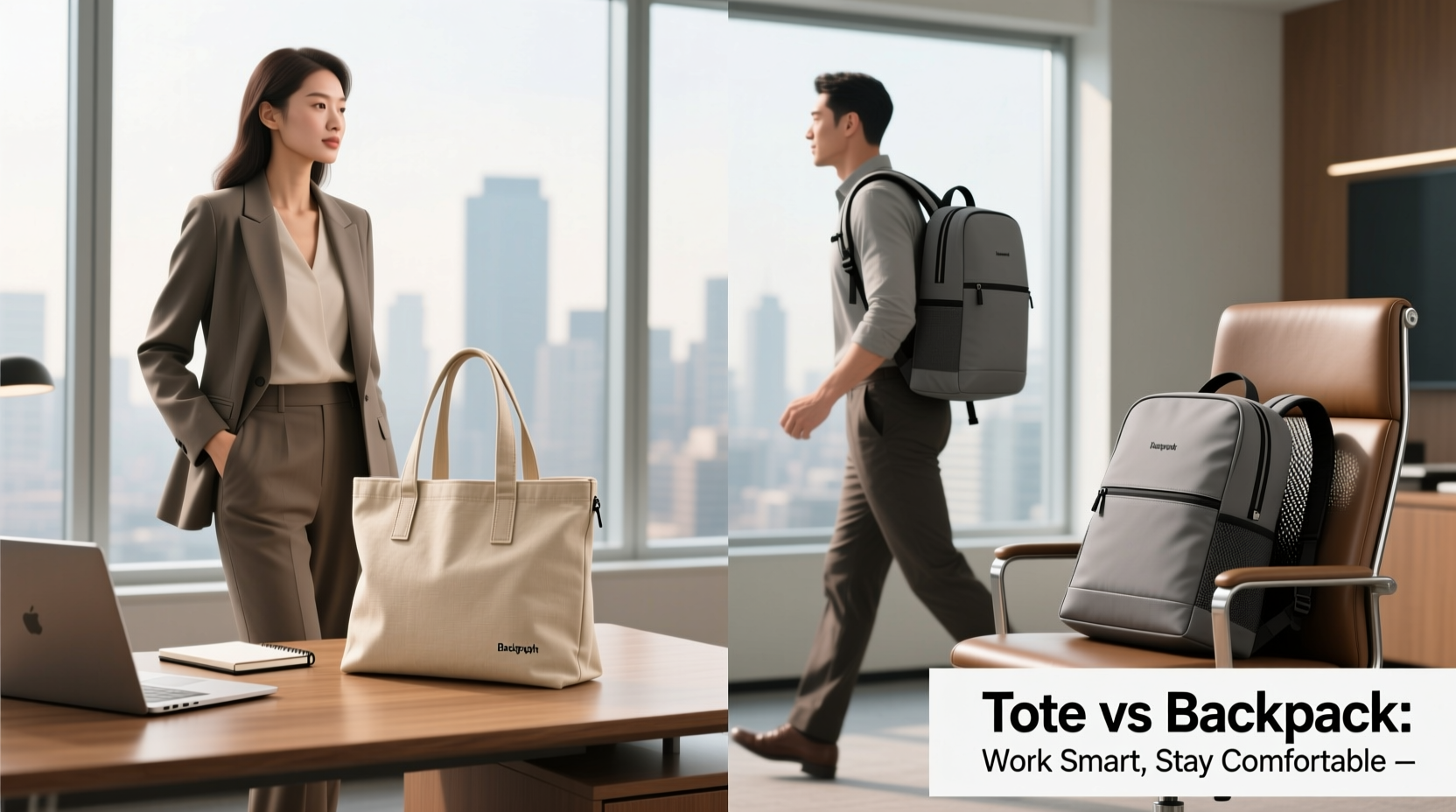
The human body wasn’t designed to carry heavy loads on one shoulder for hours at a time. Yet that’s exactly what happens when you sling a bulky tote over one arm and walk across town. Over time, this uneven load leads to muscle imbalances, spinal misalignment, and chronic discomfort—especially if your daily haul includes a laptop, charger, notebook, and water bottle.
Backpacks, by contrast, distribute weight evenly across both shoulders and closer to the body’s center of gravity. When worn correctly (both straps over the shoulders, snug against the back), they reduce strain on the neck, shoulders, and lower back. According to Dr. Lena Patel, a physical therapist specializing in workplace ergonomics:
“Carrying more than 10% of your body weight in a single-strap bag significantly increases the risk of postural dysfunction. Backpacks are biomechanically superior for daily commutes, especially when loaded with tech gear.” — Dr. Lena Patel, DPT, CSCS
However, not all backpacks are created equal. Poorly designed models with thin straps, no back padding, or excessive volume encourage slouching and poor weight transfer. Similarly, oversized totes may look elegant but often lack structural support, forcing users to grip them tightly or hike the shoulder unnaturally.
Tip: If you must use a tote, switch shoulders every 10–15 minutes to avoid unilateral strain.Professional Appearance: Perception Matters
In many corporate environments, appearance influences credibility. While casual workplaces have embraced backpacks as standard commuter gear, traditional offices—from law firms to financial institutions—often associate totes with polished professionalism.
A structured leather tote in black or navy, clean-lined and uncluttered, signals preparedness and attention to detail. It pairs naturally with business attire and fits seamlessly into boardroom settings. Backpacks, unless carefully selected, can appear juvenile or overly sporty, especially if they feature bright colors, visible branding, or hydration sleeves.
That said, the stigma around professional backpacks is fading. Modern minimalist designs made from premium materials like ballistic nylon, vegan leather, or waxed canvas now blend functionality with formality. Brands like Aer, Bellroy, and Tumi offer sleek urban backpacks tailored for white-collar commuters—proof that function doesn’t have to sacrifice fashion.
The key lies in intentionality. A $30 gym backpack stuffed to the brim sends a different message than a slim, organized briefcase-style backpack with magnetic closures and hidden laptop compartments.
Comparative Breakdown: Tote Bags vs Backpacks
| Feature | Tote Bags | Backpacks |
|---|---|---|
| Weight Distribution | Poor – concentrated on one shoulder | Excellent – balanced across both shoulders and back |
| Posture Impact | Negative – promotes leaning and shoulder elevation | Neutral/Positive – supports upright alignment when properly adjusted |
| Professional Look | High – especially with structured leather styles | Moderate to High – depends heavily on design and material |
| Capacity & Organization | Limited internal pockets; prone to clutter | Better compartmentalization; dedicated tech sleeves |
| Durability | Varies – leather ages well; canvas wears faster | Generally high – especially technical fabrics |
| Security | Low – open tops invite theft or accidental drops | Higher – zippers, anti-theft features available |
| Commuting Ease | Fair – difficult on crowded transit or stairs | Superior – hands-free, stable during movement |
This comparison shows there’s no universal “best” option. Instead, the ideal choice depends on your commute, clothing style, work environment, and physical needs.
Real-World Scenario: Sarah’s Switch from Tote to Backpack
Sarah, a marketing manager at a mid-sized consulting firm, had been using a large designer tote for years. It matched her blazers perfectly and held everything she needed: laptop, planner, makeup pouch, lunch container. But after six months of persistent neck pain and frequent headaches, she consulted a physiotherapist.
The diagnosis was clear: unilateral loading from her 12-pound tote was causing trapezius muscle strain and cervical spine compression. Her doctor recommended switching to a dual-strap backpack or drastically reducing her load.
Reluctant at first—worried about appearing “too casual”—Sarah invested in a slim, matte-black backpack with a front-zip organizer panel and padded laptop sleeve. She kept her workwear consistent and added a linen blazer for meetings. Within weeks, her pain decreased significantly. More surprisingly, no colleagues questioned her bag choice. One even asked where she bought it.
Sarah’s experience reflects a broader shift: professionalism is increasingly defined by competence and presentation—not accessory orthodoxy.
Choosing the Right Bag: A Step-by-Step Guide
Selecting the best work bag isn’t about following trends. It’s about aligning your choice with your lifestyle and health. Follow these steps to make an informed decision:
- Assess Your Daily Load
Weigh your typical contents. If your essentials exceed 10 pounds (including laptop), prioritize a backpack for safer weight distribution. - Evaluate Your Commute
Long walks, stairs, or public transit favor backpacks. Short drives or elevator access may allow for tote use with fewer physical risks. - Analyze Office Culture
Observe what senior team members carry. In conservative fields, opt for structured totes or executive-style backpacks. In creative or tech-forward spaces, functional backpacks are widely accepted. - Test Ergonomic Fit
Try before you buy. Wear the bag for 15 minutes in-store. Check for pressure points, strap comfort, and whether it rides too low or pulls forward. - Prioritize Features Over Fashion
Look for padded back panels, adjustable straps, water-resistant fabric, and secure closures. These enhance both comfort and longevity. - Consider a Hybrid Option
Some brands offer convertible bags—totes with removable backpack straps or briefcases with ergonomic carry systems. These provide flexibility across contexts.
Actionable Checklist: Picking a Work Bag That Works for You
- ☐ Total loaded weight under 10% of your body weight
- ☐ Laptop compartment with padding (minimum 15” fit)
- ☐ At least two internal pockets for organization
- ☐ Water-resistant exterior material
- ☐ Comfortable straps (padded, adjustable, non-slip)
- ☐ Professional color palette (black, gray, navy, tan)
- ☐ Secure closure (zipper, flap with magnet, or buckle)
- ☐ Fits under desks and airplane seats
- ☐ Easy to clean and maintain
- ☐ Matches your most-worn work outfits
When a Tote Can Still Work—Safely
You don’t have to abandon totes entirely. For lighter loads or occasional use, they remain a stylish and practical option. To minimize risk:
- Limit contents to essentials only—consider leaving non-critical items at the office.
- Choose a tote with dual handles so you can carry it briefly by hand, giving your shoulder a break.
- Opt for wide, padded shoulder straps instead of thin leather ones that dig into skin.
- Use a crossbody strap attachment to distribute weight diagonally across your torso.
- Avoid overstuffing—bulging seams increase strain and reduce structural integrity.
For hybrid roles (e.g., client visits followed by desk work), consider keeping a lightweight foldable backpack in your tote for the return commute—especially if you’re carrying samples, files, or gifts.
FAQ: Common Questions About Work Bags and Back Health
Can I wear a backpack in a formal office?
Yes—if it’s designed for professional use. Look for minimalist silhouettes, neutral colors, and premium materials. Avoid sporty logos, mesh pockets, or hiking-style frames. Many executives now use compact backpacks for commuting and switch to a briefcase once in the office.
How heavy is too heavy for a tote bag?
Anything over 5–7 pounds becomes risky when carried on one shoulder. A fully loaded 15-inch laptop, charger, water bottle, and notebook can easily exceed 8–10 pounds. If your tote feels heavy after a few blocks, it’s time to reconsider your carry strategy.
Are messenger bags a better alternative?
Messenger bags split the difference—they offer more support than totes but less balance than backpacks. They still rely on one shoulder and can cause similar postural issues over time. If you prefer this style, choose one with a chest strap to stabilize the load and reduce shoulder strain.
Final Thoughts: Balance Style and Spine Health
The debate between tote bags and backpacks isn’t about declaring a winner. It’s about recognizing that your daily carry impacts more than your outfit—it affects your posture, energy levels, and long-term musculoskeletal health. While totes continue to symbolize polished professionalism, modern backpacks have evolved to meet the demands of sophisticated, mobile professionals.
The smartest approach combines awareness with adaptability. Evaluate your actual needs—not just aesthetic preferences. Invest in quality over trendiness. And remember: true professionalism includes taking care of yourself. A bag that protects your spine while complementing your suit is not a compromise. It’s progress.
🚀 Ready to upgrade your work bag? Audit your current carry today—weigh it, wear it, assess its impact. Then choose a solution that supports both your career and your body. Share your favorite professional backpack or tote brand in the comments below.