Traveling light doesn’t mean sacrificing functionality. When choosing between a tote bag and a crossbody for your journey, the decision often comes down to one critical trade-off: capacity versus comfort. While both styles are popular among travelers, they serve different needs based on destination, duration, and daily activity. Understanding how each performs in real-world conditions can help you pack smarter—carrying what you need without adding physical or logistical strain.
Capacity Comparison: How Much Can Each Bag Hold?
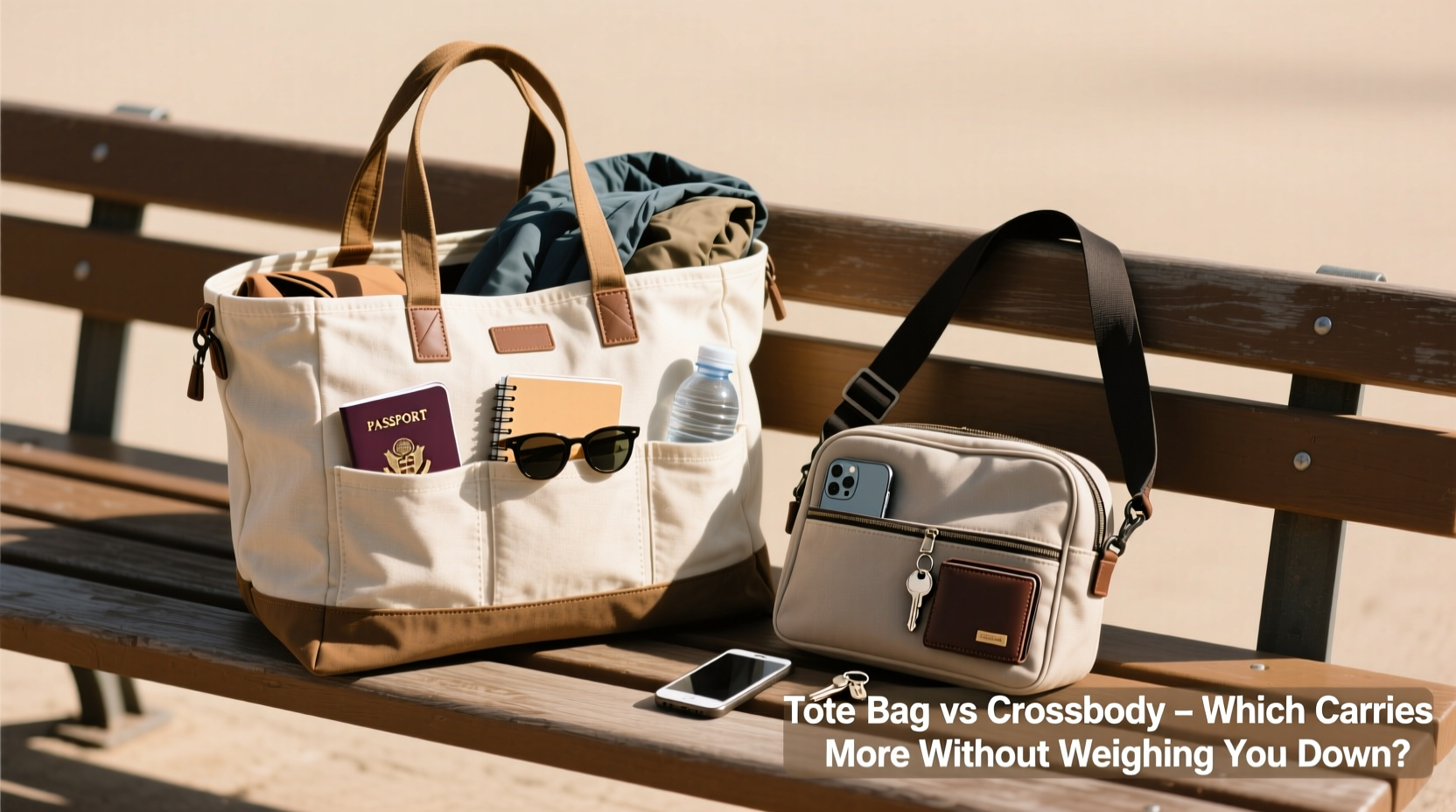
The most obvious difference between a tote and a crossbody is volume. Tote bags typically feature large, open interiors with minimal internal structure, allowing them to swallow laptops, books, water bottles, and extra layers. A standard travel tote measures around 14–16 inches wide and 12–14 inches tall, offering 15–25 liters of carrying space depending on depth. This makes it ideal for day trips, city exploration, or airport transits where you need multiple items at hand.
In contrast, crossbody bags prioritize compactness. Most models range from 5 to 10 liters, designed to hold essentials like a phone, wallet, passport, sunglasses, and a small power bank. Their smaller footprint reduces bulk but limits versatility when you're navigating full-day itineraries that require more gear.
| Bag Type | Avg. Capacity (Liters) | Typical Contents | Best For |
|---|---|---|---|
| Tote Bag | 15–25 L | Laptop, journal, snacks, jacket, water bottle | Urban travel, business trips, multi-stop days |
| Crossbody Bag | 5–10 L | Phone, wallet, keys, passport, lip balm | Sightseeing, crowded areas, quick excursions |
While the tote clearly wins in raw storage potential, its openness also invites clutter. Without compartments, items shift during movement, making retrieval difficult. Crossbodies, though limited in size, often include zippered pockets, RFID-blocking sleeves, and dedicated phone slots—features that enhance organization despite reduced space.
Tip: Use packing cubes or small pouches inside your tote to mimic the organizational benefits of a crossbody’s built-in structure.Weight Distribution and Comfort Over Time
Carrying capacity means little if the bag fatigues you by midday. This is where crossbody bags shine. By distributing weight diagonally across the torso—from shoulder to opposite hip—the design minimizes strain on any single point. The strap length keeps the bag centered near your core, reducing swing and improving balance, especially in crowds or while walking uphill.
Tote bags, however, rely on single- or double-shoulder carry, concentrating pressure on one or both shoulders. Even with padded handles, extended use can lead to soreness, particularly if loaded beyond 8–10 pounds. Some travelers report neck tension or postural shifts after hours with a heavy tote slung over one arm.
“Ergonomics matter more than you think when traveling. A poorly balanced bag forces subtle adjustments in gait and posture, leading to cumulative fatigue.” — Dr. Lena Patel, Physical Therapist & Travel Wellness Consultant
That said, not all totes are created equal. Modern travel totes increasingly incorporate ergonomic upgrades: contoured shoulder straps, chest stabilizer clips, and even backpack-style conversion options. These features bridge the gap, offering higher capacity without sacrificing long-term comfort.
When Weight Becomes a Liability
In cities with extensive walking—like Rome, Kyoto, or Lisbon—a bulky tote may become an anchor rather than an asset. Cobblestone streets, narrow alleys, and steep stairs amplify discomfort. Conversely, in destinations where transport is frequent (e.g., Tokyo’s subway system), a crossbody allows hands-free mobility and deters pickpockets far better than an open tote left unattended on a café chair.
Security and Practicality in Transit
Security is a silent factor in the tote-versus-crossbody debate. Open-top totes expose contents every time you reach inside, making them vulnerable in crowded markets or public transit. Though some come with magnetic closures or zipper tops, many remain loosely secured. In high-theft zones like Barcelona or Bangkok, this increases risk.
Crossbody bags, especially those with anti-theft features—locking zippers, slash-resistant straps, hidden pockets—are inherently more secure. Worn across the front in busy areas, they keep valuables visible and within reach. Their snug fit discourages tampering, and their low profile avoids drawing attention.
Tip: Always wear your crossbody bag across the front in tourist-heavy zones, not on your back or side.Practicality extends beyond theft prevention. Consider bathroom breaks: retrieving a wallet from a deep tote while balancing on a tiny airplane lavatory floor is awkward. Crossbodies offer quicker access with less fumbling. Similarly, pulling out boarding passes or train tickets becomes smoother when your bag stays upright and closed.
Real-World Scenario: A Day in Paris
Maria, a solo traveler visiting Paris for five days, packed two bags: a medium-sized canvas tote for daytime use and a slim leather crossbody for evenings. Her itinerary included museum visits, café hopping, and Seine walks.
On her first day, she carried only the tote—loaded with a camera, guidebook, water bottle, sweater, and snacks. By afternoon, her right shoulder ached, and she struggled to find her metro pass amid the clutter. At the Louvre, she had to set the tote down repeatedly, increasing anxiety about theft.
The next day, she switched strategy. She kept essentials (phone, ID, cardholder) in the crossbody and used the tote only when heading to locations with lockers or seated tours. The result? Less fatigue, faster movement through lines, and greater peace of mind. She still accessed her larger items when needed but minimized unnecessary load.
This hybrid approach reflects a growing trend: using both bag types strategically rather than relying on one.
Choosing Based on Trip Type
No single bag fits every journey. Your choice should align with travel style, duration, and environment.
- City Breaks (3–5 days): Crossbody bags excel here. Minimal packing needs, frequent dining out, and reliance on public transit favor lightweight, secure carry.
- Business Travel: Totes accommodate laptops, documents, and presentation materials. Look for professional designs with padded tech sleeves and discreet branding.
- Beach Vacations: Totes dominate. You’ll want room for towels, sunscreen, and flip-flops. Choose water-resistant fabrics and easy-clean interiors.
- Hiking or Nature Trips: Neither may suffice alone. Opt for backpacks instead, or pair a crossbody with a foldable daypack stored in your main luggage.
Packing Smart: Maximize Space Without Adding Weight
Regardless of bag type, how you pack determines efficiency. Follow these principles:
- Layer by priority: Essentials go on top or in outer pockets. Reserve deep sections for non-urgent items.
- Limit duplicates: One universal charger replaces multiple cables. Roll clothes to save space.
- Use multipurpose items: A scarf doubles as a blanket or modesty cover; a power bank charges multiple devices.
- Weigh before you go: Use a kitchen scale to test your loaded bag. Anything over 10% of your body weight risks strain.
Expert Checklist: Picking the Right Bag for Your Travel Style
Answer these questions before deciding:
- Will I walk more than 5 miles per day?
- → Choose crossbody or convertible style with weight distribution.
- Do I need to carry a laptop or tablet?
- → Tote is likely necessary unless using a slim crossbody with tech protection.
- Am I visiting high-theft areas?
- → Prioritize crossbody with anti-theft features.
- Is my trip mostly urban or rural?
- → Urban favors compactness; rural may require more supplies.
- Do I value speed and accessibility over volume?
- → Crossbody supports quick access and situational awareness.
Frequently Asked Questions
Can I bring a tote as a personal item on a plane?
Most airlines allow totes under the seat if they meet size limits (typically 18 x 14 x 8 inches). Measure your bag beforehand. Soft-sided totes compress better than rigid ones, giving you flexibility during boarding.
Are crossbody bags suitable for older travelers or those with mobility issues?
Yes, especially models with adjustable straps and padded shoulders. The balanced weight distribution reduces joint stress compared to swinging a tote. Some users prefer a waist-worn version for added stability.
What material lasts longest for travel bags?
Nylon and polyester offer durability, water resistance, and light weight. Leather ages well but requires maintenance and adds heft. Canvas is breathable but stains easily. For longevity, choose ripstop nylon with reinforced stitching.
Final Recommendation: Balance Capacity and Comfort
The question isn’t which bag carries more—it’s which helps you move better. Tote bags win on sheer volume, making them indispensable for travelers who need constant access to gear. But their lack of support and security can undermine convenience over time. Crossbody bags sacrifice space for superior ergonomics and safety, ideal for dynamic, fast-paced travel.
The smartest solution? Combine both. Use a compact crossbody for daily essentials and slip it inside a collapsible tote when you need extra room. This modular system lets you adapt to changing demands without overloading your body or compromising safety.
Ultimately, the best bag isn’t the biggest or trendiest—it’s the one that disappears into your movement, carrying what you need without reminding you it’s there.
🚀 Ready to optimize your travel carry? Audit your current bag: does it support your pace, priorities, and peace of mind? Share your go-to travel bag and why it works for you.