A box clutch is more than just an accessory—it’s a statement piece. With its structured silhouette and often luxurious materials, it elevates any outfit. But that same elegance demands careful handling. Improper storage can lead to warping, discoloration, or damage to delicate finishes. Whether your clutch is crafted from patent leather, satin, exotic skin, or embellished fabric, how you store it determines how long it remains pristine. This guide delivers actionable strategies to protect your investment while keeping your collection accessible and visually appealing.
Why Proper Storage Matters for Box Clutches
Unlike slouchy handbags, box clutches maintain their shape through rigid internal structures. When stored incorrectly, they can lose their form, develop creases, or accumulate dust and moisture. The compact size makes them easy to misplace or mishandle, especially when tossed into drawers or crowded shelves. Additionally, many clutches feature sensitive materials—suede, metallic coatings, sequins, or hardware—that react poorly to humidity, light, or pressure.
Long-term exposure to poor conditions can degrade adhesives, tarnish metal accents, or cause irreversible stains. Preservation isn’t just about appearance; it’s about maintaining functionality and value. A well-stored clutch will open smoothly, close securely, and retain its luster season after season.
“Consistent care and proper storage can double a bag’s lifespan.” — Emma Clarke, Fashion Care Expert
Essential Steps to Store Your Box Clutch Correctly
Storing a box clutch isn’t as simple as tucking it into a drawer. It requires deliberate steps to ensure both safety and style. Follow this timeline to build a sustainable storage routine:
- Empty and Clean: After each use, remove all contents. Wipe down surfaces with a soft, dry cloth. For spills or smudges, use a specialized cleaner suited to the material (e.g., leather conditioner for patent finishes).
- Assess Shape and Structure: Check for signs of warping or stress on corners. Gently press the sides to confirm rigidity. If the clutch feels soft or bent, support it immediately during storage.
- Use Acid-Free Tissue Paper: Place tissue inside to help maintain shape without applying pressure. Avoid newspaper, which can transfer ink.
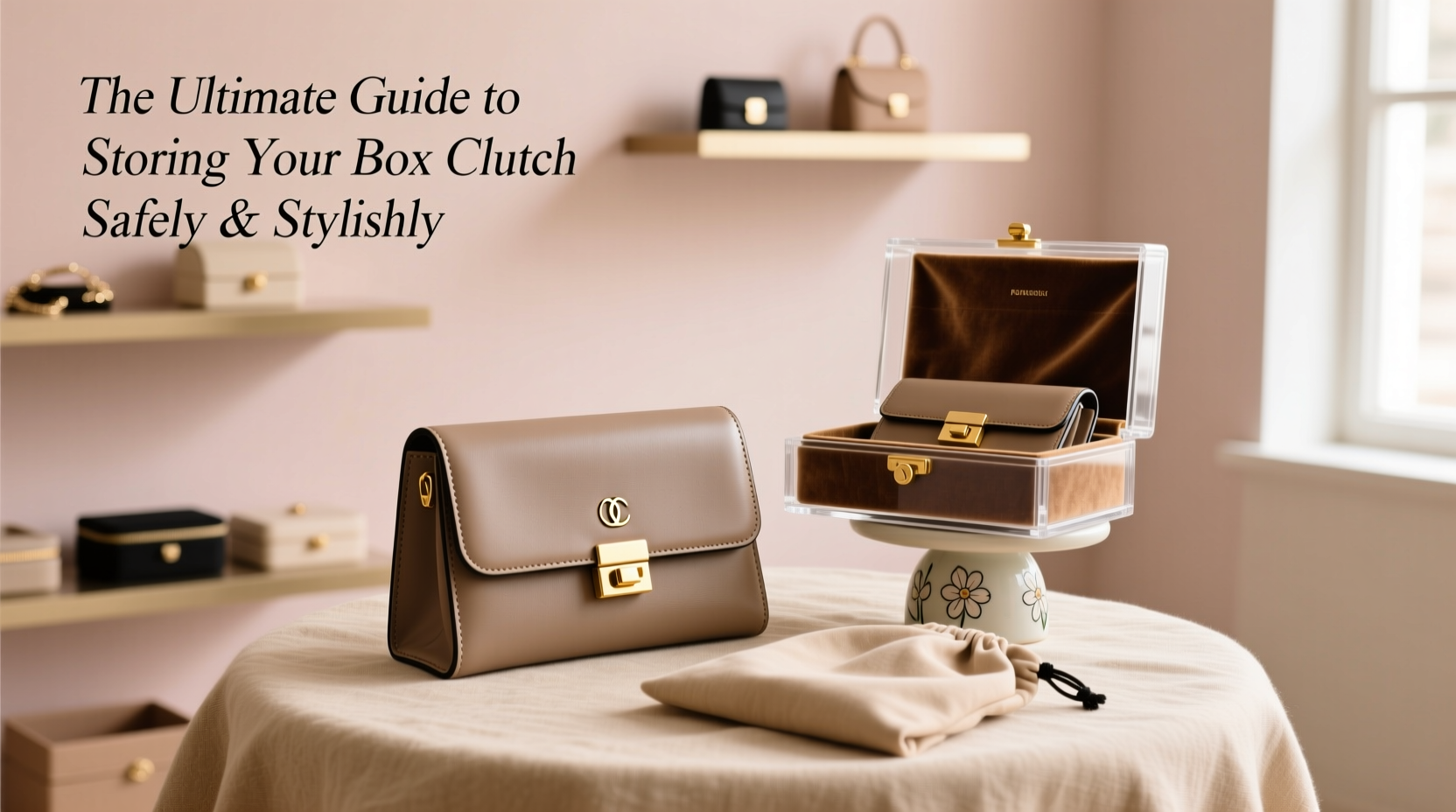
- Wrap in a Dust Bag: Always use a breathable cotton or muslin dust bag. Never store directly in plastic, which traps moisture and promotes mildew.
- Select the Right Location: Choose a dark, dry, temperature-controlled space away from windows, radiators, or bathrooms.
- Position Horizontally: Lay the clutch flat, preferably upright like a book, to prevent top compression. Avoid stacking heavy items on top.
Do’s and Don’ts of Clutch Storage
| Do’s | Don’ts |
|---|---|
| Store in a breathable dust bag | Store in plastic bags or vacuum-sealed containers |
| Keep in a cool, dry place with stable humidity | Leave near windows or heaters where temperature fluctuates |
| Support shape with acid-free tissue | Overstuff or crush the interior |
| Inspect every 4–6 weeks | Forget about clutches for months at a time |
| Organize by material type and frequency of use | Mix delicate fabrics with rough-textured items |
Designing a Stylish Storage System
Just because a clutch is stored doesn’t mean it should be hidden. Many fashion enthusiasts display their collections as part of home decor. The key is balancing visibility with protection.
Consider using a glass-front cabinet or a dedicated shelf lined with felt. Arrange clutches by color, occasion, or material for visual impact. Use small acrylic stands or padded trays to prop them upright without strain. For smaller spaces, try a rotating acrylic organizer typically used for makeup—its compartments are ideal for compact clutches.
If you prefer concealed storage, invest in a vanity drawer with dividers. Customize inserts using foam or cardboard wrapped in soft fabric to create snug slots. Label sections for “evening,” “daytime,” or “seasonal” to streamline access.
Tip: Add a sachet of lavender or cedar (not directly touching the clutch) to deter moths and absorb excess moisture.A Real Example: How Sarah Preserved Her Heirloom Clutch
Sarah inherited a vintage 1950s rhinestone-embellished box clutch from her grandmother. Made of fragile silk with a magnetic closure prone to scratching, it was too delicate for regular use but too meaningful to relegate to a closet.
She began by having a custom cotton dust bag sewn with a soft inner lining. Inside, she placed archival tissue paper to support the frame. She then mounted a shadowbox frame with UV-protective glass, placing the clutch at a slight angle on a padded base. The box includes a small silica gel packet tucked behind the padding to regulate humidity.
Now displayed in her hallway, the clutch is protected from dust and light while serving as a daily reminder of family heritage. Every three months, she removes it briefly to check for tension on the stones and reposition the tissue.
Checklist: Monthly Clutch Maintenance Routine
- Remove each clutch from storage
- Inspect for dust, discoloration, or hardware looseness
- Wipe exterior with appropriate cloth (microfiber for smooth surfaces, suede brush for nubuck)
- Check interior lining for tears or odor
- Replace tissue paper if wrinkled or damp
- Reassess storage positioning—rotate if needed
- Note any repairs required (e.g., loose chain, chipped finish)
Frequently Asked Questions
Can I store my box clutch in the original retail box?
Only if the box is made of acid-free material and stored in optimal conditions. Most retail packaging contains acidic cardboard and lacks breathability. Transfer the clutch to a cotton dust bag first, then place it inside the box if desired for stacking.
How do I store a metallic or patent leather clutch without scratches?
Always use a separate dust bag—never let it touch other items. Store it alone on a shelf or in a compartmented tray. Avoid zippers or metal details from nearby bags that could rub against the surface. For extra protection, line the dust bag with soft flannel.
Is it safe to hang clutches on hooks?
No. Hanging distorts the structure, especially at the handle or clasp point. Box clutches lack flexible straps and are not designed to bear weight from suspension. Over time, this leads to permanent bending or hinge failure.
Final Thoughts: Elevate Your Accessory Care
Storing a box clutch goes beyond tidiness—it reflects respect for craftsmanship and personal style. With minimal effort, you can prevent common issues that diminish appearance and longevity. The right environment, consistent checks, and thoughtful organization transform storage from a chore into a ritual of care.
💬 Ready to refresh your clutch collection? Take 20 minutes this week to audit your current storage. Clean each piece, wrap it properly, and find it a safe, stylish home. Your future self—and your wardrobe—will thank you.