Gold plated earrings offer the luxurious appearance of solid gold at a fraction of the cost. However, their delicate surface is vulnerable to tarnish, scratches, and wear if not stored properly. Unlike solid gold, the thin layer of plating can degrade when exposed to moisture, friction, or chemicals. With the right care and storage practices, you can significantly extend the life of your gold plated earrings, keeping them radiant and elegant for years. This guide provides actionable strategies backed by jewelry care experts to help you protect your investment and maintain their luster.
Understanding Gold Plated Jewelry
Gold plating involves bonding a thin layer of real gold—typically 0.5 to 2.5 microns thick—onto a base metal such as brass, copper, or stainless steel. While visually indistinguishable from solid gold in the short term, this outer layer wears down over time, especially with frequent use and improper storage. Factors like humidity, skin oils, perfumes, and contact with harder materials accelerate deterioration.
The longevity of gold plating depends largely on how it's treated between uses. Earrings, while less exposed than rings or bracelets, are still prone to oxidation and micro-abrasions when jumbled together or left unprotected. Understanding the composition helps inform smarter storage decisions that reduce environmental stressors.
“Gold plated jewelry isn’t disposable—it’s an affordable luxury that deserves thoughtful care. Proper storage is half the battle in preserving its beauty.” — Lena Torres, Jewelry Preservation Specialist
Best Storage Practices for Long-Term Shine
Storing gold plated earrings correctly prevents physical damage and chemical degradation. The goal is to minimize exposure to air, moisture, and friction. Here are proven methods:
Use Individual Compartments
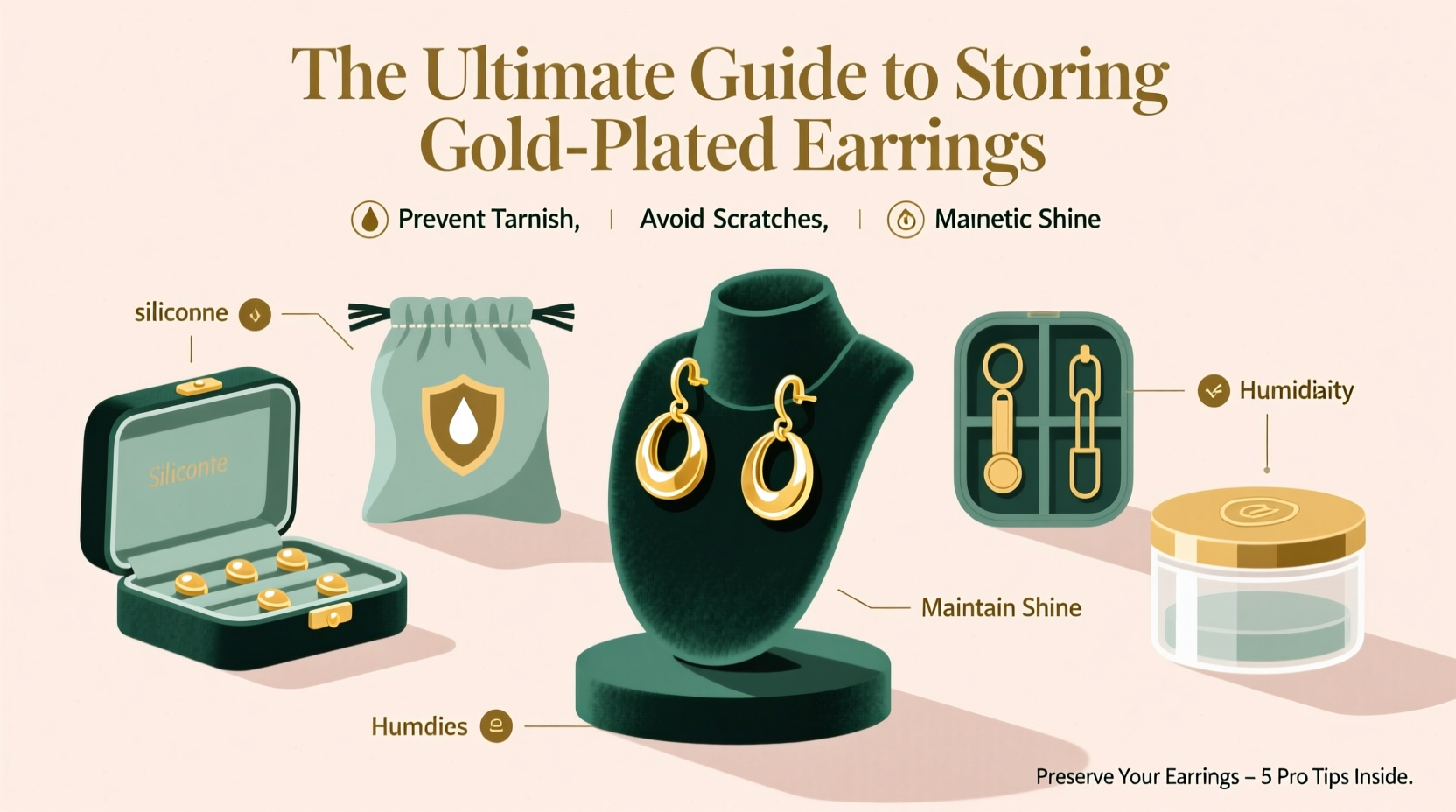
Store each pair in separate slots within a lined jewelry box. Velvet or felt-lined compartments prevent scratching and absorb minor moisture. Avoid stacking earrings directly on top of one another—even soft fabrics can cause abrasion over time.
Seal Out Air and Moisture
Oxidation occurs when metal reacts with sulfur compounds in the air. To slow this process, place earrings in resealable plastic bags (preferably anti-tarnish) before storing. For added protection, include a silica gel packet to absorb ambient humidity.
Tip: Never store gold plated earrings in the bathroom. Steam and humidity dramatically increase tarnishing risk.Avoid Direct Sunlight and Heat
UV rays and high temperatures can weaken adhesive layers in plating and fade finishes. Choose a cool, dark drawer or closet away from radiators, windows, or lamps.
Step-by-Step Guide: How to Store Gold Plated Earrings Safely
- Clean gently after wear: Wipe each earring with a soft, lint-free cloth to remove oils, sweat, or fragrance residue.
- Inspect for damage: Check posts, backs, and settings for looseness or wear. Repair early to avoid further deterioration.
- Place in individual pouches: Use small fabric drawstring bags or ziplock-style plastic sleeves.
- Insert into a compartmentalized case: Opt for a box with padded dividers to prevent movement and contact.
- Add a desiccant: Tuck a silica gel pack into the main storage area to control moisture levels.
- Keep away from other metals: Store separately from silver or costume pieces to avoid galvanic corrosion.
Do’s and Don’ts of Storing Gold Plated Earrings
| Do’s | Don’ts |
|---|---|
| Store in a dry, temperature-controlled space | Leave earrings in humid environments like bathrooms |
| Use anti-tarnish strips or cloths | Store loose in a drawer where they can tangle or scratch |
| Clean with a microfiber cloth before storing | Use harsh chemicals or abrasive cleaners |
| Rotate wear to allow rest periods | Wear daily without cleaning or inspection |
| Keep in original boxes or dedicated cases | Hang earrings on hooks where posts can bend |
Real Example: How One Collector Preserves Her Collection
Sophia M., a vintage jewelry enthusiast from Portland, owns over 60 pairs of gold plated earrings collected over a decade. She noticed rapid fading in her early purchases due to haphazard storage—earrings tossed into a makeup bag or left on her nightstand.
After researching preservation techniques, she invested in a wooden jewelry box with 30 individual compartments, lined with acid-free felt. Each pair goes into a tiny cotton pouch after wearing, then returned to its designated slot. She also places activated charcoal sachets inside the box to neutralize airborne pollutants.
“I used to replace my favorite studs every few months,” Sophia says. “Now, the same pair has lasted nearly three years with no visible wear. It’s all about consistency.”
Essential Maintenance Routine
Storage alone isn’t enough. Regular upkeep ensures long-term brilliance:
- Monthly cleaning: Dampen a soft cloth with warm water and mild dish soap. Gently wipe the surface, then dry immediately.
- Polishing: Use a jewelry polishing cloth designed for plated items—never ultrasonic cleaners or dips.
- Inspection: Examine clasps and posts weekly. Loose components increase the risk of loss and uneven wear.
- Rest breaks: Rotate earrings so no single pair is worn more than twice a week.
Jewelry Storage Checklist
Follow this checklist to ensure optimal storage conditions:
- ✅ Clean earrings after each use
- ✅ Use soft, non-abrasive cloths only
- ✅ Store in a closed container with low humidity
- ✅ Separate each pair to prevent scratching
- ✅ Include a moisture absorber (silica gel or charcoal)
- ✅ Avoid contact with other metals
- ✅ Keep away from direct sunlight and heat sources
- ✅ Inspect monthly for signs of wear or tarnish
Frequently Asked Questions
How often should I clean my gold plated earrings?
Clean them with a dry microfiber cloth after every wear. Perform a gentle wash with mild soap and water once a month, or more often if exposed to sweat or cosmetics.
Can I store gold plated earrings in a regular plastic bag?
Yes, but only if it’s resealable and free of internal texture. Better options include anti-tarnish bags or soft fabric pouches. Avoid PVC-based plastics, which emit gases that corrode metal over time.
Why do my gold plated earrings turn black?
Blackening is usually due to tarnish caused by sulfur in the air, moisture, or reactions with skin chemistry. It may also indicate the base metal oxidizing through micro-cracks in the plating. Immediate cleaning and proper storage can halt further discoloration.
Final Thoughts
Preserving the shine of gold plated earrings doesn’t require expensive tools or complex rituals. It comes down to consistent habits: wiping them clean, shielding them from moisture, and storing them with intention. A few minutes of care after wearing can add years to their appearance and usability.
Treat your gold plated pieces not as temporary accessories, but as part of a curated collection worth protecting. With the right storage strategy, you’ll enjoy their golden glow far longer than expected—without the need for constant replacement.
💬 Start today: Reorganize your earring storage using one tip from this guide. Share your setup or ask questions in the comments—let’s build a community of mindful jewelry keepers.