Designer Boston bags blend timeless elegance with structured functionality, making them a favorite among professionals, travelers, and fashion enthusiasts. But owning one isn’t just about brand prestige—it’s about choosing the right size that complements your lifestyle, proportions, and daily essentials. Too small, and you’re constantly leaving items behind. Too large, and the bag overwhelms your frame or loses its polished look. The ideal fit strikes a balance between form and function.
This guide breaks down how to assess your needs, understand sizing nuances across brands, and select a Boston bag that enhances both your wardrobe and daily routine.
Understanding the Boston Bag: Style and Structure
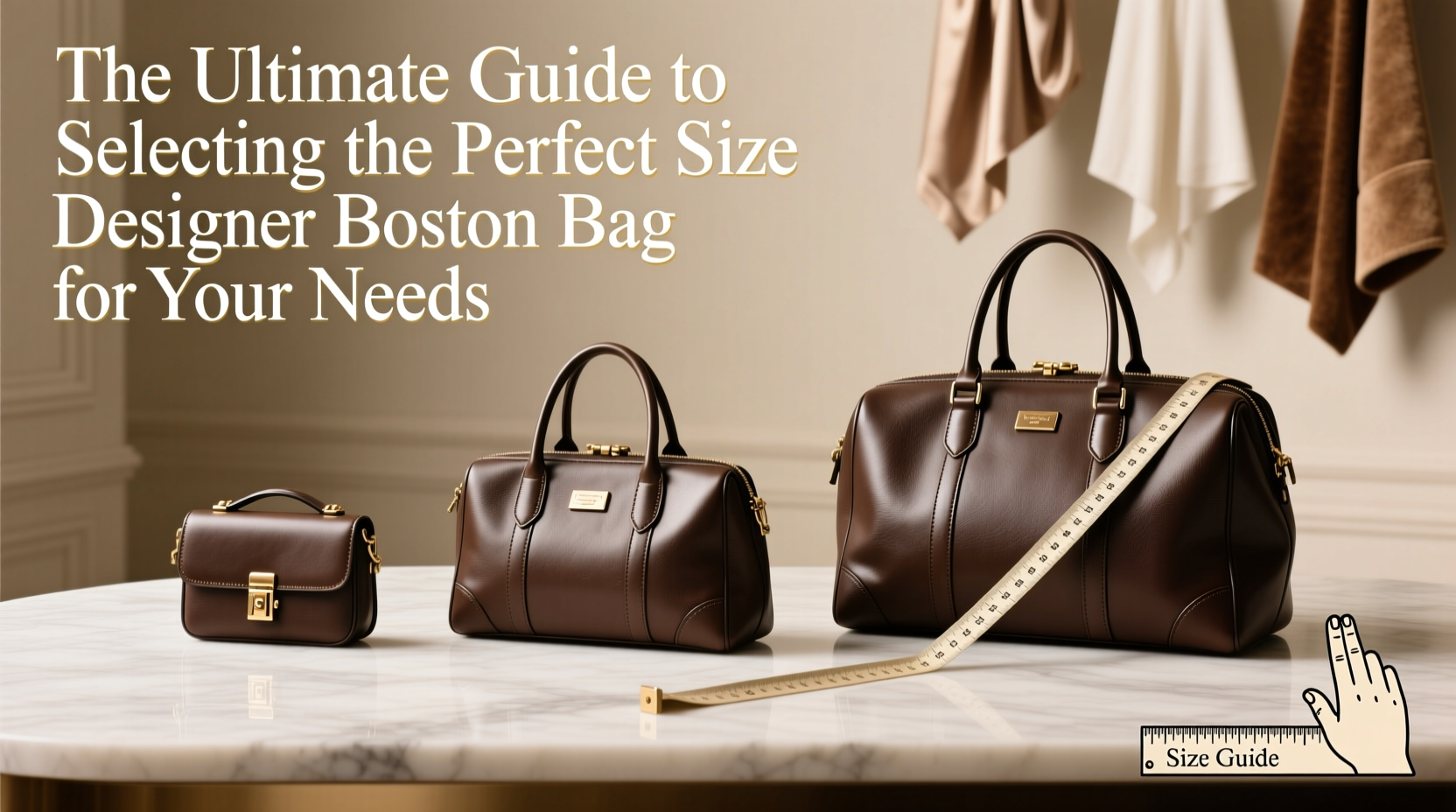
The Boston bag traces its roots to 19th-century travel luggage—named after the city where it gained popularity. Today’s designer versions maintain the classic silhouette: a structured, barrel-shaped tote with top handles and often a zip or flap closure. Unlike slouchy totes or crossbodies, Boston bags hold their shape, offering a refined aesthetic suitable for work, weekend outings, or short trips.
Key features include:
- Rigid construction (often with a flat bottom)
- Dual top handles for hand-carry or elbow carry
- Spacious interior with minimal external pockets
- Luxury materials like pebbled leather, suede, or canvas
Because of their structured design, size selection is more critical than with casual bags. A well-chosen Boston bag should feel substantial without being cumbersome.
How Body Proportions Influence Bag Size
Your height, build, and personal style play a significant role in determining the most flattering Boston bag size. A bag that looks balanced on a 5'10\" model may appear oversized on someone who is 5'3\".
Consider these guidelines:
| Height Range | Recommended Bag Height | Handle Drop Length | Visual Tip |
|---|---|---|---|
| Under 5'4\" | 7–9 inches | 4–6 inches | Bags should not exceed hip width |
| 5'4\" – 5'7\" | 9–10 inches | 5–7 inches | Handles rest comfortably at wrist when held |
| 5'8\" and above | 10–12 inches | 6–8 inches | Can carry larger sizes without visual imbalance |
A bag that’s too tall can make your torso appear shorter. Conversely, a tiny Boston on a taller frame may look underwhelming. Aim for proportion: the bag’s height should be roughly 1/3 to 1/2 the distance from shoulder to hip.
Tip: Try holding a box of similar dimensions in-store to gauge visual balance before purchasing.Matching Bag Size to Lifestyle Needs
Your daily routine dictates how much space you truly need. A Boston bag meant for the office has different requirements than one used for weekend getaways.
Everyday Use (Work or Errands)
For urban professionals, a medium-sized Boston (9–10 inches tall) typically suffices. It holds a laptop up to 13\", notebook, wallet, makeup pouch, and phone. Look for internal compartments to keep essentials organized.
Travel or Overnight Trips
Larger Boston bags (11+ inches) double as stylish carry-ons for short trips. They accommodate toiletries, a change of clothes, and travel documents. Brands like Gucci, Saint Laurent, and Loewe offer expanded versions specifically marketed as \"weekender\" Bostons.
Evening or Minimalist Use
If you only carry a phone, cardholder, and lipstick, consider a petite Boston. These compact versions retain the signature structure but in a sleeker profile—ideal for dinners or events.
“Clients often overestimate how much they need to carry. I recommend editing your essentials first, then finding a bag that fits them comfortably—not the other way around.” — Nadia Reyes, Personal Stylist & Wardrobe Consultant
Step-by-Step Guide to Choosing Your Ideal Size
Follow this process to confidently select the right designer Boston bag:
- Inventory your daily essentials: List everything you carry regularly. Measure their combined volume or lay them out together.
- Determine your primary use case: Will this be a work bag, weekend companion, or special-occasion piece?
- Check brand-specific sizing: Compare dimensions across labels. For example, a “medium” Boston from Celine may differ significantly from a medium by Prada.
- Assess handle drop and weight: Longer drops allow shoulder carry; shorter ones suit hand or elbow carry. Ensure the empty bag feels light enough for all-day wear.
- Try it in person if possible: Visit a boutique to test proportions. Hold it at your side and mimic walking to evaluate comfort.
- Review return policies: If buying online, confirm you can return or exchange if the size doesn’t match expectations.
Common Sizing Mistakes and How to Avoid Them
Even seasoned shoppers fall into traps when selecting luxury bags. Here are frequent errors and how to sidestep them:
| Mistake | Why It’s Problematic | Solution |
|---|---|---|
| Choosing based on brand prestige alone | Ignores fit and practicality | Prioritize dimensions over logo appeal |
| Ignoring empty bag weight | Heavy leather adds strain when filled | Test the bag empty; aim for under 3 lbs if used daily |
| Overlooking closure type | Open tops expose contents; tight zips limit access | Select closure based on security vs. convenience needs |
| Assuming bigger means more versatile | Oversized bags lose elegance and balance | Size up only if you consistently carry bulk items |
Mini Case Study: Finding the Right Fit for a Busy Professional
Sophie, a 5'5\" marketing executive, wanted a designer Boston bag to replace her worn leather tote. She carried a 13\" MacBook, tablet, portfolio, water bottle, and gym clothes three days a week. Initially drawn to a large 12-inch version from a luxury house, she found it awkward to carry and disproportionate to her frame.
After consulting a stylist, she switched to a 10-inch Boston with a removable shoulder strap and padded laptop sleeve. Though slightly tighter on volume, it balanced better visually and felt lighter. She began using a separate foldable tote for gym gear, streamlining her main bag. The result? Greater comfort, improved posture, and a polished appearance.
Frequently Asked Questions
Can a Boston bag be worn on the shoulder?
Some models feature extended handles or detachable straps for shoulder carry. Traditional Bostons are designed for hand or elbow carry, so check handle drop (ideally 6+ inches) if you prefer shoulder wear.
What’s the average capacity of a medium Boston bag?
A medium Boston (9–10 inches tall) typically holds 8–12 liters. This accommodates a laptop, purse, book, and small accessories without appearing overstuffed.
Do designer Boston bags come in expandable styles?
Yes—brands like Bottega Veneta and Givenchy offer Bostons with gusseted sides or zip expansions. These provide flexibility for travel while maintaining a slim profile when empty.
Final Checklist Before You Buy
- ✅ Measured my essential items and compared to bag dimensions
- ✅ Confirmed the bag’s height aligns with my body proportions
- ✅ Checked handle drop for preferred carrying style
- ✅ Researched brand-specific sizing (not relying on “small/medium/large”)
- ✅ Verified return policy for online purchases
- ✅ Considered weight when empty and fully loaded
Make the Right Choice With Confidence
Selecting the perfect size designer Boston bag isn’t about following trends—it’s about aligning craftsmanship with your real-life needs. Whether you're navigating boardrooms, weekend escapes, or city streets, the right bag should feel like a seamless extension of your identity. Take the time to assess your habits, proportions, and priorities. When form meets function, your Boston bag won’t just carry your belongings—it will elevate your entire presence.
💬 Found your ideal Boston bag size? Share your experience or ask questions in the comments—we’d love to hear what worked for you.