Rain doesn’t have to mean sacrificing style. Once relegated to clunky designs and limited color options, modern rain boots now blend functionality with fashion-forward aesthetics. Whether you're navigating a downpour on your way to work, attending an outdoor wedding, or hiking through muddy trails, the right pair of rain boots can keep your feet dry while elevating your look. The challenge lies in balancing practicality with personal style across different settings. This guide breaks down everything from materials and fits to seasonal versatility and brand recommendations, helping you make informed choices that suit both your lifestyle and wardrobe.
Understanding Materials and Construction
The foundation of any good rain boot is its material. While rubber remains the most common, advancements in synthetic compounds and natural blends have expanded options significantly. Traditional vulcanized rubber offers excellent waterproofing and durability but can feel stiff. Modern alternatives like thermo-polyurethane (TPU) and EVA (ethylene-vinyl acetate) provide lighter weight and greater flexibility without compromising protection.
Natural rubber, derived from latex, is eco-friendlier than synthetic versions and tends to be more breathable. However, it may not be suitable for those with latex allergies. Some premium brands use lined interiors—such as wool, neoprene, or moisture-wicking fabric—to enhance comfort during extended wear.
Tip: Look for seamless construction or welded seams instead of stitched ones to prevent water seepage.Outsole design also plays a crucial role. Lug soles offer superior traction on wet grass or uneven terrain, while flat treads are better suited for urban environments. For all-around performance, consider boots with multi-directional tread patterns that grip pavement and gravel alike.
Matching Style to Occasion
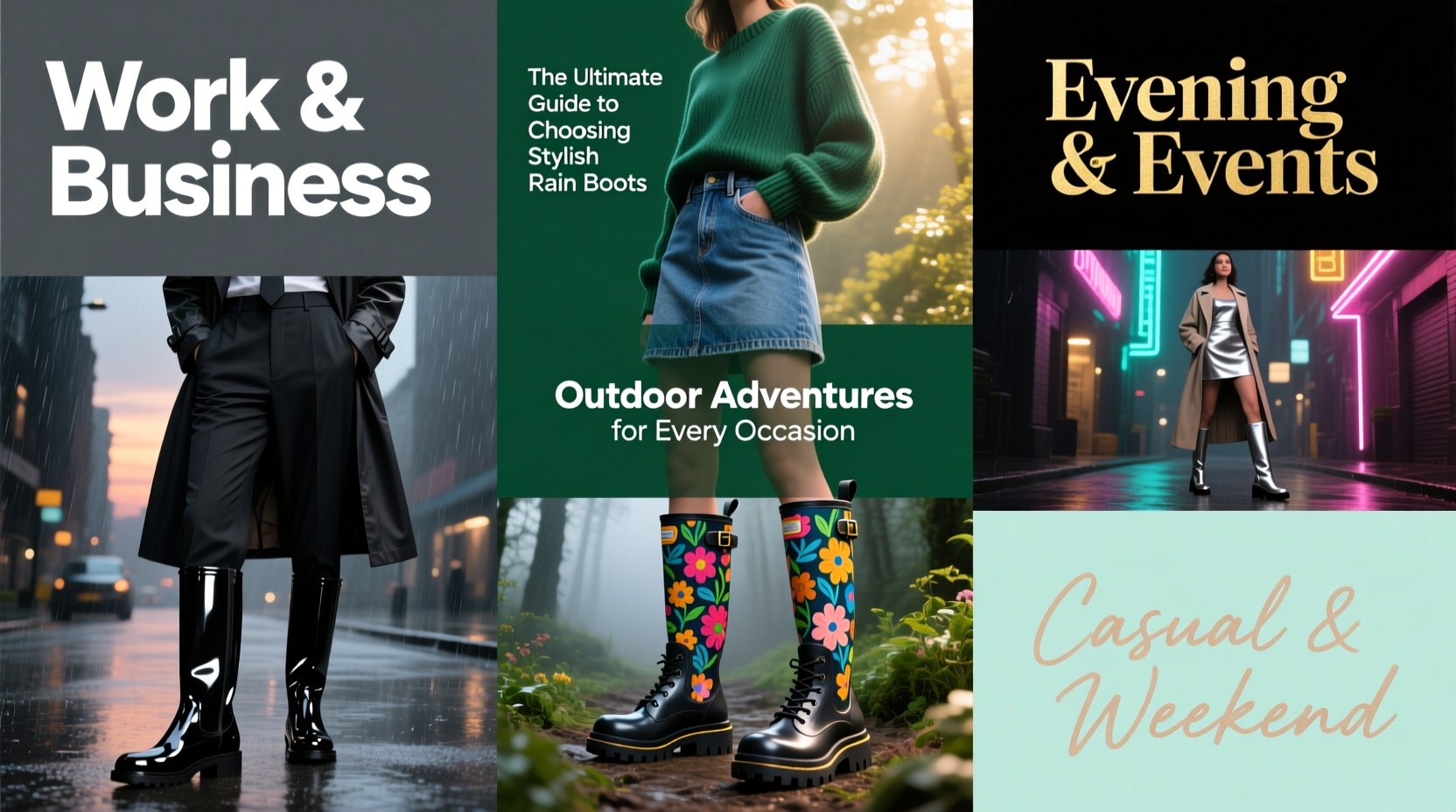
Stylish rain boots no longer mean one-size-fits-all galoshes. Today’s market caters to diverse lifestyles, offering silhouettes ranging from sleek ankle-high Chelsea styles to tall, fashion-forward knee-length designs. Choosing the right style depends largely on context.
- City Commuting: Opt for minimalist black or navy ankle boots with subtle textures. Pair them with cropped trousers or skirts for a polished, weather-ready office look.
- Outdoor Events: Festivals, farmers’ markets, or garden parties call for personality. Bright colors, floral prints, or metallic finishes add flair without compromising function.
- Countryside & Hiking: Prioritize height and support. Mid-calf or full-height boots with reinforced toes and cushioned insoles handle mud and long walks with ease.
- Formal Occasions: Sheeted matte or glossy finishes in neutral tones mimic dress shoes. Pair with tailored coats and structured bags for cohesive elegance.
“Footwear should adapt to life, not limit it. The best rain boots disappear into your routine while keeping you dry and confident.” — Lena Torres, Footwear Stylist at Urban Elements
Fit, Comfort, and Long-Term Wearability
A well-designed rain boot must fit properly—not too tight to restrict circulation, nor too loose to cause blisters. Unlike everyday shoes, many rain boots lack laces or straps, relying instead on elastic gussets or pull tabs for adjustability. Consider sizing up if you plan to wear thick socks, especially in cooler months.
Insole quality varies widely. Basic models often feature flat padding, while higher-end options include contoured footbeds with arch support. Memory foam inserts can improve comfort over time, particularly for those who stand or walk frequently.
| Feature | Recommended For | What to Avoid |
|---|---|---|
| Elastic side panels | Easy on/off; accommodates calf variation | Poor tension control after repeated use |
| Heel kick spurs | Wearing without removing laces | Bulkier appearance |
| Insulated lining | Cold, wet climates | Overheating in mild rain |
| Lightweight EVA sole | All-day wear, travel | Limited durability on rough surfaces |
Real Example: A Weekend in the Countryside
Sophie, a marketing executive based in Portland, planned a weekend getaway at a lakeside cabin. The forecast predicted intermittent showers, so she packed her sleek black knee-high rain boots—light enough for walking, stylish enough to wear indoors. On Saturday morning, a sudden downpour turned the path to the dock into a muddy slope. Thanks to the deep lug soles and snug calf fit, she navigated safely without slipping. Later, she paired the same boots with jeans rolled just above the ankle, proving that practicality and polish aren’t mutually exclusive.
Top Brands and What Sets Them Apart
Not all rain boots deliver equal value. Reputation, innovation, and attention to detail separate trend-driven labels from enduring favorites.
- Hunter: Known for classic British styling and durable rubber construction. Their Original Tall Boot remains iconic, though newer lines include slimmer fits and sustainable materials.
- Aigle: French craftsmanship meets functional elegance. Parcours and Miss Juliette series combine natural rubber with refined shapes ideal for urban wear.
- Sorel: Blends winter-ready insulation with rugged outsoles. Best for cold, wet conditions where warmth matters as much as dryness.
- Rainbow Club: Offers vintage-inspired prints and shorter silhouettes perfect for fashion-focused events.
- Bogs: Focuses on performance with waterproof, non-insulated, and self-cleaning designs. Ideal for active users and pet owners needing easy cleanup.
Step-by-Step Guide: How to Choose Your Perfect Pair
- Assess Your Needs: List the occasions you’ll wear the boots—commuting, weekends, travel, etc.
- Measure Your Calf: Use a tape measure around the widest part of your calf. Compare with brand size charts, which often list calf circumference.
- Check Return Policies: Many online retailers allow exchanges, but some final-sale items cannot be returned due to hygiene reasons.
- Test Flexibility: Bend the sole manually—if it resists too much, it may feel stiff during actual wear.
- Inspect Interior Lining: Run your hand inside. It should feel smooth, free of glue residue, and consistent in thickness.
- Walk Around: If possible, test indoors on tile or wood floors to assess heel slip and toe room.
Frequently Asked Questions
Can I wear rain boots in snow?
Only if they’re specifically designed for cold weather. Most standard rain boots lack insulation and may become slippery on ice. Insulated models from Sorel or Bogs with thermal linings are better suited for snowy conditions.
How do I clean and maintain my rain boots?
Wipe exterior surfaces with a damp cloth after each use. For stubborn dirt, use mild soap and a soft brush. Never machine wash or dry near direct heat. Store upright with shoe trees or rolled towels inside to maintain shape.
Are there sustainable rain boot options?
Yes. Brands like Hunter’s “Original Recycled” line use repurposed rubber, and Swedish label Lundby & Co. crafts boots from biodegradable natural rubber and organic cotton linings. Look for certifications like OEKO-TEX or Cradle to Cradle for verified eco-standards.
Final Thoughts: Elevate Your Wet-Weather Wardrobe
Rain boots have evolved from purely utilitarian gear into essential fashion statements. With thoughtful selection, you can own pairs that transition seamlessly between work, leisure, and adventure—all while staying dry and comfortable. The key is aligning material, fit, and design with your daily demands. Don’t settle for generic styles or poor construction; invest in boots that reflect your taste and support your movement through every season.
💬 Found your favorite pair? Share your go-to rain boot brand or styling tip in the comments—we’d love to hear how you stay stylish when the skies open up!








