
Selecting a moissanite ring is an exciting step, whether it’s for an engagement, anniversary, or self-purchase. Moissanite offers brilliance, durability, and ethical appeal, making it a top choice among modern jewelry lovers. But no matter how stunning the stone, a poorly fitting ring can diminish both comfort and aesthetic. An ill-fitting band may slip off, pinch the finger, or cause long-term discomfort. That’s why accurate ring sizing isn’t just helpful—it’s essential.
Relying on guesswork or outdated measurements leads to returns, resizing fees, or even lost stones during adjustments. This guide walks you through reliable, precise methods to measure your ring size at home, explains environmental factors that affect fit, and shares insider tips from jewelers to ensure your moissanite ring fits perfectly from day one.
Why Accurate Ring Sizing Matters for Moissanite
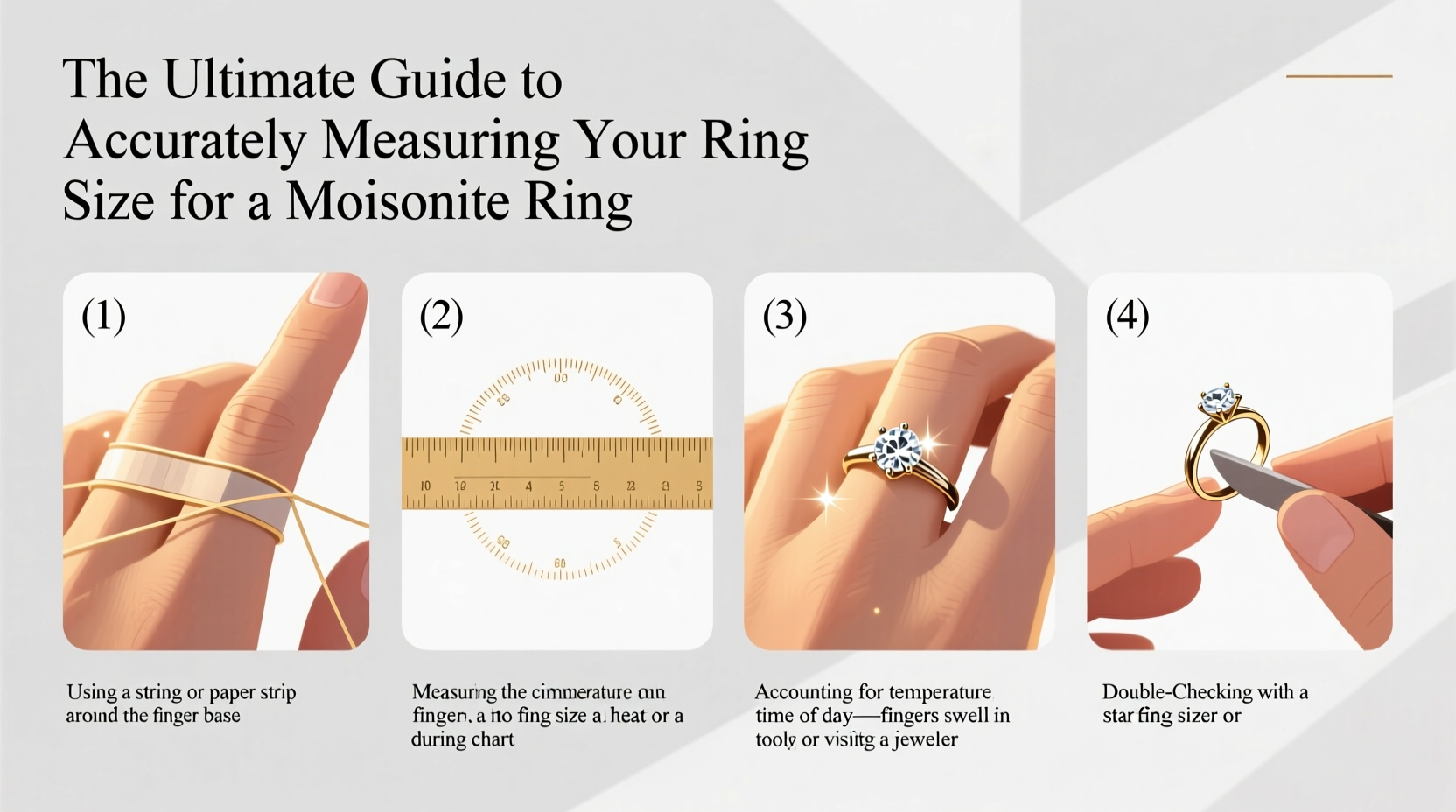
Moissanite rings often feature intricate settings, especially in solitaire or halo designs. Unlike softer metals or simpler bands, resizing a moissanite ring can be complex. The stone’s position, prong integrity, and band material all influence whether a resize is possible—and safe. Many jewelers advise against resizing tension or bezel-set moissanite rings due to structural risks.
Additionally, moissanite is nearly as hard as diamond (9.25 on the Mohs scale), meaning the setting must be secure. A loose band increases the risk of impact damage or prong bending over time. Getting the size right upfront protects your investment and ensures lasting comfort.
“Over 30% of online ring returns are due to incorrect sizing. When customers measure properly at home using calibrated tools, return rates drop significantly.” — Daniel Reyes, Master Jeweler & Founder of Lumina Bands Co.
Best Methods to Measure Your Ring Size at Home
Professional sizing at a jewelry store remains the gold standard, but if that’s not possible, several at-home methods deliver reliable results when done correctly. Each has strengths and limitations—choose based on your tools and confidence level.
1. Using a Ring Sizer Band
Silicone or plastic sizer bands are affordable, reusable, and widely available. They mimic real rings and allow you to test fit across multiple fingers. Look for sizers labeled with U.S. standard sizes (e.g., 4–13) and made by reputable brands.
Tip: Test your fit at the end of the day when fingers are slightly swollen—this reflects typical wear conditions.2. Measuring an Existing Well-Fitting Ring
If you already own a ring that fits the intended finger perfectly, use it as a reference. Place the ring on a flat surface and measure the inner diameter in millimeters using a ruler or digital caliper. Match the measurement to a ring size chart.
3. The String or Paper Strip Method
Cut a thin strip of paper or use a non-stretch string. Wrap it snugly around the base of your finger, marking where the ends meet. Lay the strip flat and measure the length in millimeters. Use a conversion chart to find your corresponding ring size.
Avoid wrapping too tightly—leave enough room to slide the string over your knuckle comfortably. Also, account for knuckle size; some people have larger knuckles than their finger base, requiring a slight compromise in fit.
Step-by-Step Guide: How to Measure Ring Size Accurately
- Choose the Right Time: Fingers swell throughout the day. Measure in the evening when they’re at their largest for the most realistic fit.
- Prepare Tools: Gather a ruler, paper strip, pen, and a printed or digital ring size chart.
- Wrap & Mark: Circumferentially wrap the paper around the finger, ensuring it passes over the knuckle in its natural position.
- Measure Length: Unwrap and measure the marked section in millimeters.
- Convert to Size: Use a standard conversion table (see below) to determine your U.S. ring size.
- Double-Check: Repeat the process two more times to confirm consistency.
- Test Fit (Optional): If ordering online, request a free ring sizer from the jeweler before finalizing.
Ring Size Conversion Table
| U.S. Size | Inner Diameter (mm) | Circumference (mm) | UK/Australia | Europe |
|---|---|---|---|---|
| 4 | 14.9 | 46.8 | H | 47 |
| 5 | 15.7 | 49.3 | J | 50 |
| 6 | 16.5 | 51.9 | L | 52.5 |
| 7 | 17.3 | 54.4 | N | 54.5 |
| 8 | 18.1 | 56.9 | P | 57 |
| 9 | 18.9 | 59.5 | R | 59.5 |
| 10 | 19.8 | 62.1 | T | 62 |
Common Mistakes to Avoid
- Measuring cold fingers: Cold temperatures shrink blood vessels, making fingers temporarily smaller. Always measure at room temperature or warmer.
- Ignoring knuckle size: A ring must slide over the knuckle comfortably. If your knuckle is larger than the base of your finger, consider splitting the difference or opting for a comfort-fit band.
- Using worn-out rings: Old rings may stretch over time, giving false readings. Only use a ring that still fits securely.
- Guessing half-sizes: Half-sizes make a noticeable difference in comfort. Don’t round up or down without testing both.
Mini Case Study: Sarah’s Engagement Ring Surprise
Sarah wanted to propose with a custom moissanite engagement ring but didn’t know her partner Lena’s ring size. She borrowed Lena’s favorite silver ring, measured the inner diameter at 16.5mm, and matched it to a U.S. size 6. Confident in her measurement, she placed the order. However, when Lena tried it on, the ring was too tight—especially over the knuckle.
After consulting a local jeweler, Sarah learned that Lena’s knuckle was 17.1mm—larger than the base. The jeweler recommended a size 6.5 with a comfort-fit interior. Sarah exchanged the ring, and the new fit was perfect. The experience taught her that consistent fit matters more than a single measurement point.
Do’s and Don’ts of Ring Sizing
| Do’s | Don’ts |
|---|---|
| Measure at the end of the day | Measure after exercise or in cold weather |
| Use a metal ruler or caliper for precision | Estimate using a flexible tape measure alone |
| Test fit with a sizer that mimics band width | Assume all ring styles fit the same |
| Contact the jeweler for a free sizer | Order the most popular size (e.g., 7) without verification |
Frequently Asked Questions
Can I resize a moissanite ring later?
Some moissanite rings can be resized, but it depends on the setting and band material. Solitaire prong settings in platinum or gold may allow small adjustments (up to 0.5 sizes). However, tension, bezel, or eternity settings are rarely resizable. Always confirm with your jeweler before purchase.
What if I’m between two sizes?
If your measurement falls between sizes, choose the larger one—especially for wider bands or if your knuckle is prominent. You can always add a sizing insert later for a snugger fit. Going too small risks discomfort and difficulty removing the ring.
Are international ring sizes the same?
No. The U.S., UK, Europe, and Asia use different numbering systems and measurement standards. Always verify which system a retailer uses and convert carefully using a trusted chart. Reputable jewelers provide conversion tools on their websites.
Final Checklist Before Ordering
- ✅ Measured finger at the end of the day
- ✅ Used a precise tool (caliper or sizer band)
- ✅ Accounted for knuckle size and band width
- ✅ Verified measurement three times
- ✅ Consulted a size chart with mm-to-size conversion
- ✅ Contacted the jeweler for clarification if needed
Conclusion
Accurately measuring your ring size is the foundation of a satisfying moissanite ring experience. It ensures comfort, protects the integrity of the setting, and avoids costly post-purchase complications. Whether you're buying for yourself or surprising a loved one, taking the time to measure correctly reflects care and intention. With the right tools, attention to detail, and awareness of common pitfalls, you can confidently select a size that feels as brilliant as the stone itself.
💬 Found this guide helpful? Share it with someone planning a special purchase, or leave a comment with your own sizing tip!








