Despite its peculiar name, the term “sock onion” does not refer to a botanical variety of allium or a newly discovered kitchen ingredient. Rather, it is a colloquial, often humorous misstatement or phonetic confusion that typically arises from mishearing the phrase “sachet onion” or conflating culinary terms related to aromatic bases and flavor infusions. In professional kitchens and recipe writing, clarity around foundational ingredients is essential—and misunderstandings like “sock onion” can lead to confusion among home cooks. This article clarifies what “sock onion” actually means (or doesn’t), explores the real culinary concepts it likely references, and provides practical guidance on how to properly use aromatic bundles, mirepoix, and infused onions in everyday cooking.
Definition & Overview: What Is a “Sock Onion”?
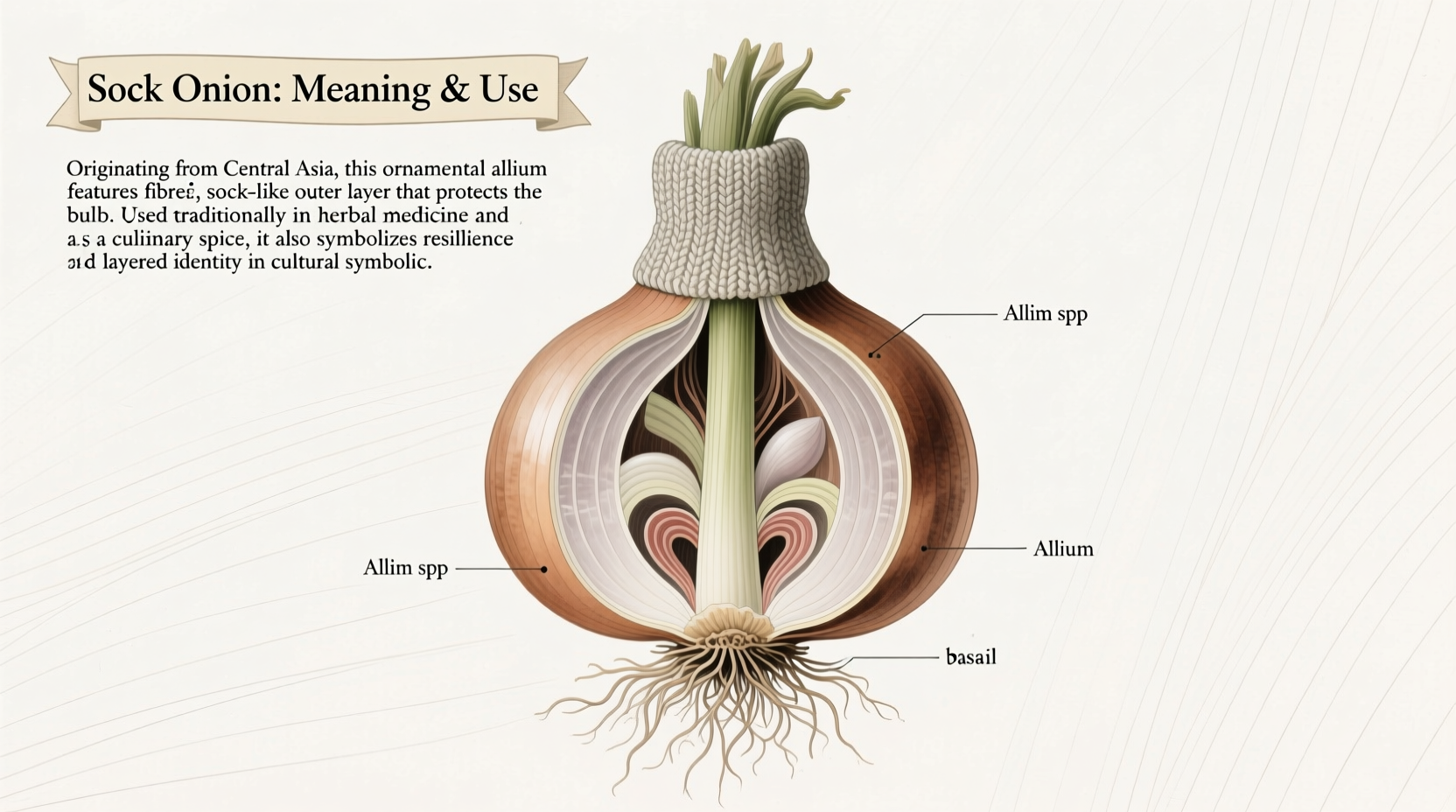
There is no recognized cultivar, species, or culinary product known as a “sock onion” in agricultural, gastronomic, or scientific literature. The term appears almost exclusively in spoken language, online forums, or misheard cooking instructions, where it functions more as a linguistic artifact than a legitimate ingredient.
The most plausible explanation is that “sock onion” results from a mispronunciation or mishearing of “sachet onion,” which itself is not a standalone item but part of a broader technique involving a sachet—a small cloth pouch used in French cuisine to contain herbs, spices, and aromatics during cooking. A sachet may include whole onions, onion skins, or diced onion along with thyme, bay leaf, peppercorns, and celery, all tied in cheesecloth and simmered in stocks, soups, or braises.
In this context, when someone says “add a sachet with onion,” it might be misheard as “add a sock with onion”—hence, “sock onion.” While amusing, the term underscores a gap in understanding about foundational flavor-building techniques in cooking, particularly those involving slow infusion and easy removal of solids.
Alternatively, “sock onion” could stem from regional dialects or non-native English speakers attempting to pronounce technical terms like “soffritto,” “mirepoix,” or even “scallion.” However, none of these align phonetically or functionally with “sock.” Thus, the conclusion remains: there is no such thing as a sock onion—but there are important culinary practices it inadvertently points toward.
Key Characteristics of Aromatic Infusion Techniques
Though “sock onion” isn’t an actual ingredient, the concept it likely refers to—infusing dishes with onions via removable bundles—has well-defined characteristics. These methods are central to building depth in sauces, broths, and stews. Below are the core attributes of such techniques:
| Characteristic | Description |
|---|---|
| Flavor Profile | Subtle sweetness, umami depth, mild pungency; develops richness when slowly cooked. |
| Aroma | Warm, earthy, slightly sulfurous when raw; becomes sweet and savory when sautéed or simmered. |
| Form | Whole peeled onion, halved; sliced; or included in a cloth bundle (sachet). |
| Culinary Function | Base flavor builder; contributes body and aroma without overwhelming texture. |
| Heat Level | None (onions themselves are non-spicy unless paired with chiles). |
| Shelf Life | Sachets are single-use; onions stored separately last 1–3 months in cool, dry conditions. |
| Removability | When used in a sachet, entire bundle is removed before serving—ensures clean presentation. |
Practical Usage: How to Use Onion in Flavor Bases and Sachets
While you won’t find “sock onion” in any reputable cookbook, the practice it suggests—using onion as part of a removable aromatic blend—is both valid and highly effective. Here’s how to apply this method correctly in home and professional cooking.
Using Onions in a Sachet (The Real “Sock Onion” Equivalent)
A sachet (from the French word for “small bag”) is traditionally made from cheesecloth or muslin and contains whole or coarsely chopped aromatics. It functions like a tea bag for savory liquids, allowing flavors to infuse while keeping solids contained for easy removal.
To make a basic onion-based sachet:
- Cut one medium yellow onion into large chunks (no need to dice finely).
- Add to a 6-inch square of cheesecloth along with:
- 1 bay leaf
- 5 black peppercorns
- 2 sprigs fresh thyme or ½ tsp dried
- 1 celery stalk, coarsely chopped (optional)
- 1 carrot chunk (optional, for mirepoix-style infusion)
- Gather the edges of the cloth and tie securely with kitchen twine.
- Add the sachet to soups, stocks, braising liquids, or bean pots during early stages of cooking.
- Simmer for 30 minutes to 2 hours, depending on dish intensity.
- Remove and discard before serving.
Pro Tip: Save onion skins and trimmings in a freezer bag over time. When you have enough, create a “waste-not” sachet with skins, garlic peels, herb stems, and carrot tops to add golden color and deep savoriness to homemade stock. Never use spoiled or moldy scraps.
When to Use a Sachet Instead of Diced Onion
Choose a sachet format when:
- You want flavor without visible pieces (e.g., clear consommés or delicate broths).
- Serving to guests who may dislike finding bits of onion in their soup.
- Cooking long-simmered dishes like beef bourguignon, coq au vin, or split pea soup.
- Batch-cooking stocks or sauces where cleanup efficiency matters.
Use diced or minced onion directly in the pot when:
- You’re building a soffritto, mirepoix, or holy trinity base (onion + celery + bell pepper).
- The onion is meant to caramelize or form part of the final texture.
- You're making stir-fries, frittatas, salsas, or other dishes where onion structure contributes to mouthfeel.
Variants & Types of Aromatic Bundles
Different cuisines employ variations of the sachet principle, using whole or bundled aromatics for infusion. Understanding these helps clarify why “sock onion” might be a misunderstood reference to global techniques.
1. Bouquet Garni (France)
A classic French herb bundle, often tied with twine or enclosed in cheesecloth. Typically includes thyme, bay leaf, and parsley stems. Sometimes wrapped around a clove-studded onion for added depth. Used in coq au vin and beef daube.
2. Mirepoix (France)
A combination of diced onion, carrot, and celery (usually in a 2:1:1 ratio) sautéed gently to form the base of sauces, soups, and stews. Unlike a sachet, mirepoix remains in the dish and breaks down during cooking.
3. Soffritto (Italy)
Similar to mirepoix but often includes pancetta or olive oil and is cooked longer for deeper flavor. Found in ragù, minestrone, and risotto alla Milanese.
4. Holy Trinity (Cajun/Creole)
Equal parts onion, celery, and green bell pepper. Forms the backbone of gumbo, jambalaya, and étouffée. Always used fresh and incorporated directly into the dish.
5. Chinese Aromatic Base
Includes scallions, ginger, and sometimes garlic, often tied together or used whole in braised dishes like red-cooked pork. Removed before serving.
6. Indian Tadka/Tempering
Whole spices (cumin seeds, mustard seeds, curry leaves) fried briefly in oil with sliced onion or onion paste. Added at the beginning or end of cooking to release volatile oils.
All of these systems serve the same purpose: extracting flavor efficiently while managing texture and appearance. None involve socks—but all rely on thoughtful handling of onions as foundational elements.
Comparison with Similar Ingredients
“Sock onion” is often confused with other onion-related terms due to phonetic similarity or conceptual overlap. The table below clarifies distinctions.
| Term | What It Actually Is | Common Misconception | Correct Use |
|---|---|---|---|
| Sock Onion | Not a real ingredient; likely mishearing of “sachet onion” | A type of onion grown in soil rich with cotton fibers | Not applicable; use sachet instead |
| Sachet | Cloth pouch containing herbs, spices, and aromatics | Only for desserts or herbal teas | Add to stocks, soups, braises; remove before serving |
| Scallion | Young onion with green stalks and small white bulb | Pronounced “sock-ion” | Use raw in salads, garnishes, stir-fries |
| Shallot | Mild, elongated onion with copper skin | Sounds like “sock-et” | Use in vinaigrettes, sauces, fine dining applications |
| Mirepoix | Diced onion-carrot-celery base | Too rustic for home cooks | Sauté in butter/oil as foundation for soups and sauces |
“In my 20 years teaching culinary students, I’ve heard ‘sock onion’ more times than I’d expect. It’s usually a sign that the student hasn’t yet worked with sachets or formal aromatic prep. Once they see it in action—how cleanly it builds flavor—they never forget it.” — Chef Elena Ruiz, Le Cordon Bleu Instructor
Practical Tips & FAQs
Q: Can I reuse a sachet?
No. Aromatics lose most of their volatile compounds after one use, and prolonged exposure to heat increases risk of off-flavors or bacterial growth. Always discard after cooking.
Q: Can I substitute a tea infuser for a sachet?
Yes—especially for small batches. Stainless steel mesh ball infusers work well for herb blends or pre-chopped aromatics. Avoid plastic versions with high-heat applications.
Q: Do I need to peel the onion before adding to a sachet?
Yes, unless you're specifically using skins for stock coloring. Unpeeled onions can introduce dirt or bitterness. Always wash and peel before inclusion.
Q: Are there commercial alternatives to homemade sachets?
Yes. Pre-made “herb bags” or “stock enhancer pouches” are available in grocery stores, but they often contain preservatives or salt. Homemade versions offer better control over ingredients and freshness.
Q: Can I freeze unused sachets?
Yes. Assemble several sachets with fresh aromatics and freeze in labeled bags. They can go straight into the pot from frozen, saving prep time later.
Q: Why not just strain the soup instead?
You can—but straining removes desirable body and nutrients. A sachet allows flavor extraction without disintegration, preserving consistency while ensuring ease of cleanup.
Q: Does onion in a sachet soften and break down?
It softens significantly but remains largely intact due to minimal cutting and containment. After removal, it will be tender but not mushy—ideal for composting or feeding to animals (not humans).
Storage Tip: Store whole onions in a cool, dark, well-ventilated area—not in plastic bags or refrigerators (unless peeled). Proper storage extends shelf life up to three months for yellow onions, six weeks for red, and two weeks for white.
Summary & Key Takeaways
The term “sock onion” is a misnomer with no basis in horticulture or culinary science. It most likely originates from a mishearing of “sachet onion,” referring to the practice of placing onion and other aromatics in a cloth bundle for infusion purposes. While humorous, the confusion highlights a need for clearer communication around fundamental cooking techniques.
Onions remain one of the most essential ingredients in global cuisine—not because of novelty, but because of their unmatched ability to build flavor foundations. Whether used in a sachet, mirepoix, soffritto, or holy trinity, proper application transforms simple ingredients into complex, satisfying dishes.
Understanding the role of removable aromatic bundles empowers home cooks to produce restaurant-quality results: clean-tasting soups, deeply flavored braises, and elegant sauces without unwanted texture. Far from needing a “sock,” what truly matters is technique, timing, and attention to detail.
Next time you’re making chicken stock or a slow-braised stew, try using a sachet with onion, herbs, and spices. Notice how much cleaner the final dish tastes—and how much easier cleanup becomes. Share your experience with others, and help retire the myth of the “sock onion” once and for all.









