Premium luxury earrings are more than accessories—they’re heirlooms, investments, and expressions of refined taste. Yet in a market flooded with imitations and misleading claims, distinguishing true craftsmanship from mass-produced facsimiles requires knowledge, attention to detail, and a discerning eye. Whether you're building a curated collection or purchasing your first pair of designer studs, understanding what defines excellence in earring design and construction is essential.
1. Understand the Hallmarks of Premium Materials
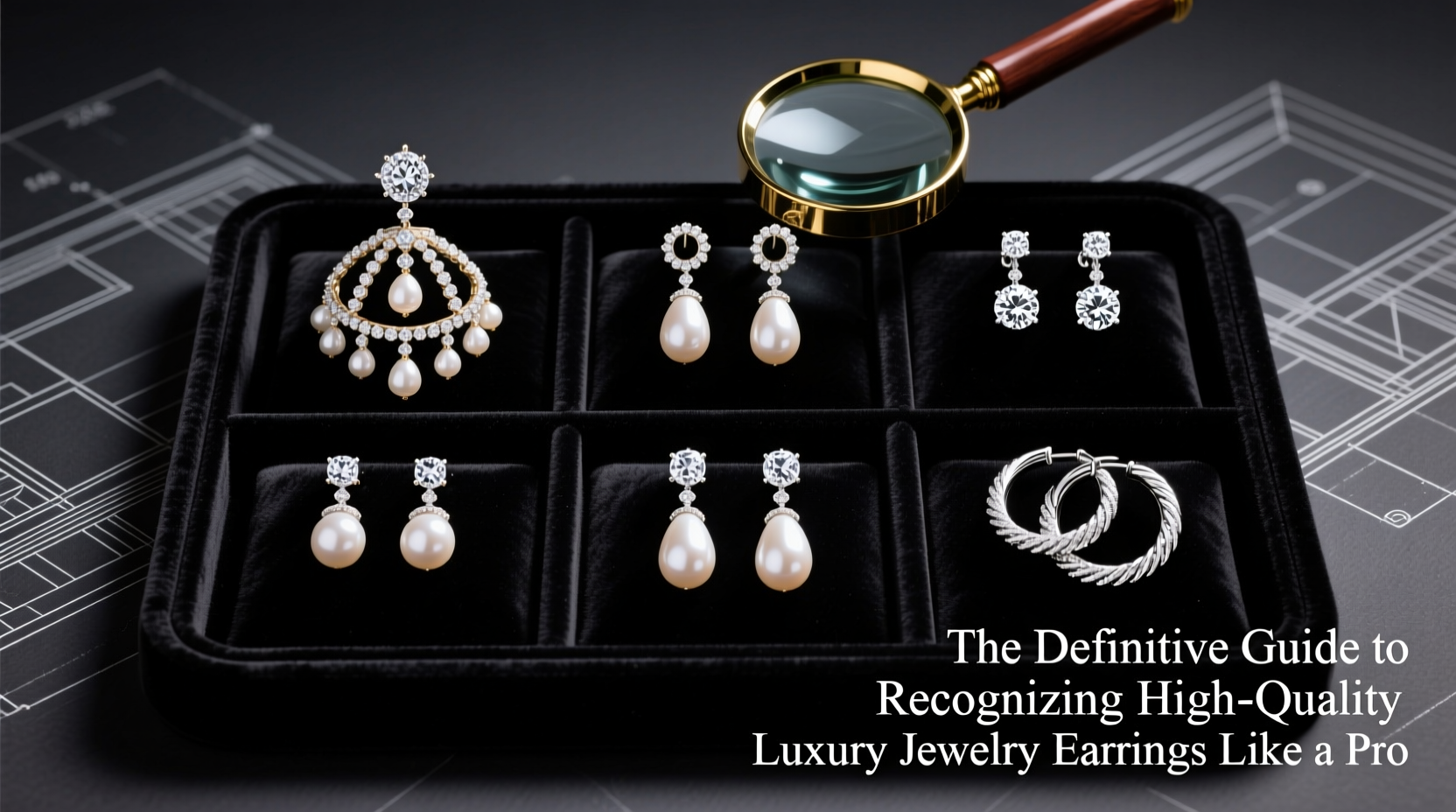
The foundation of any luxury earring lies in its material composition. High-end designers prioritize durability, luster, and skin compatibility, selecting only the finest metals and gemstones.
Precious metals such as 18-karat gold (75% pure gold), platinum, and rhodium-plated sterling silver are standard in top-tier collections. These materials resist tarnishing, maintain brilliance over time, and carry a substantial weight that cheaper alloys lack. Always look for hallmarks stamped on the post or back: “750” for 18k gold, “950” for platinum, and “925” for sterling silver.
When it comes to gemstones, natural diamonds, sapphires, emeralds, and rubies are favored for their rarity and optical properties. Certified stones from labs like GIA or AGS ensure authenticity. Be cautious of terms like “diamond-like” or “AAA zirconia”—these often signal synthetic substitutes.
Tip: Hold the earrings in your hand—luxury pieces have noticeable heft due to dense, high-purity metals.2. Evaluate Craftsmanship and Construction Details
Superior craftsmanship separates luxury from luxury-adjacent. Examine every component under magnification if possible: the setting, soldering, finish, and symmetry.
A well-crafted earring features precise stone settings—prongs should be evenly spaced, smooth-tipped, and securely cradle each gem without gaps. Bezel settings must sit flush against the metal base, with no visible glue lines. Look for hand-engraved details, milgrain edging, or hand-finished surfaces, which indicate artisanal labor rather than machine replication.
The earring post and butterfly back should be made from hypoallergenic materials like surgical steel or titanium, especially in high-end brands catering to sensitive ears. Posts should align perfectly with the center of the earring, and backs should fit snugly without excessive pressure.
| Feature | Luxury Indicator | Red Flag |
|---|---|---|
| Metal Purity | Hallmarked 18k, Pt950, or Rhodium-plated | No stamp or vague engravings like “GP” (gold plated) |
| Stone Setting | Even prongs, no visible gaps, secure hold | Uneven prongs, loose stones, glue residue |
| Finish Quality | Smooth polish, consistent texture, mirror shine | Pitting, scratches, inconsistent plating |
| Weight & Balance | Substantial but balanced; doesn’t pull on lobe | Too light (plastic core) or unbalanced |
3. Know the Designers and Their Signatures
Authentic luxury earrings often bear subtle brand signatures—distinctive motifs, patented clasps, or unique serial numbering. Familiarity with these identifiers can prevent costly missteps.
For example, Cartier’s screw-back mechanism on Love collection earrings, Van Cleef & Arpels’ clover-shaped pavé settings, or Boucheron’s sculptural titanium frameworks are instantly recognizable to connoisseurs. These details aren’t just branding—they’re proof of origin and engineering precision.
“True luxury isn’t just about sparkle—it’s about consistency in design language across decades.” — Isabelle Moreau, Senior Jewelry Appraiser at Sotheby’s Geneva
Counterfeiters frequently miss these nuances. A fake Chanel button earring might replicate the logo but use flimsy posts or uneven pearl coating. Genuine pieces reflect meticulous attention to proportion and harmony between form and function.
4. Step-by-Step Guide: How to Inspect Earrings Like an Expert
Follow this methodical approach when evaluating a pair of luxury earrings, whether in-store or online:
- Check the Stamp: Use a loupe to locate and verify metal purity marks on the post or backing.
- Assess Symmetry: Place both earrings side by side; alignment of stones, curves, and angles must be identical.
- Examine the Stones: Natural diamonds refract light uniquely—look for fire (colored flashes) and brilliance (white sparkle). Lab-grown stones are acceptable in luxury lines but should be disclosed.
- Test the Clasp: For lever-back or omega designs, ensure the closure clicks securely and opens smoothly without wobbling.
- Review Documentation: Authentic pieces come with certificates of authenticity, branded boxes, care cards, and registered serial numbers.
- Verify Provenance: If buying pre-owned, request service history or appraisal reports from recognized institutions.
5. Real Example: Spotting a Counterfeit Chopard Hoop
Sophie, a Paris-based collector, nearly purchased a pair of “pre-owned Chopard diamond hoops” listed online at 60% below retail. The photos looked convincing: glittering round brilliants set in white gold. But upon inspection, red flags emerged.
The listing lacked serial numbers, and the seller couldn’t provide original packaging. Closer examination revealed inconsistent stone sizes—some diamonds were noticeably smaller toward the back. The clasp was a generic omega type, not Chopard’s signature safety catch. Most damning? No “Chopard” hallmark inside the hollow hoop tubing, where authentic pairs are always engraved.
She passed. A month later, the same model surfaced at auction with full documentation—confirming her instincts. The counterfeit had used lower-grade VS2 clarity stones and thin-walled gold plating over brass, a far cry from Chopard’s 18k solid gold construction.
Essential Checklist Before Buying Luxury Earrings
- ✅ Metal purity clearly marked (e.g., 750, 950, 925)
- ✅ Gemstones certified by GIA, IGI, or brand-specific grading
- ✅ Perfect symmetry and alignment between both earrings
- ✅ Secure, brand-appropriate fastening mechanism
- ✅ Accompanied by original box, certificate, and warranty card
- ✅ Weight feels substantial and balanced on the ear
- ✅ No visible glue, rough seams, or tooling marks
Frequently Asked Questions
Are lab-grown diamonds considered luxury?
Yes—many high-end houses like De Beers (Lightbox) and Chopard now incorporate ethically sourced lab-grown diamonds into fine collections. What matters is cut, color, clarity, and setting quality, not solely origin. Full disclosure should accompany such pieces.
How can I verify authenticity without a certificate?
Take the earrings to an independent GIA-certified appraiser or reputable jeweler. They can test metal density, analyze stone fluorescence, and compare design details against brand archives. Never rely solely on packaging or logos.
Do luxury earrings hold value?
Select pieces from iconic brands—especially limited editions or vintage designs—can appreciate. Classic diamond studs in platinum from Cartier or Van Cleef typically retain 60–80% of retail resale value, provided they’re well-maintained and documented.
Final Thoughts: Elevate Your Eye, Protect Your Investment
Recognizing high-quality luxury earrings isn’t reserved for auction specialists or heiresses. It’s a skill built through observation, education, and disciplined evaluation. Every element—from the depth of a diamond’s pavilion to the smoothness of a polished gallery—tells a story of intent and integrity.
As you refine your ability to spot excellence, you gain more than confidence in purchasing—you cultivate a deeper appreciation for the artistry behind wearable masterpieces. Whether you wear them daily or pass them down generations, true luxury endures because it was never designed to do less.
💬 Have a pair of earrings you’d like help authenticating? Share your experience in the comments—our community of collectors and experts is ready to assist.