Purchasing sterling silver jewelry is an investment in both style and value. Among the most common markings, “S925” indicates that a piece contains 92.5% pure silver and 7.5% alloy—typically copper—making it durable enough for everyday wear. However, counterfeit items stamped with fake hallmarks flood online marketplaces and even some retail outlets. Without proper knowledge, buyers risk paying premium prices for base metal fakes. This guide equips you with reliable techniques, expert-backed indicators, and practical tools to verify authenticity confidently.
Understanding the S925 Standard
The term “S925” is synonymous with sterling silver. Internationally recognized, this hallmark certifies that the item is composed of 92.5% fine silver, meeting strict quality standards set by organizations such as the British Hallmarking Council and ASTM International. The remaining 7.5% consists of alloy metals that enhance hardness and resistance to tarnish.
It’s important to note that not all silver-colored metals are created equal. Plated items may carry a thin layer of silver over brass or nickel, while others use misleading stamps like “925,” “SS,” or “Sterling” without certification. True S925 silver will often include additional marks indicating the manufacturer, country of origin, or independent assay verification.
“Authenticity isn’t just about the stamp—it's about consistency across multiple tests.” — Dr. Lena Torres, Metallurgist & Jewelry Authentication Specialist
Step-by-Step Guide to Verifying Genuine S925 Silver
Confidence in your purchase comes from systematic verification. Follow these steps to assess whether a ring is genuinely made from S925 silver:
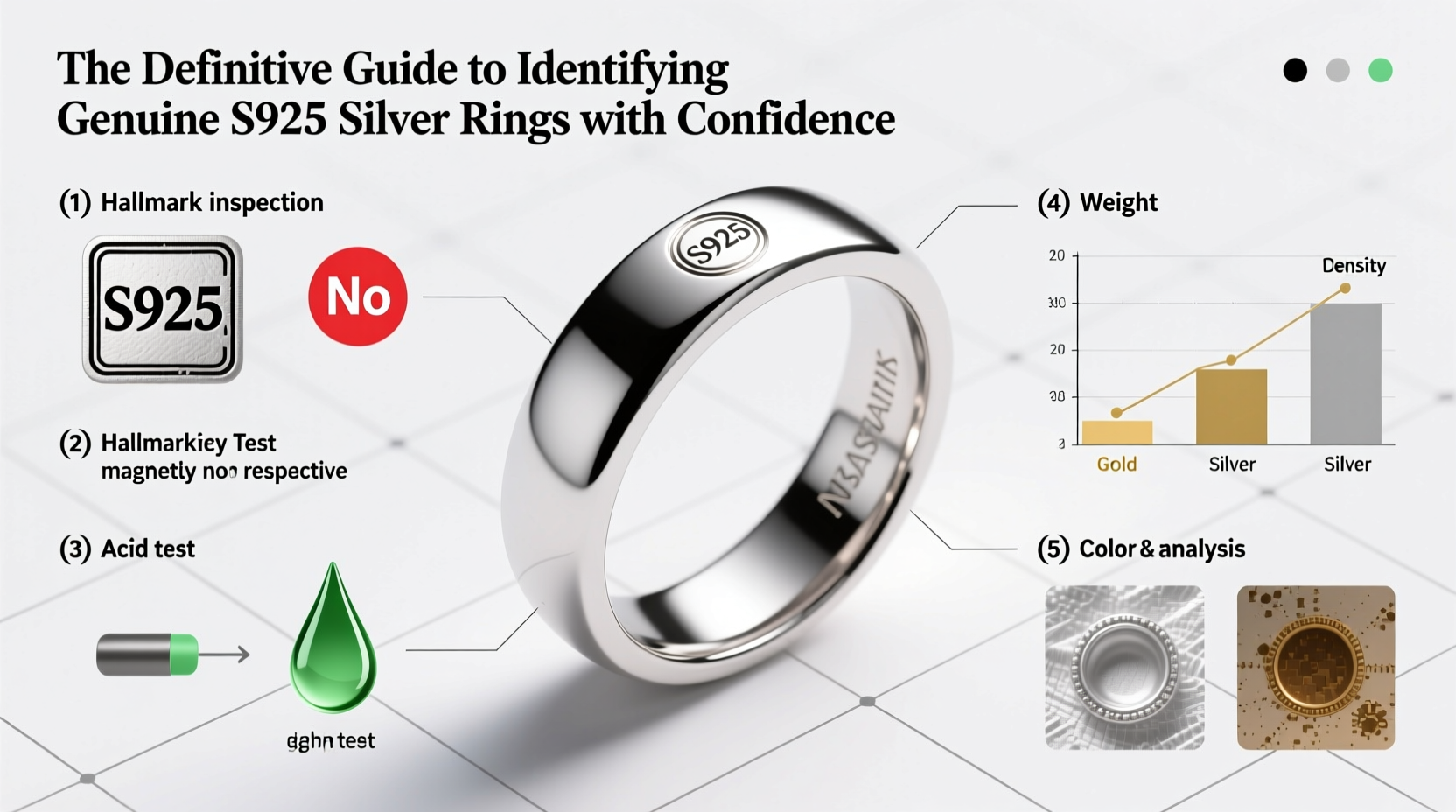
- Inspect the Hallmark: Use a jeweler’s loupe (10x magnification) to locate the “S925,” “925,” or “Sterling” stamp inside the band. Look for crisp, evenly engraved characters—not shallow or uneven impressions typical of counterfeits.
- Check for Additional Marks: Authentic pieces may also bear a maker’s mark, country code (e.g., “UK,” “IT”), or assay office symbol (like the leopard head for London).
- Perform the Magnet Test: Genuine silver is non-magnetic. Hold a strong neodymium magnet near the ring. If it attracts, the core metal is likely iron or steel—a red flag.
- Conduct the Ice Test: Place a small ice cube on the ring. Due to silver’s exceptional thermal conductivity, real S925 silver will cause the ice to melt significantly faster than on imitations.
- Observe Tarnish Patterns: Over time, authentic silver develops a natural yellowish-to-dark gray patina. Fake silver either doesn’t tarnish or shows green/black discoloration due to base metal oxidation.
- Use a Testing Kit: Acid test kits apply nitric acid via dropper to a discreet scratch on the surface. A color change (cream for silver, green for base metals) confirms composition.
- Seek Professional Appraisal: For high-value purchases, consult a certified gemologist or use X-ray fluorescence (XRF) analysis available at reputable jewelers.
Common Signs of Fake S925 Silver Rings
Fake silver rings often mimic appearance but fail under scrutiny. Be alert for these telltale signs:
- Inconsistent Weight: Real silver has density (10.49 g/cm³). Lightweight rings feel hollow or cheap—likely aluminum or plastic cores.
- Unusual Discoloration: Skin turning green or black after wearing suggests copper-rich alloys or plating over nickel.
- Blurry or Misaligned Stamps: Poorly struck hallmarks indicate mass-produced fakes rather than precision craftsmanship.
- Overly Bright Shine: While polished silver sparkles, excessive shine that doesn’t dull slightly with handling may signal rhodium plating or stainless steel.
- Price That Seems Too Good: Genuine S925 silver has intrinsic material cost. A $10 \"solid sterling\" ring from an unknown seller raises suspicion.
Comparison Table: Genuine vs. Counterfeit S925 Silver Rings
| Feature | Genuine S925 Silver | Counterfeit Ring |
|---|---|---|
| Hallmark Clarity | Sharp, deeply engraved | Faint, uneven, or missing |
| Magnet Reaction | No attraction | May attract weakly or strongly |
| Tarnish Color | Grayish-black patina | Green, orange, or peeling coating |
| Thermal Conductivity | Melts ice quickly | Minimal effect on ice |
| Acid Test Result | Creamy white residue | Green, brown, or no reaction |
Real-World Example: How One Buyer Avoided a Costly Mistake
Sophia, a first-time buyer shopping online for an anniversary gift, found a beautifully designed S925 silver ring priced at 70% off retail. Excited by the deal, she nearly completed the purchase before remembering a friend’s cautionary tale about fake silver. She contacted the seller requesting photos of the hallmark under magnification. The blurry image showed a smudged “925” stamp with uneven depth. Skeptical, she asked for a return policy and authenticity certificate—neither was offered. After researching the brand and finding no official presence, she reported the listing and instead bought from a local jeweler who demonstrated the ice and magnet tests in person. Her final choice, though more expensive, came with a lifetime warranty and full hallmark transparency.
This scenario underscores the importance of due diligence—even when emotions run high during gift buying.
Essential Checklist for Buying Authentic S925 Silver Rings
Before purchasing, go through this verification checklist:
- ✅ Visible and legible “S925” or “925” stamp inside the band
- ✅ Additional marks: maker’s logo, country code, or assay office seal
- ✅ No magnetic attraction when tested with a strong magnet
- ✅ Ice melts noticeably faster on the surface compared to other metals
- ✅ Proper weight and cool-to-the-touch feel indicative of dense metal
- ✅ Seller provides return policy and authenticity guarantee
- ✅ Option to inspect in person or receive high-resolution close-up images
Frequently Asked Questions
Does all real silver tarnish?
Yes, genuine S925 silver naturally tarnishes when exposed to sulfur compounds in air, moisture, and certain cosmetics. Lack of tarnish over months of wear may suggest plating or inert materials like stainless steel.
Can a ring be real silver without a stamp?
Rarely. Most countries require legal hallmarking for items sold as sterling silver. Antique or handmade pieces might lack stamps, but they should come with documentation or professional verification.
Are S925 and 925 the same thing?
Yes. Both denote 92.5% pure silver. “S925” is commonly used in Asian manufacturing, while “925” appears globally. Neither guarantees authenticity alone—always combine stamp inspection with physical testing.
Final Thoughts: Confidence Through Knowledge
Identifying genuine S925 silver rings doesn’t require a laboratory—just attention to detail and a few simple tools. By understanding what constitutes true sterling silver, recognizing red flags, and applying consistent verification practices, you protect your investment and ensure lasting quality. Whether you're selecting a sentimental gift or building a personal collection, informed decisions lead to greater satisfaction and trust in your choices.
💬 Have you uncovered a fake silver ring using these methods? Share your experience or ask questions in the comments—your insight could help others avoid costly errors.