There’s a subtle art to making an outfit appear more luxurious than it actually is. While clothing fabric and fit play major roles, accessories often tip the scale between “casual” and “curated.” Among cold-weather staples, two contenders consistently emerge: the delicate drape of a long scarf and the understated gleam of a sweater chain. Both are small additions, yet each carries significant visual weight. The real question isn’t just about personal preference—it’s about impact. Which accessory truly elevates an ensemble to look more expensive?
The answer isn’t absolute. It depends on context, styling, and the message you want your outfit to convey. However, understanding the psychological and aesthetic influence of each can help you make smarter choices—especially when you're aiming to project elegance, sophistication, or quiet wealth.
The Psychology of Perceived Value in Fashion
Fashion psychology reveals that people judge clothing quality based on cues like symmetry, proportion, and intentional detail. A well-placed accessory signals thoughtfulness—a hallmark of high-end dressing. Expensive-looking outfits aren’t always costly; they’re often simply considered.
Accessories function as punctuation marks in an outfit. They draw attention, create focal points, and suggest narrative. A long scarf implies movement and texture, while a sweater chain introduces metallic contrast and precision. Both manipulate perception, but in different ways.
“Luxury isn’t just about price tags—it’s about curation. One deliberate accessory can transform a basic knit into something editorial.” — Clara Nguyen, Stylist & Fashion Editor at *Urban Edit*
Why a Long Scarf Can Elevate Your Look
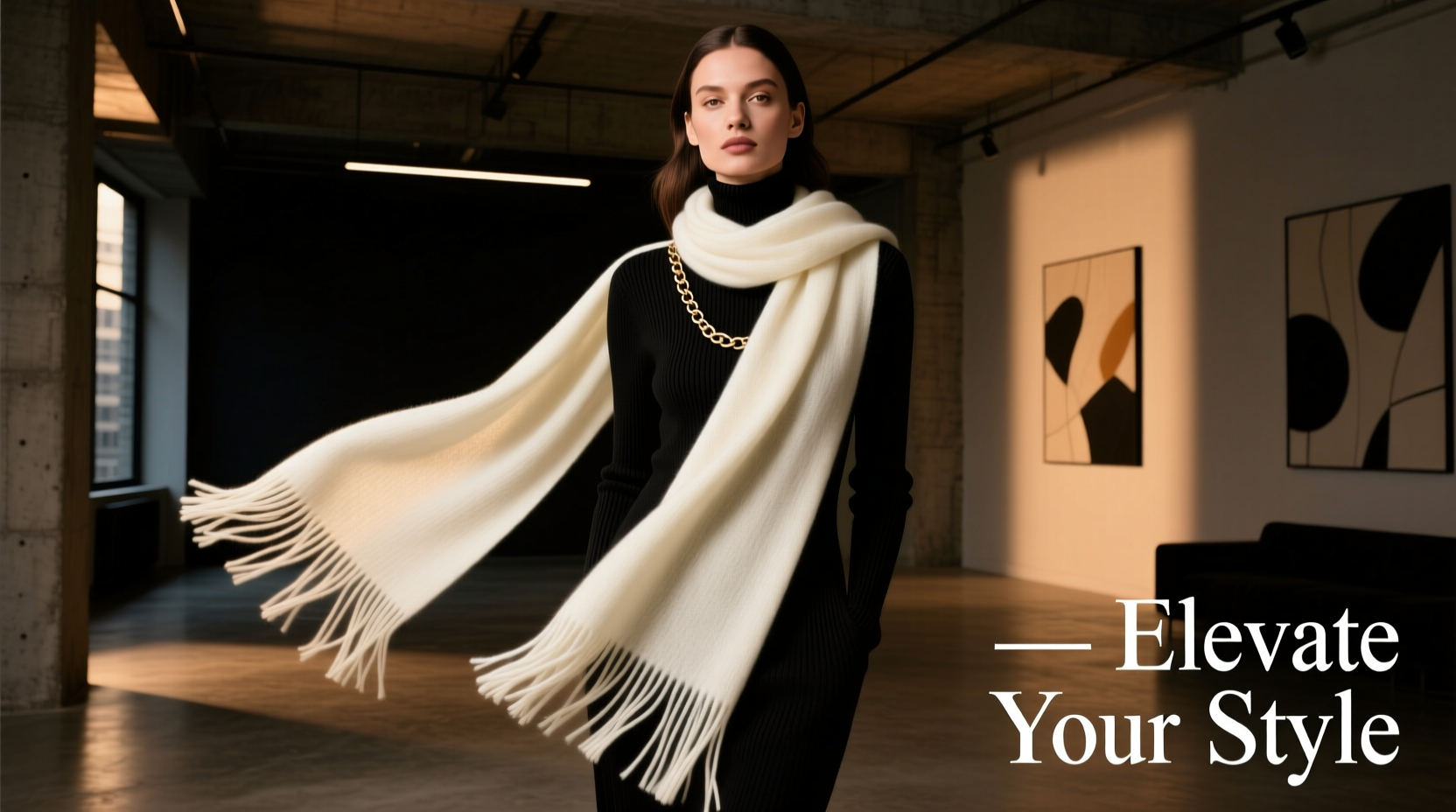
A long scarf, particularly in natural fibers like cashmere, merino wool, or silk-blend, instantly suggests comfort, refinement, and seasonal awareness. Its fluidity softens structured pieces and adds dimension to minimal silhouettes.
When draped intentionally—whether looped once with ends flowing or loosely knotted at the shoulder—it creates vertical lines that elongate the body. This optical effect mimics tailoring, a key trait of high-end fashion. Moreover, scarves in neutral palettes (camel, charcoal, ivory) align with the “quiet luxury” trend, where subtlety speaks louder than logos.
Tip: Choose a scarf one shade deeper or lighter than your coat for a tonal, layered effect that reads as intentional and elevated.Best Practices for Styling a Long Scarf Luxuriously
- Select scarves with clean edges—avoid frayed hems or synthetic shine.
- Drape asymmetrically over one shoulder for a Parisian-inspired nonchalance.
- Pair with monochrome or tonal outfits to let the texture stand out.
- Use oversized scarves as shawl-collar substitutes over blazers or coats.
The Quiet Power of the Sweater Chain
If a scarf whispers elegance, a sweater chain speaks precision. Typically made of delicate gold or silver-toned metal, these chains slip through sweater necklines or button closures, adding a flash of metallic contrast without overwhelming the look.
Sweater chains gained popularity through minimalist Scandinavian and Japanese aesthetics, where jewelry is sparse but meaningful. Unlike bold pendants or chunky necklaces, sweater chains enhance rather than dominate. Their strength lies in their restraint—offering just enough sparkle to suggest investment in details.
Because they’re often worn over knits, sweater chains emphasize the neckline, drawing attention to the face and creating a polished focal point. This subtle framing mimics couture-level attention to proportion.
How to Wear a Sweater Chain Like a Pro
- Choose a V-neck or crew-neck sweater with a slightly loose fit to allow chain movement.
- Opt for a single chain between 24–30 inches for balanced drape.
- Layer over collared shirts for a preppy-meets-modern contrast.
- Match metal tones to other jewelry (e.g., watch, earrings) for cohesion.
- Avoid overly shiny or plated finishes—matte or brushed metals look more authentic.
Comparing Impact: Scarf vs. Sweater Chain
| Feature | Long Scarf | Sweater Chain |
|---|---|---|
| Visual Weight | High – adds volume and texture | Low – adds fine detail |
| Seasonality | Winter-focused | All-season (under layers) |
| Luxury Signal | Material quality (cashmere = premium) | Attention to detail (jewelry placement) |
| Versatility | Moderate – mainly outerwear companion | High – works under or over layers |
| Cost Perception Boost | Strong in cold weather | Consistently effective year-round |
Real-World Example: The Office Upgrade
Consider Sarah, a marketing associate preparing for a client presentation. She owns a well-fitting navy wool coat, black trousers, and a beige cashmere turtleneck. Her goal: look polished but approachable, professional but not stiff.
Option A: She adds a camel-colored long scarf, loosely looped. The result is warm, textured, and inviting—ideal for creative industries. Clients perceive her as thoughtful and put-together.
Option B: She skips the scarf and threads a slim gold sweater chain through her turtleneck. The metallic glint catches light subtly during hand gestures. She appears meticulous and modern—perfect for finance or tech sectors.
In both cases, the base outfit remains the same. Yet the accessory shifts the narrative. The scarf emphasizes comfort and craftsmanship; the chain emphasizes precision and polish.
Actionable Checklist: Maximizing Perceived Value
Whether you choose a scarf, a chain, or alternate between both, follow this checklist to ensure your accessory enhances—not distracts from—your luxury aesthetic:
- ✅ Match materials to your wardrobe’s quality tier (e.g., real cashmere, solid metal).
- ✅ Keep colors neutral or tonal—avoid loud patterns or rhinestones.
- ✅ Ensure proper drape or length—scarves should flow, chains should rest just below collarbones.
- ✅ Coordinate with footwear and outerwear (e.g., leather gloves with a silk scarf).
- ✅ Limit competing accessories—let the scarf or chain be the hero.
Frequently Asked Questions
Can I wear both a sweater chain and a scarf together?
Yes, but with caution. Layer a thin chain under a lightweight scarf so the metal peeks through at the neckline. Avoid bulky combinations that create visual clutter. The goal is layered elegance, not overcrowding.
Which is more cost-effective for upgrading my wardrobe?
A sweater chain typically offers higher ROI. Priced between $30–$120 for quality pieces, it works across seasons and outfits. A premium scarf costs more ($150+) and is seasonally limited. However, if you live in a cold climate, a great scarf pays for itself in daily wear.
Do these accessories work for men too?
Absolutely. Men can use fine silver or gunmetal chains over crewnecks or button-downs for a refined touch. Scarves in charcoal or heather gray wool add sophistication to overcoats. The principles of texture, proportion, and subtlety apply universally.
Final Verdict: Which Makes You Look More Expensive?
The long scarf wins in environments where texture and warmth are valued—think winter cityscapes, creative fields, or relaxed luxury settings. Its material richness (especially in cashmere) immediately signals investment.
The sweater chain takes the crown for versatility, precision, and year-round elegance. It’s the detail that says, “I care about the small things,” which is a core tenet of looking expensive without overspending.
Ultimately, the most expensive-looking outfit isn’t defined by a single accessory—but by intentionality. Whether you choose the soft drape of a scarf or the quiet gleam of a chain, what matters is how deliberately you wear it.
💬 Ready to refine your cold-weather style? Try one accessory this week with full attention to drape, color, and coordination. Notice how people respond—and share your experience in the comments.