
Cardigans are a wardrobe staple—versatile, cozy, and effortlessly stylish. But anyone who’s worn one knows the frustration: the front edges slowly drift apart throughout the day, no matter how carefully you button or drape it. Enter the sweater accessory market, where two contenders promise to solve this issue: the sweater buckle and the sweater clip. While both aim to keep your cardigan closed and styled, they function differently—and not all solutions work equally well for every situation.
Understanding the mechanics, materials, and real-world performance of each can help you decide which option suits your lifestyle, garment type, and aesthetic preferences. This isn’t just about fashion—it’s about function. Let’s break down the differences and determine which actually holds up when it matters most.
How Sweater Buckles Work
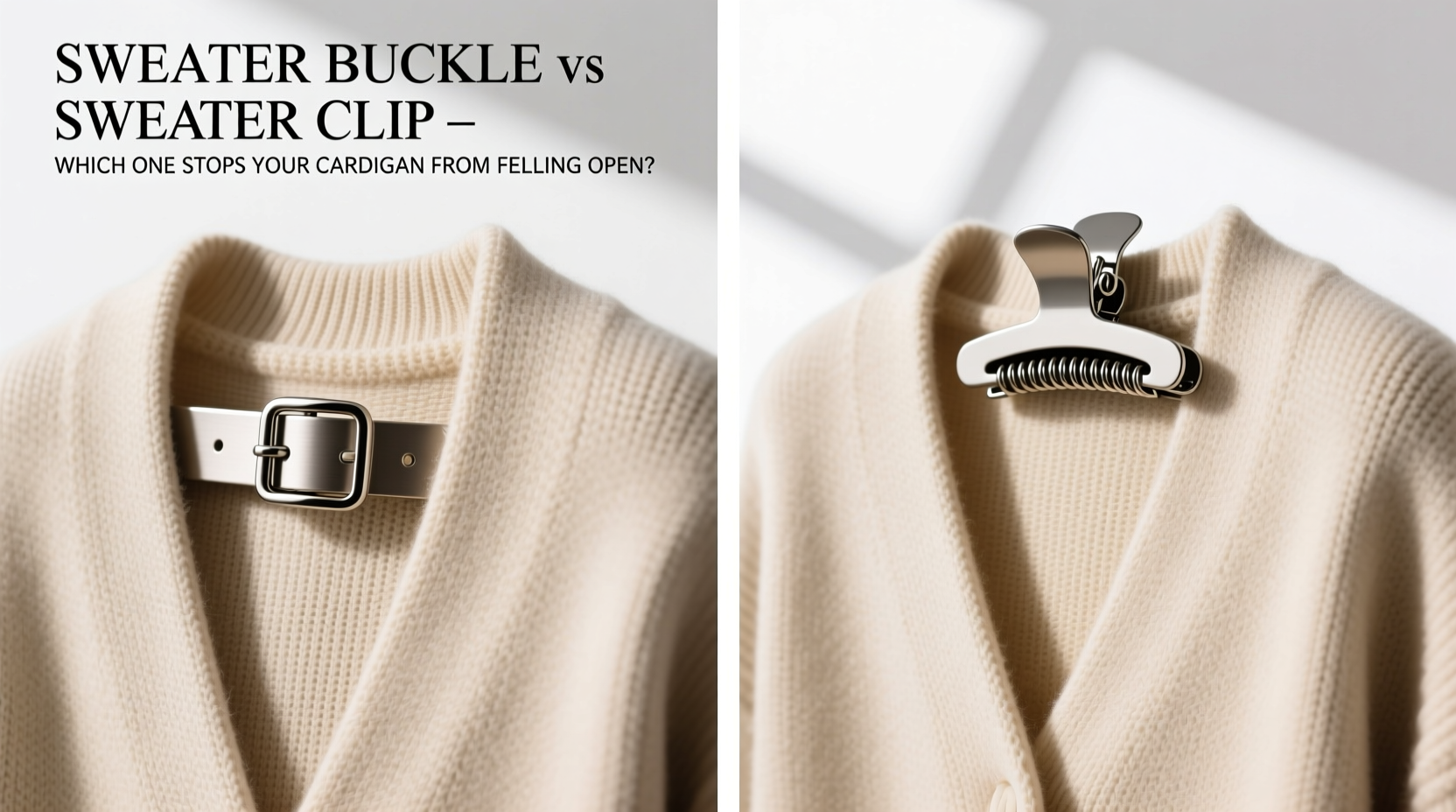
A sweater buckle is typically a decorative fastener that attaches through the fabric of a cardigan using a pin or post mechanism. It operates much like a brooch or lapel pin, puncturing both sides of the cardigan front to hold them together securely. These buckles come in various sizes and styles—from minimalist geometric shapes to vintage-inspired designs with enamel detailing.
The strength of a sweater buckle lies in its anchoring method. Because it physically passes through the knit, it creates a fixed point that resists lateral movement. This makes it particularly effective on looser weaves or heavier fabrics like wool or cable knits, where slipping is more common.
However, repeated use in the same spot can lead to stretched holes or snagged yarns, especially on delicate materials like cashmere or fine merino wool. Some users report minor wear over time, particularly if the pin backing is loose or poorly constructed.
Tip: Rotate the placement of your sweater buckle slightly each time you wear it to prevent consistent stress on the same knit loops.How Sweater Clips Function
Sweater clips, also known as cardigan clasps or knit retainers, operate without piercing the fabric. Most feature a spring-loaded clamp or magnetic closure that grips the two layers of the cardigan from the outside. They’re designed for ease of use—simply pinch and snap onto the front panels.
Because they don’t penetrate the material, sweater clips are gentler on delicate knits. They’re ideal for lightweight or loosely woven garments where a pin might distort the pattern or pull threads. Many modern versions use silicone-lined jaws or soft rubber pads to increase grip without damaging fibers.
That said, their effectiveness depends heavily on fabric thickness and tension. On thin cotton blends or open-gauge knits, clips may slide down or fail to hold under movement. One user reported her silk-blend cardigan gapping within minutes of attaching a magnetic clip during a morning commute.
“Clips offer elegance without damage, but they’re not universal. You need enough fabric density for them to grip.” — Lena Patel, Textile Stylist & Wardrobe Consultant
Direct Comparison: Buckle vs Clip
| Feature | Sweater Buckle | Sweater Clip |
|---|---|---|
| Attachment Method | Pierces fabric with pin/post | Clamps or magnetically grips surface |
| Fabric Safety | May cause small holes or stretching over time | No punctures; safer for delicate knits |
| Holding Power | High – secure even with movement | Moderate – varies by fabric thickness |
| Style Options | Wide range of decorative designs | More minimalist; limited ornamentation |
| Ease of Use | Requires alignment and pressure to insert | Quick snap-on; adjustable positioning |
| Best For | Thick, structured knits; statement styling | Lightweight, drapey cardigans; daily wear |
Real-World Test Case: Office Wear Over a Workweek
To evaluate performance beyond theory, a practical test was conducted with a woman wearing a medium-weight merino wool cardigan five days a week. She alternated between a brass sweater buckle and a silicone-jawed magnetic clip.
- Day 1–2 (Buckle): The cardigan stayed fully closed throughout the day, including while sitting at a desk and walking between meetings. No slippage occurred, though removing the buckle left a slight dimple in the knit.
- Day 3–4 (Clip): The clip held well during stationary periods but slid downward twice during arm movements. Re-positioning was needed midday.
- Day 5 (Buckle again): After reattaching the buckle in a slightly different spot, it performed flawlessly. The user noted greater confidence in the fit compared to the clip.
The conclusion? For consistent, reliable closure—especially in active environments—the buckle outperformed the clip. However, the clip was preferred for comfort and speed when wearing softer, less structured pieces.
Choosing the Right Option for Your Needs
Selecting between a sweater buckle and a clip shouldn’t be based solely on aesthetics. Consider these factors:
- Knit Weight: Heavy wools and dense cables benefit from buckles. Lightweight cotton or silk blends do better with clips.
- Wear Frequency: If you wear the same cardigan daily, a clip reduces long-term wear on the fabric.
- Mobility Level: Active lifestyles demand stronger retention—buckles win here.
- Aesthetic Goals: Buckles double as jewelry; clips tend to be discreet.
- Garment Value: On high-end or vintage knits, avoid piercing closures unless reversible damage is acceptable.
Checklist: How to Choose Between a Sweater Buckle and Clip
- ✅ Assess the thickness and elasticity of your cardigan fabric
- ✅ Determine how often you’ll wear the piece
- ✅ Decide whether you want a visible accent or invisible hold
- ✅ Test both options on the actual garment before committing
- ✅ Check the backing mechanism—secure catches matter
- ✅ Prioritize grip quality over design if functionality is key
Frequently Asked Questions
Can a sweater clip damage my cardigan?
Generally, no—if used correctly. High-quality clips with non-slip padding won’t mark or snag fabric. Avoid cheap metal-only clamps that can pinch or leave creases. Always remove gently and store flat.
Do sweater buckles work on buttoned cardigans?
Yes, and they’re often used decoratively over top buttons to add flair while reinforcing closure. Just ensure the pin doesn’t interfere with existing buttons or seams.
Are there alternatives to both?
Absolutely. Some brands now offer internal magnetic strips sewn into hems, or hidden snaps. Tailors can also add discreet hook-and-eye closures inside the placket for a clean look without external hardware.
Final Verdict: Which Actually Keeps Your Cardigan Closed?
If your priority is reliability—keeping your cardigan firmly shut through movement, wind, and extended wear—the **sweater buckle** is the superior choice. Its mechanical penetration provides unmatched stability, especially on thicker or loosely structured knits.
However, if you value fabric preservation, ease of switching between garments, or prefer a low-profile solution, the **sweater clip** is a smart alternative—provided your cardigan has enough body for the clip to grip effectively.
In short: buckles win on hold strength; clips win on versatility and gentleness. The best approach? Own both and match the tool to the garment.
💬 Have a favorite sweater accessory that works wonders? Share your go-to solution in the comments and help others find the perfect fit!