In today’s evolving workplace culture—where hybrid offices, creative industries, and remote meetings blur traditional dress codes—dressing professionally no longer means wearing a suit every day. A well-styled casual jacket can bridge the gap between comfort and polish, offering versatility without sacrificing authority. The key lies in how you pair, fit, and finish the look. Whether it's a chore coat, bomber, denim trucker, or unstructured blazer, turning a casual outer layer into a professional asset is both an art and a science.
Understanding the Jacket Spectrum: From Casual to Professional-Ready
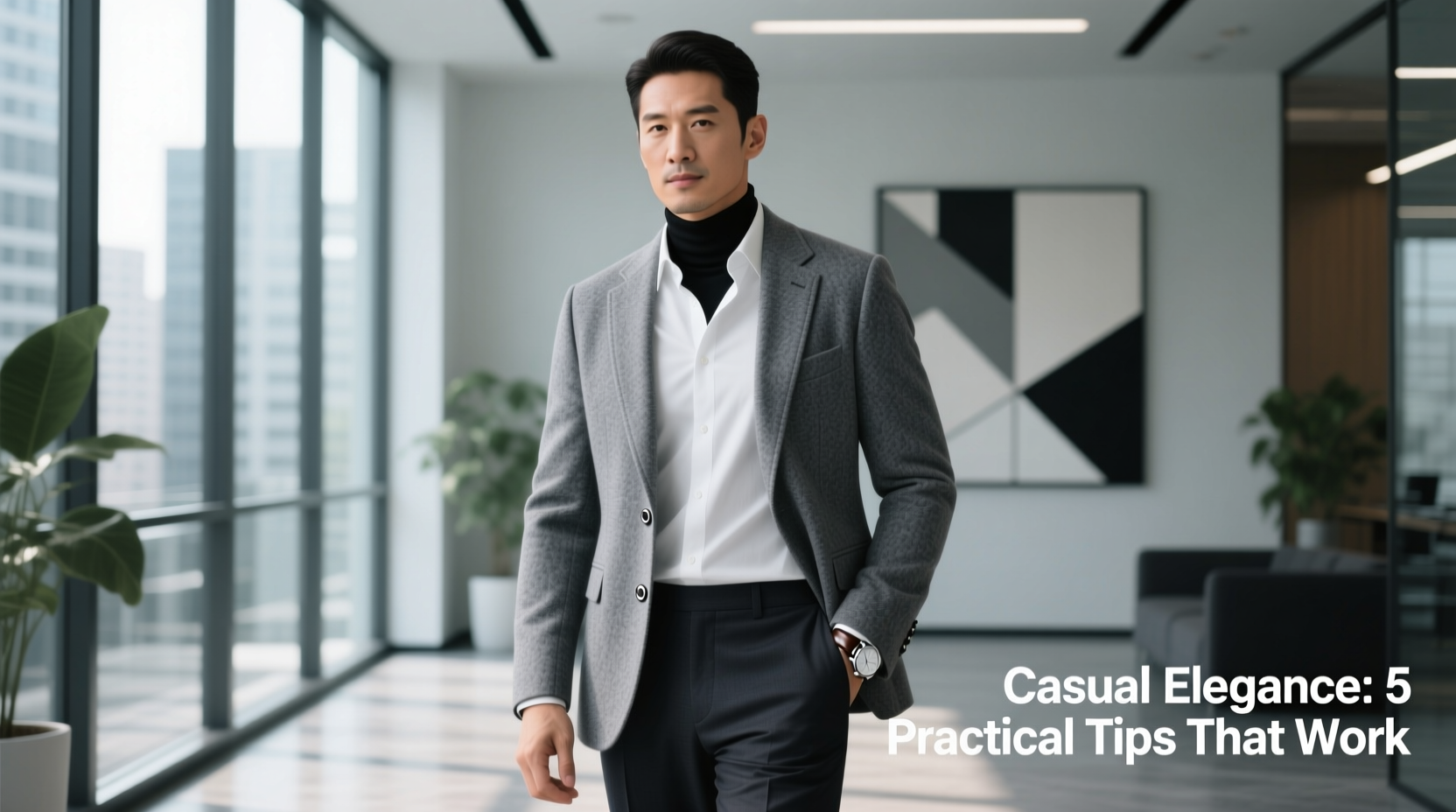
Not all casual jackets are created equal when it comes to office appropriateness. The material, cut, color, and level of structure determine whether a jacket reads as weekend-wear or boardroom-ready. For example, a quilted nylon field jacket may struggle in a client-facing role, while a wool-blend chore coat in charcoal or navy can seamlessly integrate into business-casual settings.
The goal isn’t to disguise a casual piece but to style it with intention. Focus on clean lines, neutral tones, and fabrics that convey quality—such as cotton twill, merino wool, or textured blends. Avoid overly distressed finishes, loud graphics, or athletic materials like polyester mesh unless your environment is highly informal.
Tip: When in doubt, choose jackets with minimal branding and solid colors—navy, gray, olive, or black offer maximum versatility.Fit Is Non-Negotiable: Why Structure Matters
No amount of clever accessorizing can compensate for poor fit. A jacket should sit cleanly on the shoulders, allow room for a lightweight sweater underneath, and end at or just below the hip. Baggy sleeves, sagging hems, or tight armholes instantly undermine professionalism.
Consider tailoring. Even off-the-rack jackets benefit from minor adjustments—shortening sleeves, tapering the waist, or removing excess fabric under the arms. A tailored fit signals attention to detail, which translates directly into perceived competence.
“Clothes don’t make the man, but fit makes the message.” — Daniel Day, Menswear Stylist & Consultant
Do’s and Don’ts of Casual Jacket Fit
| Aspect | Do | Don't |
|---|---|---|
| Shoulders | Seam ends precisely at shoulder bone | Extends beyond or sits too far in |
| Sleeves | End at wrist bone, allowing 0.5” of shirt cuff to show | Cover hands or ride up above wrists |
| Length | Hem aligns with top of trouser pockets | Hangs below mid-buttock |
| Chest | Allows movement without pulling buttons | Gaps open when buttoned |
Strategic Pairing: Building a Cohesive Outfit
A sharp professional look hinges on balance. Pairing a rugged jacket with soft, refined layers creates contrast that works in your favor. Think of the jacket as the statement piece—it should be grounded by polished components beneath.
- Shirts: Opt for crisp oxford cloth, fine flannel, or solid-colored button-downs. Tucked-in shirts instantly elevate formality.
- Knits: Merino wool or fine-gauge cotton sweaters under a jacket add warmth and sophistication.
- Bottoms: Chinos, wool trousers, or dark selvedge denim (without rips) maintain continuity. Avoid cargo pants or sweatpants.
- Footwear: Loafers, derbies, or minimalist leather boots complete the transition from casual to professional.
Real Example: From Commute to Client Meeting
Take Mark, a project manager at a design firm. He starts his day biking to a co-working space in a navy cotton bomber jacket over a light blue oxford shirt and dark gray chinos. Once inside, he removes his backpack, rolls up his sleeves slightly, and adds a slim tie clipped with a simple bar. The bomber—previously seen as weekend wear—now functions as a modern alternative to a blazer. Clients perceive him as approachable yet prepared. The shift required no wardrobe change, only strategic layering and grooming.
Step-by-Step Guide: Transforming Your Jacket Look in 5 Minutes
- Assess the jacket: Ensure it’s clean, wrinkle-free, and fits properly.
- Layer smartly: Wear a collared shirt or fine-knit polo. Tuck it in for added polish.
- Add definition: Use a slim leather belt that matches your shoes.
- Refine the base: Swap jeans for flat-front trousers or dark, clean denim.
- Finish strong: Slip on leather shoes and check your grooming—hair, nails, and watch add subtle cues of professionalism.
This sequence takes less time than brewing coffee but dramatically shifts perception. It’s not about dressing up; it’s about dressing with purpose.
Essential Checklist: Is Your Casual Jacket Office-Worthy?
- ✅ Fits well across shoulders and chest
- ✅ Made from structured, non-athletic fabric
- ✅ In a neutral or muted tone
- ✅ Free of stains, fraying, or excessive wear
- ✅ Paired with tailored bottoms and closed-toe shoes
- ✅ Worn over a collared or refined knit layer
- ✅ Complements your overall grooming standard
Frequently Asked Questions
Can I wear a denim jacket to a professional setting?
Yes—but only if it’s dark indigo, unwashed, and free of distressing. Pair it with a tucked-in chambray or white shirt, charcoal trousers, and brown brogues. Avoid light washes or patches, which lean too casual.
Is a bomber jacket too informal for the office?
Not inherently. Modern bombers in wool, suede, or matte nylon with clean lines can work in creative or tech environments. Avoid shiny satin or military surplus styles in conservative offices.
What if my workplace has a strict dress code?
Even in formal environments, an unstructured linen or cotton-blend jacket in navy or gray can replace a traditional suit jacket during warmer months or casual Fridays. Always observe what senior team members wear—it sets the unofficial standard.
Final Thoughts: Elevate Without Overcomplicating
Professionalism isn’t dictated by rigid rules but by consistency, confidence, and coherence. A casually styled jacket can project authority when treated as part of a deliberate ensemble rather than an afterthought. The most effective looks aren’t flashy—they’re intentional. By focusing on fit, fabric, and finishing details, you gain flexibility without compromising respect.
Start small: pick one jacket from your current rotation and rebuild the outfit around it using these principles. Test it in a low-stakes meeting. Notice reactions. Adjust. Mastery comes not from owning more, but from styling better.
💬 Which casual jacket do you rely on for professional settings? Share your go-to combo in the comments—your insight could inspire someone else’s next polished look.








