Bracelets are more than just accessories—they’re subtle storytellers of personal style. Whether delicate or bold, a well-chosen bracelet can transform an ordinary outfit into something memorable. Yet, many people underuse or misstyle these small but powerful adornments. The key isn’t just wearing them—it’s styling them with intention. From casual jeans to formal gowns, the right bracelet combination enhances confidence, complements your ensemble, and reflects your aesthetic sensibility.
Mastery in bracelet styling lies not in quantity, but in harmony. It’s about understanding proportions, materials, color coordination, and context. With the right approach, you can create looks that feel curated, balanced, and uniquely yours.
Understand Your Wrist & Proportions
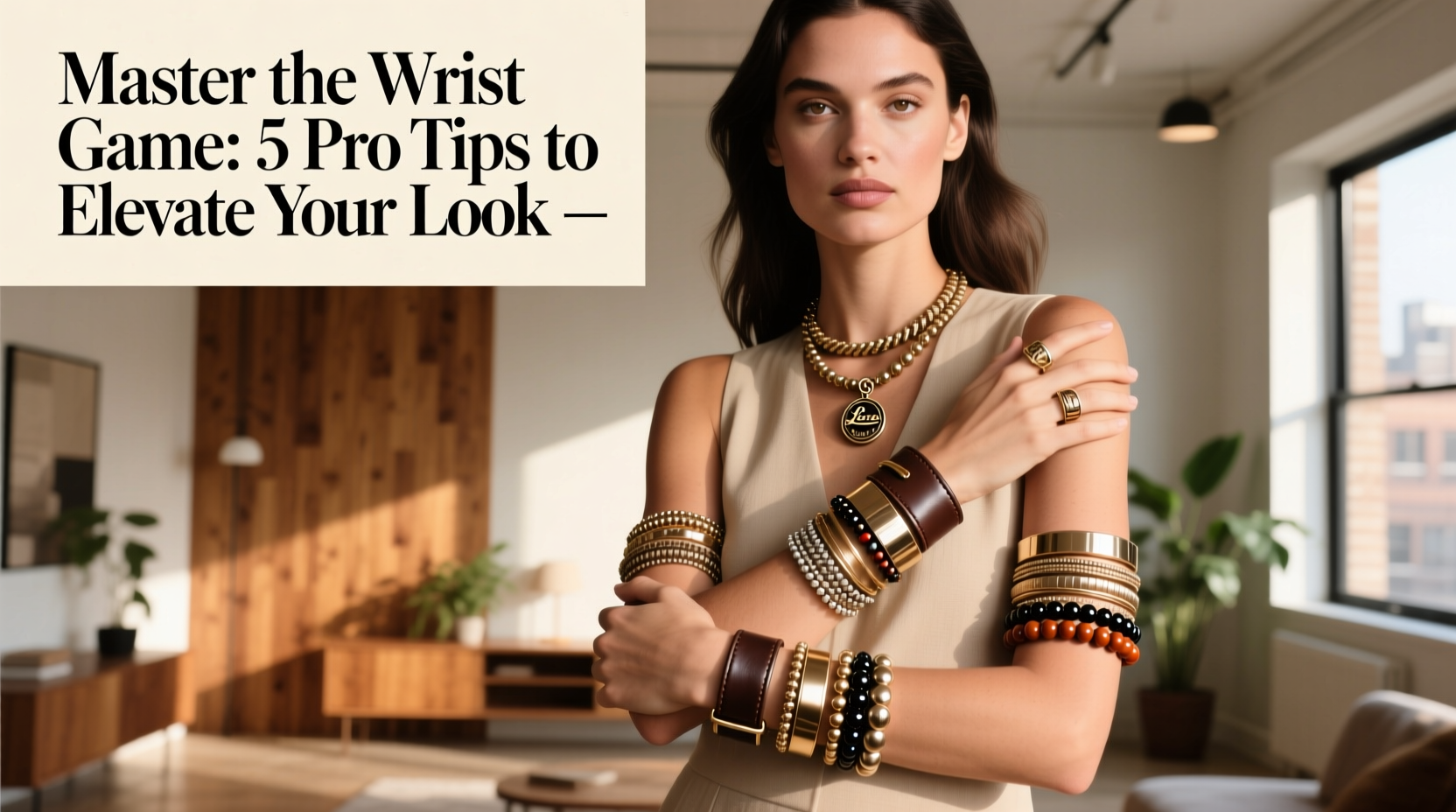
Your wrist size and shape influence how bracelets appear when worn. A slender wrist may be overwhelmed by chunky bangles, while a broader wrist can carry larger pieces without looking disproportionate. Before building a stack or selecting a statement piece, consider your natural frame.
- Delicate wrists: Opt for thin chains, dainty cuffs, or minimalist bangles.
- Average to broad wrists: Feel free to experiment with layered bangles, wider cuffs, or mixed textures.
The goal is balance—not only between the bracelet and your wrist but also with the rest of your body and outfit. For instance, long sleeves call for longer or stacked bracelets that peek through fabric, while short sleeves allow room for bolder statements.
Tip: Measure your wrist circumference and add 0.5–1 inch for comfort when selecting bangle sizes.Master the Art of Stacking
Stacking bracelets has become a signature trend—but done poorly, it can look cluttered. Done well, it exudes effortless sophistication. The secret is variety with cohesion.
Begin with a base layer: a simple chain or slim bangle. Then build outward using different textures (e.g., leather, metal, beads), widths, and finishes (matte, polished, brushed). Aim for three to five pieces per wrist for most occasions; fewer for professional settings, more for events.
“Balance is everything. Mix metals thoughtfully, vary thicknesses, and always leave a little breathing room between pieces.” — Lena Torres, Fashion Stylist & Accessory Consultant
Aim for visual rhythm rather than symmetry. Try pairing a hammered gold cuff with a thin rose-gold chain and a single beaded strand. Or combine a leather wrap with silver charms and a sleek watch.
Step-by-Step Guide to Building a Balanced Stack
- Start with a neutral anchor piece (e.g., a classic watch or plain bangle).
- Add one textured or patterned bracelet (e.g., woven, engraved, or beaded).
- Incorporate a contrasting material (leather, fabric, gemstone) for depth.
- Include a personalized touch (initial charm, birthstone, meaningful symbol).
- Step back and assess movement, comfort, and visual flow.
Match Bracelets to Outfit Style & Occasion
Just as shoes and bags align with your outfit’s tone, so should your bracelets. Context matters—what works at a beach wedding won’t suit a boardroom meeting.
| Outfit Type | Recommended Bracelet Style | What to Avoid |
|---|---|---|
| Casual (jeans, t-shirt) | Leather wrap, beaded strands, simple chain | Overly formal or fragile pieces |
| Business Professional | Sleek watch, single metal bangle, minimal link chain | Bulky stacks or noisy bangles |
| Cocktail/Evening | Statement cuff, sparkling tennis bracelet, layered metallics | Worn or tarnished items |
| Boho/Festival | Multi-wrap leather, ethnic beads, charm bracelets | Too much uniformity or polish |
| Formal Gown | Diamond or crystal tennis bracelet, elegant cuff | Clashing colors or distracting shapes |
When dressing up, let your bracelet shine—pair it with bare arms or sheer sleeves that don’t cover the wrists. In contrast, during work hours, prioritize subtlety and professionalism. A single polished bangle or elegant watch often speaks louder than a noisy stack.
Color & Material Coordination
Harmony between your bracelet and clothing elevates the entire look. This doesn’t mean matching exactly—think instead in terms of complementary tones and intentional contrast.
- Warm-toned metals (gold, brass, rose gold) pair beautifully with earth tones, creams, and warm reds.
- Cool metals (silver, platinum, white gold) enhance blues, grays, blacks, and jewel tones.
- Colored beads or stones should echo a hue from your outfit—match your scarf, shoes, or even lipstick.
Avoid clashing unless intentional. For example, pairing yellow gold jewelry with cool-toned neons can look disjointed. However, mixing metals is now widely accepted—just do it purposefully. Combine similar finishes (e.g., brushed gold with brushed silver) or anchor mixed metals with a unifying element like a black leather band.
Real-Life Example: Elevating a Simple Outfit
Consider Maya, a marketing executive preparing for a client presentation. She wears a crisp white blouse and navy blazer—classic, professional, but slightly understated. To add individuality without distracting from her message, she selects a minimalist platinum bangle and pairs it with a slim silver watch. The cool metal complements her navy palette, and the clean lines reinforce precision and attention to detail.
Later that evening, she transitions to dinner with friends in a floral summer dress. She swaps to a layered look: a rose-gold chain, a delicate charm bracelet with a tiny book pendant (a nod to her love of reading), and a thin beaded strand in coral—matching her sandals. The shift is subtle but impactful: same person, two distinct vibes, both authentic.
This versatility is what makes bracelets so powerful. With a few thoughtful choices, you can adapt your presence to any environment.
Essential Checklist for Styling Success
Bracelet Styling Checklist:- ✓ Assess wrist size and proportion before choosing pieces
- ✓ Match bracelet energy to the occasion (minimalist vs. bold)
- ✓ Coordinate metal tones with other jewelry and outfit hues
- ✓ Limit stacks to 3–5 pieces for balance
- ✓ Include one personal or meaningful element (charm, engraving)
- ✓ Ensure comfort and ease of movement
- ✓ Check functionality—won’t snag clothes or interfere with tasks
Frequently Asked Questions
Can I wear bracelets with a watch?
Absolutely—and it’s often encouraged. Position the watch first, then layer bracelets above or below it. Keep spacing even and avoid overcrowding. A general rule: if the watch is bold, keep accompanying bracelets simple.
How do I prevent bracelets from tangling or slipping?
Choose secure closures (toggle, lobster claw, magnetic) and avoid overly loose fits. For chains, opt for slightly heavier links that stay in place. Store bracelets flat or hung individually to maintain shape and reduce friction.
Is it okay to mix expensive and affordable bracelets?
Yes, especially when styling for self-expression. High-low mixing is common in modern fashion. Just ensure quality alignment—a tarnish-prone cheap piece next to fine gold can undermine the whole look. Focus on finish and cohesiveness over price tags.
Final Thoughts: Make It Meaningful
Styling bracelets isn’t just about following trends—it’s about curating moments of expression. Each piece you choose carries weight, whether sentimental, symbolic, or simply joyful. When you pair them thoughtfully with your outfits, you’re not just accessorizing—you’re communicating who you are.
Start small. Build gradually. Pay attention to how different combinations make you feel. Confidence isn’t just in what you wear, but in how intentionally you wear it.
💬 Ready to redefine your wrist game? Revisit your jewelry box today—edit, mix, and style with purpose. Share your favorite bracelet combo in the comments and inspire others to wear theirs with confidence.