Wearing religious symbols is deeply personal. For many, jewelry like the Star of David or the Christian cross isn’t just fashion—it’s identity, heritage, faith, or remembrance. But what happens when you feel drawn to both? Can you wear them together without misunderstanding, offense, or confusion? The answer isn’t simple, but it’s worth exploring with care, context, and clarity.
In an increasingly interconnected world, people often find themselves shaped by multiple traditions—through family, marriage, interfaith friendships, or spiritual exploration. Expressing that blend through jewelry is natural. Yet because these symbols carry profound meaning, combining them requires thoughtful consideration.
Understanding the Symbolism Behind Each Piece
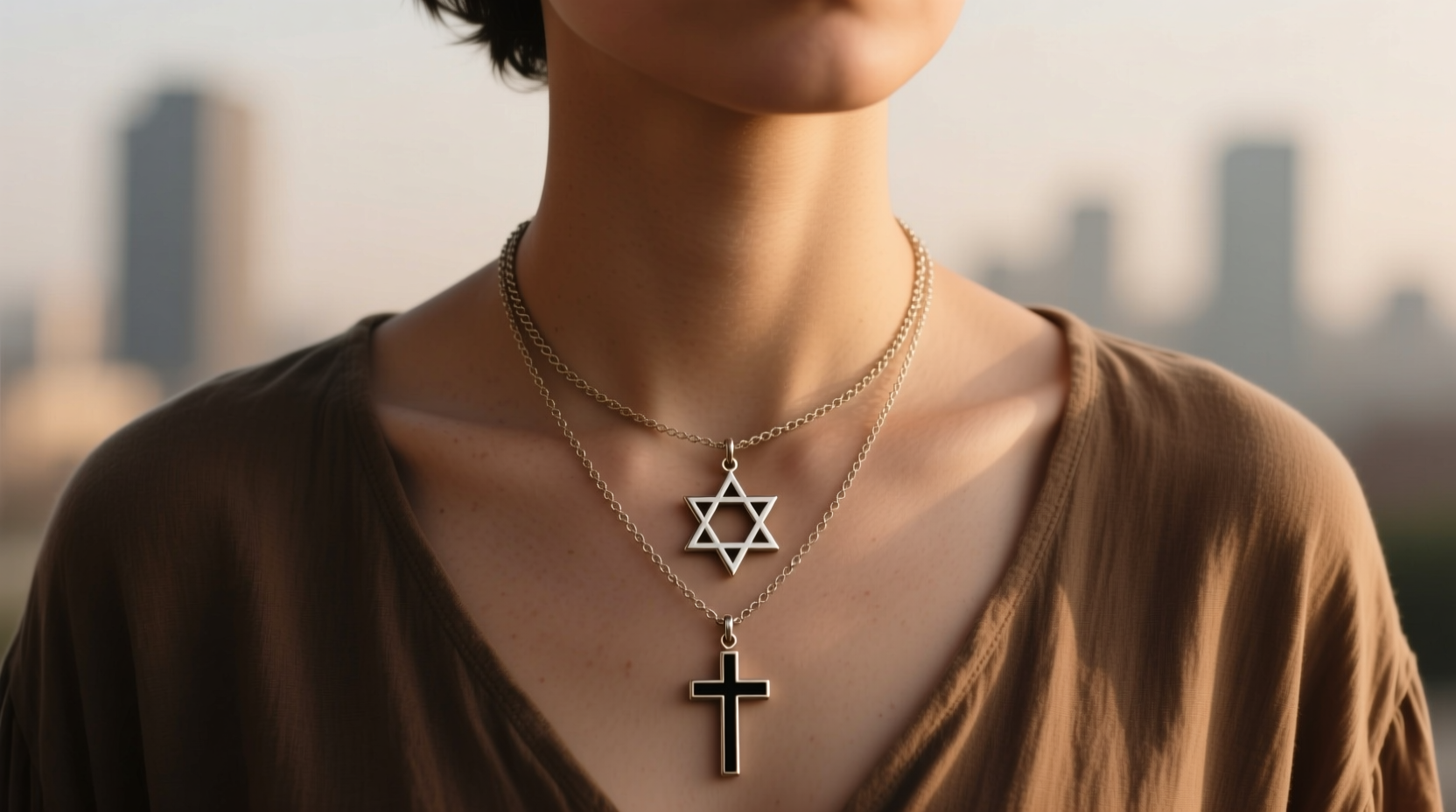
The Star of David (Magen David) and the cross are among the most recognizable religious emblems in the world. Their meanings run deep:
- Star of David: A six-pointed star that became a central symbol of Judaism in the 17th century, though its roots go back further. Today, it represents Jewish identity, faith, and solidarity. It’s also associated with King David and divine protection.
- Christian Cross: A representation of Jesus Christ’s crucifixion and resurrection. It signifies sacrifice, redemption, and salvation in Christianity. Variations include the Latin cross, Orthodox cross, and Celtic cross, each with distinct theological nuances.
Because both symbols are sacred, wearing them isn’t neutral. They signal belief, belonging, or respect. When worn together, they may be interpreted as syncretism—a blending of faiths—or as a statement of dual heritage.
“Symbols are not accessories. They are vessels of memory, doctrine, and community. Wearing them carries responsibility.” — Dr. Miriam Feldman, Religious Studies Professor at Boston University
Navigating Cultural Sensitivity and Personal Identity
Whether you can wear both without “causing a stir” depends on your intent, audience, and context. Some communities may see the pairing as meaningful; others may view it as disrespectful or confusing.
For example, someone with a Jewish parent and Christian upbringing might wear both necklaces to honor both sides of their family. That gesture can be powerful and authentic. However, if the same person wears them casually, without understanding their significance, it could come across as appropriation or trivialization.
Tip: Reflect on why you want to wear each symbol. Is it aesthetic, ancestral, spiritual, or educational? Your motivation shapes how others will perceive it.When Dual Symbols Work Well
Cases where wearing both is generally accepted include:
- Interfaith families: Couples from different religions sometimes wear both symbols to represent unity.
- Mixed heritage individuals: People with Jewish and Christian ancestry may wear both to affirm their full identity.
- Advocacy or solidarity: Allies in interfaith dialogue may use the symbols to promote peace and mutual respect.
When It Might Cause Concern
Situations to approach with caution:
- Wearing both in religious ceremonies (e.g., a synagogue or church service), where one symbol may dominate.
- Using them purely for fashion without acknowledging their origins.
- Presenting the combination as a new spiritual hybrid without grounding in either tradition.
Real-Life Example: A Story of Family and Faith
Lena, a 29-year-old teacher from Chicago, grew up attending both her Jewish grandmother’s Passover seders and her father’s Baptist church. Her mother was Ashkenazi Jewish; her father converted to Christianity before Lena was born. As a child, she felt torn between two worlds. In college, she began wearing a small Star of David on one chain and a delicate cross on another—stacked together.
At first, some relatives questioned her choice. Her aunt asked, “Are you trying to be both?” Lena responded, “I’m not choosing. I’m honoring where I come from.” Over time, her family came to understand. Today, she teaches religious studies and uses her necklaces as conversation starters about identity and inclusion.
Lena’s story shows that intentionality matters. She didn’t merge the beliefs—but she honored the people who shaped her.
Practical Guide: How to Wear Both Respectfully
If you’re considering wearing both symbols, follow this step-by-step approach to minimize misunderstanding and maximize respect.
- Educate yourself: Learn the history and significance of each symbol within their respective traditions.
- Clarify your intent: Are you expressing heritage, faith, love, or curiosity? Be honest with yourself.
- Consider the setting: Avoid wearing both during formal religious services unless explicitly welcomed.
- Be ready to explain: If someone asks, respond with humility: “This honors my family,” or “I’m learning about both traditions.”
- Listen to feedback: If someone expresses discomfort, don’t argue—ask why and reflect.
| Do | Don’t |
|---|---|
| Wear both to honor mixed heritage | Treat them as trendy fashion-only items |
| Stack them subtly or wear one closer to the heart | Combine them into a single fused pendant without context |
| Use them to spark respectful conversations | Present the combo as a new religion or doctrine |
| Respect boundaries in religious spaces | Wear both during solemn rituals without guidance |
Frequently Asked Questions
Is it offensive to wear a Star of David if I’m not Jewish?
It can be, depending on context. Non-Jews wearing the Star of David as a fashion statement without understanding its meaning may be seen as appropriative. However, allies, partners in interfaith relationships, or those honoring Jewish loved ones often wear it respectfully. When in doubt, ask members of the Jewish community for perspective.
Can Christians wear the Star of David?
Yes—many do. Some Christians, especially those interested in the Hebrew roots of Christianity, wear the Star of David to acknowledge Jesus’ Jewish identity. As long as it’s done with respect and not to replace or reinterpret Jewish tradition, it can be meaningful.
What if I want to wear both but fear backlash?
Your concern shows awareness, which is a good start. Consider starting with one symbol and introducing the other gradually. You might also choose to wear them separately in different settings. Openness and humility go a long way in easing tensions.
Tips for Balancing Expression and Respect
Tip: If wearing both feels risky in certain environments, consider reversible pendants or layering chains so you can adjust based on context. Tip: Pair your jewelry with actions—donate to interfaith organizations, attend cultural events, or volunteer in diverse communities. Symbols gain depth when matched with deeds.Checklist: Before You Wear Both
- ☐ I understand the historical and religious meaning of both symbols
- ☐ My reason for wearing them is clear and respectful
- ☐ I’ve considered how my community might react
- ☐ I’m prepared to have conversations about my choices
- ☐ I respect the boundaries of religious spaces and ceremonies
Final Thoughts: Wear With Meaning, Not Just Style
You can wear a Star of David and a cross together—but how you do it matters more than whether you do. Symbols carry weight. When worn thoughtfully, they can bridge cultures, honor ancestors, and express complex identities. When worn carelessly, they risk erasing the very histories they represent.
There’s no universal rule that says “yes” or “no.” Instead, ask yourself: Am I representing something true? Am I being honest with myself and respectful to others? If the answer is yes, then you’re not causing a stir—you’re starting a dialogue.
💬 Have you worn both symbols? What was your experience? Share your story in the comments and help others navigate faith, fashion, and identity with compassion.








