Choosing the right sunglasses isn’t just about fashion—it’s about harmony. The ideal frame should complement your facial structure, enhance your features, and convey confidence without effort. Among the most iconic styles, square and aviator sunglasses stand out as timeless choices. But when it comes down to fit and flattery, which one wins? The answer depends less on trends and more on proportion, bone structure, and personal style.
While aviators have long symbolized cool authority—popularized by pilots and rock stars alike—square frames bring a modern edge rooted in minimalist design. Both are versatile, but their impact varies dramatically depending on who wears them. Understanding how each style interacts with different face shapes is key to making a choice that doesn’t just look good, but feels inherently *right*.
Understanding Facial Proportions and Frame Balance
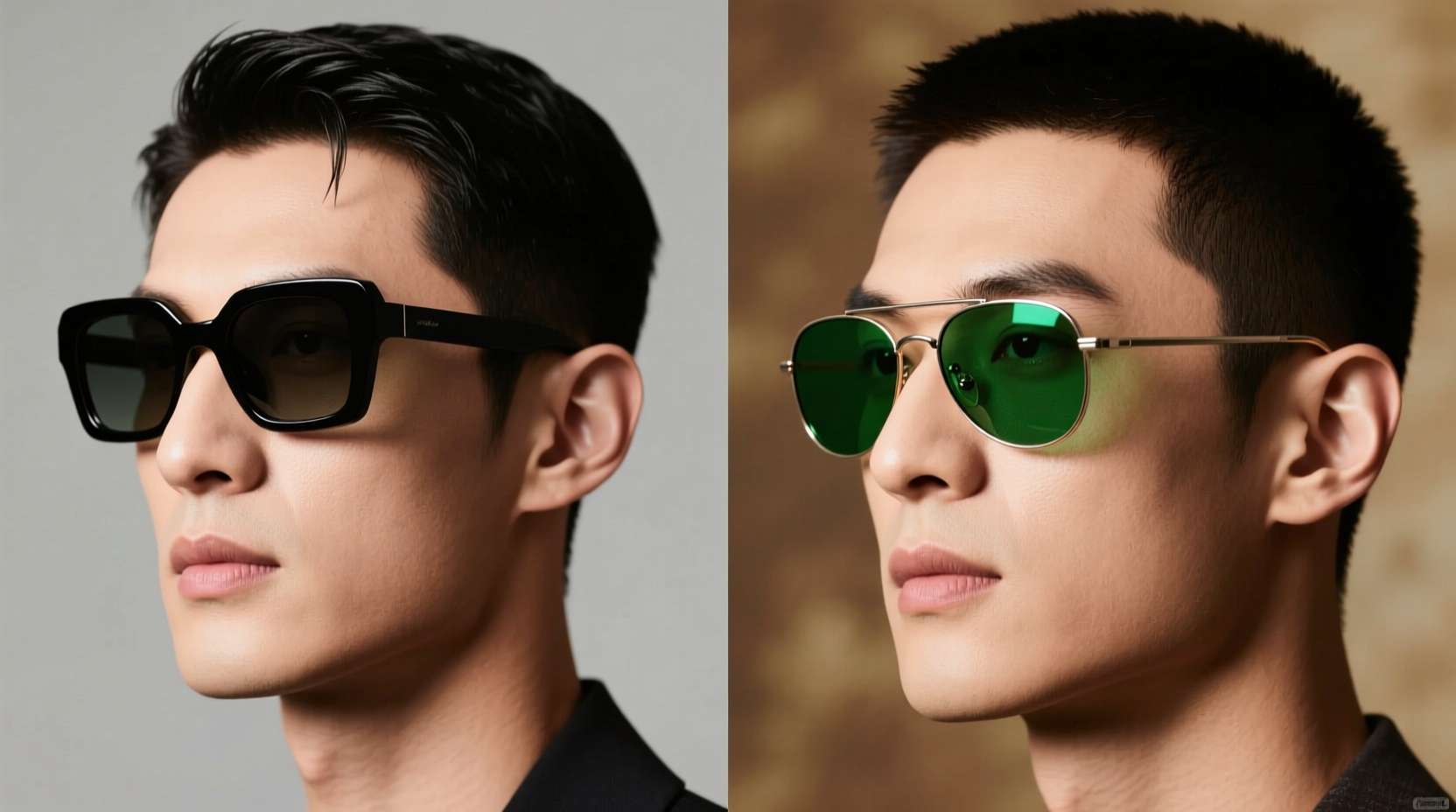
The foundation of flattering eyewear lies in balance. Sunglasses should counteract dominant facial features rather than amplify them. For example, angular frames can soften roundness, while curved lines can break up sharp jawlines. This principle applies directly to the square vs aviator debate.
Aviator sunglasses typically feature teardrop-shaped lenses with a pronounced lower curve and thin metal frames. Their upward sweep draws attention outward and upward, elongating the face visually. In contrast, square frames—whether bold or subtle—emphasize horizontal lines and geometric precision. They add structure and definition, often creating the illusion of broader cheekbones or a stronger jawline.
Framing effectiveness also depends on scale. Oversized aviators may overwhelm smaller faces, while narrow square frames can get lost on wider facial structures. Proportion matters as much as shape.
“The best sunglasses don’t hide your face—they highlight its natural architecture.” — Marcus Lin, Eyewear Designer at Vista Optics
Face Shape Guide: Who Wears What Best
No single frame suits all. Matching your face shape to the right silhouette transforms sunglasses from an accessory into an extension of identity. Below is a breakdown of how square and aviator frames perform across common face types.
| Face Shape | Square Frames Verdict | Aviator Frames Verdict |
|---|---|---|
| Rounded / Oval | Excellent – adds definition and contrast to soft curves | Good – elongates slightly but may lack visual weight |
| Square / Rectangular | Cautious – can overemphasize angles unless rounded edges used | Strong – curves balance strong jawlines and foreheads |
| Heart-Shaped | Variable – works if bottom-heavy; avoid top-heavy designs | Ideal – downward curve balances wide forehead |
| Diamond | Great – complements narrow jaw and high cheekbones | Very Good – softens angularity while drawing focus to eyes |
| Oblong / Long | Poor – may stretch face further unless low-set bridge | Best – width and curvature create balanced proportions |
For those with oval or heart-shaped faces, aviators offer a universally safe bet. Their flowing lines harmonize with varied contours. However, individuals with softer or rounder features often benefit more from the architectural presence of square frames, which introduce needed contrast.
Tip: Hold potential frames up to your face in a mirror without wearing them. Observe where the outer edge aligns—ideally, it should follow the line of your cheekbone for optimal balance.Style Context: When to Choose Which
Beyond anatomy, context plays a decisive role. The occasion, wardrobe, and even season influence whether square or aviator sunglasses will serve you better.
Aviators excel in casual and semi-formal environments. Paired with a leather jacket or a crisp white shirt, they project effortless sophistication. Their reflective lenses and metallic frames catch light subtly, adding polish without shouting. They’re particularly effective in bright conditions due to larger lens coverage and superior glare reduction.
Square frames, especially in matte acetate or thick-rimmed styles, lean into contemporary aesthetics. Think urban minimalism, editorial looks, or creative professions. They pair well with structured clothing—blazers, tailored coats, monochrome ensembles—and work especially well when you want your eyewear to be part of the statement.
Consider lifestyle too. Frequent drivers may prefer aviators for their superior peripheral shading and UVA/UVB protection. Artists, designers, or those in tech might gravitate toward square frames for their expressive potential and alignment with modern visual culture.
Mini Case Study: Two Professionals, Two Choices
Lena, a landscape architect in her early 30s, has a heart-shaped face with a broad forehead and delicate chin. She tried square sunglasses but found they drew too much attention to her temples, unbalancing her profile. After switching to medium-sized aviators with gradient green lenses, clients began commenting on her \"calm, focused presence\" during site visits. The frames softened her angles and enhanced her approachability.
In contrast, James, a graphic designer with a rounded face and warm coloring, struggled with traditional aviators that seemed to float on his face. He experimented with oversized black square frames and immediately noticed a shift. Colleagues said he looked “more grounded,” and he felt bolder in client meetings. The rigid lines created symmetry his softer features lacked.
Their experiences underscore a simple truth: there is no universal winner—only what works for you.
How to Test and Refine Your Choice
Selecting flattering sunglasses isn't guesswork. Follow this step-by-step process to make a confident decision.
- Identify your face shape. Use a tape measure or ruler to compare forehead, cheekbone, jawline, and face length. Determine if you're round, square, oval, heart, diamond, or oblong.
- Try both styles in person. Visit optical stores or boutiques offering try-ons. Avoid relying solely on online filters or models.
- Check lens alignment. The upper rim should sit close to your brow without touching. The outer corners should extend past your eye's outer edge.
- Assess color coordination. Warm skin tones (golden, peachy) suit gold, tortoiseshell, or warm gray frames. Cool tones (pink, olive) pair better with silver, black, or blue-accented metals.
- Evaluate comfort and wearability. Wear each pair for at least 15 minutes. Note pressure points, slippage, or vision obstruction.
- Seek honest feedback. Ask someone whose taste you trust: “Do these look like they belong on my face?”
Common Mistakes and How to Avoid Them
- Mistaking trendiness for suitability. Just because a celebrity wears square frames doesn’t mean they’ll suit your face. Trends rotate; your bone structure doesn’t.
- Ignoring bridge fit. A poorly fitted nose bridge causes slipping and misalignment. Look for adjustable pads, especially with aviators.
- Overlooking lens quality. Style means nothing if UV protection is inadequate. Always verify 100% UVA/UVB blocking.
- Matching frames only to outfits. Your face is present every day; clothes change. Prioritize facial harmony over wardrobe matching.
Frequently Asked Questions
Can I wear square sunglasses if I have a square face?
Yes, but choose wisely. Opt for square frames with slightly rounded edges or a thinner frame material to avoid exaggerating angularity. Avoid boxy, heavy designs. Instead, look for styles labeled “soft square” or “rounded rectangle.”
Are aviators still in style in 2024?
Absolutely. While design details evolve—such as matte finishes, tinted arms, or asymmetric bridges—the core aviator silhouette remains a staple. Modern variations keep the style fresh without losing its classic appeal.
Which frame is better for small faces?
Smaller aviators (often called “classic” or “vintage size”) tend to scale better on petite features. Oversized square frames can overwhelm. Look for narrow-width squares under 135mm total width for better proportion.
Final Recommendation: It’s About Intention, Not Rules
So, which frame is actually more flattering—square or aviator? The real answer is neither and both. Aviators generally offer broader versatility, particularly for elongated or angular faces. Square frames provide structure and modern flair, ideal for rounder or softer profiles. But the ultimate test isn’t geometry—it’s how you feel when you put them on.
Flattery isn’t just visual. It’s psychological. The right sunglasses should make you stand a little taller, speak a little clearer, move through the world with quiet assurance. Whether you reach for the sleek symmetry of a square frame or the soaring elegance of aviators, let intention guide you. Know your face. Respect your style. Choose not for approval, but for authenticity.
💬 Found your perfect pair? Share your experience or tag a friend who needs help choosing between square and aviator sunglasses. Real talk beats trends every time.