A short coat is a cornerstone of modern wardrobes—versatile, structured, and effortlessly stylish. Whether it’s a tailored wool blazer-style piece, a sleek leather moto, or a lightweight trench, its cut flatters most body types and transitions seamlessly between seasons. But the true potential of a short coat lies not in the garment alone, but in how you accessorize it. The right accessories don’t just complement—they transform, adding depth, personality, and purpose to your look. From boardroom meetings to weekend brunches, a few strategic additions can shift the tone, refine the silhouette, and make your outerwear work harder.
1. Master the Art of Layering with Scarves
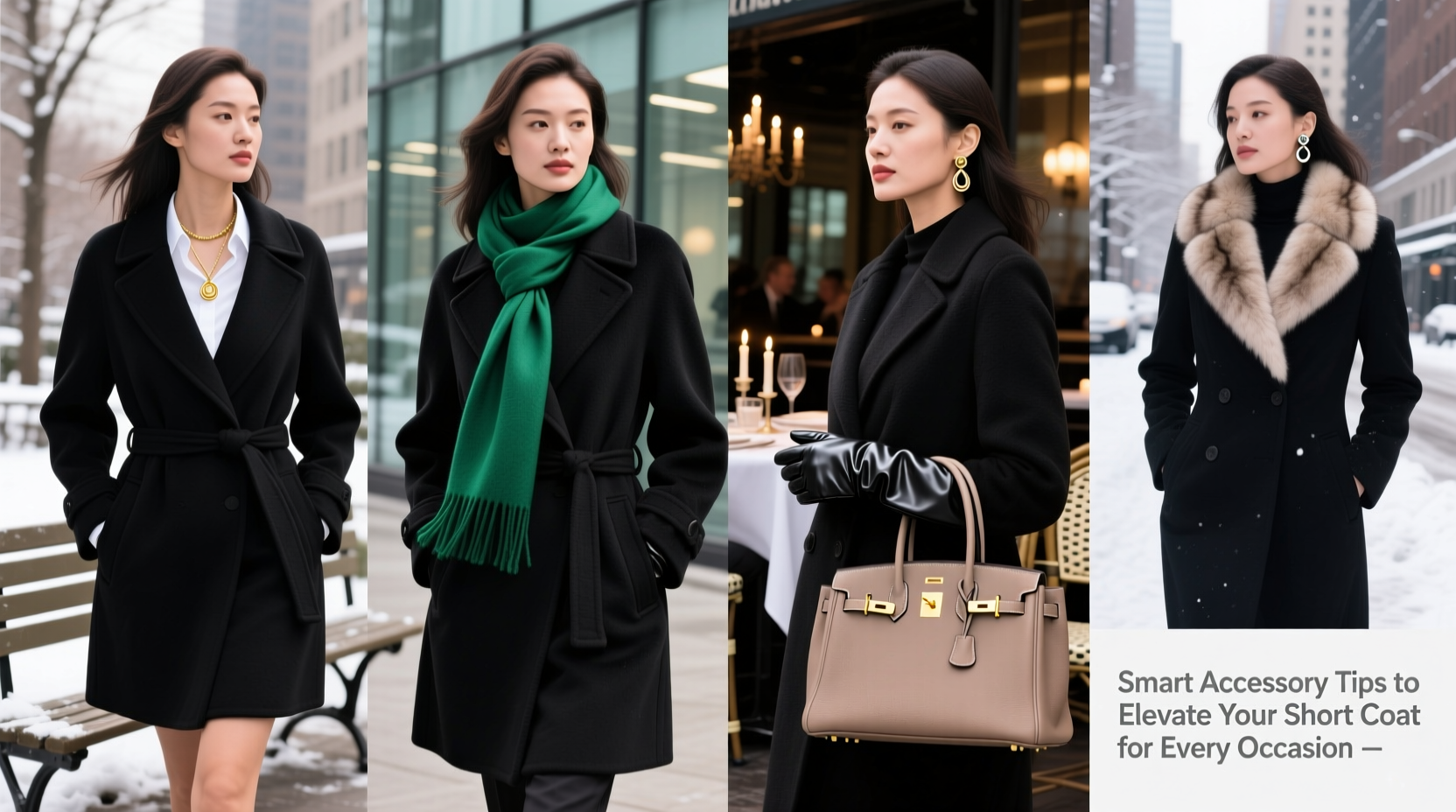
Scarves are among the most dynamic accessories for short coats. Their drape, color, and texture influence both warmth and aesthetic balance. A short coat naturally ends above the hip, leaving the midsection exposed. A well-chosen scarf fills that visual gap while drawing attention upward toward the face.
Silk scarves tied loosely at the neck add polish to a professional ensemble. Opt for solid neutrals like camel or charcoal when wearing a dark coat, or introduce a subtle print—like micro-polka dots or tonal geometrics—for character without clutter. For colder weather, switch to cashmere or merino wool. Drape it asymmetrically over one shoulder to preserve the coat’s clean lines.
Tip: Fold a rectangular scarf lengthwise into a thin band before tying—it stays neat and avoids bulk under the coat collar.Choosing the Right Scarf by Occasion
| Occasion | Scarf Material | Color Strategy | Styling Tip |
|---|---|---|---|
| Business Meeting | Silk or fine cotton | Monochrome or muted tones | Neat knot under collar |
| Casual Outing | Wool blend or knit | Bold patterns or earthy hues | Loose drape over shoulders |
| Evening Event | Chiffon or satin | Metallics or jewel tones | Wrap once, let ends flow |
| Winter Commute | Thick cashmere | Contrast with coat | Tuck ends inside coat |
2. Elevate with Belts and Waist Definition
One of the most underused tricks in outerwear styling is the belt. While long coats often feature built-in belts, short coats rarely do. Yet, adding a slim belt over the coat at the natural waist instantly creates structure and elongates the torso. This technique works especially well with boxy or straight-cut short coats that risk looking shapeless.
Choose a belt in a complementary material: a suede belt with a wool coat, a matte leather strap with a nylon bomber. Keep the width under 1.5 inches to avoid overwhelming the frame. For formal settings, a minimalist gold or silver buckle adds refinement. On weekends, try a woven fabric belt for a relaxed contrast.
“Defining the waist on a short coat changes everything—it turns a generic layer into a tailored statement.” — Lena Park, Stylist & Fashion Consultant
3. Strategic Use of Bags: Proportion and Placement
The handbag or crossbody you choose affects the overall balance of your outfit. With a short coat, bags that sit at or below the hip can create visual dissonance, making the lower half appear heavier. Instead, opt for styles that align with the coat’s hemline or sit higher on the body.
A structured top-handle bag held at elbow level keeps the eye moving vertically. Crossbody bags should be compact and worn across the chest, not slung low. For evening wear, a clutch tucked under the arm maintains elegance without disrupting the coat’s line.
Tip: Match your bag hardware (zippers, buckles) to your jewelry metal tone—consistency elevates perceived quality.4. Jewelry That Complements, Not Competes
Jewelry placement is crucial when wearing a short coat. Because the neckline is often exposed, earrings and necklaces become focal points. Long pendant necklaces work best with open-front coats, especially when layered over turtlenecks or button-downs. For closed collars, skip necklaces altogether and focus on earrings and watches.
Statement hoops or chandelier earrings bring drama to a simple wool coat, while delicate studs keep things professional. When wearing a high-collared coat, consider a bold cuff bracelet or stacked bangles—they remain visible when sleeves are slightly pushed up.
Real Example: Olivia’s Work-to-Dinner Transition
Olivia wears a navy short pea coat daily. During work hours, she pairs it with a silk scarf in navy and ivory stripes, a minimalist watch, and pearl studs. Her tote bag has brass hardware that matches her belt buckle. After work, she swaps the tote for a metallic crossbody, removes the scarf, and adds long gold drop earrings. The same coat now feels festive and intentional—no change in outerwear, only accessories.
5. Footwear and Hats: Anchoring the Look
No accessory discussion is complete without addressing footwear and headwear. Shoes ground the outfit and determine its formality. Pointed-toe ankle boots extend the leg line, ideal with cropped pants or skirts. Chunky lug soles pair well with edgier short coats like leather or denim, reinforcing a bold attitude.
Hats offer both function and flair. A felt fedora or trilby adds sophistication to a tweed short coat, while a beret brings Parisian ease to a casual cotton jacket. In winter, a cashmere beanie in a matching tone preserves warmth without sacrificing style.
Step-by-Step Guide: Accessorizing Your Short Coat by Season
- Spring: Pair a trench-style short coat with a lightweight linen scarf, aviator sunglasses, and leather loafers. Add a slim crossbody bag.
- Summer: Wear a cropped denim jacket with oversized sunnies, layered delicate necklaces, and espadrilles. Skip scarves; use a wide-brimmed hat instead.
- Fall: Layer a wool-blend short coat over a turtleneck. Add a plaid scarf, leather gloves, and knee-high boots. Carry a structured satchel.
- Winter: Style a quilted short coat with a chunky knit scarf, beanie, and insulated ankle boots. Use a roomy tote with interior pockets for essentials.
Checklist: Smart Accessory Pairings for Short Coats
- ✅ Choose scarves that enhance, not hide, the coat’s neckline
- ✅ Use a slim belt to define the waist on boxy silhouettes
- ✅ Match bag size and height to the coat’s hemline
- ✅ Coordinate metal tones across jewelry, bags, and belts
- ✅ Select shoes that extend the leg line or reinforce the coat’s vibe
- ✅ Rotate hat styles seasonally—felt in fall, straw in summer
- ✅ Limit necklaces when wearing high collars or scarves
Frequently Asked Questions
Can I wear a belt over a short coat?
Yes—especially if the coat is straight or oversized. Use a narrow belt (under 1.5 inches) at the natural waist to create definition without distorting the coat’s shape.
What kind of bag works best with a short coat?
Top-handle bags, compact crossbodies, and clutches that sit at or above the hip maintain proportion. Avoid large tote bags that extend below the coat hem, as they disrupt the silhouette.
How do I avoid looking bulky in winter?
Opt for thin thermal layers underneath, and choose scarves that tuck neatly. Use a close-fitting beanie instead of a bulky knit hat, and select streamlined gloves. Focus on vertical lines to preserve elegance.
Conclusion: Make Every Detail Count
A short coat is more than an outer layer—it’s a canvas. The accessories you choose are the brushstrokes that define its expression. By thoughtfully integrating scarves, belts, bags, jewelry, and footwear, you unlock endless versatility from a single piece. These aren’t mere add-ons; they’re tools of intentionality, allowing you to tailor your presence to any moment. Whether you’re stepping into a meeting, meeting friends for coffee, or walking into an evening event, let your accessories speak first. Reassess your current coat rotation. What could one well-placed detail change?
🚀 Start today: Pull out your favorite short coat and experiment with three new accessory combinations this week. Share your favorite pairing in the comments—your insight might inspire someone else’s next great look.








