
Every day, millions of people make a seemingly small decision that could be quietly affecting their spine: what kind of bag to carry. Whether it’s a sleek single-strap purse slung over one shoulder or a functional backpack worn across both shoulders, the choice impacts posture, muscle balance, and spinal alignment. While fashion often drives this decision, long-term back health may tell a different story. Understanding how each style distributes weight—and stress—on the body is essential for preventing chronic pain and musculoskeletal strain.
The Biomechanics of Carrying Weight
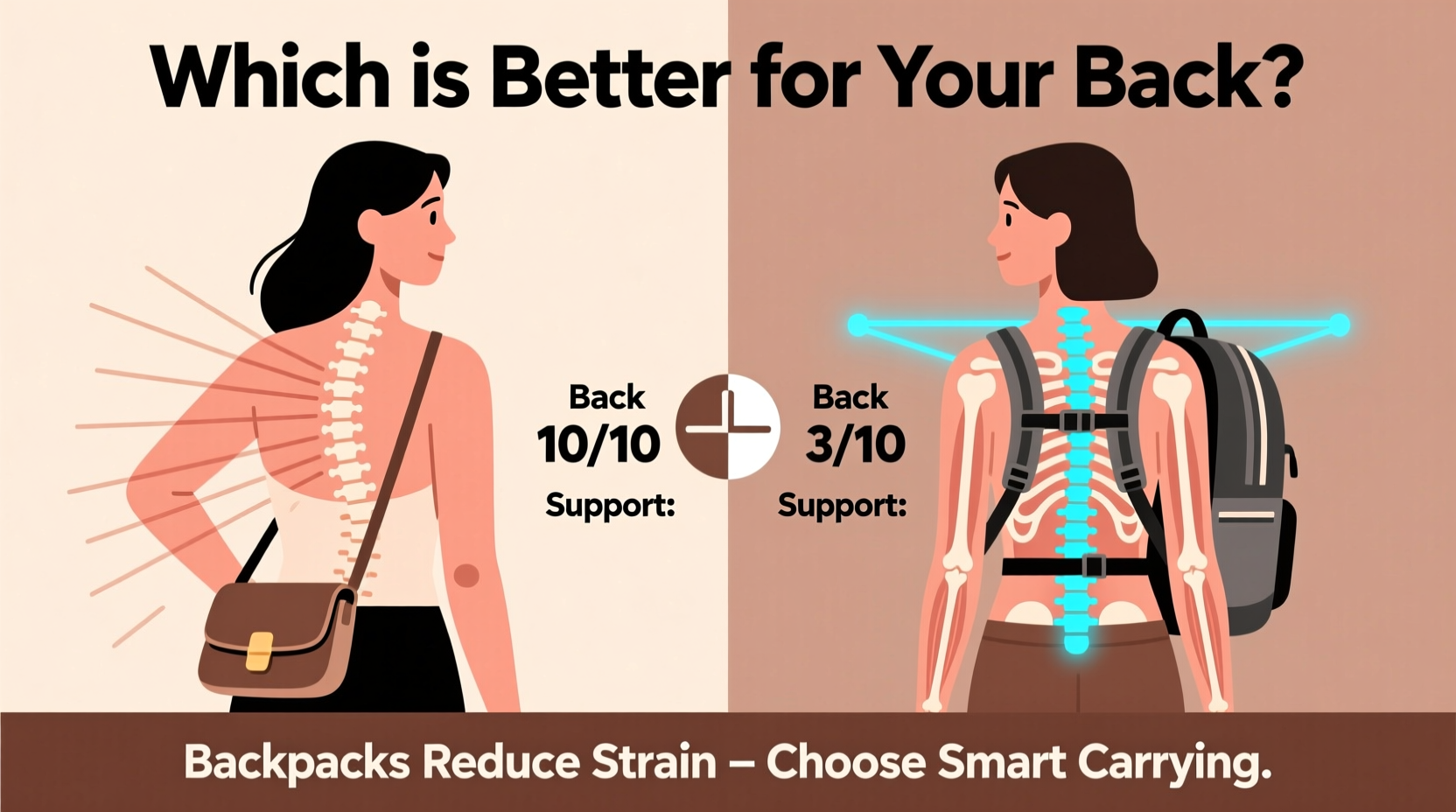
When you carry a load on your body, your spine responds dynamically. The human spine is designed to maintain a neutral, S-shaped curve when upright. Any deviation from this alignment due to uneven loading can trigger compensatory shifts in posture, leading to muscle imbalances, joint stress, and even nerve compression over time.
A single strap purse creates an asymmetrical load. When hung over one shoulder, it pulls that side downward, prompting the body to tilt or lean to counterbalance. This forces the trapezius, levator scapulae, and paraspinal muscles on one side to work harder, while the opposite side stretches abnormally. Over hours or days, this imbalance can contribute to neck pain, shoulder elevation, and postural deviations such as scoliosis-like curvatures.
In contrast, a properly fitted backpack with two padded straps distributes weight more evenly across both shoulders and closer to the body’s center of gravity. This symmetrical loading reduces lateral pull and encourages a more neutral spinal position, especially when the backpack sits between the shoulders and hips.
“Carrying heavy loads asymmetrically, like with a crossbody bag on one shoulder, can lead to functional scoliosis and chronic myofascial pain.” — Dr. Lena Torres, Physical Therapist & Spine Specialist
Comparing Load Distribution: A Practical Breakdown
To understand the real-world impact, consider how each bag type handles common carrying scenarios:
| Factor | Single Strap Purse | Backpack |
|---|---|---|
| Weight Distribution | Uneven, concentrated on one shoulder and hip | Even across both shoulders and upper back |
| Spinal Alignment | Frequent lateral bending; increased risk of postural deviation | Promotes upright posture when properly adjusted |
| Muscle Engagement | Overuse on one side; contralateral compensation | Balanced engagement of trapezius and core stabilizers |
| Load Capacity | Limited; heavier loads increase strain significantly | Higher capacity with less proportional strain |
| Ease of Access | High; quick access to contents | Varies; front-access packs improve usability |
| Fashion Flexibility | High; integrates easily with formal and casual wear | Improving, but still limited in professional settings |
Real-World Impact: A Mini Case Study
Sophia, a 34-year-old marketing executive, carried a leather crossbody purse daily for nearly a decade. Stylish and roomy enough for her phone, wallet, laptop, and makeup, it became a staple of her wardrobe. Over time, she began experiencing persistent right-sided neck pain and frequent tension headaches. After months of discomfort, she consulted a physical therapist.
Upon assessment, Sophia showed significant elevation of her right shoulder, tightness in her right trapezius, and a visible lateral shift in her cervical spine. The diagnosis? Chronic postural strain from unilateral loading. Her therapist recommended switching to a lightweight, ergonomic backpack and incorporating daily stretching exercises. Within six weeks of consistent change, her pain decreased by 70%, and her posture visibly improved.
Sophia’s experience isn’t unique. Many professionals unknowingly sacrifice spinal health for convenience or aesthetics, only realizing the cost after symptoms arise.
Tip: If you must use a single strap purse, alternate shoulders every 15–20 minutes and avoid carrying more than 10% of your body weight.Choosing the Right Backpack: Not All Are Created Equal
While backpacks generally offer superior biomechanical support, not all designs are beneficial. A poorly fitted or overloaded backpack can cause its own set of problems, including lower back strain, rounded shoulders, and restricted breathing if straps are too tight.
For optimal spinal health, choose a backpack with the following features:
- Padded, adjustable shoulder straps – Allow customization for fit and reduce pressure points.
- Chest or sternum strap – Helps stabilize the load and prevent shoulder roll.
- Waist belt – Transfers up to 20% of the weight to the hips, reducing spinal compression.
- Contoured shape – Fits snugly against the back without protruding.
- Weight limit awareness – Never exceed 10–15% of your body weight.
For those transitioning from purses to backpacks in professional environments, consider minimalist, slim-profile backpacks in leather or structured fabric. These maintain a polished appearance while supporting healthy carrying habits.
Action Plan: How to Protect Your Back Regardless of Bag Choice
You don’t need to abandon your favorite purse entirely. With mindful habits, you can minimize harm and preserve spinal health. Follow this step-by-step guide:
- Assess your daily load – Remove non-essentials. Only carry what you truly need.
- Limit weight – Keep total bag weight under 10% of your body weight (e.g., under 12 lbs for a 120-lb person).
- Switch sides frequently – If using a single strap bag, alternate shoulders every 15–20 minutes.
- Adjust backpack fit – Straps should allow the bag to sit snugly between shoulders and waist, not sagging below the hips.
- Engage your core – Stand tall with shoulders back; avoid hunching forward when walking.
- Stretch daily – Focus on neck rolls, shoulder blade squeezes, and chest openers to counteract carrying strain.
Checklist: Back-Friendly Bag Habits
✅ Use this checklist daily:- Is my bag under 10% of my body weight?
- Am I standing upright without leaning to one side?
- If using a purse, have I switched shoulders today?
- Are my backpack straps snug but not digging in?
- Have I removed unnecessary items (e.g., old receipts, extra chargers)?
- Did I stretch my neck and shoulders after prolonged carrying?
Frequently Asked Questions
Can a single strap purse really cause long-term back problems?
Yes. Chronic use of a heavy single strap purse can lead to muscular imbalances, postural changes, and repetitive strain injuries. Over time, this may contribute to conditions like thoracic outlet syndrome, cervical radiculopathy, or chronic myofascial pain. Early intervention through habit change can prevent lasting damage.
Are messenger bags a better alternative to single strap purses?
Messenger bags distribute weight slightly better due to wider straps and chest clips, but they still create asymmetrical loading. While an improvement over flimsy purses, they are not biomechanically equivalent to dual-strap backpacks. Use them with caution and keep the load light.
What’s the maximum safe weight for a backpack?
Health professionals recommend keeping backpack weight at or below 10–15% of your body weight. For most adults, that means no more than 12–18 pounds. Exceeding this increases compressive forces on the lumbar spine and raises injury risk.
Conclusion: Prioritize Health Without Sacrificing Style
The debate between single strap purses and backpacks isn’t just about fashion—it’s about function and long-term well-being. While purses win on aesthetic versatility, backpacks clearly outperform in spinal safety and ergonomic efficiency. That doesn’t mean you must give up your favorite accessory, but it does mean being intentional about usage, weight, and frequency.
Modern design has bridged the gap between style and support. Sleek backpacks, convertible crossbacks, and balanced shoulder bags now offer fashionable alternatives that respect your posture. The best choice isn’t one-size-fits-all—it’s the one that aligns with both your lifestyle and your body’s needs.
💬 Your back carries you every day—return the favor. Evaluate your current bag habits, try a healthier alternative this week, and share your experience with others. Small changes today can prevent pain tomorrow.