
In 2009, a relatively unknown communications consultant named Simon Sinek stepped onto the TED stage and delivered a message that would go on to reshape modern leadership, marketing, and organizational culture. His talk, titled “How Great Leaders Inspire Action,” introduced the world to the concept of the \"Golden Circle\" and the powerful mantra: “Start with Why.” Over 70 million views later, it remains one of the most influential TED Talks in history. But what makes this presentation so enduring? And how did a simple idea about purpose spark a global movement?
The answer lies not just in the clarity of Sinek’s model, but in its universal applicability—from Fortune 500 boardrooms to nonprofit missions and personal development journeys. By unpacking the core principles, real-world applications, and lasting impact of this landmark talk, we gain insight into why Sinek’s message continues to resonate more than a decade later.
The Golden Circle: A Framework That Changed Thinking
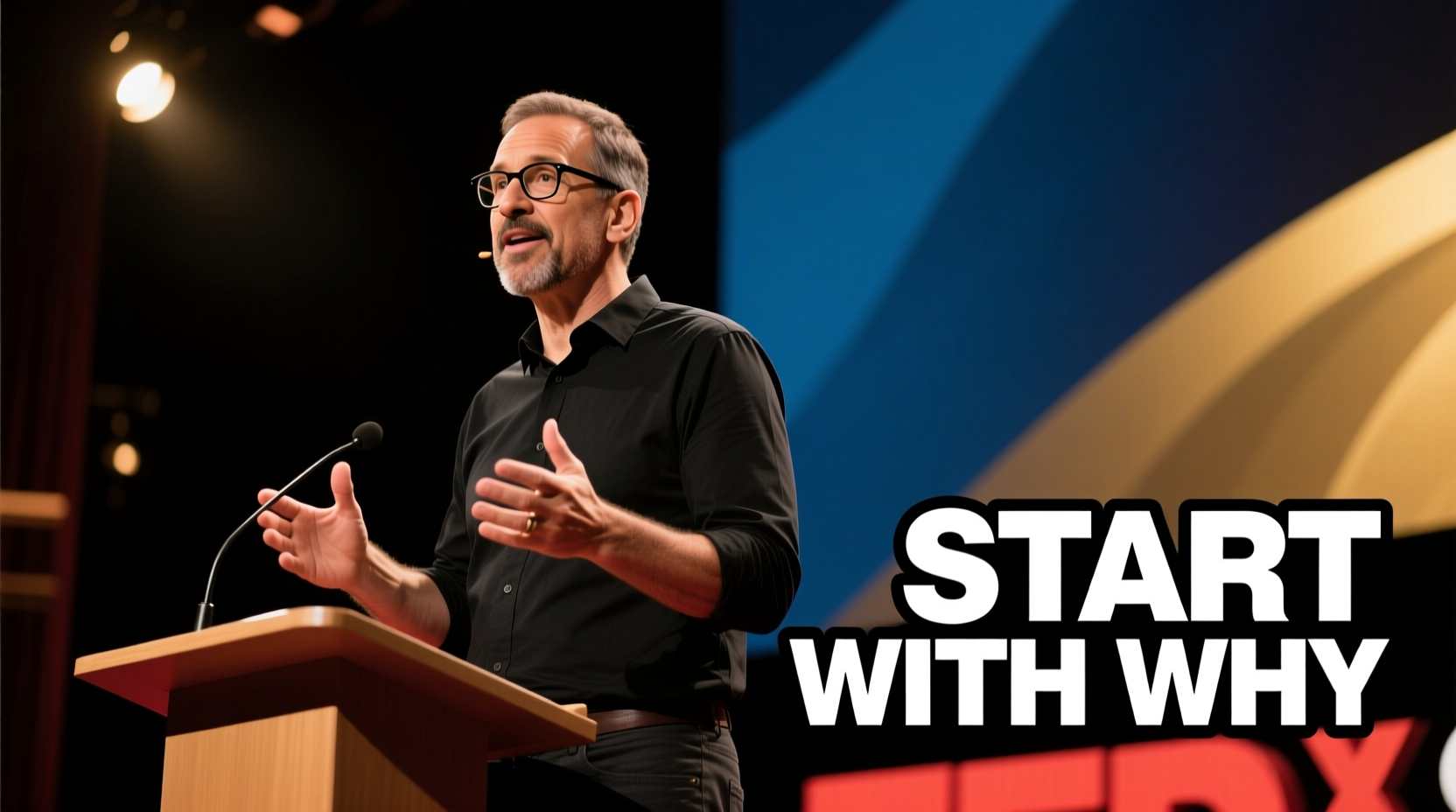
At the heart of Sinek’s TED Talk is the Golden Circle—a three-layered model consisting of Why, How, and What. Most organizations, he argues, communicate from the outside in: they start with *what* they do, then explain *how* they do it, and rarely articulate *why* they do it. In contrast, truly inspiring leaders and organizations—like Apple, Martin Luther King Jr., and the Wright brothers—communicate from the inside out: they begin with their purpose, cause, or belief.
Sinek illustrates this with a now-iconic diagram:
| Layer | Description | Typical Communication | Inspiring Communication |
|---|---|---|---|
| Why | Purpose, cause, belief | Rarely communicated | Communicated first |
| How | Process or value proposition | Mentioned second | Explained after Why |
| What | Product, service, result | Stated first | Shared last |
This reversal isn’t just rhetorical—it reflects how human decision-making works at a neurological level. Sinek explains that the “Why” speaks to the limbic brain, responsible for feelings like trust and loyalty, while the “What” appeals only to the neocortex, which governs rational thought. When communication starts with Why, it creates emotional resonance, making people feel connected before they even understand the details.
Tip: Whether you're pitching a product, leading a team, or defining your career path, always ask: What is my Why? Then build your message outward from there.Real-World Impact: From Startups to Social Movements
The power of Sinek’s idea became evident almost immediately after the talk went viral. Companies began re-evaluating their mission statements. Executives started opening meetings by revisiting their organizational purpose. Schools and hospitals adopted the framework to strengthen internal culture.
Mini Case Study: A Tech Startup’s Turnaround
Consider a small software startup struggling to differentiate itself in a crowded market. Despite having strong technical capabilities (the “How”) and a functional product (the “What”), they couldn’t attract investors or customers. After studying Sinek’s talk, the founder rewrote their pitch deck to lead with their Why: “We believe every small business deserves access to enterprise-grade tools.” This shift reframed their identity—not as another app developer, but as an advocate for economic equity. Within six months, they secured funding and doubled their client base.
This example underscores a broader truth: people don’t buy what you do; they buy why you do it. The same principle applies beyond commerce. Civil rights leaders like MLK didn’t march for policy changes alone—they led with a dream, a belief, a Why. That’s what mobilizes people.
“People don’t buy what you do, they buy why you do it. And what you do simply proves what you believe.” — Simon Sinek
Why This Talk Went Viral: Simplicity, Science, and Storytelling
Several factors contributed to the unprecedented reach of Sinek’s presentation. First, the concept is deceptively simple. The Golden Circle can be sketched on a napkin, yet it holds profound implications. Second, Sinek grounds his argument in biology, citing the structure of the human brain to explain why purpose-driven messaging works. This blend of psychology and practicality gives the idea credibility.
But perhaps the most compelling reason for its success is storytelling. Sinek doesn’t lecture—he narrates. He tells the story of Apple’s innovation under Steve Jobs, contrasting it with competitors who had equal resources but lacked a clear Why. He recounts the Wright brothers’ relentless pursuit of flight despite limited funding, driven by belief rather than profit. These stories make abstract ideas tangible.
The talk also arrived at a cultural moment ripe for renewal. In the aftermath of the 2008 financial crisis, trust in institutions was low. People were hungry for authenticity, transparency, and meaning. Sinek offered a blueprint for rebuilding trust—not through better advertising, but through clearer intention.
Applying the Why: A Step-by-Step Guide
Understanding the Golden Circle is one thing; applying it is another. Here’s a practical timeline for integrating Sinek’s framework into your work or organization:
- Reflect on Your Core Belief (Week 1): Ask yourself: What drives me? What change do I want to see in the world? Write down your answers without filtering for logic or marketability.
- Clarify Your How (Week 2): Identify the values or processes that enable you to pursue your Why. For example, if your Why is “to empower underrepresented voices,” your How might be “through inclusive platforms and mentorship.”
- Define Your What (Week 3): List the tangible products, services, or actions that manifest your purpose. Be specific: job titles, deliverables, customer outcomes.
- Test the Order (Week 4): Rewrite your elevator pitch, email signature, or company homepage starting with Why. Share it with trusted peers and observe their reactions.
- Embed It Daily (Ongoing): Begin team meetings by revisiting the Why. Hire based on alignment with purpose. Measure success not just by results, but by fidelity to belief.
Avoiding Common Pitfalls: Do’s and Don’ts
While the Why framework is powerful, misapplication can dilute its impact. Use this checklist to stay on track:
| Do’s | Don’ts |
|---|---|
| Use authentic language—your Why should sound like you. | Don’t copy another organization’s mission statement. |
| Revisit your Why regularly, especially during transitions. | Don’t treat it as a one-time exercise. |
| Align hiring and promotions with cultural fit and shared beliefs. | Don’t prioritize skills over values. |
| Be patient—trust and loyalty take time to build. | Don’t expect immediate results after rebranding. |
Frequently Asked Questions
Can the Golden Circle apply to individuals, not just organizations?
Absolutely. Personal branding, career decisions, and even parenting can benefit from starting with Why. Knowing your personal purpose helps you make aligned choices, reduce burnout, and build deeper relationships.
What if my company doesn’t have a clear Why?
That’s common—and fixable. Begin by interviewing long-term employees or loyal customers. Ask: “What do you think we stand for?” Patterns in their answers may reveal an implicit Why waiting to be named.
Is the Golden Circle just another buzzword?
No. Unlike fleeting management trends, Sinek’s model is rooted in observable patterns across history and neuroscience. Its longevity—over a decade of sustained influence—is proof of its substance.
Conclusion: Reconnect With Purpose
Simon Sinek’s TED Talk endures because it taps into something fundamental: the human need for meaning. In a world saturated with information, distractions, and transactional interactions, the Why offers a compass. It reminds us that leadership isn’t about charisma or title—it’s about clarity of belief and the courage to act on it.
Whether you’re launching a project, leading a team, or redefining your life direction, the lesson is the same: start with Why. Let that belief guide your actions, shape your message, and inspire those around you. The results may not come overnight, but they will be lasting.
🚀 Ready to find your Why? Take 20 minutes today to write your personal or organizational purpose statement. Share it with someone who matters. Then watch how the rest begins to fall into place.